


- Posted on 25 Mar 2025
By James Laurenceson
This article was published in China International Strategy Review, vol. 7, pp. 16–30. https://doi.org/10.1007/s42533-025-00177-w.
Abstract
As Great Power rivalry in the Asia–Pacific has intensified, Australia has widely come to be seen as a prototypical Balancer. By lending its modest weight in support of its long-time security ally, the US, it seeks to offset the challenges to the regional order posed by China. Developments like the AUKUS partnership struck between Australia, the US and the UK in 2021 are interpreted as confirmation of Australia’s contemporary international alignment. This paper, however, argues that post-AUKUS, Australia has not comprehensively abandoned its hedging strategy. This is reflected in a number of Canberra’s regional assessments and responses that diverge significantly from that of Washington. Similar to Beijing, Canberra believes that the era of US primacy has come to an end and the region is now multipolar. In framing a response, Canberra also broadly shares Beijing’s view that deeper economic integration not only advances domestic and regional prosperity, but also stability and security. Further conditioning Canberra’s response is a recognition that short of extreme scenarios, geopolitical “like-mindedness” counts for little in safeguarding local living standards. For China, Australia’s ongoing ambiguous alignment is a starting point for creative and professional diplomacy to unlock mutually beneficial outcomes. A second Trump administration in Washington is also likely to exacerbate the foreign policy divide between Canberra and Washington.
share_windows Read the article online here. (Access may require purchase or subscription).
AUTHOR

Director, Australia-China Relations Institute And Professor, DVC (International & Development)
News
Australia-China Weekly Brief: October 2026 issues
The Australia-China Weekly Brief by the Australia-China Relations Institute at the University of Technology Sydney (UTS:ACRI) tracks key developments in...

News
The struggle over what China wants
China expertise is itself a field of epistemic struggle, shaped by competing convictions, dispositions and geopolitical perspectives. Doshi’s critique of Kang,...
News
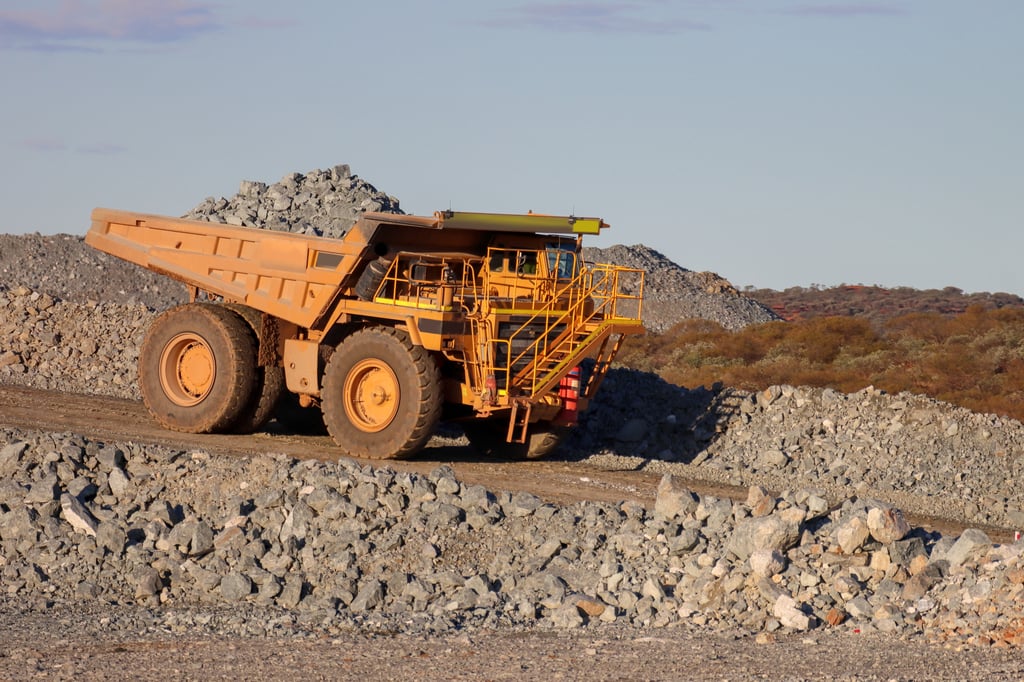
Australia should turn critical minerals leverage into industrial capability
Australia’s Syerston Scandium Project is a test of whether critical minerals cooperation can make Australia not merely a supplier, but a critical capability...

News
PERSPECTIVES | Can Australia and China talk sensibly about AI Safety?
Australia will attend the APEC Economic Leaders’ Meeting in Shenzhen on November 18-19 2026 amid questions about the extent to which the two countries can, or...
News
Australia-China Weekly Brief: October 2026 issues
The Australia-China Weekly Brief by the Australia-China Relations Institute at the University of Technology Sydney (UTS:ACRI) tracks key developments in...
News
The struggle over what China wants
China expertise is itself a field of epistemic struggle, shaped by competing convictions, dispositions and geopolitical perspectives. Doshi’s critique of Kang,...
News
Australia should turn critical minerals leverage into industrial capability
Australia’s Syerston Scandium Project is a test of whether critical minerals cooperation can make Australia not merely a supplier, but a critical capability...
News
PERSPECTIVES | Can Australia and China talk sensibly about AI Safety?
Australia will attend the APEC Economic Leaders’ Meeting in Shenzhen on November 18-19 2026 amid questions about the extent to which the two countries can, or...