


- Posted on 4 Feb 2025
By Michael Clarke
This article was published in the Australian Journal of International Affairs, vol. 79, issue 2, pp 209-234. https://doi.org/10.1080/10357718.2025.2455709.
Abstract
Through an examination of the treatment of MOOTW in official doctrinal and defense policy statements and ‘semi-authoritative’ Chinese military writings this paper argues: (i) that MOOTW have become integrated into China’s military strategy as a means of protecting ‘overseas interests’, enhancing PLA operational experience and supporting China’s broader diplomatic and strategic objectives; and (ii) the manner in which this integration has occurred is emblematic of the iterative nature of Chinese strategic doctrine informed by perceptions of shifts in the contemporary global security environment and their impact on China’s national interests. The paper concludes however that while China has made significant strides in embedding MOOTW into the PLA’s mission, its ability to meet these objectives is constrained both by the fact that its primary strategic focus remains East Asia and its capability development is geared to ‘counter-intervention’ of outside powers in that sphere.
share_windows Read the article online here. (Access may require purchase or subscription).
AUTHOR

Michael Clarke
Adjunct Associate Professor, Australia-China Relations Institute, UTS and Associate Professor, Deakin Centre for Future Defence and National Security, Deakin University
News
Australia-China Weekly Brief: October 2026 issues
The Australia-China Weekly Brief by the Australia-China Relations Institute at the University of Technology Sydney (UTS:ACRI) tracks key developments in...
News
The struggle over what China wants
China expertise is itself a field of epistemic struggle, shaped by competing convictions, dispositions and geopolitical perspectives. Doshi’s critique of Kang,...
News
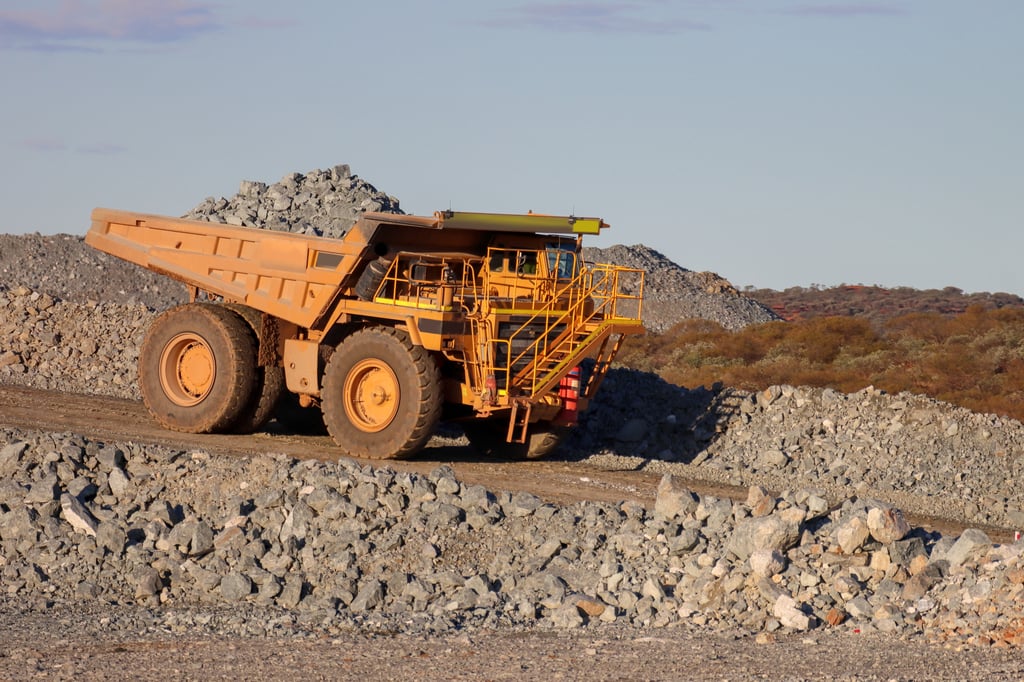
Australia should turn critical minerals leverage into industrial capability
Australia’s Syerston Scandium Project is a test of whether critical minerals cooperation can make Australia not merely a supplier, but a critical capability...

News
PERSPECTIVES | Can Australia and China talk sensibly about AI Safety?
Australia will attend the APEC Economic Leaders’ Meeting in Shenzhen on November 18-19 2026 amid questions about the extent to which the two countries can, or...
News
Australia-China Weekly Brief: October 2026 issues
The Australia-China Weekly Brief by the Australia-China Relations Institute at the University of Technology Sydney (UTS:ACRI) tracks key developments in...
News
The struggle over what China wants
China expertise is itself a field of epistemic struggle, shaped by competing convictions, dispositions and geopolitical perspectives. Doshi’s critique of Kang,...
News
Australia should turn critical minerals leverage into industrial capability
Australia’s Syerston Scandium Project is a test of whether critical minerals cooperation can make Australia not merely a supplier, but a critical capability...
News
PERSPECTIVES | Can Australia and China talk sensibly about AI Safety?
Australia will attend the APEC Economic Leaders’ Meeting in Shenzhen on November 18-19 2026 amid questions about the extent to which the two countries can, or...