


- Posted on 20 Feb 2025
By Marina Yue Zhang
This book chapter was published in Peter C.Y. Chow (ed.), Technology Rivalry Between the USA and China, Palgrave Studies in Global Security, Palgrave Macmillan, pp. 93–130. https://doi.org/10.1007/978-3-031-76169-0_4.
Abstract
At the confluence of geopolitics and technological advancement, the semiconductor industry stands as a pivotal battleground in the ongoing technological rivalry between the United States and China. This chapter delves into the strategic policy shifts led by the United States, aimed at containing China’s technological rise in the semiconductor sector. The intense rivalry between the two nations significantly impacts the complex, interdependent global value chain (GVC) for semiconductors, an epitome of economic interdependence and efficiency, now exposed to vulnerabilities amidst techno-geopolitical uncertainty. This uncertainty, born from the interplay between rapid technological innovation and strategic geopolitical maneuvers, introduces a degree of unpredictability to global collaboration in technology. The chapter also investigates China’s strategic counteractions at both the national and corporate levels to secure technological independence against such backdrop, shedding light on the geopolitical dynamics in an era marked by geopolitics-driven fragmentation in technology. These measures and countermeasures, indicative of a broader strategic effort, have wide implications, extending beyond a simple competition for technological superiority, suggesting a profound shift in global power dynamics. It underscores the need for other countries in the semiconductor GVC for strategic adjustments in foreign policy and national security to adeptly navigate the challenges and opportunities presented facing techno-geopolitical uncertainty.
share_windows Read the book chapter online here. (Access may require purchase or subscription).
Author

Associate Professor Research, DVC (International & Development)
News
Australia-China Weekly Brief: October 2026 issues
The Australia-China Weekly Brief by the Australia-China Relations Institute at the University of Technology Sydney (UTS:ACRI) tracks key developments in...

News
The struggle over what China wants
China expertise is itself a field of epistemic struggle, shaped by competing convictions, dispositions and geopolitical perspectives. Doshi’s critique of Kang,...
News
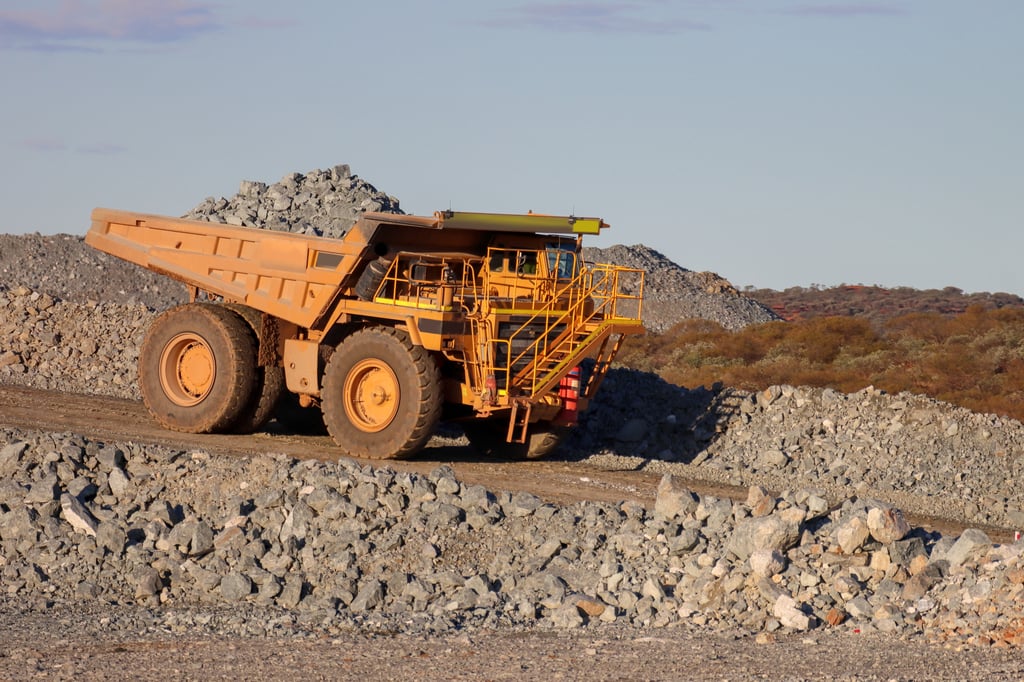
Australia should turn critical minerals leverage into industrial capability
Australia’s Syerston Scandium Project is a test of whether critical minerals cooperation can make Australia not merely a supplier, but a critical capability...

News
PERSPECTIVES | Can Australia and China talk sensibly about AI Safety?
Australia will attend the APEC Economic Leaders’ Meeting in Shenzhen on November 18-19 2026 amid questions about the extent to which the two countries can, or...
News
Australia-China Weekly Brief: October 2026 issues
The Australia-China Weekly Brief by the Australia-China Relations Institute at the University of Technology Sydney (UTS:ACRI) tracks key developments in...
News
The struggle over what China wants
China expertise is itself a field of epistemic struggle, shaped by competing convictions, dispositions and geopolitical perspectives. Doshi’s critique of Kang,...
News
Australia should turn critical minerals leverage into industrial capability
Australia’s Syerston Scandium Project is a test of whether critical minerals cooperation can make Australia not merely a supplier, but a critical capability...
News
PERSPECTIVES | Can Australia and China talk sensibly about AI Safety?
Australia will attend the APEC Economic Leaders’ Meeting in Shenzhen on November 18-19 2026 amid questions about the extent to which the two countries can, or...