


Project details:
Funder
-
Australian Centre for International Agricultural Research
Timeline
-
2022-2026
Location
-
Kiribati
-
Solomon Islands
Partners
-
Cawthron Institute New Zealand
-
CSIRO
-
Live and Learn Kiribati
-
Pacific Community
-
World Wide Fund for Nature-Pacific (Solomon Islands)
- Posted on 22 Jul 2024
Food System Pathways: Developing a process for community-led adaptation
Future risks and opportunities
As global temperatures continue to rise, the influence of climate change on development is accelerating. Food systems are already being impacted, exacerbated by population growth, dietary change, and shocks such as COVID-19. While these drivers may have negative outcomes, they may also present opportunities for food systems to transform towards more desirable futures.
Development practice can empower communities to identify opportunities for transitioning their food systems to more sustainable and healthy futures. By nature, food systems are complex, and solutions will have to address diverse issues. Also, planning and engagement approaches can build local capacity to make these shifts, and mainstream ongoing adaptation.
Food System Pathways
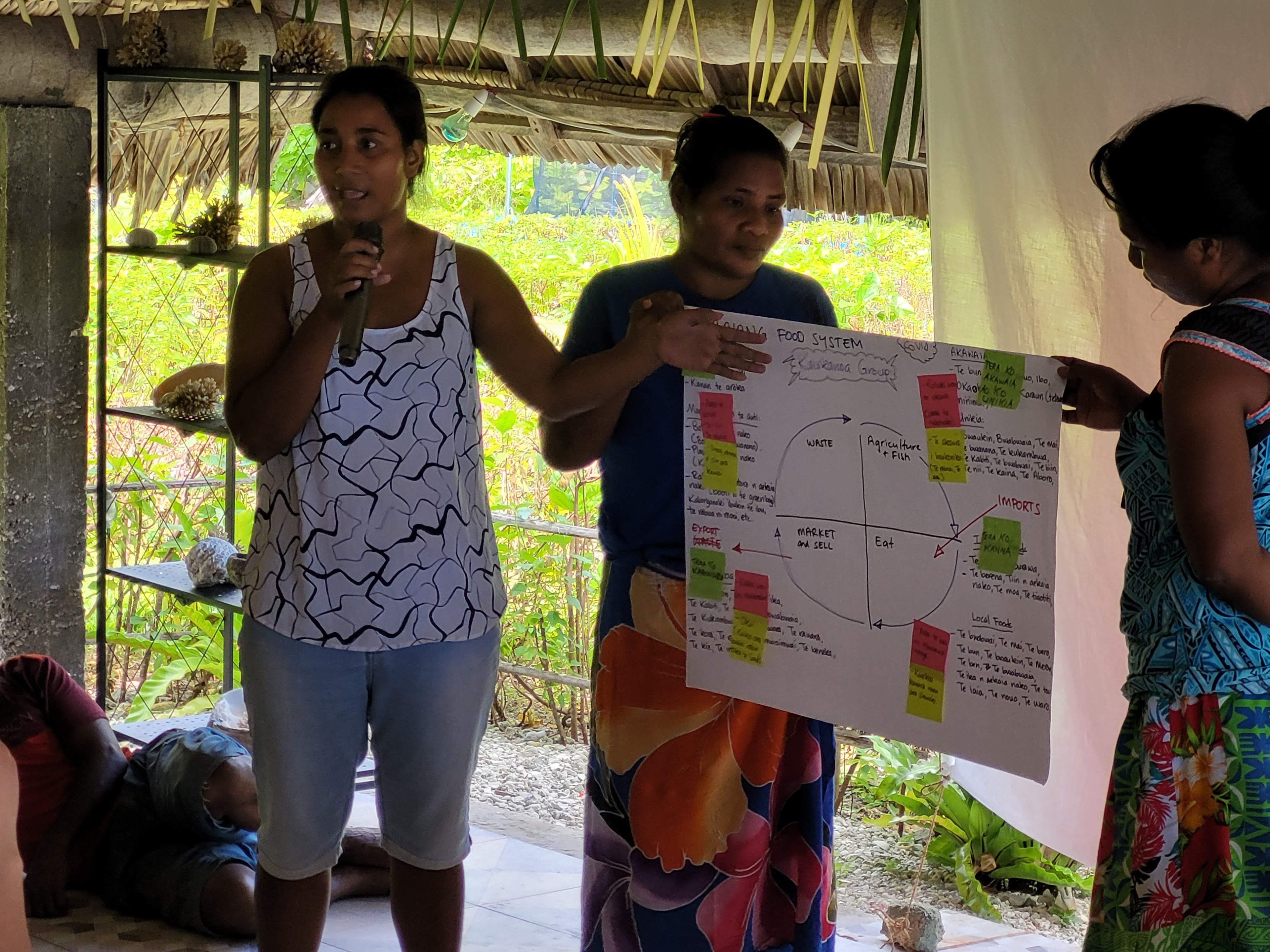
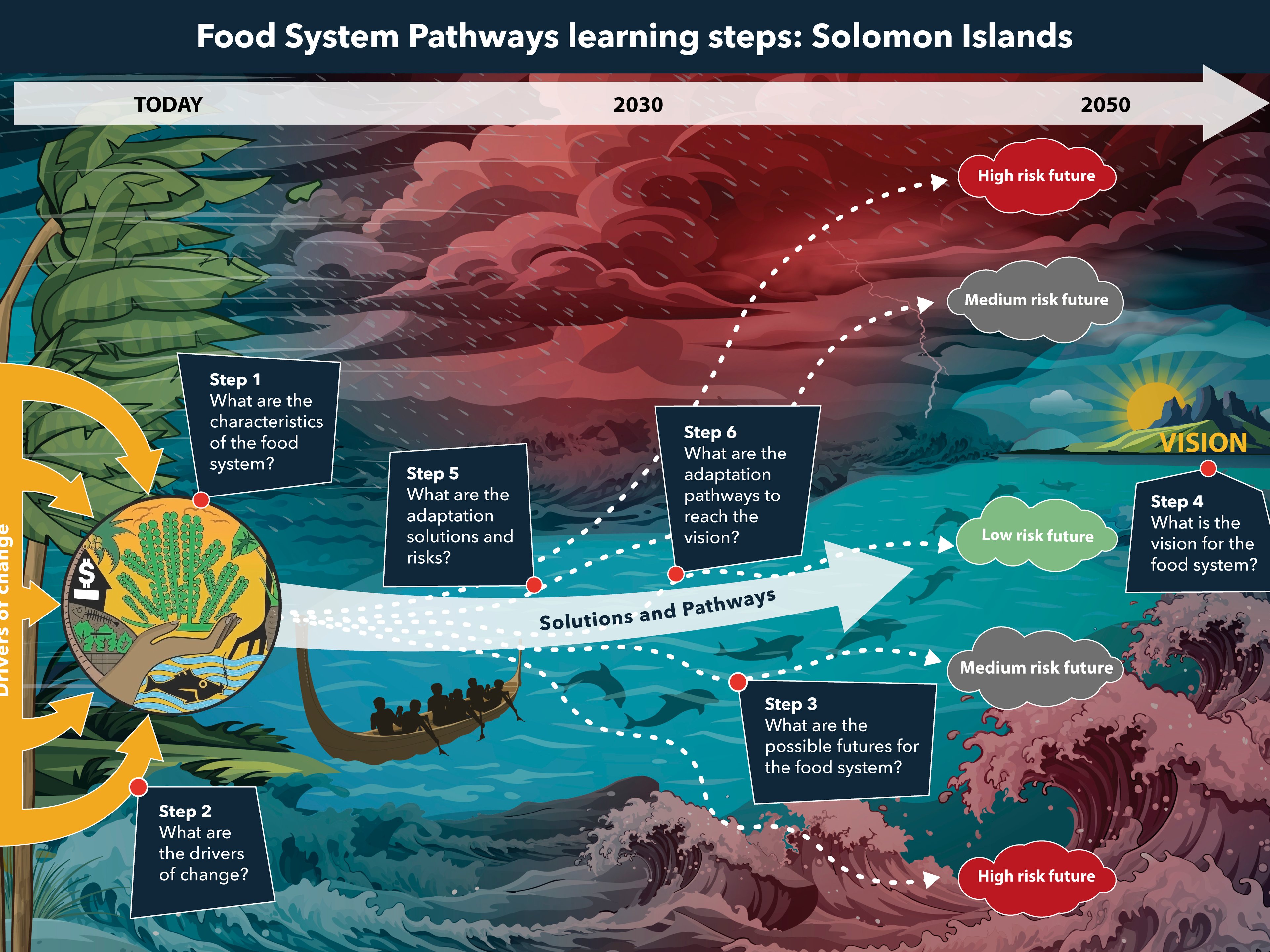
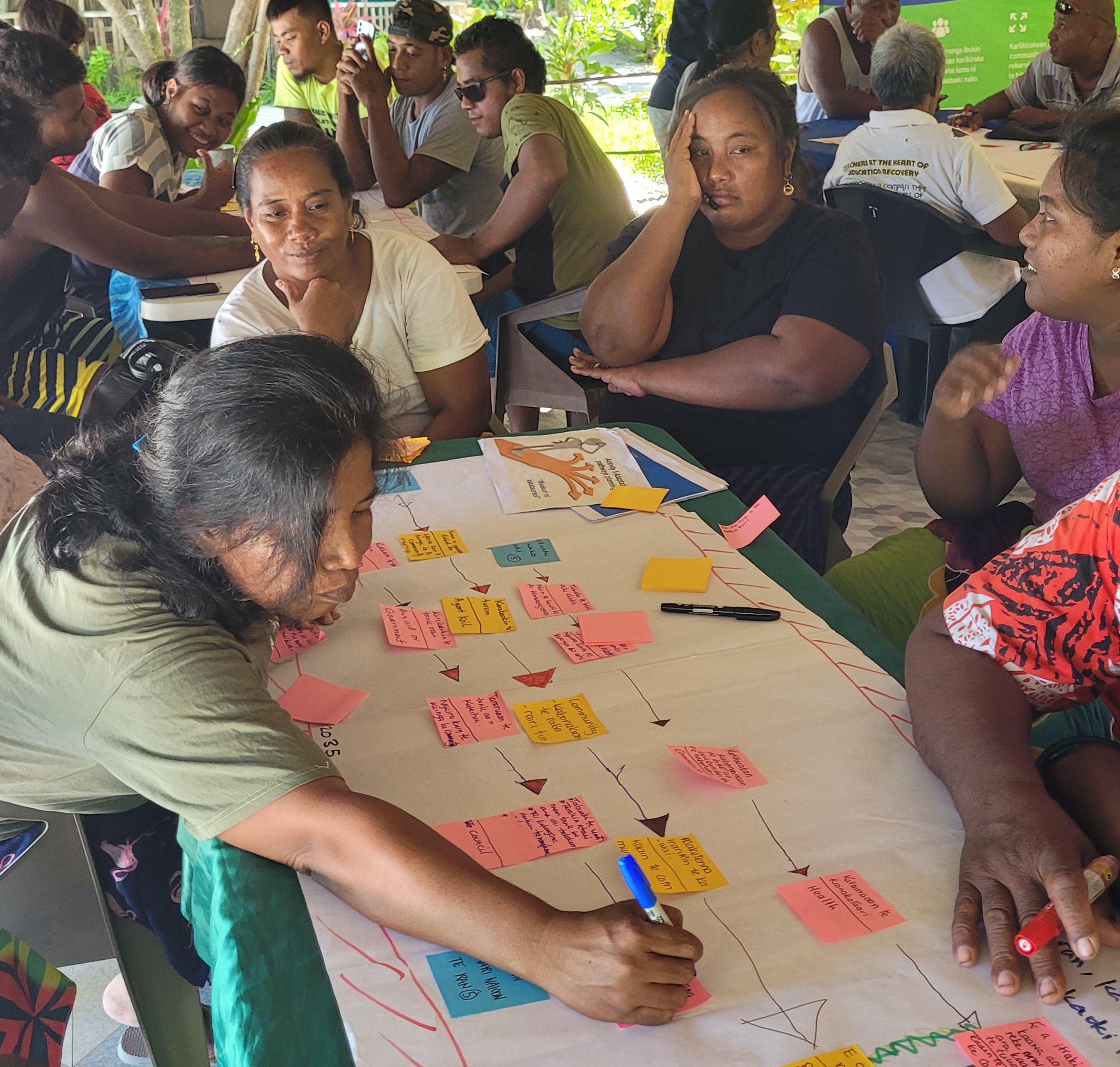
In 2023-2026 the Australian Centre for International Agriculture Research funded the Transformation pathways for Pacific coastal food systems project. Working with communities and their partners in two pilot sites in Solomon Islands and Kiribati, the project team co-developed a participatory planning process that identified ‘adaptation pathways’ to transform local food systems. The process was based on simple participatory tools which encouraged deep learning about food systems, their challenges, and identification of necessary solutions.
The pathways were implemented by a network of voluntary ‘knowledge brokers’, who were trained to coordinate and manage partners and resources. They were also empowered to repeat the planning process to facilitate ongoing community-led adaptation.
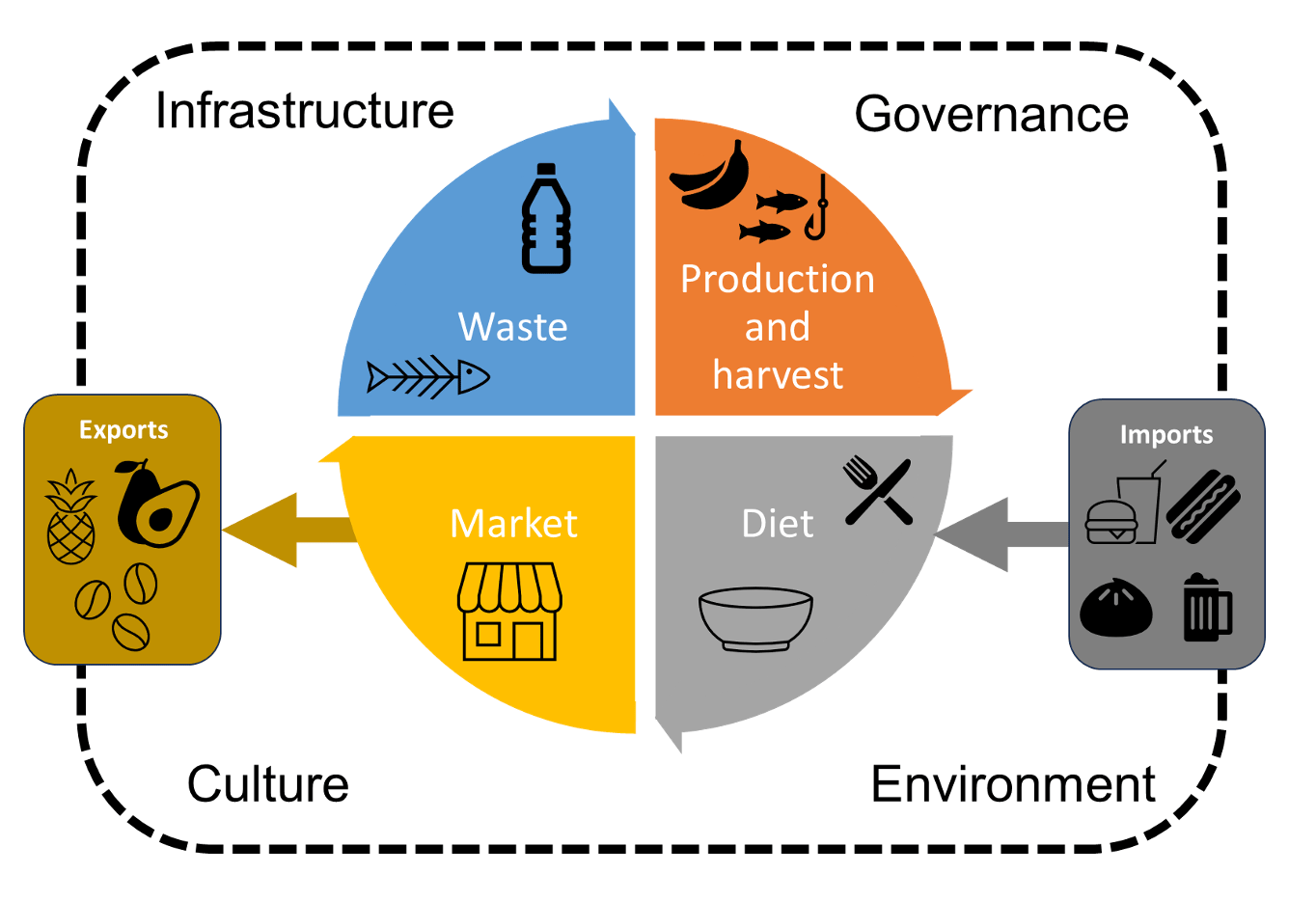
The Food System Pathways planning process followed six steps. Within each step, participatory tools enabled participants to learn from each other, and combine local knowledge with scientific information (e.g. climate and population projections, dietary trends). The process takes 3-4 days.
Outputs and outcomes
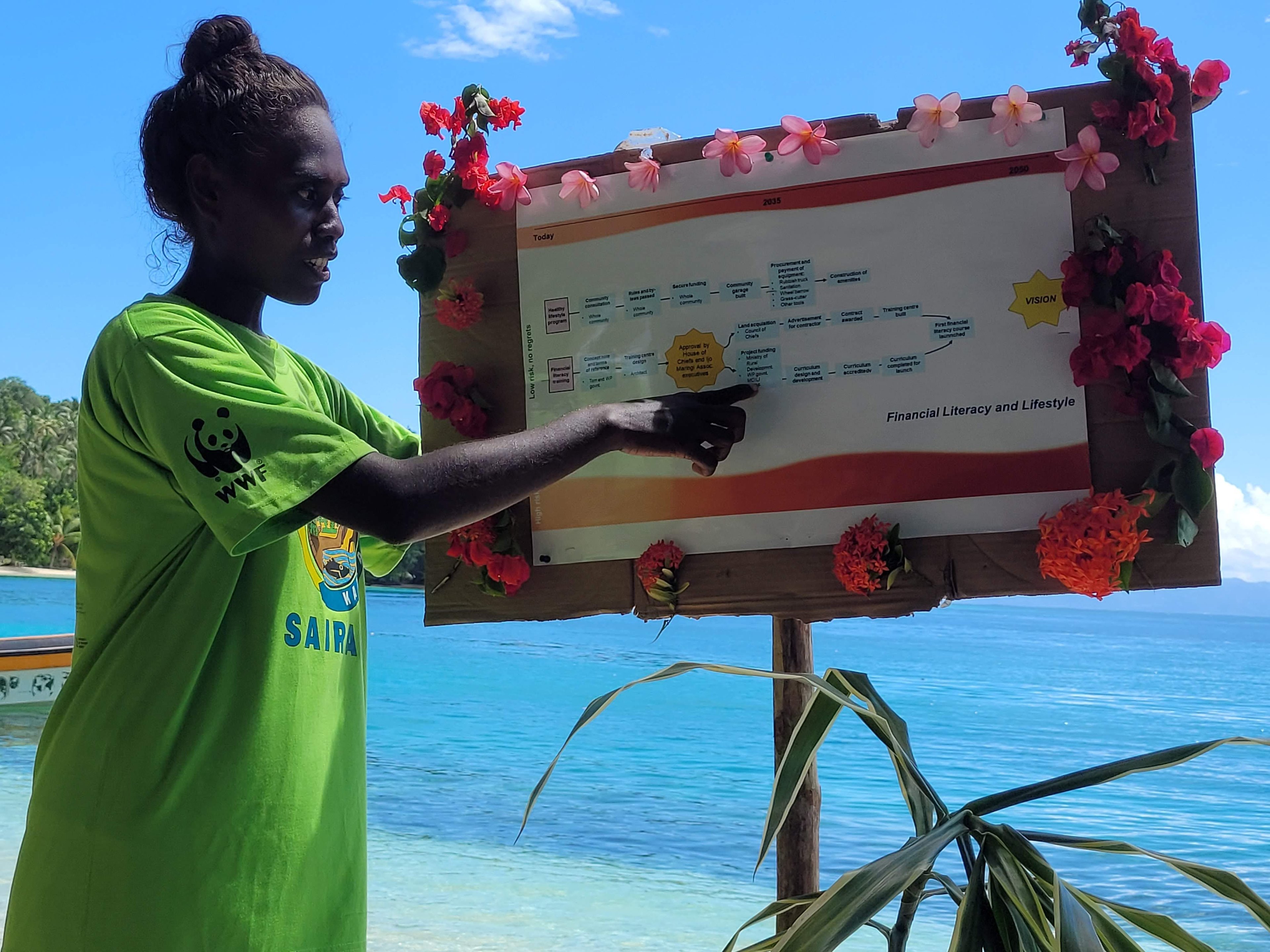
The process culminated in a suite of adaptation pathways that would reach the community’s food system vision, and minimised future risk by being climate-resilient and flexible. Many solutions were ‘no regrets’, such as building financial literacy, or training in composting for agriculture. Knowledge brokers then took responsibility for leading the implementation of each pathway.
Outputs from the project are available on this webpage, including a Food System Pathways Guidebook and other resources to support knowledge brokers to facilitate the process. The results for the pilot sites are collated into Food System Pathways Storybooks.
Research outputs
Solomon Islands – Ijo Maringi
Ijo Maringi pathways, visions and artwork
Kiribati – Abaiang
- Food Systems Pathways Guidebook English
- Food Systems Pathways Guidebook Kiribati
- Food Systems Storybook and results English
- Food Systems Storybook and results Kiribati
Abaiang Pathways, visions, and artwork
- Abaiang Food System Pathways – English
- Abaiang Food System Pathways – Kiribati
- Abaiang Food System Vision – English
- Abaiang Food System Vision – Kiribati
- Abaiang Food System Artwork
Project blogs
Research Team

Research Director, DVC (Research)

Primary Exploration, Mining and Metal Supply Scenario (PEMMSS)
The energy transition is driving demand for many mineral commodities, but where will this mineral supply come from?

Salmon farming disclosures
We examined climate-related disclosures for Tassal, Huon and Petuna and identified four key gaps between disclosures and existing climate science and other...
MekongELEVATE Research Partnership
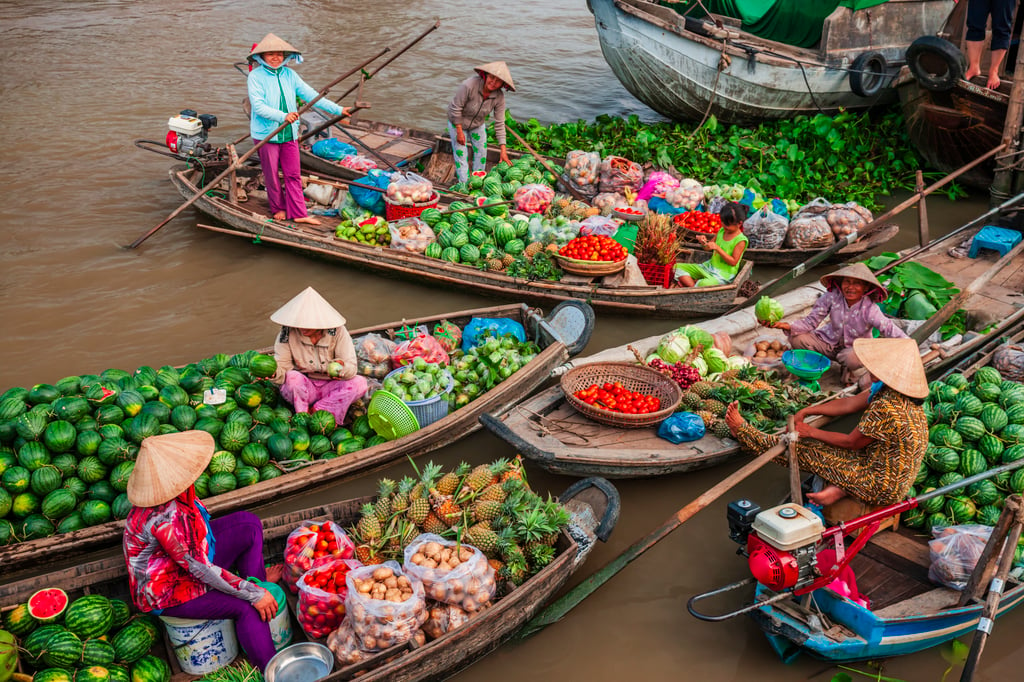
MekongElevate is a four-year, multi-country initiative under the Mekong–Australia Partnership that seeks to strengthen the climate resilience of marginalised...
Operationalising the WEFE Nexus in Agricultural Water Systems
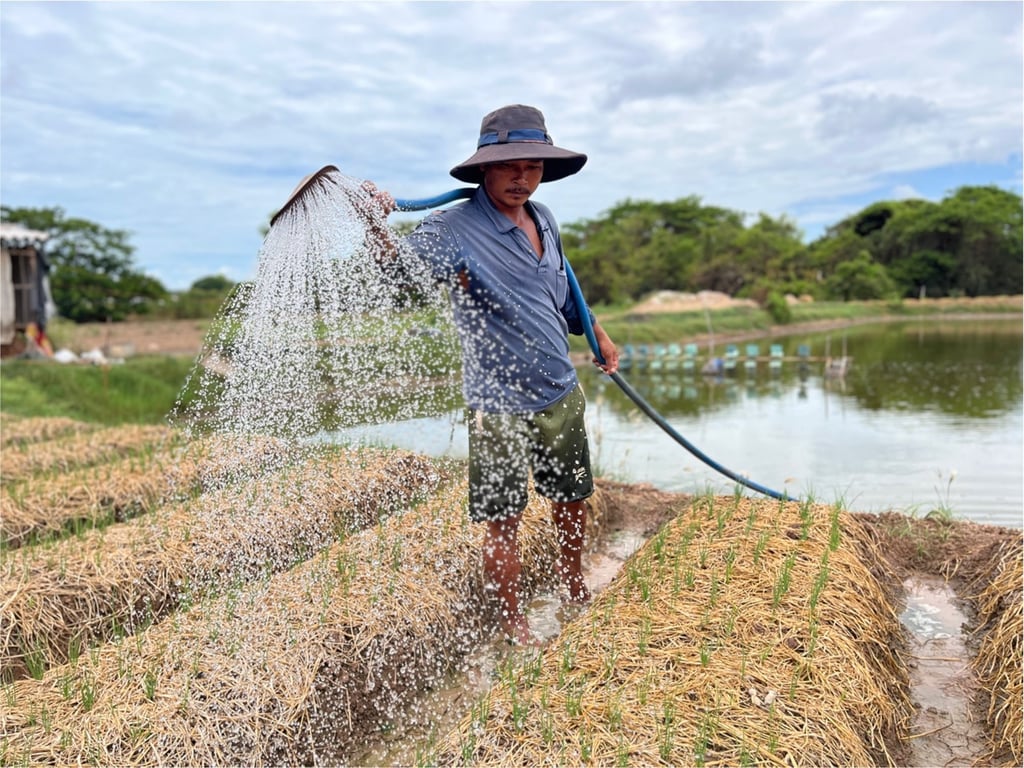
Addressing water scarcity and navigating Water-Energy-Food-Ecosystem (WEFE) trade-offs in agriculture.
Primary Exploration, Mining and Metal Supply Scenario (PEMMSS)
The energy transition is driving demand for many mineral commodities, but where will this mineral supply come from?
Salmon farming disclosures
We examined climate-related disclosures for Tassal, Huon and Petuna and identified four key gaps between disclosures and existing climate science and other...
MekongELEVATE Research Partnership
MekongElevate is a four-year, multi-country initiative under the Mekong–Australia Partnership that seeks to strengthen the climate resilience of marginalised...
Operationalising the WEFE Nexus in Agricultural Water Systems
Addressing water scarcity and navigating Water-Energy-Food-Ecosystem (WEFE) trade-offs in agriculture.