


At a research facility in the outskirts of Sydney, UTS students are studying what happens to the human body after death – and applying that knowledge to some of forensic science’s most complex challenges.
From locating missing persons, determining time since death and identifying victims, to improving disaster victim recovery, research at the Australian Facility for Taphonomic Experimental Research (AFTER) is helping build a clearer understanding of decomposition in real-world conditions.
AFTER is a taphonomic research facility, sometimes referred to as a body farm, and the only place in the Southern Hemisphere where researchers can study how whole human bodies decompose. Set in natural Australian bushland, it allows research to take place under environmental conditions similar to those encountered in real forensic casework.
“AFTER is critical to forensic research in Australia,” says Associate Professor Maiken Ueland, director of AFTER.
Research at the facility focuses on addressing some of the most complex challenges in forensic science and helping researchers develop new methods and technologies for real-world investigations.
Learning through research
Research at AFTER involves PhD students working across a range of forensic science projects.
“PhD students are the lifeblood of AFTER as they conduct a significant amount of the research happening at the facility,” says Ueland.
One of those students is Bridget Thurn, whose journey into forensic research began during her undergraduate studies at UTS.
“When I saw an Honours project working at AFTER with Associate Professor Maiken Ueland, I knew that was where I wanted to be,” she says.
“It was a no-brainer to continue to a PhD, and I still love the field.”
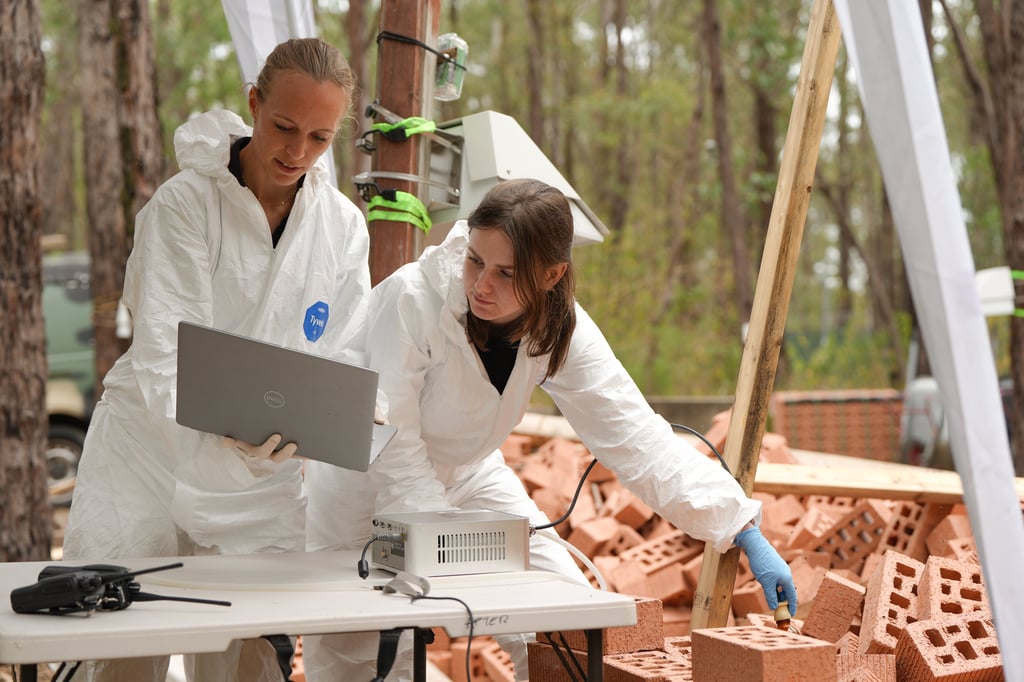
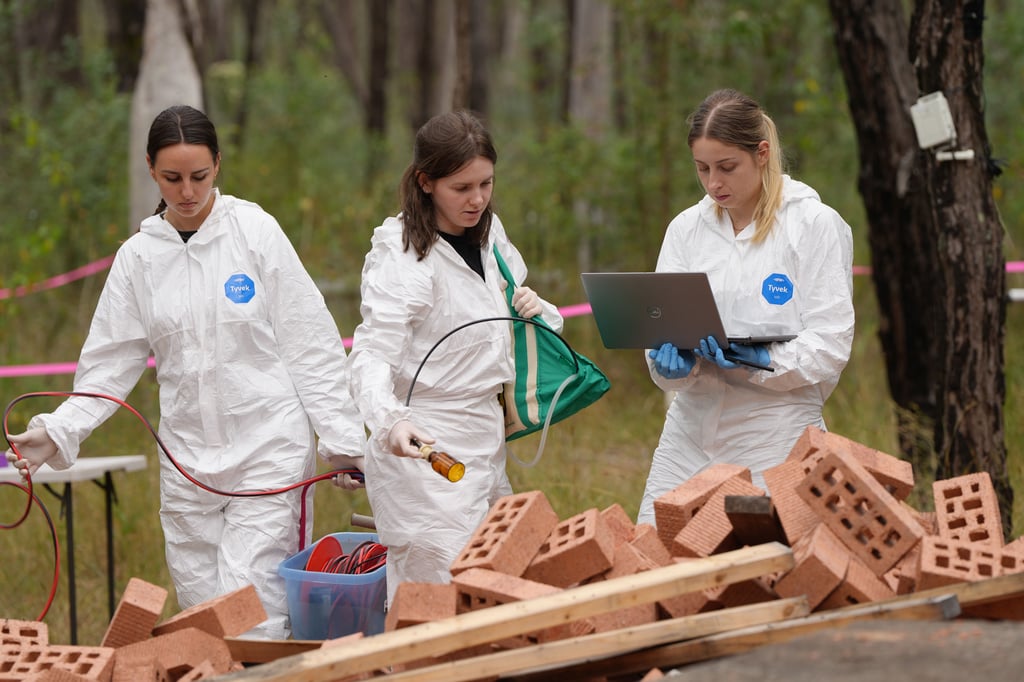
Now a PhD candidate, Bridget focuses on the odour released by human remains in mass disaster scenarios and how it can be used to locate victims trapped beneath rubble.
Each year, AFTER stages a large-scale disaster simulation, recreating the conditions of a mass disaster as closely as possible. Bridget collects odour samples during these trials and analyses them in the laboratory.
“The aim of this work is to improve methods of locating deceased and living victims in disaster situations, to ultimately decrease the mortality rate of these traumatic events,” she says.
AFTER’s natural bushland setting allows researchers to study decomposition under Australian environmental conditions.
“This helps us understand not just how human remains decompose, but how the Australian landscape influences that process,” says Bridget.
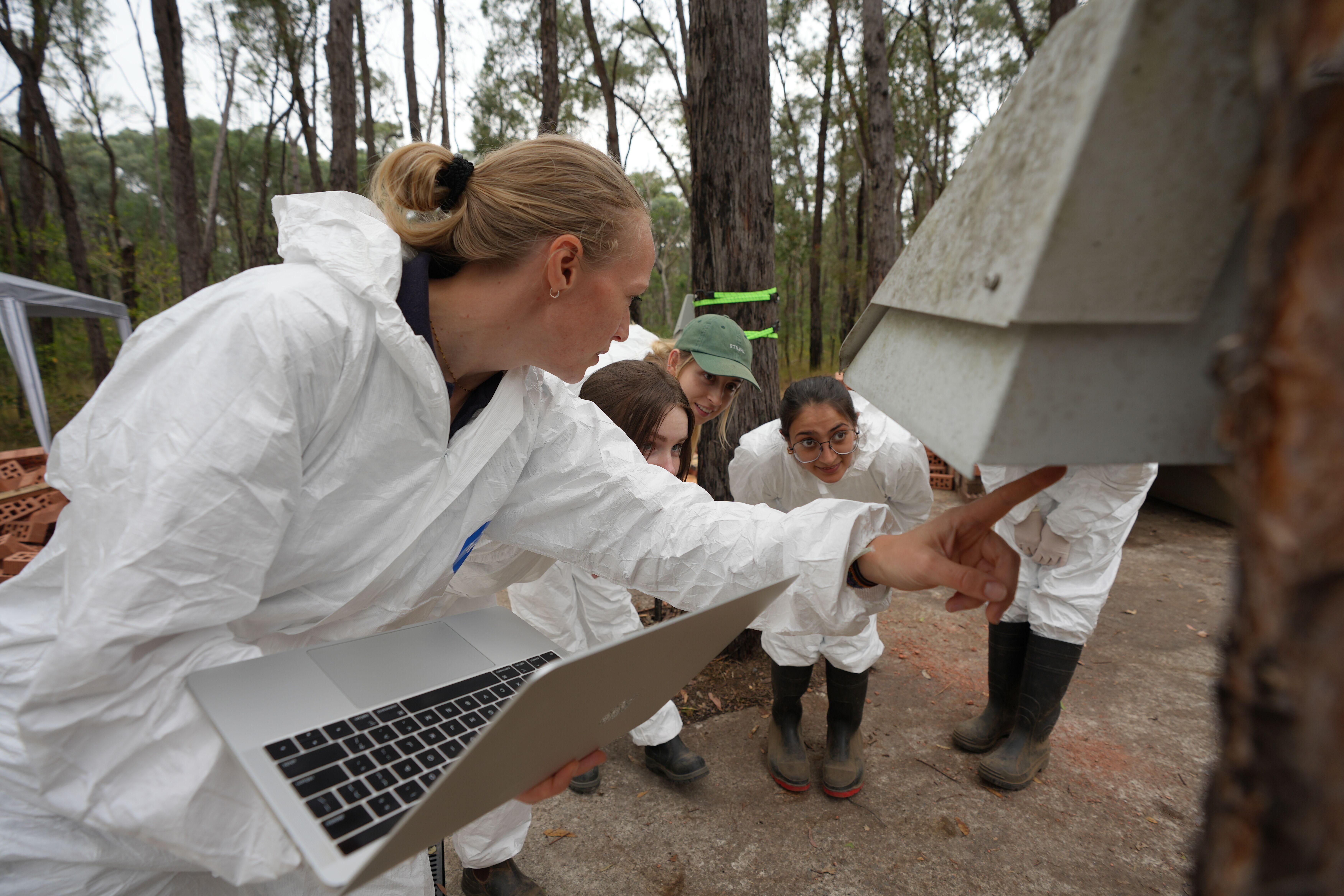
From the morgue to the field
One of the aspects Bridget values most about her PhD is the range of environments she works in.
Her research takes her between the morgue, the AFTER facility and the laboratory, depending on the stage of a project.
“My work is very dependent on when we receive a donor,” she says.
“When we have a new donor it's all systems go, and I'll either spend two days in the morgue or a week at AFTER collecting samples.”
At other times, she is running samples, processing data or writing up results.
“I love the variation that my PhD offers, and it’s a privilege to undertake fieldwork in such unique locations,” she says.
Working directly with donated human remains gives students practical experience that would be difficult to replicate elsewhere.
“This can really help people working in forensics manage the psychosocial aspects of working with human remains, particularly those who may attend crime scenes and be exposed to human victims throughout their careers,” says Ueland.
Students also develop skills beyond technical knowledge.
“One of the main things that students learn is how to adapt to changing conditions,” she says.
“Doing fieldwork and working with human remains requires you to be flexible, adaptable and able to think quickly and solve problems as they arise.”
Facilities like AFTER provide realistic conditions for research and training for future and existing forensic scientists, law enforcement and other partners.
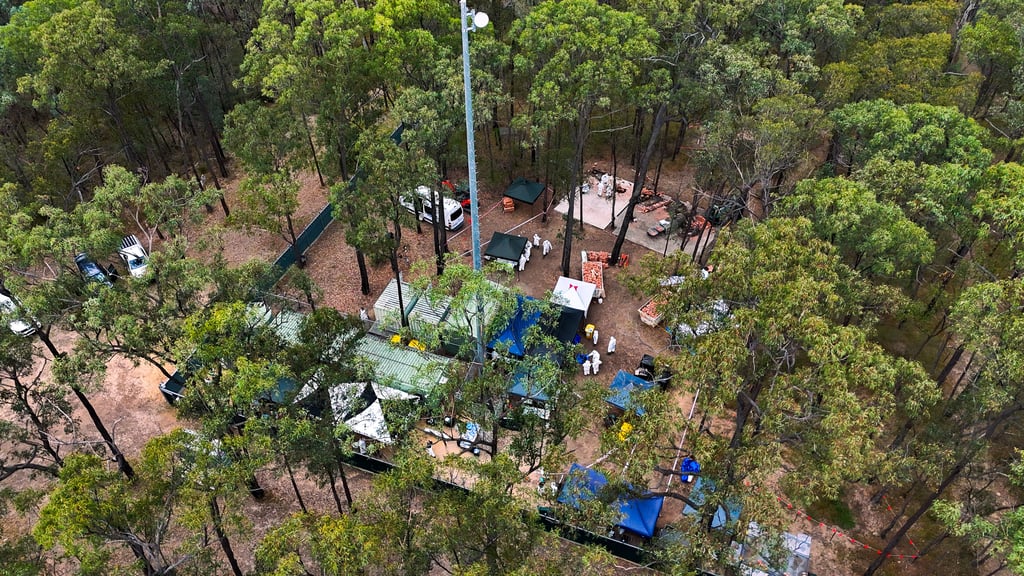
AFTER is a taphonomic research facility where researchers can study how whole human bodies decompose. Set in natural Australian bushland, it allows research to take place under environmental conditions similar to those encountered in forensic casework.
Research with real-world impact
Many projects at AFTER are developed with industry partners, bringing student research closer to real forensic and emergency response work.
“Students at AFTER often have projects with direct links to law enforcement, first responders and forensic services. The outcomes of their projects will then have industry input to ensure they are highly relevant,” says Ueland.
Students also gain insight into how forensic and investigative training is delivered in practice.
“A lot of research projects will have training components where industry partners attend site,” says Ueland.
“This allows the students to see how forensic and investigative training is done and to interact with potential future employers.”
For Bridget, that connection came into focus after presenting her Honours research.
“We had a law enforcement organisation on site and after speaking about my Honours project on how decomposition is affected by chemical lime, an officer informed me that she had used the published paper as supporting evidence in court,” she says.
It was a moment that took the research out of the lab and showed me how the work I was doing at AFTER was contributing in ways outside of an academic environment.
Looking ahead
Bridget credits Associate Professor Ueland with shaping her development as a researcher.
“Working with Maiken has been very rewarding, as she's constantly pushing you to question your limitations,” she says.
“She has a poster in her office that says ‘do it scared’, which is a mantra that's carried me through my candidature.”
“Maiken also instils a joy of learning in her students, which reminds me that at the heart of research is curiosity.”
Ueland sees AFTER continuing to expand its role in both research and training.
“I see AFTER as a critical part of growing and improving forensic science,” she says.
“A major benefit of AFTER is the ability to train the current and future workforce in realistic conditions.”
The facility also hopes to expand access through undergraduate practical sessions and educational visits.
For Bridget, there is still much to discover.
“We've only begun to scratch the surface of what there is to learn,” she says.
“I’m keen to keep going and learning as much as I can.”
Featured researcher
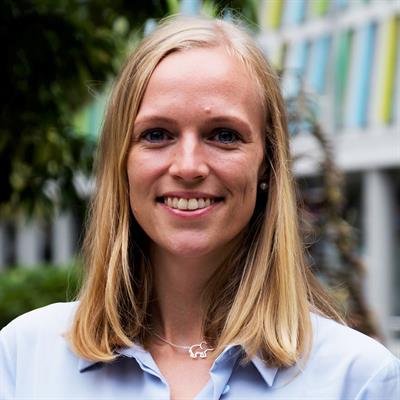
AFTER Director, Faculty of Science
Featured student

Bridget Thurn
PhD Candidate
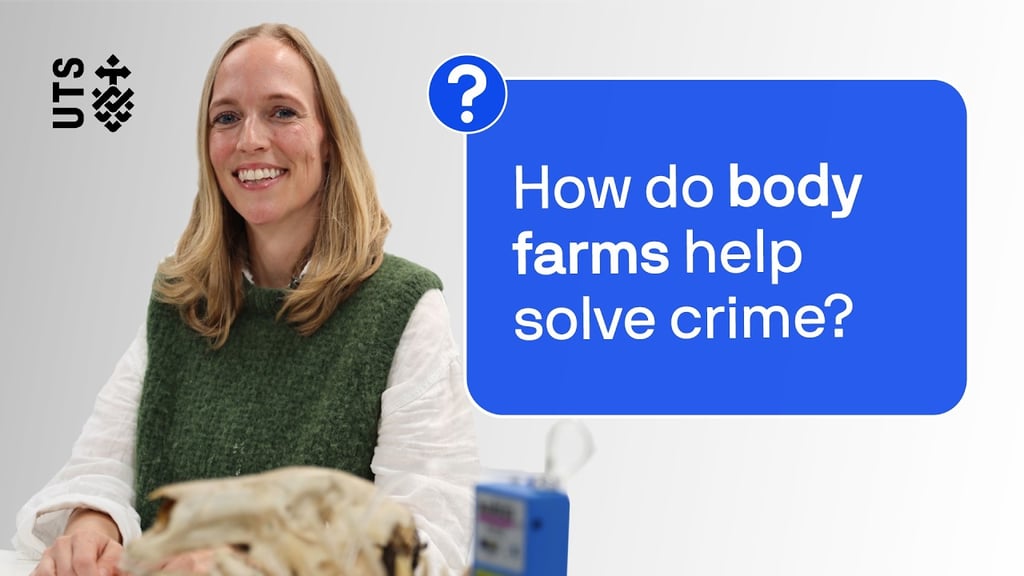

Webpage
Five tips to land a job before you graduate
What if your career could start before you finish your degree? UTS graduate Akshaya Parthasarathy shares the five tips that helped her turn university...
Webpage
Here's why supply chain analysts have never been more critical
Associate Professor Sanjoy Paul tells us what’s changed in global supply chains – and why analysts now play a critical role.
Webpage
Climate solutions need diverse skills. Here’s what matters most.
Solving climate challenges needs more than technical expertise. Sustainability researcher Alex Baumber shares the 6 core skills you need to shape climate work.
Webpage
Making the leap into data engineering
Akshaya Parthasarathy’s journey to a thriving career as a data engineer in Sydney shows how bold decisions, practical education and staying true to your...
Webpage
Five tips to land a job before you graduate
What if your career could start before you finish your degree? UTS graduate Akshaya Parthasarathy shares the five tips that helped her turn university...
Webpage
Here's why supply chain analysts have never been more critical
Associate Professor Sanjoy Paul tells us what’s changed in global supply chains – and why analysts now play a critical role.
Webpage
Climate solutions need diverse skills. Here’s what matters most.
Solving climate challenges needs more than technical expertise. Sustainability researcher Alex Baumber shares the 6 core skills you need to shape climate work.
Webpage
Making the leap into data engineering
Akshaya Parthasarathy’s journey to a thriving career as a data engineer in Sydney shows how bold decisions, practical education and staying true to your...