


A deep curiosity about artificial intelligence and robotics, paired with entrepreneurial passion and drive, has taken Dr Katia Bourahmoune places she never expected.
Dr Katia Bourahmoune is slicing her way through the complementary worlds of academia and entrepreneurship.
She’s the co-founder and AI lead at Lifeform AI, a technology start-up pioneering the use of artificial intelligence (AI) for physical skill learning and human health. She also recently completed a PhD and was a lecturer at the UTS Robotics Institute.
“I always wanted to be a scientist. But I fell in love with engineering along the way and that became part of my journey. I want to understand the world and how it works, but also how to make it better,” Katia explained.
It’s a journey that has taken her across the fields of neuroscience, data science, AI and robotics. On it, she has travelled to Japan where she studied and founded Lifeform AI.
She then came to Australia where she has pushed herself to new levels as she completed a PhD at UTS while building entrepreneurship into a defining part of the journey.
Striking PhD research
A robot arm holds a sword. A person stands opposite, holding their own sword equipped with sensors. The person’s movements and skill are captured as they strike; the robot blocks and counter-strikes, the person counters, and so it goes. A practice duel between human and machine has commenced.
It may look simple enough, almost everyday in a world where robots dance, cook and run marathons. But underlying it is a series of very deep research concepts that Katia explored in her PhD and built into the sword-fighting robot.
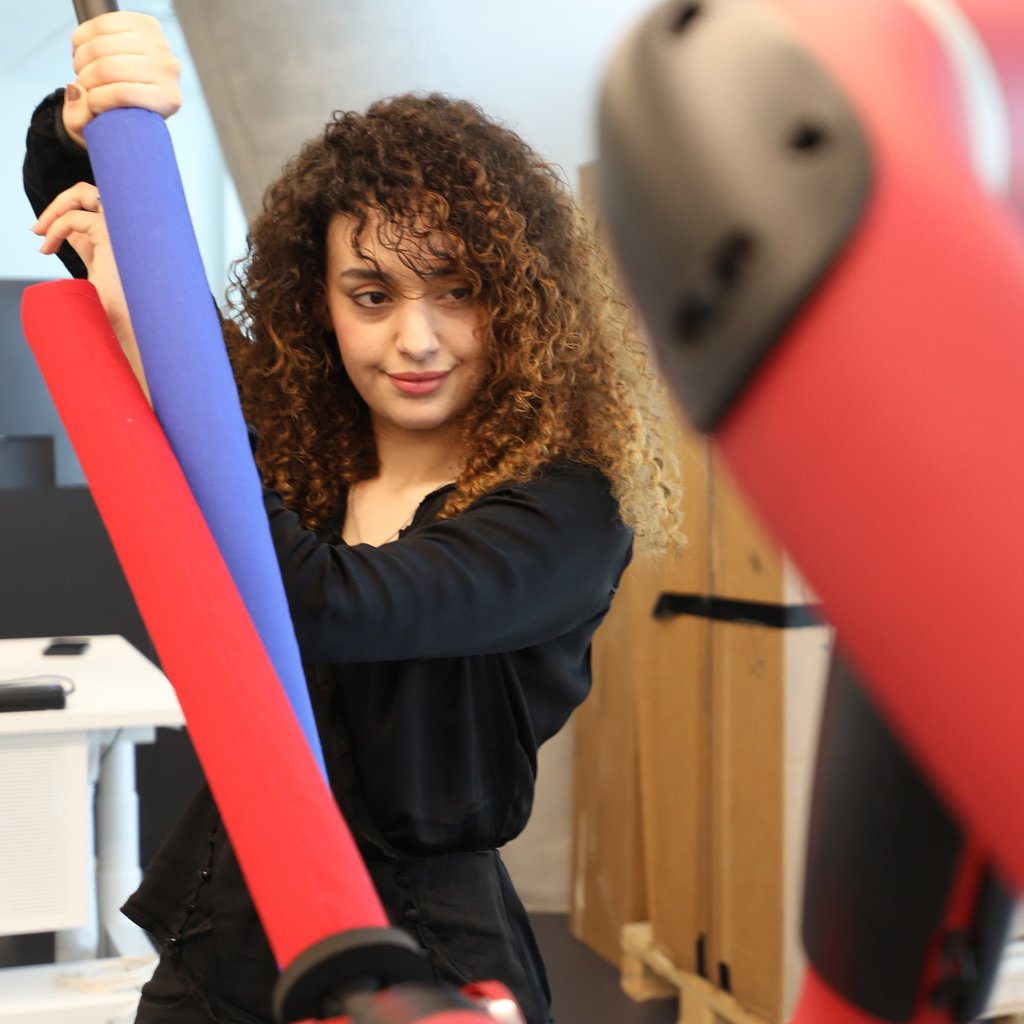
“There’s a place for artificial intelligence and robotics to immortalise many traditional skills and transfer that knowledge to the next generation.”
Dr Katia Bourahmoune
Doctor of Philosophy
“My PhD was on human-robot skills transfer. I studied how we transfer physical skills from people to machines and, more importantly, how people can learn them from machines,” she said.
“I’ve practiced martial arts since I was young. Sworsdmanship came to my mind as examples of the most complex physical skills, such as kendo (the Japanese art of sword-fighting) or jianfa (Chinese sword-fighting). I thought it would be good to explore how to capture and understand these skills using emerging technologies.”
“As the Japanese population ages, traditional martial arts practice is disappearing and there are fewer people to pass it on.”
Working with Associate Professor Marc Carmichael at the UTS Robotics Institute, Katia had to work out how to capture data around physical movements, develop machine learning that recognises the physical skills being performed, and then transfer all that into a robot using AI.
As well as the sword-fighting robot, Katia also created a series of ‘serious’ games to help people train their skills in virtual worlds tied closely to real-world practice.
Her cutting-edge research was recognised with the audience choice award at SIGGRAPH Asia, the leading conference on computer graphics and interactive techniques.
Impactful start-up
“Entrepreneurship has been part of my story for a very long time. I always knew I wanted to carve my own path and have had the good fortune to meet collaborators who shared the same spirit,” Katia said.
She co-founded Lifeform AI with robotics engineer and academic Dr. Karlos Ishac, and the company has gone on to develop AI solutions and smart interfaces that capture human movement and behaviour.
Following their founding in Japan, they raised capital and collaborated with large multinational companies such as Fujitsu and Mitsui Fudosan. When they moved to Australia, they sparked interest from Google who they continue to partner with on the next phase of their technology.
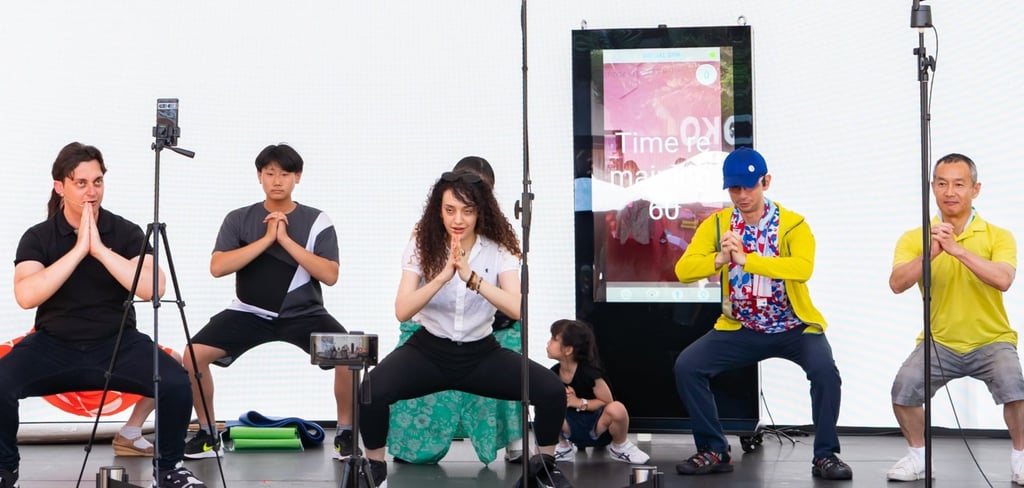
“The start-up has taken me to remarkable places – from Silicon Valley to major Japanese stadiums such as the Tokyo Dome, to regional towns across the beautiful Japanese and Australian countryside,” Katia said.
“We’ve had the privilege to represent Australia at World Expo 2025 where we showcased our AI innovations for sports to more than 10,000 international attendees at the Australian Pavillion in Osaka, Japan.
“The audience got to experience what it’s like to learn a sport and receive instant feedback from an expert-trained AI.”
Their philosophy of impact runs deep. Lifeform AI is the official technology partner of Blind Sports Australia, working with the Australian blind football team to compete at the Paralympics in Los Angeles in 2028 and Brisbane in 2032.
“In a big country like Australia, it’s hard logistically to organise training when some people are in Sydney and others in Melbourne. We found a place for technology to completely change the way teams train and prepare,” Katia said.
“Blind sports teams are under-serviced and sometimes don't have full access to training facilities. AI can help fill that gap.”
A double-edged sword
For Katia, her PhD research and start-up success are complementary like the two blades of a Japanese ken or Chinese jian, or double-edged sword.
She highlights the importance of both sides of her path – in creating new ideas and then translating them into real-world impact.
“In rapidly evolving fields, research is the scientific validation arm that helps me explore the technology at a very deep level. Being hands-on with the research gives me an edge," Katia said.
Research accelerates my entrepreneurship and entrepreneurship opens doors for my research. Together, they take each other to the next level.
“During a PhD, you will often be told to specialise, to choose one path and follow it deeply. That is a good path, but it is not the only one. Some questions ask us to cross boundaries, learn new disciplines and bring different forms of knowledge together. If that is where your curiosity leads, follow it,” she said.
“Entrepreneurship has taught me it’s possible if you set your mind to it. It’s a difficult path. The risks are high, that's true. But the rewards when they come are extraordinary.”
“Follow where the journey takes you. You may not know why things are happening in the moment. But if you're genuinely passionate about something and have the chance to do it, see it through.”
Explore

Designing safe places people want to be in
New PhD research into public spaces is helping Codee Ludbey make sure security professionals, urban designers and communities are on the same page.

Shooting for the moon
For Dr Clyde Webster, Earth is the perfect place to test people-first robotics that will prepare humankind for the final frontier: space.
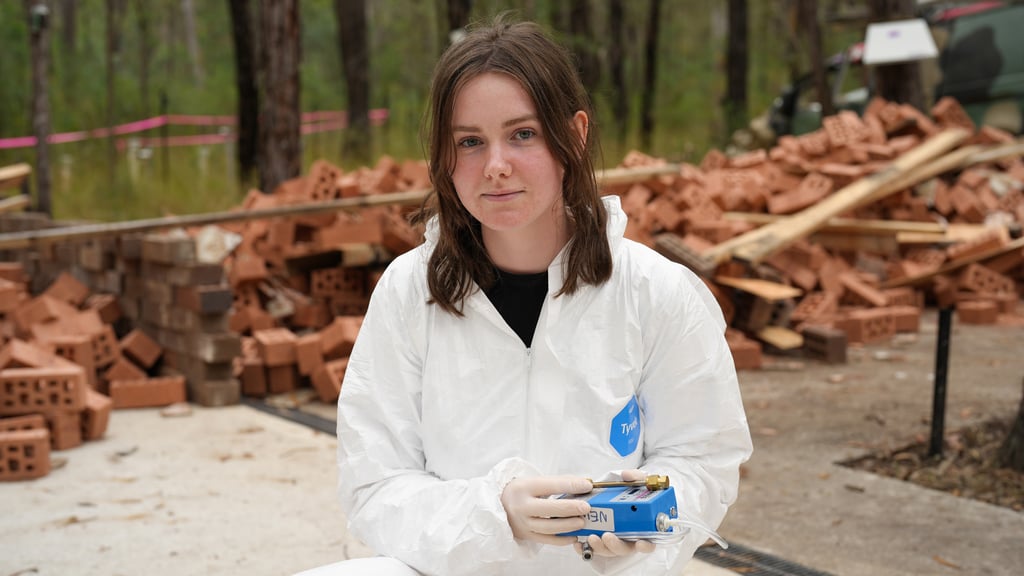
Life finds a way
Forensic scientist and PhD student Bridget Thurn is untangling the mysteries of life, death and what it means to be human.
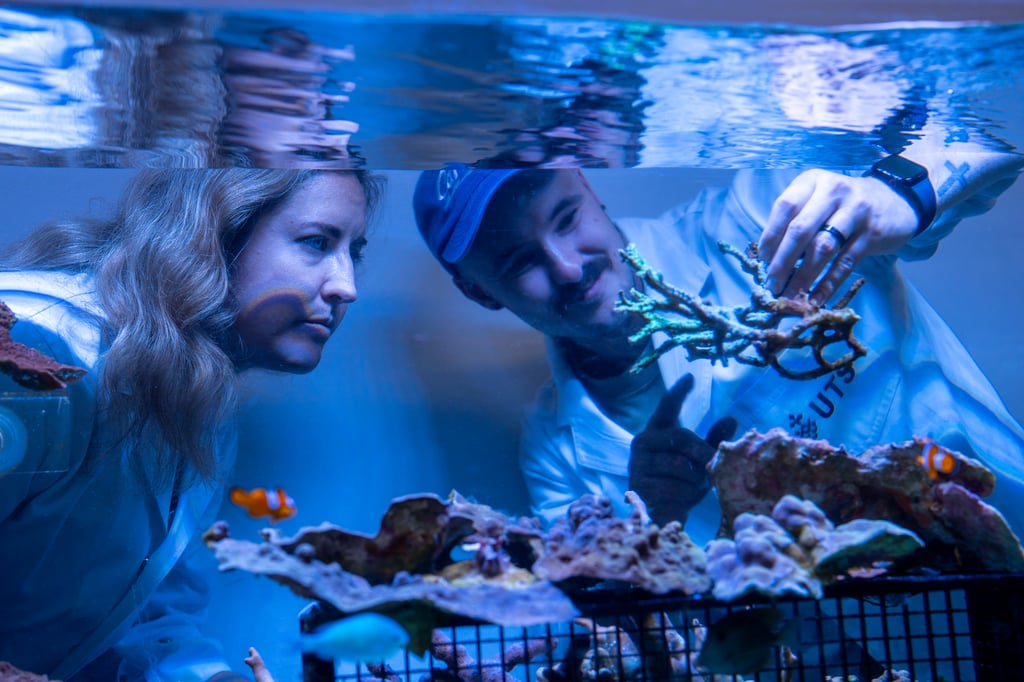
How research students are helping to drive reef recovery
The Great Barrier Reef is under threat, but UTS PhD students are playing a key role in its recovery by working with scientists, reef operators, Traditional...
Designing safe places people want to be in
New PhD research into public spaces is helping Codee Ludbey make sure security professionals, urban designers and communities are on the same page.
Shooting for the moon
For Dr Clyde Webster, Earth is the perfect place to test people-first robotics that will prepare humankind for the final frontier: space.
Life finds a way
Forensic scientist and PhD student Bridget Thurn is untangling the mysteries of life, death and what it means to be human.
How research students are helping to drive reef recovery
The Great Barrier Reef is under threat, but UTS PhD students are playing a key role in its recovery by working with scientists, reef operators, Traditional...