


New PhD research into public spaces is helping Codee Ludbey make sure security professionals, urban designers and communities are on the same page.
Have you ever found yourself in a public place that seemed a little… off? Maybe a run of shuttered shopfronts at night made you feel uneasy, or crossing through a dimly lit carpark had you gripping your keys that little bit tighter.
According to Codee Ludbey, those anxious feelings are often a sign that security experts aren’t getting something right.
For more than a decade, the young professional has been carving out a niche as a security consultant, where he’s responsible for conducting risk assessments for major public places and public transport projects. As he puts it, Codee makes public spaces safer without making them worse.
“I kept coming across this problem where security was being led down a path of doing too much or making a place feel very fortified when it probably didn’t need to be,” Codee said.

“I got into the security game because I like the idea of being a small contributor to letting everyone else live their lives without having to feel afraid of going outside.”
During his time in the industry, Codee has become intimately familiar with the tensions that exist in his line of work. Public spaces are increasingly expected to be both safe and welcoming, but that can be a difficult balance to strike. Security measures designed to protect against crime and terrorism tend to be at odds with what makes community spaces feel inviting.
“A lot of security people come from ex-police or ex-military or ex-government backgrounds, and coming from that world, it’s very much about managing the threat or the ‘bad guys’ and less about the consequences for the people actually using the public place. Well, now we’ve gotten rid of the bad guys, but we’ve also gotten rid of everyone else because it’s no longer a nice place to be.”
These competing priorities mean security professionals are often butting heads with architects and urban designers. While the latter focuses on creating open, vibrant places for people to gather, the former is tasked with mitigating risks to public safety.
“Both sides want the same outcome, but they don’t share the language to work that challenge out in the design process,” Codee said. “I got into the security game because I like the idea of being a small contributor to letting everyone else live their lives without having to feel afraid of going outside, but I felt we were getting that balance wrong professionally.”
From industry to research
The path to research came into focus when Codee realised someone needed to step up and make the changes he wanted to see in his industry.
“I think we need to try and learn new things to find new ways of doing things,” he said. “For me it’s really important to be across the cutting edge of research to understand some of these more complex social problems. Things like terrorism and crime – we’re never going to solve them, but having better ways of understanding how they occur and why can really change the way you go about your work.”
Not one to do things by halves, in the same year he co-founded Core42, the security advisory firm of which he’s currently co-managing director, Codee enrolled in a PhD at UTS. He was drawn to the university’s ties to industry and strong standing in the urban design space, and the degree offered him a way to investigate the problem while continuing to work on major infrastructure projects.
Under the guidance of Dr Pernille Christensen and Dr Gabriela Quintana Vigiola from the School of Built Environment, Codee began looking at how to better integrate security thinking into urban design and public place planning.
The missing piece
One of the most profound discoveries of Codee’s research has been just how crucial it is to bring the community into the process from the very beginning.
“From a safety and security perspective, we like to throw things like cameras at the problem, we like to throw things like more lighting at the problem. But no one’s asked whether that’s actually causing people to feel unsafe because we’ve done too much for that context,” he said.
“There is a civic component to the conversation that often isn’t really considered, so the idea was to see if there’s a way forward by bringing in that voice that’s often not involved in the professional design process.”
The approach isn’t without its challenges. Community members can be quite opinionated (“as they should be,” Codee said), and they don’t necessarily have an appreciation for constraints like budgets, or even what’s practical from an engineering standpoint. Some people will gladly do a survey, whereas others are better served by an in-person town hall session with council.
“I think a lot of the nervousness traditionally around trying to work in that space is how you get the right feedback in a form that makes sense and works for both sides,” Codee explained. “It’s something we’re starting to try and understand and bring into our processes. You don’t want to over-promise and then not be able to deliver.”
Putting feedback from the community in front of the experts also revealed something unexpected. Despite often finding themselves “at loggerheads”, the security and design teams were able to come together and find a middle ground.
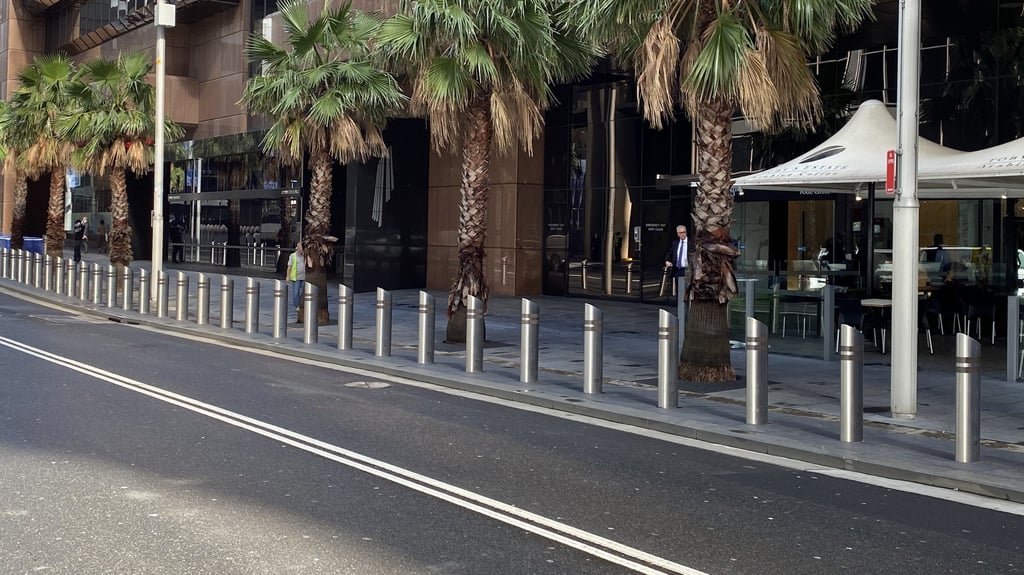
“Both groups really seemed to have that professional empathy for the other side,” he said. “I was quite surprised at how willing security people were to ‘scale it back’ and how much designers were willing to be a bit more forgiving over big ugly bollards. But it really comes down to the fact that we’re just not talking the same language professionally.”
Putting it into practice
Perhaps most excitingly, Codee’s research is already making an impact in the real world. As he closes in on the final stages of his PhD and prepares to submit his thesis for external examination (“I can see the light at the end; I’m almost there”), his team is actively using his research insights across several projects, including a major railway upgrade in Perth.
“As part of our security analysis work, we’ve gone out and done a community survey and collected that data and plugged it into the professional design process,” Codee said.
“The feedback that we got from the community was really interesting because the transport agency had a particular view of things like cameras, and the local community said, ‘Well, we know they’re important, but we don’t want it to be as obvious – can we tweak the way it looks?’ So we can now start working with that in the design process.”
For Codee, the biggest takeaway from his time doing a PhD has been the opportunity to gain new perspectives. Through UTS’s cross-faculty research training programs, he’s been able to engage with academics and students he would otherwise never have met.
“Collaboration is the way forward and UTS really supports that,” he said. “Drop the blinkers from your discipline and talk to people in completely different fields. You might pick up something you weren’t expecting.”
Explore
What it’s really like to be a sports scientist
Associate Professor Blake McLean shares what sports scientists do, where they work and the skills it takes to help athletes perform at their best.
How to study like an elite athlete
Associate Professor Blake McLean, sports scientist and Director of the High Performance Sport program at UTS, shares five lessons students can learn from elite...
What is it like to be a landscape architecture student at UTS?
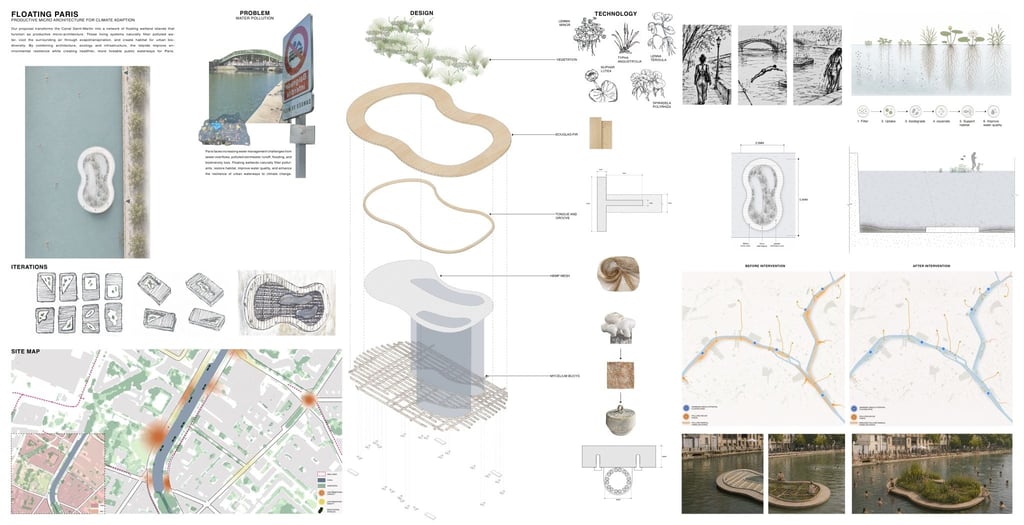
What is it really like to study Landscape Architecture at UTS? Third-year student Noah Orman shares his experience of studio learning, Global Studio and...
Thinking about Civil Engineering?
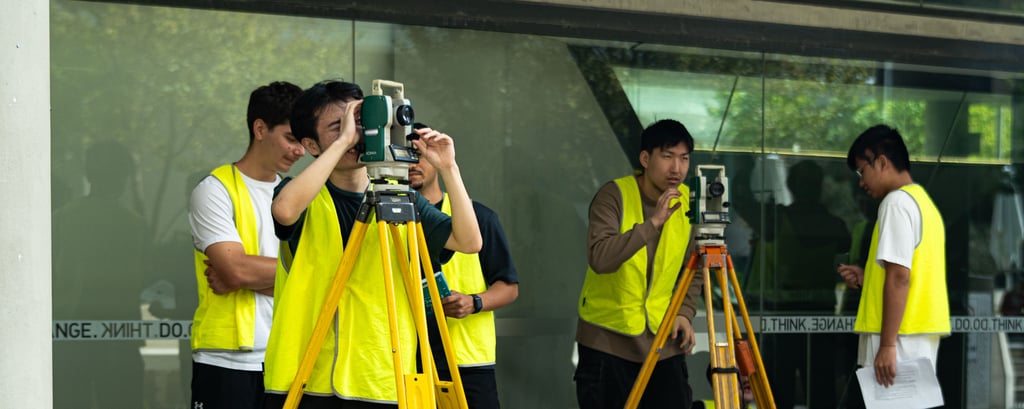
Thinking about studying Civil Engineering in Australia? Discover what Civil Engineers do, the career opportunities available and how studying Civil Engineering...
What it’s really like to be a sports scientist
Associate Professor Blake McLean shares what sports scientists do, where they work and the skills it takes to help athletes perform at their best.
How to study like an elite athlete
Associate Professor Blake McLean, sports scientist and Director of the High Performance Sport program at UTS, shares five lessons students can learn from elite...
What is it like to be a landscape architecture student at UTS?
What is it really like to study Landscape Architecture at UTS? Third-year student Noah Orman shares his experience of studio learning, Global Studio and...
Thinking about Civil Engineering?
Thinking about studying Civil Engineering in Australia? Discover what Civil Engineers do, the career opportunities available and how studying Civil Engineering...