


- Posted on 14 Oct 2025
- 5 minute read
How UTS Professor Nico Schulenkorf is using sport as a force for good
From kids kicking a soccer ball down at the local park to Steph Curry throwing a three-pointer in front of the crowd at Madison Square Gardens, sport brings people together at every level of society.
But if you ask Professor Nico Schulenkorf, Co-Director of the Centre for Sport, Business and Society (CSBS) at University of Technology Sydney (UTS), it can do more than just build momentary feelings of connection. Instead, he says, sport can be a catalyst for economic, social and health care gains.
“This is a side of sport that’s perhaps less understood or less utilised by the general public, and that’s using sport for the social good, especially for disadvantaged communities around the world,” says Nico, a Professor of Sport Management at the UTS Business School.
“Sport-for-development, as it’s called, has been designed to use sport as a strategic vehicle to help improve the lives of marginalised groups.”
Nico has been working in and around the sport-for-development (SFD) sector for more than 20 years, and now, he’s set to take his knowledge to the next level. Earlier this year, he was appointed to the Olympic Refuge Foundation’s Think Tank where he’s supporting global SFD programs for young people facing displacement.
It’s sport, but not as you know it
Sport research is often focused on the world of elite competition, where eye-watering salaries and multimillion-dollar broadcasting deals are the norm. But the widespread nature of sport and its accessibility to people of all ages, all backgrounds and all abilities means it arguably has a role to play in building a more equitable world.
In SFD, that means using sport as the vehicle through which organisations can deliver programs that enhance the lives of people and communities. These could include public health campaigns, educational initiatives, or social cohesion programs that help bring people in conflict together.
This is the focus of the Olympic Refuge Foundation, which uses sport to build capacity, confidence and opportunity among people who have been displaced. The Olympic Refuge Foundation’s Think Tank is responsible for building an evidence base to support these goals.
When we go back to the original purpose of the Olympics, it’s about bringing the world together through sport. The Olympic Refuge Foundation focuses on supporting refugees and displaced people everywhere, not just to prepare the select few that make the Olympic Refugee team.
To this end, The Think Tank is helmed by a group of 21 people representing research, sporting, NGO and lived experience backgrounds from across the globe. Their combined expertise guides the rollout of global SFD programs that offer real potential for change.
These include the Game Connect initiative in Uganda, which uses sport to improve the wellbeing of more than 10,000 young people impacted by displacement, and the SPiRiT program In Bangladesh, where young people displaced by climate-induced disasters are learning to overcome environmental challenges. These are just two of 12 Olympic Refuge Foundation projects that are changing young lives around the world.
Why sport management matters in SFD
As an expert in socially committed sport business and management, Nico is uniquely placed to contribute design, planning, implementation and evaluation expertise that will ensure the Foundation’s projects achieve their aims.
These are vital skills in the SFD sector, where sporting initiatives are often conducted in challenging circumstances. Building robust systems and structures around them gives them the best possible chance of succeeding, not just in the moment but long into the future.

“There are many SFD programs that set out with the best intentions, but they struggle to survive once the funding landscape changes or key partners leave. For programs to be successful, particularly in places that are disrupted by conflict, they need to be part of a much bigger system in order for their value and longevity to be maximised.”
Nico Schulenkorf
Program design and management that considers these risks and has contingencies in place to address them is key to the success of SFD programs. So too is understanding the nuances of the local environment (what works in Fiji is unlikely to work in Kenya, for example), building local capacity to support program sustainability, and seeking diversified partnerships and funding streams.
This is where Nico’s expertise really comes to the fore.
“SFD programs used to be delivered by international NGOs that would fly in, drop the program, run it and then fly out again, which meant the lasting sustainable impact wasn’t really there. True collaborations and input from local organisations and individuals, that’s essential for a program to work well and to thrive beyond the initial funding,” he says.
That collaboration isn’t just important on the field, but it’s also critical in the boardroom and in the partnerships space.
From the grassroots to the global, sport can unite communities
The Think Tank is an exciting opportunity for Nico to continue building on the SFD work he’s been conducting at UTS since the early 2000s, most recently within the CSBS. As one of Australia’s leading sport management research centres, the CSBS works in partnership with industry, community and government to grow the Australian sporting sector.
SFD is just one of many research areas within the centre, but the CSBS has a growing international profile as a leader in this humanitarian discipline . Among Nico’s vast program of work, he has collaborated with NGOs and government agencies around the world to deliver sports-for-peace programs that bridge gaps between communities in conflict.
In Sri Lanka, for example, his research with Tamil, Sinhalese and Muslim players found that strategically planned sporting programs can support ethnic reconciliation at the community level. In Israel, a study on the role of volunteers in the Football for Peace co-existence initiative highlighted the skills needed to become a community change agent. In turn, this assisted young leaders to help unite Jewish, Arab, Circassian and Druze groups through sport.
More recently, Nico’s interests have been focused on the Pacific Islands region and the ways in which women can be supported to participate in sport, both on the field and in the management space. For example, in Papua New Guinea, changes to professional practice and organisational policy have seen women increasingly engaged as coaches, administrators and officials across the country.
Collectively, these outcomes demonstrate the potential of sport as a conduit for real-world impact and positive societal gain. Sport itself might be the medium, not the message, but Nico never ceases to be inspired by its potential to bring hope to people in need.
“Are you ending the war with it? No. That’s not going to happen. That’s not the goal,” he says.
“It’s about trying to find a commonality, which is sport, and leveraging the excitement and passion around it for the greater good.”
Explore Nico's profile
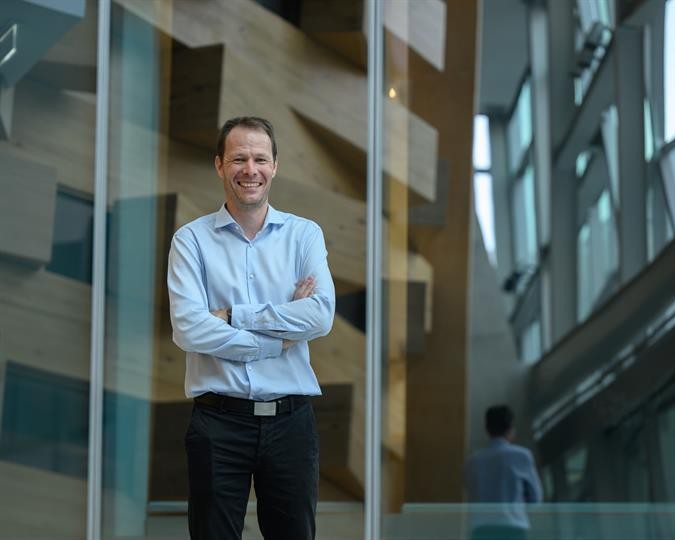
Professor, Business School
Explore the Centre for Sport, Business and Society (CSBS)

This UTS Accounting student is turning opportunity into achievement
For Liv Coxsedge, success came from saying yes to opportunities, backing herself and helping others do the same.

Learning to lead responsibly
For Alison Gibson, the UTS MBA transformed years of experience into the confidence to lead change and champion sustainability.

Taking the classroom into the community
What happens when business education steps beyond the classroom? Explore how UTS students are applying their skills in community settings - building meaningful...

Reinventing life and career with a supply chain course
A UTS MBA helped international student Shiva Sharma find confidence, connection and a career in supply chain management.
This UTS Accounting student is turning opportunity into achievement
For Liv Coxsedge, success came from saying yes to opportunities, backing herself and helping others do the same.
Learning to lead responsibly
For Alison Gibson, the UTS MBA transformed years of experience into the confidence to lead change and champion sustainability.
Taking the classroom into the community
What happens when business education steps beyond the classroom? Explore how UTS students are applying their skills in community settings - building meaningful...
Reinventing life and career with a supply chain course
A UTS MBA helped international student Shiva Sharma find confidence, connection and a career in supply chain management.