


Australia-China education and research ties at a crossroads
WHEN
3 June 2026
Wednesday
12.30pm - 1.30pm Australia/Sydney
WHERE
Online
COST
Free admission
An outcome of the 2025 China-Australia Annual Leaders’ Meeting was an agreement to 'continue or expand engagement' in people-to-people links, including in education and innovation.
Recent developments, however, point in a less positive direction. In the current financial year to date, visa applications from People’s Republic of China (PRC) nationals seeking to study at Australian universities are down by one-third. This signals potential financial strain for Australia's higher education sector ahead with top-ranking institutions, including the University of Melbourne, the University of Sydney and the University of New South Wales, deriving between one-quarter and one-third of their total revenue from Chinese students.
Research collaboration is also facing headwinds. In 2019, the Australian Research Council (ARC) funded 166 projects involving Chinese partners, accounting for 18 percent of all ARC-supported international collaborations. By 2025, this had fallen to 84 projects and 10 percent, despite continued growth in high-impact scientific output from researchers affiliated with PRC institutions.
PRC nationals have also been a major source of talent for Australian laboratories, but recent research by the Australia-China Relations Institute at the University of Technology Sydney (UTS:ACRI) has documented they now face extended processing times when applying for postgraduate and research-related visas, particularly in STEM fields.
How integrated are Australia’s higher education and research systems with the PRC? What alternative sources of revenue and talent for are available? How are research security frameworks experienced by Australian institutions and researchers?
UTS:ACRI hosted a webinar with Dr Angela Lehmann, Senior Director Global Engagement and Policy, Universities Australia, Mr John Ross, Asia Pacific Editor, Times Higher Education, and Professor Wanning Sun, UTS:ACRI Deputy Director, on a panel moderated by Professor James Laurenceson, UTS:ACRI Director, to discuss these questions and more.
About the speakers
Dr Angela Lehmann
Dr Angela Lehmann is Senior Director Global Engagement and Policy at Universities Australia. She is a leading voice in the Australia-China education and research relationship and has published widely on China-Australia’s education relationship. She speaks regularly at conferences and symposia about international education and China-Australia higher education ties. Dr Lehmann is the Chair of the Foundation for Australian Studies in China. She is also an Advisory Board member at UTS:ACRI.
Mr John Ross
Mr John Ross is Asia Pacific Editor with Times Higher Education since February 2018. He was previously higher education and science correspondent with The Australian newspaper. He has won the National Press Club’s Higher Education Journalist of the Year award three times, most recently in 2022, and has been shortlisted six times.
Professor Wanning Sun
Professor Wanning Sun is Deputy Director of the Australia-China Relations Institute at the University of Technology Sydney (UTS:ACRI) and a Professor of Media and Communication in the Faculty of Arts and Social Sciences at UTS. A fellow of Australian Academy of the Humanities since 2016, she was a member of the ARC College of Experts (2020-2023).
About the moderator
Professor James Laurenceson
Professor James Laurenceson is Director of the Australia-China Relations Institute at the University of Technology Sydney (UTS:ACRI). His research interests relate to the Chinese economy and the Australia-China economic and broader relationship.

Audio
News
Australia-China Weekly Brief: October 2026 issues
The Australia-China Weekly Brief by the Australia-China Relations Institute at the University of Technology Sydney (UTS:ACRI) tracks key developments in...
News
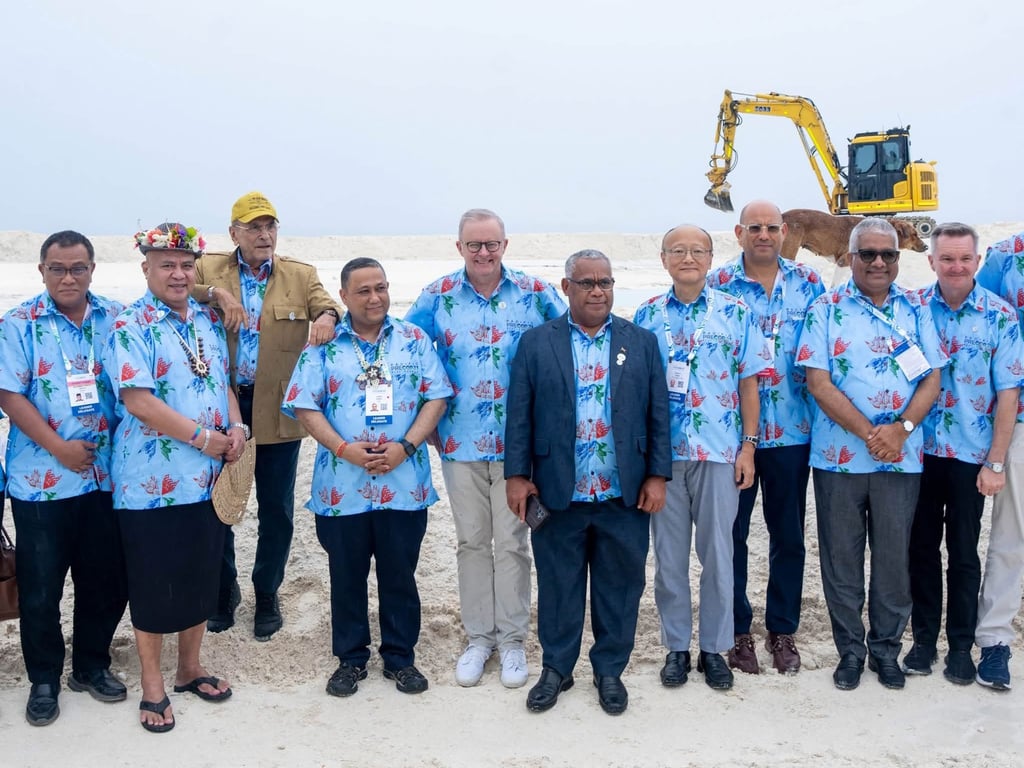
Whose security counts in the Pacific?
While climate-related spending gets criticised, billions forked out for security and strategic engagement gets framed as for the “national interest”.
News
Australia-China Weekly Brief: September 2026 issues
The Australia-China Weekly Brief by the Australia-China Relations Institute at the University of Technology Sydney (UTS:ACRI) tracks key developments in...

News
If we asked the Americans to leave, would they?
Canada is looking for ways to protect its independence from Washington. Australia has embedded itself so deeply in the US military system that it risks being...
News
Australia-China Weekly Brief: October 2026 issues
The Australia-China Weekly Brief by the Australia-China Relations Institute at the University of Technology Sydney (UTS:ACRI) tracks key developments in...
News
Whose security counts in the Pacific?
While climate-related spending gets criticised, billions forked out for security and strategic engagement gets framed as for the “national interest”.
News
Australia-China Weekly Brief: September 2026 issues
The Australia-China Weekly Brief by the Australia-China Relations Institute at the University of Technology Sydney (UTS:ACRI) tracks key developments in...
News
If we asked the Americans to leave, would they?
Canada is looking for ways to protect its independence from Washington. Australia has embedded itself so deeply in the US military system that it risks being...