


When Yasi began exploring data science, it wasn’t part of a long-term plan. It started with curiosity.
With a background in materials and metallurgical engineering, Yasi was already skilled in analytical thinking and solving complex technical problems. But programming and data science were new territory.
“I quickly realised how powerful data science could be. Especially with how it can be applied across almost any industry,” Yasi says.
That realisation led to a pivotal decision: enrolling in the UTS Master of Data Science and Innovation (MDSI) to expand both technical skills and career possibilities.
Why Study Data Science at UTS?
For Yasi, the appeal of the degree was clear: it offered a way to combine existing expertise with new, in-demand skills.
“I wanted to approach problems from a completely different perspective and expand the impact of my analytical thinking.”
This is a common motivation for postgraduate students considering a career shift or upskilling. At UTS, the Master of Data Science and Innovation is designed not just to teach technical skills, but to develop thinking and capability for our increasingly complex and interconnected world.
One of the biggest transformations during the degree wasn’t just technical, it was conceptual.
“The program changed how I think about data. Instead of seeing it as information, I see it as a tool for understanding systems and supporting decision-making.”
Yasi learned to approach problems holistically, considering how data flows through systems, how insights are used, and what outcomes matter most.
This systems-thinking approach is critical in today’s data-driven industries, where solving complex problems requires more than just technical ability.
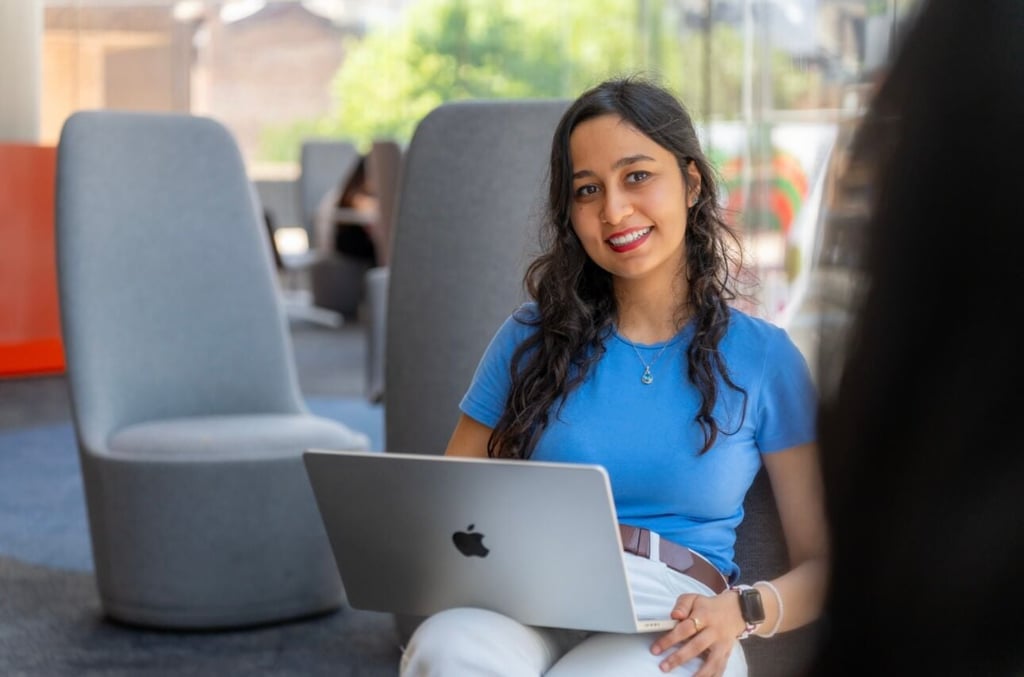
“The Master of Data Science and Innovation fundamentally changed how I approach problems. I now think in terms of systems: how data is generated, structured, and used. it also taught me that communication is just as important as technical skills. You need to help people understand what the data means."
Yasi Mo
Master of Data Science and Innovation
A defining feature of the UTS experience is its focus on applied, project-based learning, something that stood out to Yasi when considering her study options.
“One of the most memorable projects was developing a deep learning model for skin cancer detection,” Yasi explains. “Our team developed a machine learning approach that combined image data with structured clinical data to help classify skin lesions. The project highlighted the real potential of machine learning in healthcare and demonstrated how data science can contribute to meaningful real-world applications.”
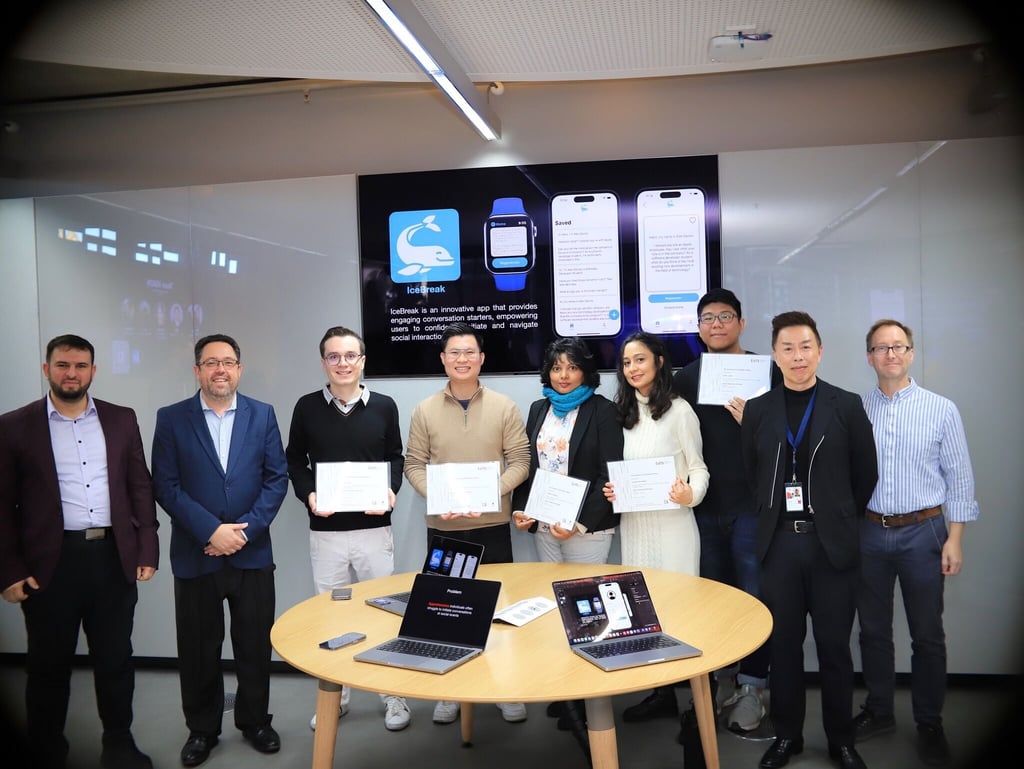
The project, which combined image data with clinical data, went on to win first prize at the UTS iLab Showcase.
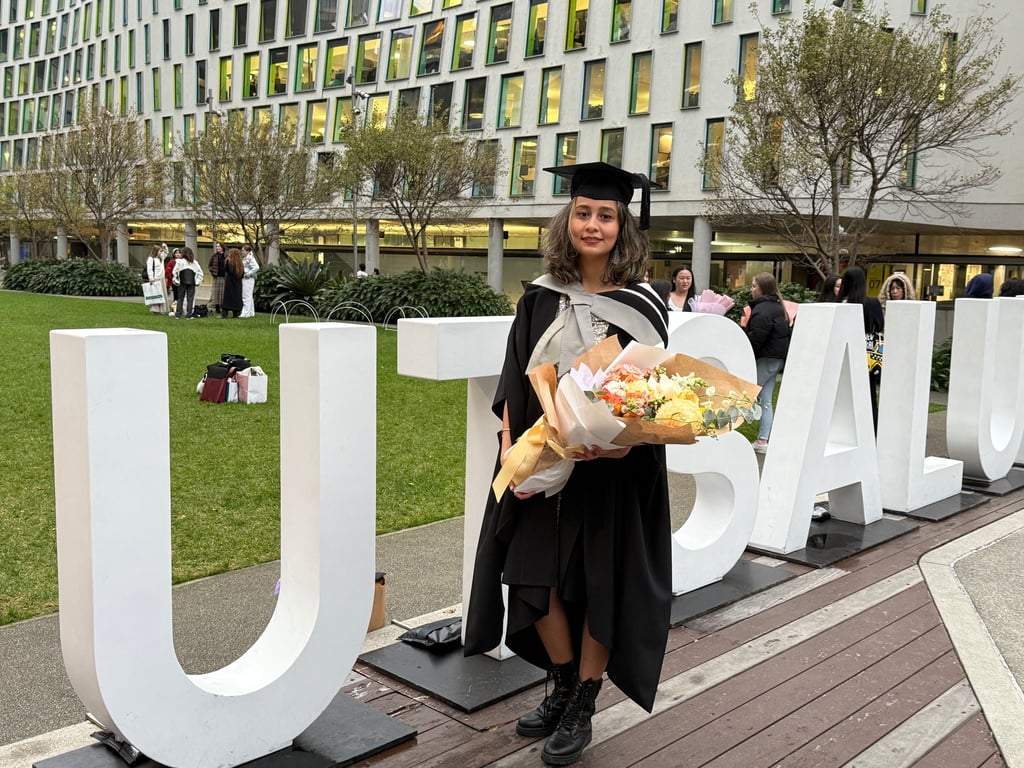
Yasi also co-developed an AI literacy course for students from non-computer science backgrounds, in collaboration with Dr Antonette Shibani and supported by a university grant.
The course was later presented at the ASCILITE 2024 Conference in Melbourne — one of Australasia's leading conferences on technology in education — demonstrating how UTS's transdisciplinary approach can make emerging technologies like AI accessible and meaningful to a broader audience.
She also completed the Apple Foundation Program, where she took a digital product from concept to a fully functional iOS app, building hands-on experience in product thinking and real-world development.
From study to industry: applying data science skills
After graduating, Yasi received multiple job offers within just two months and accepted a role as a Technical Data Analyst at Urban Utilities. In this role, Yasi works across operational reporting and analytics, helping transform complex engineering and operational data into dashboards, performance insights, and decision-support tools.
One of the most impactful aspects of the program for Yasi was its transdisciplinary nature.
Students from diverse backgrounds, including healthcare, finance, and engineering, worked together to solve complex problems.
This experience helped Yasi move beyond a purely engineering mindset and develop a more flexible, collaborative approach to problem-solving.
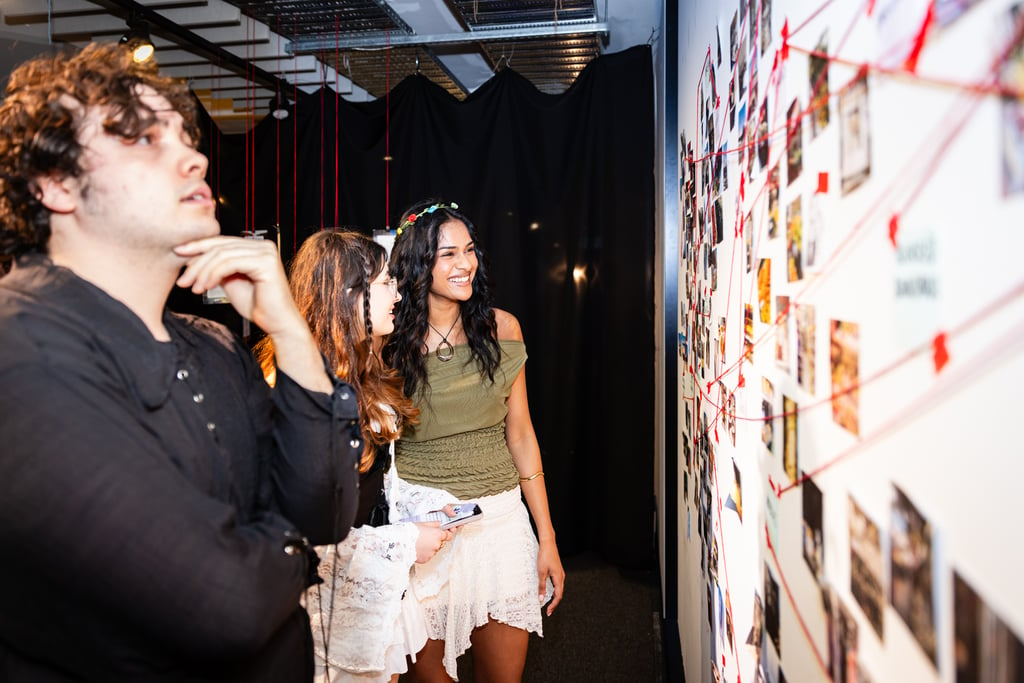
“Complex challenges don’t belong to a single discipline. The best solutions come from combining different perspectives.”
Yasi Mo
Master of Data Science and Innovation
Looking ahead, Yasi is motivated by the opportunity to work on large-scale, real-world challenges, particularly in infrastructure and operational systems.
“I’m interested in problems where data can improve how systems function, helping organisations move from reactive to proactive decision-making.”
From improving system performance to enabling predictive insights, the goal is clear: use data to create meaningful impact.
The experience has even sparked an interest in further study, something Yasi hadn’t considered before starting the degree.
Yasi’s journey highlights what makes UTS different:
- A strong focus on real-world, project-based learning
- A transdisciplinary approach to solving complex problems
- Industry-relevant tools and technologies
- Flexible study options for working students
For students looking to future-proof their careers, the Master of Data Science and Innovation offers more than technical training. It builds the thinking and capability needed for a complex world.

Designing a creative urban future
Awkar Ruel has creativity running through his veins. From a young age, he wanted to be an architect, working in a profession where he could bring the drawings...
Creative intelligence will be essential to the future of work. Here’s why.
Creative graduates who can thrive within complex and uncertain environments and tackle challenges across disciplines, fields and industries are transforming...

Innovation for the greater good
Kirah Godsell was always going to change the world, but it wasn’t until she enrolled at the University of Technology Sydney (UTS) that she figured out how.

One degree, multiple paths to a data science career
One of the most valuable aspects of the Master of Data Science and Innovation is that graduates emerge with the skills to work in multiple industries.
Designing a creative urban future
Awkar Ruel has creativity running through his veins. From a young age, he wanted to be an architect, working in a profession where he could bring the drawings...
Creative intelligence will be essential to the future of work. Here’s why.
Creative graduates who can thrive within complex and uncertain environments and tackle challenges across disciplines, fields and industries are transforming...
Innovation for the greater good
Kirah Godsell was always going to change the world, but it wasn’t until she enrolled at the University of Technology Sydney (UTS) that she figured out how.
One degree, multiple paths to a data science career
One of the most valuable aspects of the Master of Data Science and Innovation is that graduates emerge with the skills to work in multiple industries.