


- Posted on 15 Aug 2025
- 3-minute read
Dog-mediated rabies is a major concern in many parts of Asia and Africa. This vaccine-preventable disease occurs in over 150 countries and is nearly always fatal once symptoms appear.
Dogs are responsible for up to 99% of all transmissions to humans, with India accounting for 35% of the global rabies burden despite a long history of rabies prevention efforts.
With the continued persistence of rabies as a public health problem in the Global South, how might we shift thinking, change perceptions and evolve our approach to managing rabies via remaking ‘One Health’?
Project overview
One Health is an integrated, unifying approach that aims to balance and optimise the health of people, animals, and ecosystems. It recognises that the health of humans, plants, domestic and wild animals, and the wider environment are closely interconnected.
In 2001, India shifted from dog culling programs to a One Health approach that promoted neutering and vaccinations. Despite these efforts, eradication and effective management of rabies remains problematic, continues to cause casualties, and drives tensions between people and dogs.
This project investigates why rabies persists as a public health problem in both urban and rural areas of India and is looking to remake One Health to consider rabies transmission as more than just disease management. It builds on pilot research, that suggests that the answer may lie in insufficient attention to the complexity of everyday people-dog relations.

Our research challenges the biomedical framing of rabies, revealing that sustainable solutions lie in understanding the socio-cultural dynamics of street dog life.
Our impact
Our transdisciplinary research team is comprised of experts in geography, history, social psychology, and behavioural ecology with the goal of rethinking the dominant concepts and practices that support safe cohabitation between people and animals.
Our solution seeks to evolve One Health by making it more socially and culturally informed. Drawing on our expertise in animal behaviour and ecology within UTS’s Centre for Compassionate Conservation, our research focuses on understanding the lived experience of dogs on the street and how that shapes rabies transmission.
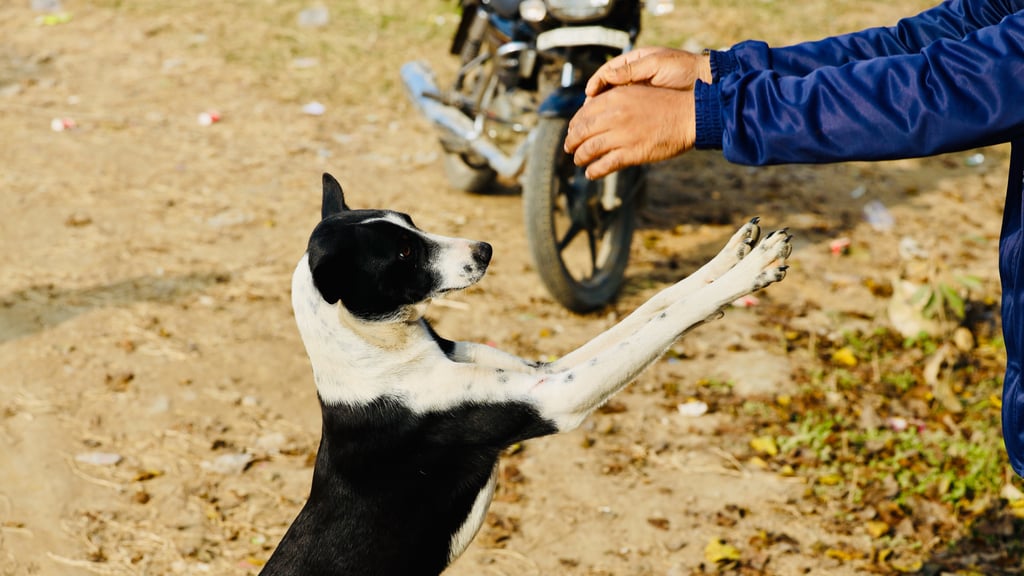
India’s street dogs have lived freely alongside people for thousands of years, and the bonds between people and dogs remain strong. More than just pets, our research has been identifying the socio-cultural conditions that lead to healthy lives for dogs on the streets. But poor outcomes do exist, creating tensions that challenge safe cohabitation. With our project partners, we have been developing strategies and education resources aimed at ensuring safety for all and implementing effective interventions that improve the coexistence of street dogs and humans.
By creating new systems for sustainable rabies management and prevention and highlighting the importance of fostering positive dog-human relationships, this research aims to develop policy guidelines and evolve practices in India and other regions, surpassing and positively impacting traditional One Health approaches. Through this and other projects we are highlighting the importance of transdisciplinary research methodologies for addressing complex global challenges.
Research project team

Associate Professor, Faculty of Law
Senior Research Fellow, Faculty of Law
Other researchers working on this project are:
- Nynke Kooistra, UTS Transdisciplinary School (PHD Candidate)
- Prativa Bomzon, UTS Transdisciplinary School (PHD Candidate)
- Kapil Patwardhan, UTS Transdisciplinary School (PHD Candidate)
- Rashmi Singh Rana, UTS Transdisciplinary School (PHD Candidate)
- Tim Kurz, Unversity of Western Australia
- Jo Watson, Unversity of Western Australia
- Krithika Srinivasan, University of Edinburgh
- Guillem Rubio Ramon, University of Edinburgh
- Priyanshu Thapilyal, University of Edinburgh
- Chris Pearson, University of Liverpool
- Heeral Chhabra, University of Liverpool
Related reading
If you are interested to read more in this research area, here are some additional related resources.
- ROH-Indies Statement Regarding the Supreme Court’s Delhi-NCR Order from the 11th of August, 2025
- What can free-living Indian street dogs teach us about how to care for pet dogs?
- Download project flyer (PDF)

Salmon farming disclosures
We examined climate-related disclosures for Tassal, Huon and Petuna and identified four key gaps between disclosures and existing climate science and other...

Building a research legacy inside elite sport
Since 2017, the University of Technology Sydney (UTS) and the Oklahoma City Thunder, of the NBA, have worked together to better understand what drives...

MekongELEVATE Research Partnership
MekongElevate is a four-year, multi-country initiative under the Mekong–Australia Partnership that seeks to strengthen the climate resilience of marginalised...
Bioengineering Protein Nanocages into Multi-target Vaccines for Alzheimer’s Disease
Alzheimer's disease (AD) is characterised by the clumping of abnormal proteins in the brain, which increases over time and leads to worsening cognitive...
Salmon farming disclosures
We examined climate-related disclosures for Tassal, Huon and Petuna and identified four key gaps between disclosures and existing climate science and other...
Building a research legacy inside elite sport
Since 2017, the University of Technology Sydney (UTS) and the Oklahoma City Thunder, of the NBA, have worked together to better understand what drives...
MekongELEVATE Research Partnership
MekongElevate is a four-year, multi-country initiative under the Mekong–Australia Partnership that seeks to strengthen the climate resilience of marginalised...
Bioengineering Protein Nanocages into Multi-target Vaccines for Alzheimer’s Disease
Alzheimer's disease (AD) is characterised by the clumping of abnormal proteins in the brain, which increases over time and leads to worsening cognitive...