


- Posted on 16 Feb 2026
- 3-minute read
Occupational violence in schools is a widespread issue globally. According to UNESCO, an estimated 246 million children experience school violence each year.
This issue significantly impacts not only students but also educators, administrators, and their families, and is often under reported.
Although research is limited, evidence-based intervention strategies have proven effective in mitigating the negative effects of such incidents in both domestic and international contexts. While some recommendations for improving these practices exist, there remains a need to understand how data-focused approaches can enhance outcomes in school-based violence prevention and management strategies and make them more proactive, rather than reactive.
So, how can schools create environments that focus on prevention and on community empowerment, fostering a culture of positive behaviour both in person and through other means?
Project overview
This series of research investigates how data science and visualisation can improve the understanding and management of school violence, exploring pathways to enable improved proactive interventions, impactful responses and subsequent care to school precincts – helping support the enhancement to the vitality of the school community.
Through a wide range of analytics and research methods the team performed a range of activities from reviewing existing Occupational Violence and Aggression in Schools (OVAS) literature, qualitative and quantitative studies such as interview and workshops, data cleansing, visualisation, hypotheses testing and, statistical and machine learning modelling.
The research team also explored policy prototyping to support better and informed decision-making for today and into the future.
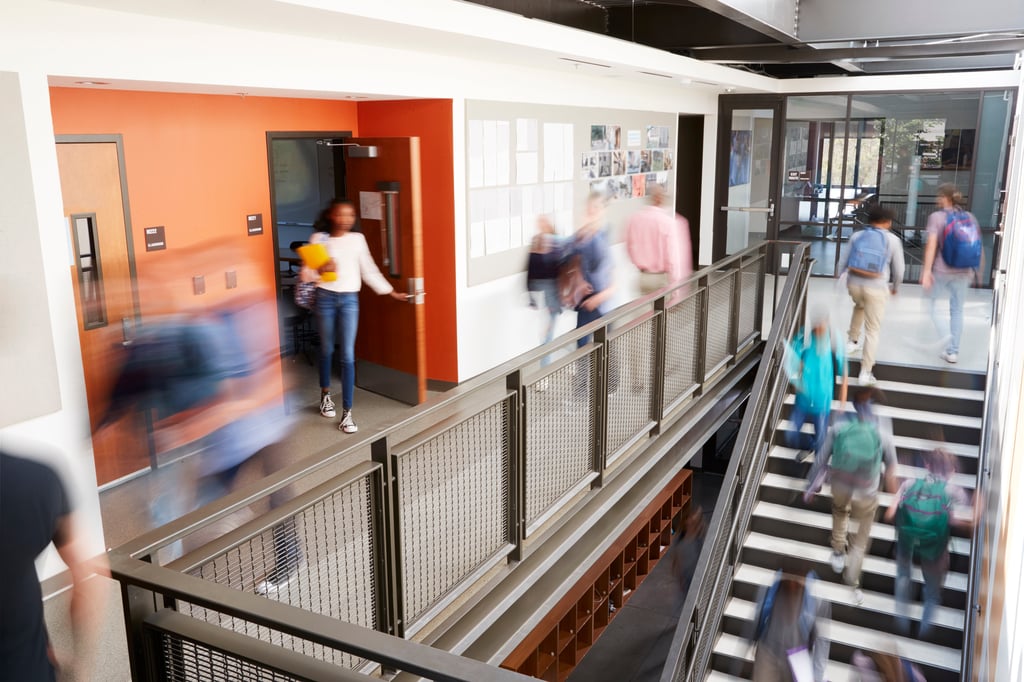
This research shows the power of data‑centred approaches to reshape how school violence is understood, visualised, and managed – enabling faster, wiser decisions that prioritise prevention, wellbeing, and long‑term community vitality.
Key objectives
- Understand current practices. Review the client’s existing OVAS literature and analyse existing data and reporting practices.
- Data-centred approach. Explore how data science and visualisation can help address school precinct needs, focusing on Occupational Violence and Aggression in Schools (OVAS).
- Enhance community vitality. Develop strategies to promote positive behaviour and community empowerment within schools.
Our impact
The research team collaborated with educators, administrators, students, and community members to co-design interventions and strategies for the entire school ecosystem. They analysed and visualised data to maximise its use.
Key outcomes
- Enhanced understanding of school complexities and influencing factors within a school community.
- Demonstrated real-world applications of data science for decision support.
- Improved data-informed practices for OVAS management.
- Accelerated deployment of support services and wellbeing measurement.
- Supported the shifting from reactive to proactive approaches.
- Established best practices in data science for OVAS management.
- Developed a proof-of-concept for data visualisation and tactical implementation.
- Formed multi-agency partnerships to enhance support capabilities.
- Influenced policy with evidence-based recommendations.
- Supported stakeholder participation in school safety policy-making.
The transdisciplinary research team continues to research and improve the understanding and management of school violence, aiming for safer and more vibrant school communities.

TD Research and the Transdisciplinary school acknowledge the financial assistance of the Cotton Research and Development Corporation in order to undertake this research project.
Work with us
We deliver a wide range of research projects for public and private sector partners seeking research expertise and support in overcoming their complex challenges using our unique transdisciplinary (TD) methodology.
To get involved in this research project or to find out how TD Research can help you and your organisation, please email TDResearch@uts.edu.au.
Explore
Research project team
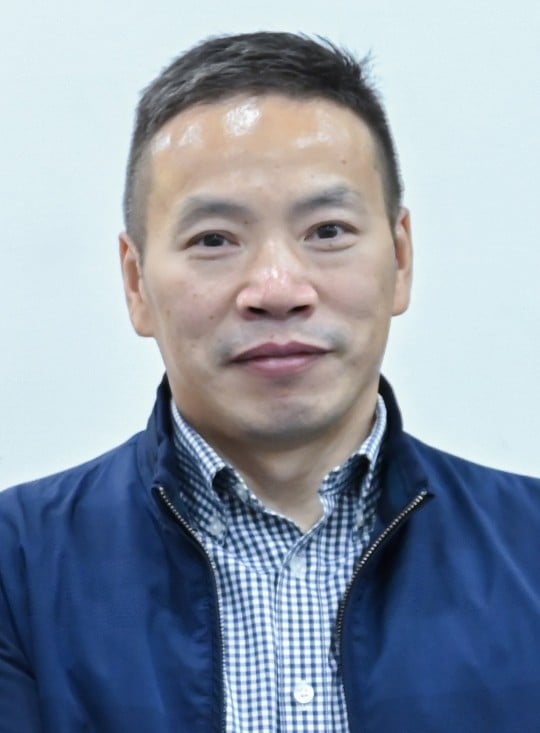
Course Director, Data Science And Innovation, Faculty of Law
Other researchers working on this research project are:
- Liang Jiang, UTS Transdisciplinary School (PHD Candidate)
- Hy Lu, UTS Transdisciplinary School (PHD Candidate)

Salmon farming disclosures
We examined climate-related disclosures for Tassal, Huon and Petuna and identified four key gaps between disclosures and existing climate science and other...

Building a research legacy inside elite sport
Since 2017, the University of Technology Sydney (UTS) and the Oklahoma City Thunder, of the NBA, have worked together to better understand what drives...

MekongELEVATE Research Partnership
MekongElevate is a four-year, multi-country initiative under the Mekong–Australia Partnership that seeks to strengthen the climate resilience of marginalised...

Bioengineering Protein Nanocages into Multi-target Vaccines for Alzheimer’s Disease
Alzheimer's disease (AD) is characterised by the clumping of abnormal proteins in the brain, which increases over time and leads to worsening cognitive...
Salmon farming disclosures
We examined climate-related disclosures for Tassal, Huon and Petuna and identified four key gaps between disclosures and existing climate science and other...
Building a research legacy inside elite sport
Since 2017, the University of Technology Sydney (UTS) and the Oklahoma City Thunder, of the NBA, have worked together to better understand what drives...
MekongELEVATE Research Partnership
MekongElevate is a four-year, multi-country initiative under the Mekong–Australia Partnership that seeks to strengthen the climate resilience of marginalised...
Bioengineering Protein Nanocages into Multi-target Vaccines for Alzheimer’s Disease
Alzheimer's disease (AD) is characterised by the clumping of abnormal proteins in the brain, which increases over time and leads to worsening cognitive...