


Timeframe
-
2023 – 2026
SDGs
-
4. Quality Education
- Posted on 6 Aug 2026
- 4-minute read
Thrive: where causal AI, lived experience and co-design with communities drive better support to help young people of all backgrounds need to finish high school well and thrive beyond it.
Completing high school well is a critical milestone that shapes young people’s future opportunities. Yet many students, particularly those facing social, economic, or personal disadvantage do not finish school well.
Despite significant investment in education programs and policies, gaps between advantaged and disadvantaged students persist or have widened according to data from the Australian Curriculum, Assessment and Reporting Authority.
One reason is that the factors influencing school engagement and completion are complex and interconnected, including academic support, mental health, family context, and students’ sense of belonging at school. Therefore, there is no one-size-fits-all solution and effective support needs to be tailored to the diverse needs of students.
The Thrive program partners researchers from UTS’s Human Technology Institute, Western Sydney University and educational experts from the NSW Department of Education, combining the expertise of youth and education specialists with the development of new causal machine learning methodologies, rich longitudinal datasets, and qualitative and co-design research methods. Thrive researchers explore the complex web of needs and circumstances shaping students’ outcomes.
Building on these insights, Thrive aims to empower schools and communities to take ownership of their unique challenges and opportunities. Rather than prescribing a single model of support, Thrive’s approach fosters a shift in mindset, encouraging local leaders, educators, and communities to use evidence and lived experience to identify what works best in their context.
By supporting locally driven innovation and continuous learning, Thrive seeks to enable practical, sustainable solutions that can adapt over time and drive meaningful, ongoing change for students.

Key collaborators
- Western Sydney University, Translational Health Research Institute
- Department of Education
- Paul Ramsay Foundation


Webpage
Bioengineering Protein Nanocages into Multi-target Vaccines for Alzheimer’s Disease
Alzheimer's disease (AD) is characterised by the clumping of abnormal proteins in the brain, which increases over time and leads to worsening cognitive...

Webpage
The Right to Housing in Australia
Housing is increasingly unaffordable, and inequality in housing is growing. The human right to housing offers a response to this crisis that centres human...
Webpage
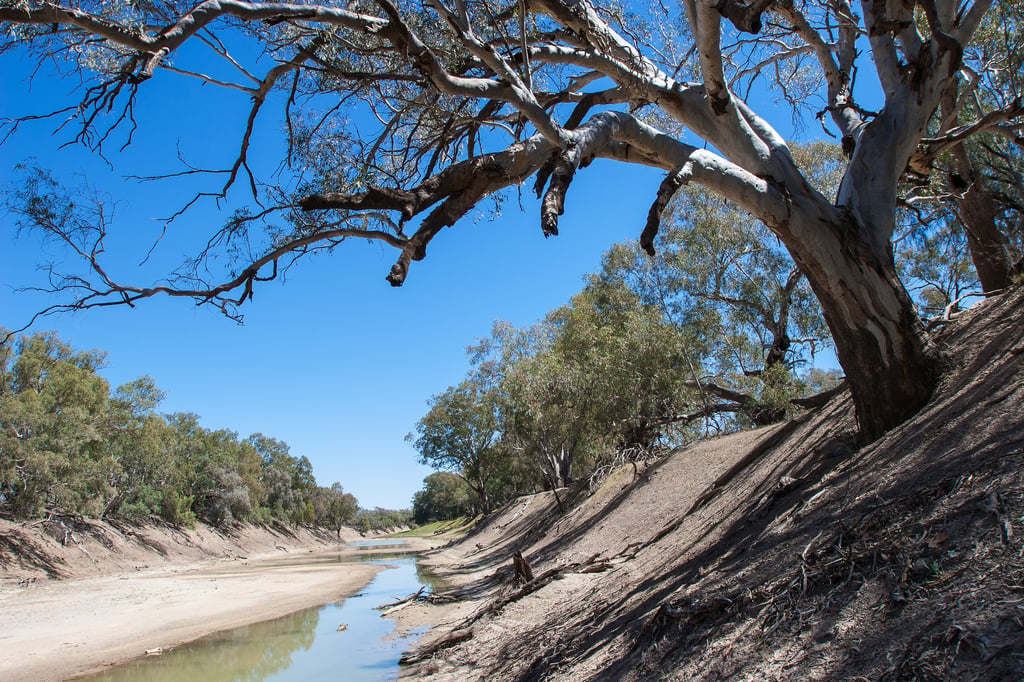
Can the Darling River System survive both climate change and mismanagement?
Water levels in the Darling River are notoriously irregular but decreasing rapidly. Darling River water is critical for the Murray-Darling Basin and in recent...

Webpage
A pathway to home ownership for ‘generation rent’
Breaking into home ownership in Australia has never been more difficult. It takes longer to save for a deposit, and repayments are harder to afford....
Webpage
Bioengineering Protein Nanocages into Multi-target Vaccines for Alzheimer’s Disease
Alzheimer's disease (AD) is characterised by the clumping of abnormal proteins in the brain, which increases over time and leads to worsening cognitive...
Webpage
The Right to Housing in Australia
Housing is increasingly unaffordable, and inequality in housing is growing. The human right to housing offers a response to this crisis that centres human...
Webpage
Can the Darling River System survive both climate change and mismanagement?
Water levels in the Darling River are notoriously irregular but decreasing rapidly. Darling River water is critical for the Murray-Darling Basin and in recent...
Webpage
A pathway to home ownership for ‘generation rent’
Breaking into home ownership in Australia has never been more difficult. It takes longer to save for a deposit, and repayments are harder to afford....