


Timeframe
-
2025 – present
SDGs
-
3. Good Health and Well Being
- Posted on 28 Sep 2026
- 3-minute read
Creating a multi‑target, next‑generation vaccine to stop Alzheimer’s before it starts.
Project summary
Alzheimer's disease (AD) is characterised by the clumping of abnormal proteins in the brain, which increases over time and leads to worsening cognitive decline. Vaccines could prevent the onset of Alzheimer's by stimulating a patient’s immune system to selectively target and degrade AD-causing proteins. Previous clinical trials showed that vaccines could clear some problematic proteins from the brain but failed to stop cognitive decline. These clinical failures may be due to these vaccines targeting only one abnormal protein at a time, even though multiple proteins interact to progress AD, and that their identities and prevalence differ between patients and change over time.
Researchers from the School of Life Sciences, and their collaborators, have begun to transform AD vaccine development using tiny unique nanoparticles, called protein nanocages. These modifiable nanocages can be readily adapted into vaccines capable of simultaneously targeting multiple abnormal proteins in the brain. This unique therapeutic strategy comprehensively combats the entire spectrum of AD-causing proteins, promising enhanced efficacy and protection against the disease.
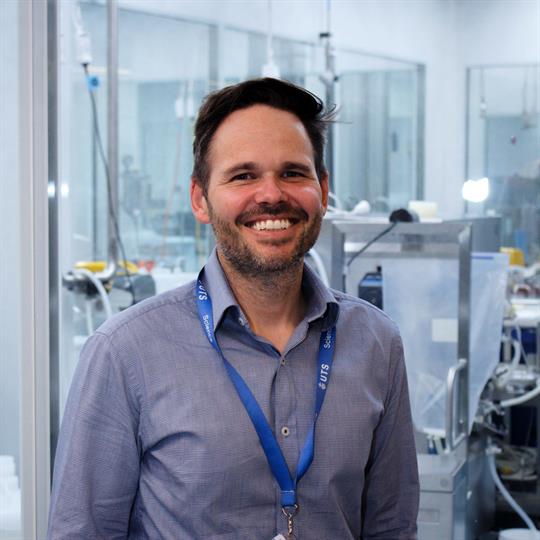
In this project, Associate Professor Andrew Care and his team are developing and manufacturing a large set of nanocage vaccines that target different abnormal proteins associated with AD. They then test the capacity of these nanocage vaccines, alone or in combination, to prevent the onset of AD in a clinically relevant humanised mouse model.
This research is poised to represent a major breakthrough in the fight against AD. It will pave the way for the development of a vaccine that is safe, effective and affordable, offering significant benefits to millions of individuals at risk of AD.

Key contact
Key collaborators
- A/Prof. Bernadette Saunders – University of Technology Sydney
- A/Prof. Lyndsey Collin-Praino – University of Adelaide
- Prof. Lars Ittner – Dementia Research Centre, Macquarie University
- Dr. Julia van der Hoven – Dementia Research Centre, Macquarie University
- Dr. Claire Rennie – University of Technology Sydney
- Dr. Ole Tietz - Dementia Research Centre, Macquarie University
- Dr India Boyton, University of Technology Sydney
- A/Prof. Matthew Faria – Pneumatic Bio; and University of Melbourne
The Right to Housing in Australia
Housing is increasingly unaffordable, and inequality in housing is growing. The human right to housing offers a response to this crisis that centres human...

Thrive project: Helping all young Australians finish school well
Completing high school well is a critical milestone that shapes young people’s future opportunities. Yet many students, particularly those facing social,...
Can the Darling River System survive both climate change and mismanagement?
Water levels in the Darling River are notoriously irregular but decreasing rapidly. Darling River water is critical for the Murray-Darling Basin and in recent...

A pathway to home ownership for ‘generation rent’
Breaking into home ownership in Australia has never been more difficult. It takes longer to save for a deposit, and repayments are harder to afford....
The Right to Housing in Australia
Housing is increasingly unaffordable, and inequality in housing is growing. The human right to housing offers a response to this crisis that centres human...
Thrive project: Helping all young Australians finish school well
Completing high school well is a critical milestone that shapes young people’s future opportunities. Yet many students, particularly those facing social,...
Can the Darling River System survive both climate change and mismanagement?
Water levels in the Darling River are notoriously irregular but decreasing rapidly. Darling River water is critical for the Murray-Darling Basin and in recent...
A pathway to home ownership for ‘generation rent’
Breaking into home ownership in Australia has never been more difficult. It takes longer to save for a deposit, and repayments are harder to afford....