


The Gender Legislative Index
Timeframe
-
2018-current
Lead Researchers
-
Professor Ramona Vijeyarasa
SDGs
-
5. Gender Equality
-
10. Reduced Inequalities
-
16. Peace, Justice and Strong Institutions
Collaborators
-
UTS Rapido Social Impact
-
UTS Connected Intelligence Centre
- Posted on 15 Aug 2025
- Updated on 24 Jul 2026
- 4 minute read
Evaluating women’s human rights in legislation globally
The law has the power to deliver concrete change to fulfil women’s rights, but until now, there has been no global standards to assess and score laws on how well they do it.
What is the Gender Legislative Index?
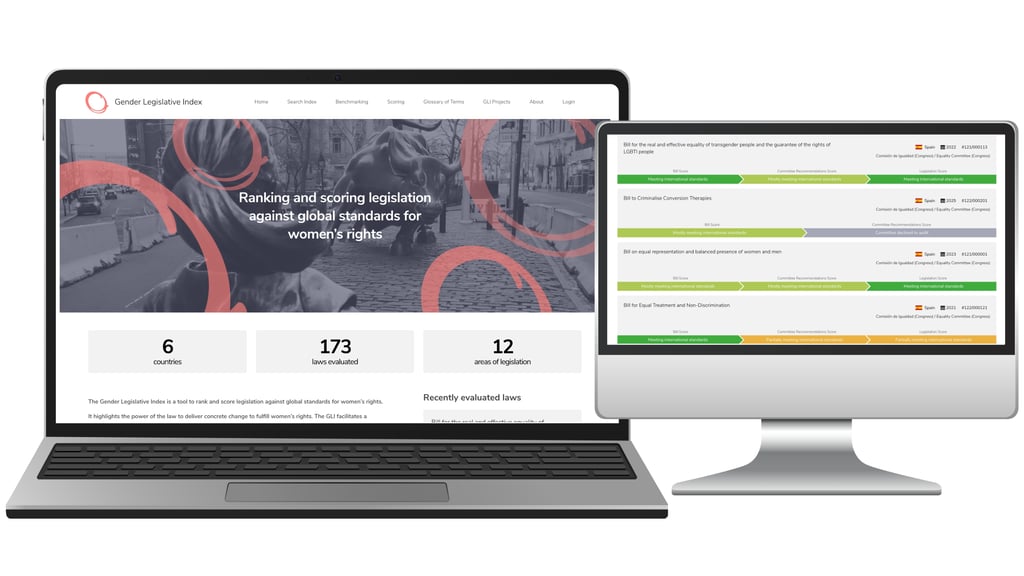
The Gender Legislative Index (GLI) ranks and scores legislation against global standards for women's rights, highlighting the law's power to deliver concrete change when it's designed to work for women from the outset. It seeks to get the law right the first time, rather than invest in poor or average legislation that later needs amending.
The GLI assesses legislation against seven criteria derived from a detailed analysis of all 37 General Recommendations of the CEDAW Committee, the first published analysis of its kind. It covers 12 areas of law, from the more familiar (gender-based violence, family law, reproductive and sexual health) to areas rarely examined through a gender lens, including extractives, financial services, public procurement and taxation.
It was developed by Professor Ramona Vijeyarasa, UTS Chair in Gender and the Law, in collaboration with UTS Rapido Social Impact and the UTS Connected Intelligence Centre. The GLI combines human evaluators with a machine-learning algorithm to assess how well domestic laws respond to the different needs of men, women and non-binary people.
From research to real-world reform
In 2022, the GLI's findings were cited directly in a successful parliamentary motion by Tasmanian MP Ruth Forrest, arguing that "Australian laws should not be gender-neutral where there are important differences between men and women that need to be taken into account." (Forrest MP, 2022).
The motion’s success saw Tasmania establish Australia’s only parliamentary committee in any state, territory or federal jurisdiction focused exclusively on gender-auditing of new bills: A Gender and Equality Committee.
A growing body of evidence
To date, the GLI has been used to evaluate 173 laws across six countries: Australia, Canada, Indonesia, the Philippines, Spain and Sri Lanka. This body of work informed a study published by Oxford University Press, The Woman President: Law, Leadership and Legacy for Women based on Experiences from South and Southeast Asia, examining the difference women leaders make to the lives of other women through the law.
This research, and the industry engagement behind it, laid the groundwork for a successful ARC Discovery Grant (2025-2027), with Professor Vijeyarasa as lead Chief Investigator alongside co-investigators from the University of Sydney and University of Canberra.
This research, and the industry engagement behind it, laid the groundwork for a successful ARC Discovery Grant (2025-2027), with Professor Vijeyarasa as lead Chief Investigator alongside co-investigators from the University of Sydney and University of Canberra.
Partnership with UTS Rapido Social Impact
The Gender Legislative Index was developed through a collaboration between UTS Faculty of Law and UTS Rapido Social Impact, pairing legal scholarship with data science, machine learning and UX design. Rapido built AI-powered heat-map visualisations to meaningfully aggregate each evaluator's assessment of a law, along with an algorithm to calculate overall rankings, turning a complex, multi-evaluator process into a clear, benchmarked scale from gender regressive to gender responsive.

“The women’s rights law behind the GLI tells legislators how to do it better, but the data science and machine learning brings the index integrity, while the UX and design thinking brings the GLI accessibility to a wide audience. Rapido Social Impact’s UX work has helped turn the GLI into an open-access tool, extending its reach to activists, legislators and inter-governmental organisations globally.”
Professor Ramona Vijeyarasa
UTS Chair in Gender and the Law, and founder of the Gender Legislative Index
More information
Lead researcher

Professor, Faculty of Law
Explore
Sustainable Development Goals (SDG)
My Blue Sky
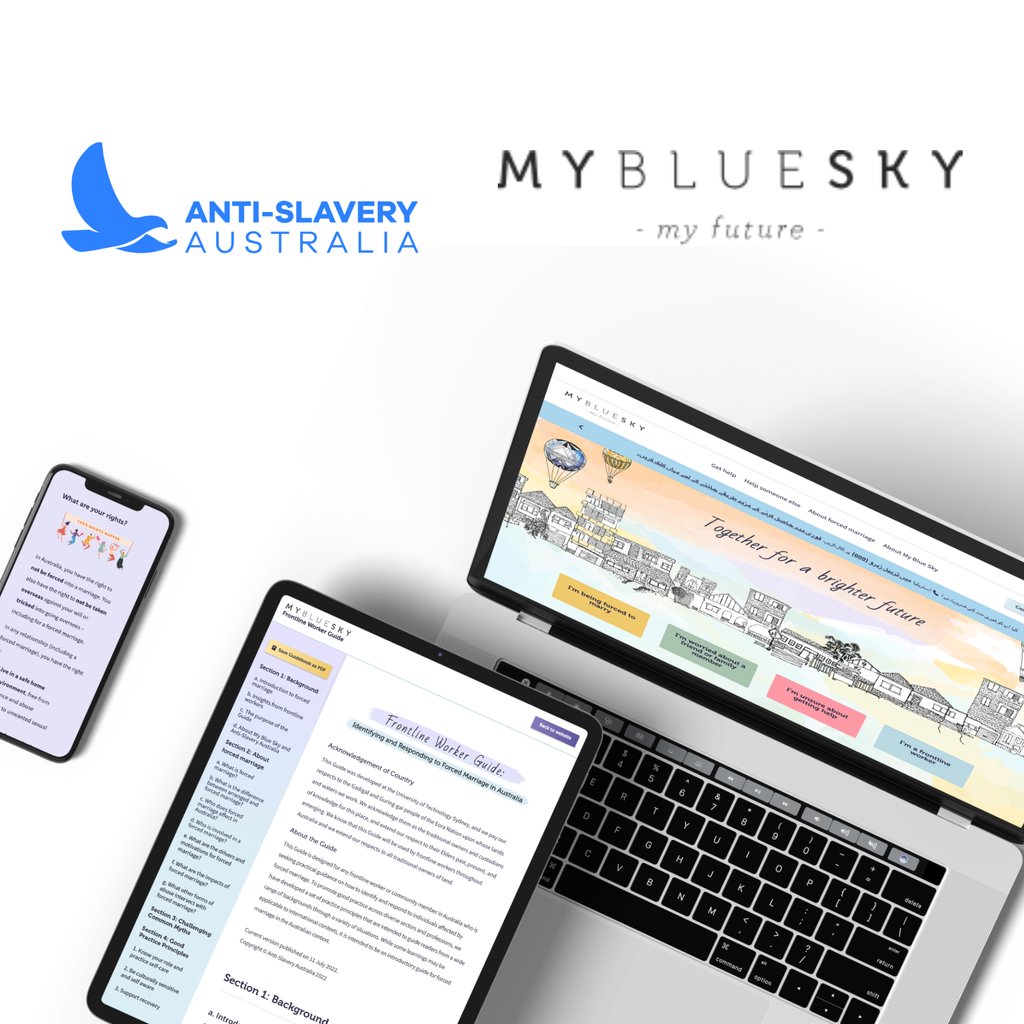
Anti-Slavery Australia, a specialist legal and research centre within the UTS Faculty of Law, has run My Blue Sky, Australia's national forced marriage support...

New research to advance equality for women through the law
UTS’s first professorial chair in gender and the law will pioneer the creation of a global legal database to drive gender equality in legislation around the...

Informed 365
In an era where corporate social responsibility is at the forefront of consumer minds, the partnership between Informed 365 and UTS Rapido sets a new standard...

Salmon farming disclosures
We examined climate-related disclosures for Tassal, Huon and Petuna and identified four key gaps between disclosures and existing climate science and other...
My Blue Sky
Anti-Slavery Australia, a specialist legal and research centre within the UTS Faculty of Law, has run My Blue Sky, Australia's national forced marriage support...
New research to advance equality for women through the law
UTS’s first professorial chair in gender and the law will pioneer the creation of a global legal database to drive gender equality in legislation around the...
Informed 365
In an era where corporate social responsibility is at the forefront of consumer minds, the partnership between Informed 365 and UTS Rapido sets a new standard...
Salmon farming disclosures
We examined climate-related disclosures for Tassal, Huon and Petuna and identified four key gaps between disclosures and existing climate science and other...