


Lead researchers
-
Associate Professor Dana Cordell
-
Professor Stuart White
SDGs
-
13. Climate Action
-
2. Zero Hunger
-
12. Responsible Consumption and Production
Collaborator
-
National Foundation for Australia-China Relations
- Posted on 15 Aug 2025
PACSAN models a future for Australia and China to simultaneously address the climate crisis and phosphorous scarcity in agriculture.
While the world has mapped out net zero targets for sectors like energy and transport to decarbonise, the food and agriculture sector remain largely uncharted. Yet our food systems contribute around a third of the world’s total GHG emissions. Emissions occur from farm inputs all the way to the dinner table and beyond: such as fertiliser use, livestock and crop production, food waste and household cooking. At the same time, every farmer in the world needs access to phosphorus for growing crops, but its’ global supply hinges on finite phosphate rock reserves, with 80% controlled by just five countries. Australia is the world’s 5th largest importer of phosphorus to support our agricultural system, yet there are no nationally agreed targets to ensure secure access to the critical nutrient and prevent nutrient pollution of our waters from the Hawkesbury Nepean Catchment to the Great Barrier Reef.
Led by UTS’s Institute for Sustainable Futures, the Phosphorus & Climate Smart Agriculture Network (PACSAN) has modelled the most promising sustainability measures to tackle these twin challenges, and bring together leading researchers and stakeholders across Australia and China’s food systems. PACSAN ultimately aims to assist Australia and China in simultaneously reducing greenhouse gas emissions to meet the Paris Agreement targets and ensuring phosphorus use supports food security while maintaining and improving water quality.
PACSAN network members across both countries identified five priority areas that are of mutual interest for further exploration: food waste avoidance, sustainable food choices, nutrient productivity on farm, improving energy productivity across the whole food value chain and traceability.
PACSAN is funded by the National Foundation for Australia-China Relations, part of the Department of Foreign Affairs and Trade.
Researchers

Research Director, DVC (Research)

Director, DVC (Research)

Webpage
Bioengineering Protein Nanocages into Multi-target Vaccines for Alzheimer’s Disease
Alzheimer's disease (AD) is characterised by the clumping of abnormal proteins in the brain, which increases over time and leads to worsening cognitive...

Webpage
The Right to Housing in Australia
Housing is increasingly unaffordable, and inequality in housing is growing. The human right to housing offers a response to this crisis that centres human...

Webpage
Thrive project: Helping all young Australians finish school well
Completing high school well is a critical milestone that shapes young people’s future opportunities. Yet many students, particularly those facing social,...
Webpage
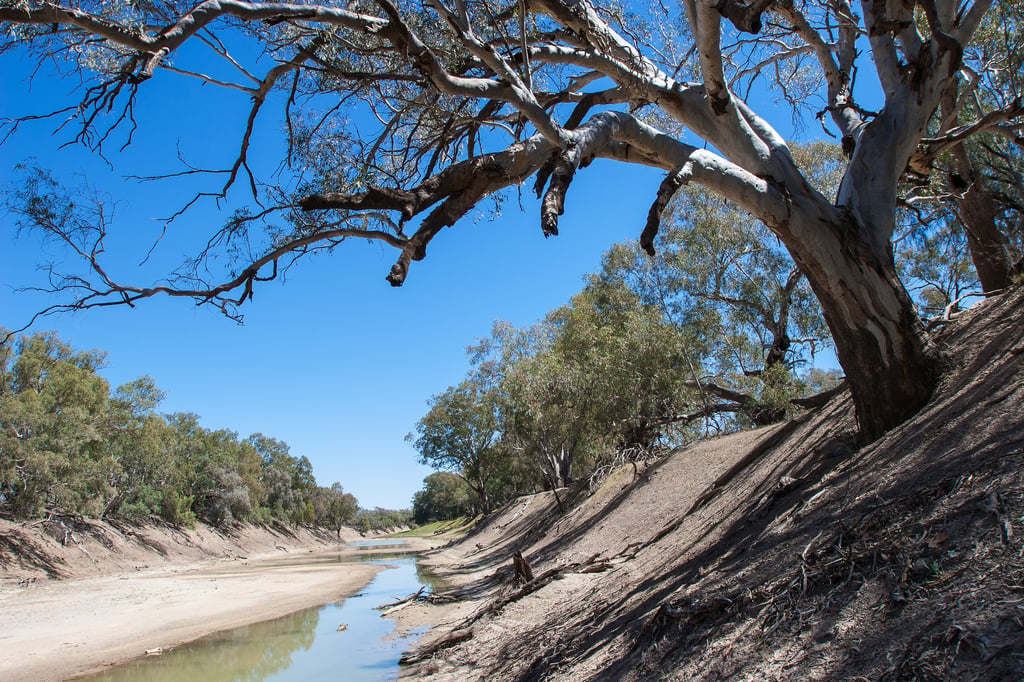
Can the Darling River System survive both climate change and mismanagement?
Water levels in the Darling River are notoriously irregular but decreasing rapidly. Darling River water is critical for the Murray-Darling Basin and in recent...
Webpage
Bioengineering Protein Nanocages into Multi-target Vaccines for Alzheimer’s Disease
Alzheimer's disease (AD) is characterised by the clumping of abnormal proteins in the brain, which increases over time and leads to worsening cognitive...
Webpage
The Right to Housing in Australia
Housing is increasingly unaffordable, and inequality in housing is growing. The human right to housing offers a response to this crisis that centres human...
Webpage
Thrive project: Helping all young Australians finish school well
Completing high school well is a critical milestone that shapes young people’s future opportunities. Yet many students, particularly those facing social,...
Webpage
Can the Darling River System survive both climate change and mismanagement?
Water levels in the Darling River are notoriously irregular but decreasing rapidly. Darling River water is critical for the Murray-Darling Basin and in recent...