

- Posted on 25 Sep 2020
- 3-minute read
Despite negative public discourse around Australian migration policy, research from the UTS Business School reveals the significant contribution entrepreneurial refugees are making to our country.
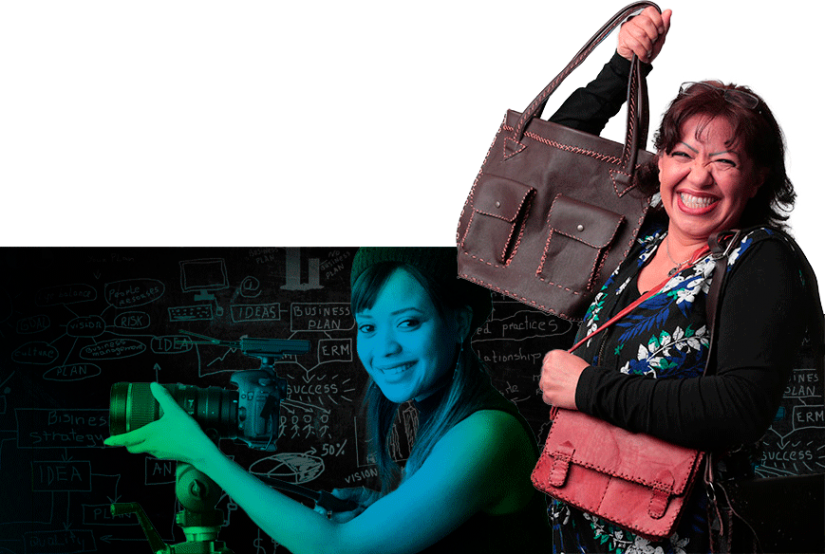
Refugee entrepreneurs Isha Kamara and Sima Mahboobifad (photographer: Karl Schwerdtfeger)
Professor Jock Collins has been studying what he calls ‘minority entrepreneurship’ for more than 30 years. His research looks at how traditionally disadvantaged groups, such as Indigenous people, people with disabilities, migrants and refugees, engage with entrepreneurship as a result of barriers to mainstream labour market participation.
Funded by an Australian Research Council (ARC) Discovery Grant, Collins is currently conducting an in-depth project on refugee entrepreneurs in Australia, travelling across the country to meet refugees running small and medium-sized businesses.
On a recent trip to Adelaide, he met a group of 16 Hazara refugees who had established a range of businesses, despite having little formal education as a result of living under Taliban rule. These men are just one chapter of Australia’s refugee story – but a chapter that speaks volumes about the contribution refugees can make to their communities.
"The main benefit of this research will be to understand the stories and experience of refugee entrepreneurs – the barriers they face, the way they overcome them, the contribution they’re making to their family, to their local neighbourhoods and to Australian society," says Professor Collins.
"This will inject a different dimension into the debate about refugee policy."
Collins aim to promote the results of the research all around Australian via mainstream and electronic media, so that local communities gain an understanding of the difficulties refugees have faced and their achievements since coming to Australia.

“What it shows is that with a small amount of support and a large amount of goodwill, these refugees can successfully establish a business.”
The ARC project complements a concurrent industry research project that Collins is working on in partnership with Settlement Services International (SSI), a community-level resettlement service for newly arrived refugees. The partnership has resulted in the launch of Ignite, an entrepreneurship initiative that supports refugees to establish small businesses in Sydney.
Ignite is upending traditional assumptions about entrepreneurial practice, which favour business qualifications gained at university level, and focusing instead on translating the passion and drive of program participants into successful enterprise activities.
“This is really, in many ways, a bit of a world first,” says Collins, who has been responsible for monitoring and evaluating the program over a three-year period.
“Basically what we’ve found is that about 45 newly-arrived refugees in the program have established a business in Sydney in the last two or three years – a very, very short time. What it shows is that with a small amount of support and a large amount of goodwill, these refugees can successfully establish a business.”
Collins and his team are now commencing an ARC Linkage project in collaboration with SSI; National Disability Services and Break Thru People Solutions, looking at the entrepreneurial activities of people with disabilities.
Research team

Adjunct Fellow, Business School
Faculty
Funded by
- Australian Research Council Discovery Grant
- Australian Research Council Linkage Grant
Partners
- Settlement Services International
- National Disability Services
- Break Thru People Solutions
Contact us
Email: research.engagement@uts.edu.au
| Communities |

Reframing Ageing in Place: The Elder Persona Research
Through co-design workshops and community engagement, UTS researchers developed practical tools to help organisations better support older Australians to age...

The Hybrid Work Revolution: Balancing Flexibility and Productivity
As hybrid work becomes a permanent feature of modern workplaces, UTS researchers are investigating how organisations can create arrangements that are fair,...
If business schools want socially responsible graduates, they must teach empathy differently
Learn how UTS researchers use lived experience and experiential learning to strengthen empathy, social responsibility and leadership capability.

Amplifying the impact of community organisations
Community-led organisations are strengthening and showcasing the achievements of their social impact-driven initiatives on a broader scale.
Reframing Ageing in Place: The Elder Persona Research
Through co-design workshops and community engagement, UTS researchers developed practical tools to help organisations better support older Australians to age...
The Hybrid Work Revolution: Balancing Flexibility and Productivity
As hybrid work becomes a permanent feature of modern workplaces, UTS researchers are investigating how organisations can create arrangements that are fair,...
If business schools want socially responsible graduates, they must teach empathy differently
Learn how UTS researchers use lived experience and experiential learning to strengthen empathy, social responsibility and leadership capability.
Amplifying the impact of community organisations
Community-led organisations are strengthening and showcasing the achievements of their social impact-driven initiatives on a broader scale.