


- Posted on 16 Sep 2025
- 7min 41sec read
It’s the year 2050. A patient has just left his doctor’s office clutching a prescription. The treatment? Attendance at hologram-based Pink Floyd concert and a restorative gardening activity, delivered through something called the SBS Third Space Program.
In the future, good health is just as much about human interaction and belonging as it is about diet and blood pressure.
Welcome to the world of the Envisioning Futures Showcase, a UTS exhibition produced by students in the Bachelor of Creative Intelligence and Innovation (BCII) for the Special Broadcasting Service (SBS).
The BCII is an award-winning degree that equips students with creative problem solving, critical thinking and transdisciplinary collaboration skills that can be applied to industry challenges.
Envisioning Futures is one of numerous subjects that invite external organisations to tap into this innovation-first skillset.
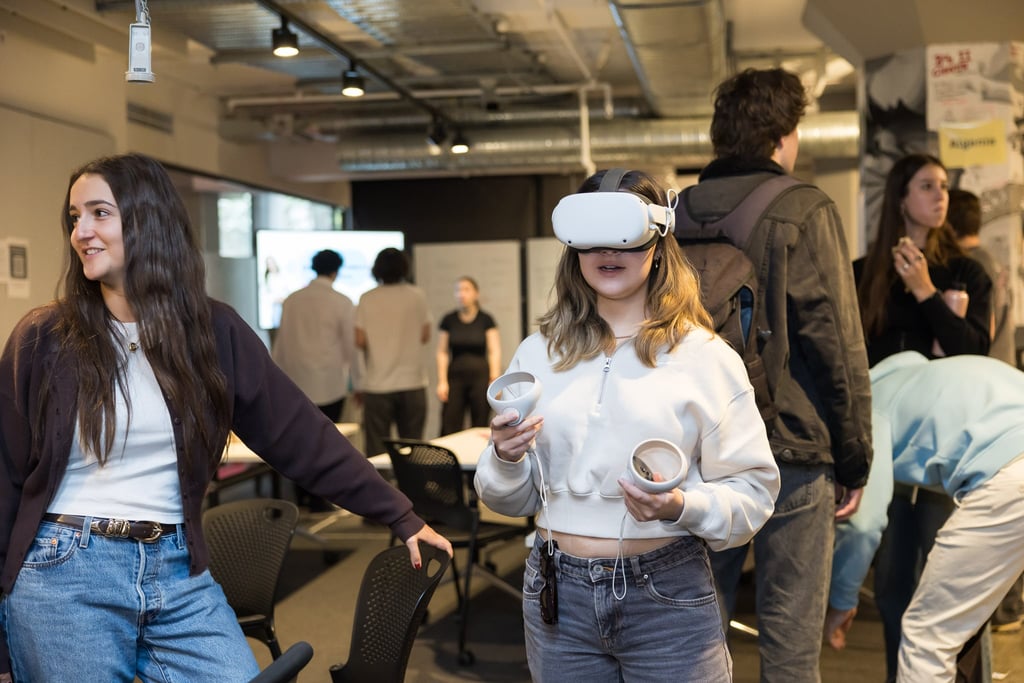
The catalyst for the Envisioning Futures partnership was a milestone event for SBS: in 2025, the broadcasting company turned 50. Amid the celebrations, the SBS team wanted not only to look back on the company’s glorious past but to think about its future.
“We have lots of fantastic stories to tell about the past and the contribution that SBS has made to social cohesion, but we also wanted to make sure we had a future focus, too,” says Uma Oldham, Head of Media and Marketing at SBS.
SBS is a long-term BCII partner, having previously been involved in an innovation sprint and student internship experience in 2017. Now, Oldham could see a new opportunity emerging.
I thought about the BCII and leveraging the smarts of a younger audience who might not be as engaged with SBS to see if they could ideate around a challenge for us.
“In the BCII, there are students from 26 different disciplines coming together to think about a challenge. That’s very representative of how a lot of organisations work, but particularly at SBS where we work in cross-functional teams.”
Where futures thinking and imagination collide
The SBS Challenge Brief asked students to consider how the future of media, social cohesion and belonging might evolve in Australia by 2050. Working in small, transdisciplinary groups, students chose from one of six theme areas to start building their projects. Their process was based on a technique called futures thinking, which is a creative approach to problem solving that explores multiple future scenarios.
Student Luke Abraham and his team produced the aforementioned Third Space concept, imagining a future in which SBS has evolved from a media organisation to a company focused on human connection.
This work was based on a concept known as weak signals, or early indicators of what might ultimately become seismic societal shifts. For Luke and his team, those weak signals pointed to third spaces (spaces beyond home or work where people can come together), AI intimacy, digital voyeurism and the emergence of digital concerts.
“With the development of technology and the rate at which technological change is transforming how we live, we imagined that a lot of the traditional ways in which humans connect with each other would become less prevalent,” he says.
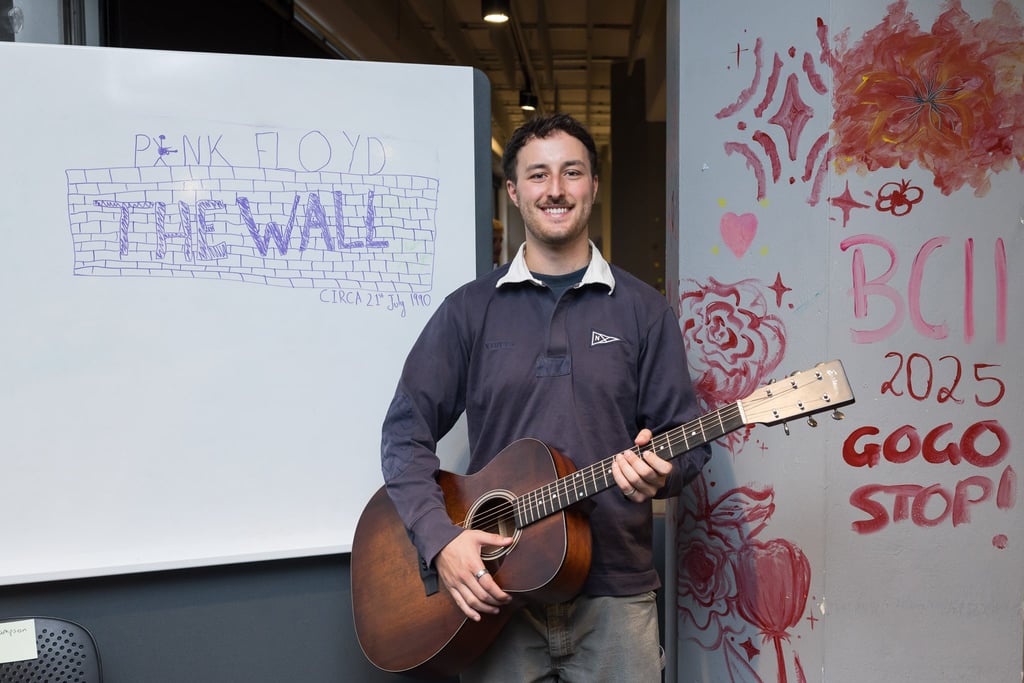
In this envisioned future, human connection would be something doctors prescribed, and people would access that connection through nostalgic and restorative activities— “like watching a simulation of the Pink Floyd Berlin Wall performance in 1990,” Luke says.
In another group, inspired by their transdisciplinary degree, student Layal Dani and her team produced the Eora Dagara Polycultural Festival in which cultures of the world would come together to merge and blend their food, practices and languages.
We wanted to explore the idea of polyculturalism instead of multiculturalism, because in 2050, we’re going to see a lot more cultures being fused together and sharing ideas that become common to all.
“It’s that idea of fusing cultures that you don’t expect to see together, so taking elements of both and expressing them as a polycultural whole.”
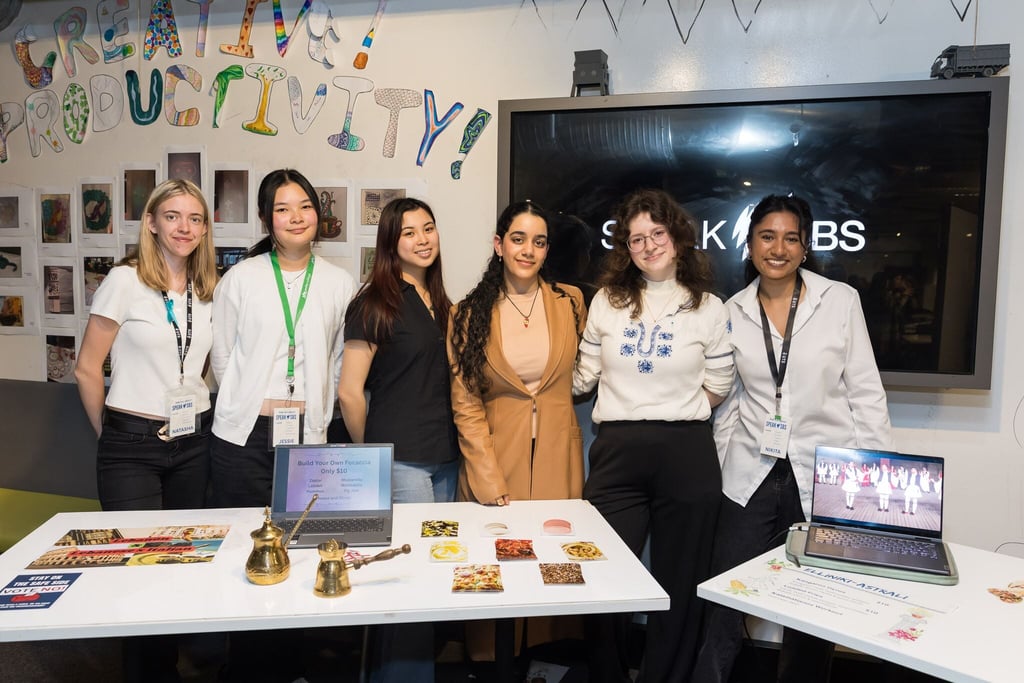
The students hosted four polycultural stalls to introduce event attendees to the core concepts of their project; among these was an immersive language stall called Speak SBS that positioned language as the gateway to cultural connection.
For SBS, an ongoing evolution
Throughout the Envisioning Futures subject, students were supported by senior SBS staff, including department heads from the organisation’s Sustainability, AI, Languages, First Nations, Digital and Social teams, among others. Students gained access to professional mentoring that helped shape their ideas, while SBS staff enjoyed front-row seats to the BCII ideation process.
For the SBS team, watching the projects come to life was inspiring, to say the least.
“The ones that strongly resonated were those that really took us to the future,” says Oldham.
“There was the Third Space project, which talked about connecting people through holograms. There was another one called the Belonging Network, which was all about using Neuralink to have conversations with anyone in any language.
“We also really liked You, Me and AI, which described a future in which AI was a culture in itself and asked, how do we make AI feel more included? SBS is all about social cohesion and inclusive cultures and languages, so I thought that was quite clever.
“Being taken out and immersed in trends that we don’t normally look at was really interesting.”
Oldham and her colleagues have nominated eight student teams to present their ideas at the annual SBS Audience Festival in October this year. This event provides an important opportunity to gather insights into how audiences engage with SBS programming and services, as well as what they want to see from the broadcaster in future.
Showcasing the Envisioning Futures ideas and gathering feedback will help shape conversations about the next phase of SBS’s ongoing evolution – and about the role of imagination in creating a boundless future.
There’s definite value in engaging with UTS and the students. Getting those fresh ideas around your brand can give you perspective.
Building a research legacy inside elite sport
Since 2017, the University of Technology Sydney (UTS) and the Oklahoma City Thunder have worked together to better understand what drives performance,...

MekongELEVATE Research Partnership
MekongElevate is a four-year, multi-country initiative under the Mekong–Australia Partnership that seeks to strengthen the climate resilience of marginalised...

Bioengineering Protein Nanocages into Multi-target Vaccines for Alzheimer’s Disease
Alzheimer's disease (AD) is characterised by the clumping of abnormal proteins in the brain, which increases over time and leads to worsening cognitive...
Biotech start-up takes leap to regenerate Alzheimer’s damage
Australian biotechnology start-up Skin2Neuron found the perfect scientific and manufacturing partner to help their breakthrough cell-based treatment take root.
Building a research legacy inside elite sport
Since 2017, the University of Technology Sydney (UTS) and the Oklahoma City Thunder have worked together to better understand what drives performance,...
MekongELEVATE Research Partnership
MekongElevate is a four-year, multi-country initiative under the Mekong–Australia Partnership that seeks to strengthen the climate resilience of marginalised...
Bioengineering Protein Nanocages into Multi-target Vaccines for Alzheimer’s Disease
Alzheimer's disease (AD) is characterised by the clumping of abnormal proteins in the brain, which increases over time and leads to worsening cognitive...
Biotech start-up takes leap to regenerate Alzheimer’s damage
Australian biotechnology start-up Skin2Neuron found the perfect scientific and manufacturing partner to help their breakthrough cell-based treatment take root.