


Project details
Client
-
Department of Climate Change, Energy, the Environment and Water NSW
Year
-
2026
Sustainable Development Goals
-
7. Affordable and Clean Energy
-
9. Industry, Innovation and Infrastructure
-
11. Sustainable Cities and Communities
- Posted on 20 Apr 2026
Australian drivers are keen to own EVs and take part in the energy transition, but it can be tricky for people living in apartments to organise charging set-ups. We investigated what's holding stratas back and how stratas can get electrification happening in their buildings.
Installing EV charging in apartment buildings presents fundamentally different challenges from stand-alone housing. It requires collective decision-making, shared investment, coordination across multiple stakeholders, and the ability to navigate complex governance and technical processes. The EVRB program has generated a substantial evidence base, including funding applications, feasibility assessments, financial statements, quotations, and project plans. To draw on this material, the NSW Department for Climate Change, Energy, the Environment and Water (DCCEEW) commissioned the Institute for Sustainable Futures (ISF) to synthesise the available data and undertake targeted engagement with program stakeholders.
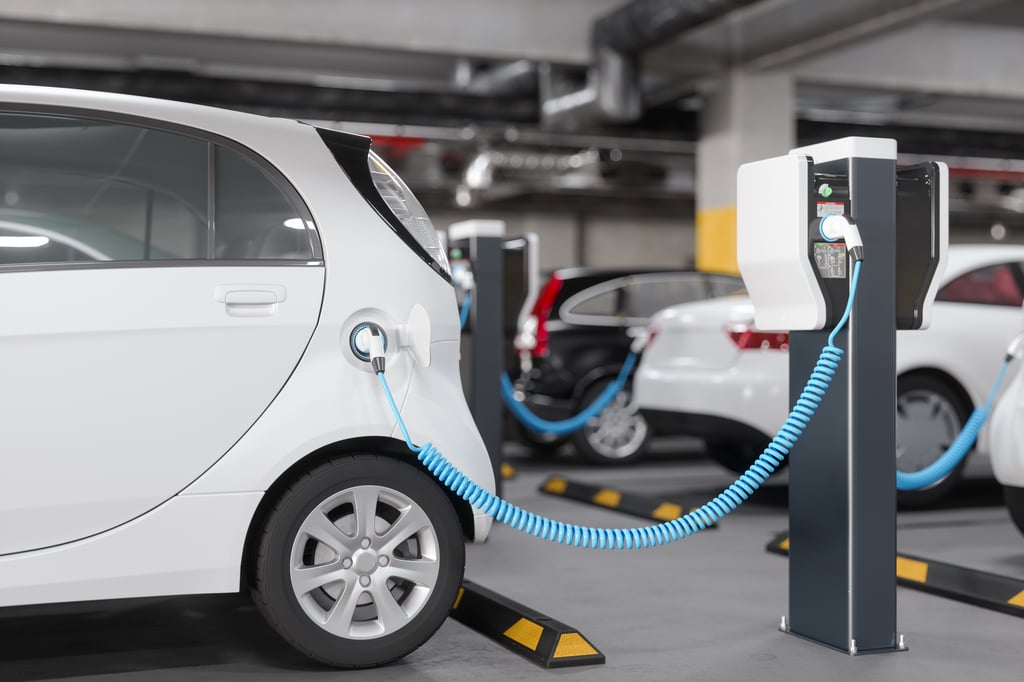
Almost a quarter of NSW households live in apartment buildings. This share is growing rapidly; within two decades around half of Greater Sydney’s population are projected to live in strata. Yet despite their increasing prevalence, strata residents remain largely excluded from many of the benefits of the energy transition that homeowners can access. This disparity is evident in the transition to EVs. For most drivers, the ability to charge an EV at home during off-peak or solar rich periods is an important enabler for affordable and practical EV ownership. Many apartment residents who own a car view a lack of home charging as a substantial barrier to making the switch to an EV.
The NSW Government launched its EV Ready Buildings program, a $10 million initiative to support apartment residents in assessing and installing EV infrastructure upgrades where they live. The EVRB program has generated a substantial evidence base, including funding applications, feasibility assessments, financial statements, quotations, and project plans. UTS analysed data from 150 of the 280 apartment buildings co-funded through the EVRB program, complemented by insights from an online survey and focus group discussions with program participants.
Key insights
Installing EV charging in apartment buildings presents fundamentally different challenges from stand-alone housing. It requires collective decision-making, shared investment, coordination across multiple stakeholders, and the ability to navigate complex governance and technical processes.
Across the program, barriers to progress were rarely technical alone. Instead, governance complexity, uncertainty, and capability constraints within strata communities emerged as the most significant challenges.
Despite the buildings having relatively low EV ownership rates, their strata committees were still actively exploring upgrades in anticipation of future demand and to protect long-term property value. This is reflective of applicant buildings being motivated by future-proofing rather than immediate need.
More than half (54%) of participating buildings selected a whole of building approach, while shared charging solutions were more commonly selected by smaller buildings. Although whole of building projects typically involved higher upfront expenditure, larger buildings benefited from economies of scale, resulting in lower average costs per parking bay.
Project costs were mainly driven by electrical cabling and labour requirements, while major switchboard works were often behind those projects with higher costs. Newer buildings (those constructed post-2004) were typically more expensive to upgrade, independent of building size, number of lots, or the financial position of the owner corporation.
Project outcomes are shaped by a range of interconnected factors. While there is no single factor that determines success, projects are most likely to succeed where there is strong alignment across three core dimensions:
- Motivation: Drivers of interest and investment include the availability of grant funding, the desire to futureproof, increase property value, and respond to resident demand. Grant funding was often the primary catalyst for EV charging discussions and prompted many strata communities to investigate EV charging for the first time. These drivers are often moderated by competing priorities, misinformation, and uncertainty
- Opportunity: External conditions that influence feasibility, such as building infrastructure readiness, project affordability, a supportive strata culture, and market capability. Projects progressed when infrastructure readiness and affordability combined to create a viable business case.
- Ability: The capacity of strata stakeholders to understand options, make decisions, and manage delivery. This is often enabled by project champions and supported by trusted advice and capable suppliers. Knowledgeable and experienced champions played a critical role in navigating complex technical, financial, and governance decisions and in building support among residents.
Download the report
Researchers

Research Director, DVC (Research)

Research Principal, DVC (Research)

Research Consultant, DVC (Research)

Research Principal, DVC (Research)

Research Director, Strategic Energy Collaborations, DVC (Research)
Case Study
The Australian Strategic Electric Vehicle Integration (SEVI) project
The growing adoption of electric vehicles (EVs) will create many opportunities and challenges across the energy and transport sectors. It calls for new...
Case Study
Leading the charge on bidirectional charging
A new project delivered by ISF and the NRMA explores the potential benefits of bidirectional charging for Australia's electricity grid and its consumers. The...

Case Study
International EV Policy Research
A synthesis of global EV policy lessons across six key domains to inform Australia’s next phase of electric vehicle market growth.
Case Study
Vehicle-Grid Network
Accelerating Australia’s electric vehicle-to-grid integration through cross-sector collaboration.
Case Study
The Australian Strategic Electric Vehicle Integration (SEVI) project
The growing adoption of electric vehicles (EVs) will create many opportunities and challenges across the energy and transport sectors. It calls for new...
Case Study
Leading the charge on bidirectional charging
A new project delivered by ISF and the NRMA explores the potential benefits of bidirectional charging for Australia's electricity grid and its consumers. The...
Case Study
International EV Policy Research
A synthesis of global EV policy lessons across six key domains to inform Australia’s next phase of electric vehicle market growth.
Case Study
Vehicle-Grid Network
Accelerating Australia’s electric vehicle-to-grid integration through cross-sector collaboration.