


Vehicle-Grid Network
Partners
-
ARENA
-
RACE for 2030 CRC
-
Climate-KIC Australia
-
Industry and government organisations across the V2G value chain
Timeline
-
2025-2029
Sustainable Development Goals
-
7. Affordable and Clean Energy
-
9. Industry, Innovation and Infrastructure
-
17. Partnerships for the Goals
- Posted on 10 Dec 2025
Accelerating Australia’s electric vehicle-to-grid integration through cross-sector collaboration.
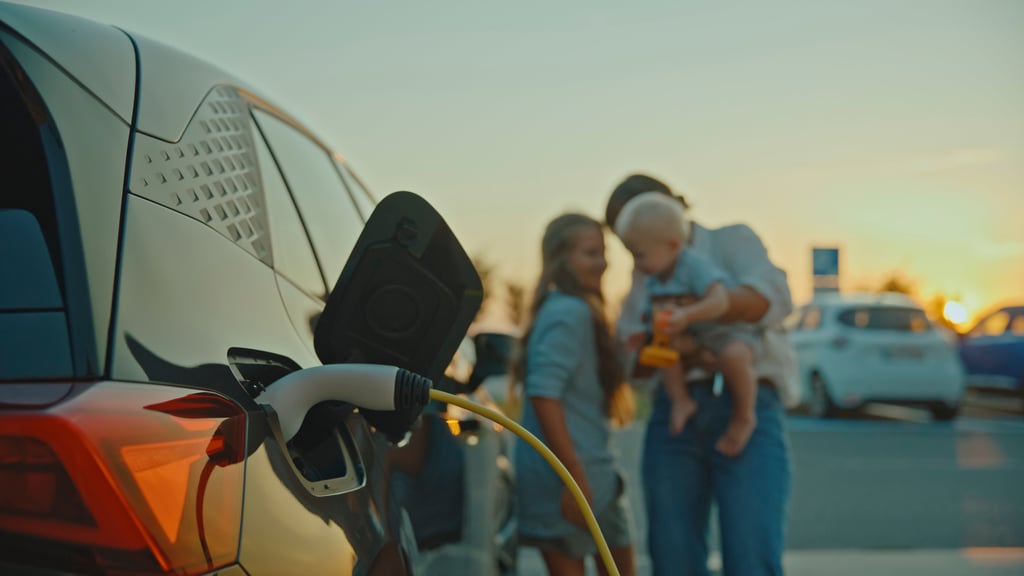
The opportunity for bidirectional electric vehicle (EV) charging is gaining momentum in Australia.
With EV sales rising, there is increasing potential to use EVs as flexible battery energy storage to reduce household and business energy bills and support the energy grid.
| Bidirectional EV charging enables an EV to both charge and send power back to a home or the grid at times when it’s most needed. This is also known as Vehicle-to-Grid (V2G). |
Recent product launches, partnership announcements, and media attention are fuelling interest, and early pilots are aiming to demonstrate the potential system and consumer benefits.
Yet, the industry is still developing. The availability of V2G-enabled vehicles and bidirectional chargers is increasing, but the pathway to adoption isn’t yet simple or frictionless. Consumers and businesses are still navigating complex questions around compatibility, connection approvals, local certification, warranties, and retail and Virtual Power Plant program participation. Industry and government are supporting emerging business models and customer value propositions, and streamlined certifications, standards, and regulations, however variations exist across use cases and regions.
These conditions make it difficult and costly for any single organisation to move quickly or confidently to create the market on their own.
To address this gap, the Vehicle-Grid Network (VGN) is being established as Australia’s first collaboration network for accelerating electric vehicle-to-grid integration. The project in partnership with the Australian Renewable Energy Agency (ARENA) and the RACE for 2030 CRC, is led by Climate-KIC Australia and the Institute for Sustainable Futures at the University of Technology Sydney.
Smooth transitions don’t happen in silos, they happen when the right people and organisations come together.
VGN will be a national point of synthesis on V2G. It aims to connect and amplify efforts across the ecosystem, streamline processes, create local and international market signals, and embed emerging evidence into policy and industry decision-making.
Why it matters
Australia’s energy and transport sectors are transforming rapidly. EVs can play a critical role in supporting the grid, but fragmentation risks slowing that progress. VGN aims to address these gaps by building a nationally coordinated network that fosters collaboration, accelerates innovation, and ensures Australia leads in clean mobility and energy integration.
“The Vehicle-Grid Network builds on RACE for 2030's partnership with ARENA in producing the National Roadmap for Bidirectional EV Charging,” said Oliver Hill, Program Leader – RACE for Electric Vehicles.
“This network will serve as a national point of synthesis for research and knowledge, showcasing the depth of expertise and leadership actively contributing to innovative Distributed Energy Resource management in Australia.”
Clean Energy Finance Corporation Executive Director, Richard Lovell said, “Vehicle-to-grid technology is vital for a cleaner, more resilient energy system. Enabling EVs to share power with the grid improves stability and empowers consumers to play an active role in Australia’s energy future.”
Project objectives
- establishing a nationally coordinated industry collaboration network to align industry, government and researchers on shared priorities for V2G integration
- strengthening technical and market foundations by enabling interoperability, supporting evolving domestic and international standards, and unlocking shared commercial and regulatory barriers
- building sector and consumer capability through trusted information, educational resources, events, and practical tools
- positioning Australia for international leadership in V2G services to deliver a cleaner, more resilient and affordable transport and energy systems.
How we work
VGN convenes stakeholders across working groups, roundtables, expert panels and hands-on learning opportunities to tackle the technical, regulatory, and market challenges that no single organisation can solve alone. The goal is to support sectoral capability uplift and ensure co-designed solutions are relevant, actionable, and widely adopted.
Working Groups
VGN Working Groups bring together partners from across the EV value chain to collaborate on shared challenges and develop practical, industry-informed outputs to progress vehicle-grid integration.
The three themes for the 2026 Working Groups are:
- WG1: standards, interoperability and testing
- WG2: regulation and market strategy
- WG3: consumer journey and deployment
Roundtables
VGN convenes all partners together three times a year to provide updates on market and technical progress, as well as networking opportunities to foster collaboration.
Climate-KIC Australia CEO Christopher Lee said, “Smooth transitions don’t happen in silos, they happen when the right people and organisations come together.”
“Through the Vehicle-Grid Network, we’re creating the space for industry, government and researchers to share what’s working, make sense of emerging technologies together, and identify opportunities to accelerate bidirectional charging at scale and make EVs a win for people, businesses, and the grid.”
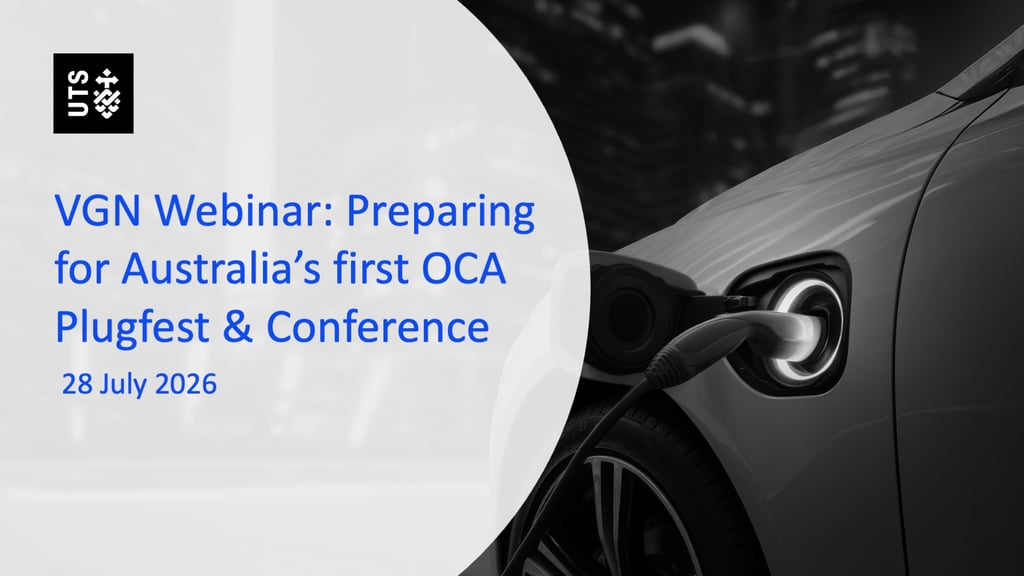
OCA Plugfest & Conference 2026
VGN is hosting Australia's inaugural OCA Plugfest and Conference in Canberra this October. This premiere event brings the OCPP community together for hands-on testing, knowledge sharing, and valuable connections with the people shaping the future of EV charging.
Join the Vehicle-Grid Network
VGN is a unique network for key stakeholders throughout the entire vehicle-to-grid value chain with up-to-date insights. We are continuing to seek leading partners from industry and government to join VGN. If you’re interested in learning more or getting involved, reach out to Project Lead, Nodoka Nakamichi: Nodoka.Nakamichi@uts.edu.au
Outputs
More info
Get involved
Research Team

Director, DVC (Research)

Senior Research Consultant, DVC (Research)

Research Principal, DVC (Research)

Research Director, DVC (Research)

Research Assistant, DVC (Research)

CEO Climate-KIC Australia And Industry Professor, DVC (Research)

Research Consultant, DVC (Research)

Webpage
Pacific Women-Led Multi-Hazard Early Warning Systems
Improving gender equity in early warning systems for disasters in the Pacific.
Webpage
Optimising Organic Waste and Cultivating Circularity for Australian Agriculture
Circular economy for Australian agriculture, fisheries and forestry.
Webpage
International EV Policy Research
A synthesis of global EV policy lessons across six key domains to inform Australia’s next phase of electric vehicle market growth.

Webpage
MekongELEVATE Research Partnership
MekongElevate is a four-year, multi-country initiative under the Mekong–Australia Partnership that seeks to strengthen the climate resilience of marginalised...
Webpage
Pacific Women-Led Multi-Hazard Early Warning Systems
Improving gender equity in early warning systems for disasters in the Pacific.
Webpage
Optimising Organic Waste and Cultivating Circularity for Australian Agriculture
Circular economy for Australian agriculture, fisheries and forestry.
Webpage
International EV Policy Research
A synthesis of global EV policy lessons across six key domains to inform Australia’s next phase of electric vehicle market growth.
Webpage
MekongELEVATE Research Partnership
MekongElevate is a four-year, multi-country initiative under the Mekong–Australia Partnership that seeks to strengthen the climate resilience of marginalised...