Connecting cultures, supporting Indigenous sovereignty

Acknowledging Country in our Mother Languages is a project led by Dr Elaine Laforteza through the Multicultural Women’s Network.

This project aims to meaningfully connect culturally and linguistically diverse communities with First Nations peoples and support Indigenous sovereignty. It honours stories of language loss, revival, survival, and strength, celebrating linguistic diversity on Aboriginal land.

Always was. Always will be Aboriginal land.
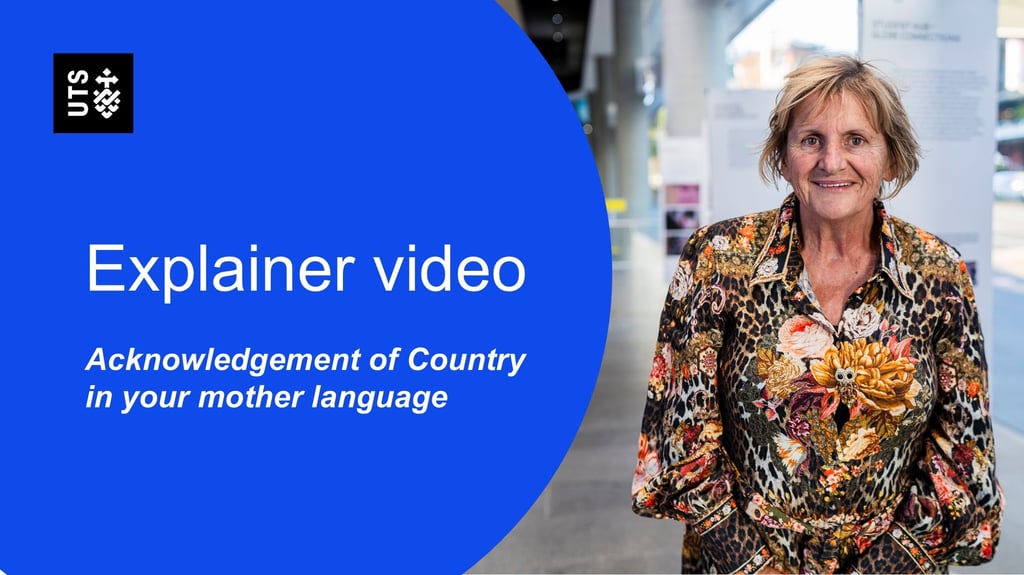
A woman in a floral shirt stands smiling in a corridor. Blue circle with text: "Explainer video - Acknowledgement of Country in your mother language." UTS logo.

Explainer video - Acknowledgement of Country in your mother language

Explainer video - Acknowledgement of Country in your mother language transcript

Speaker 1: 
“I’m Turkish Australian, and I Acknowledge Country”. 
 
Speaker 2: 
“I’m Pakistani, and I Acknowledge Country”. 
 
Speaker 3: 
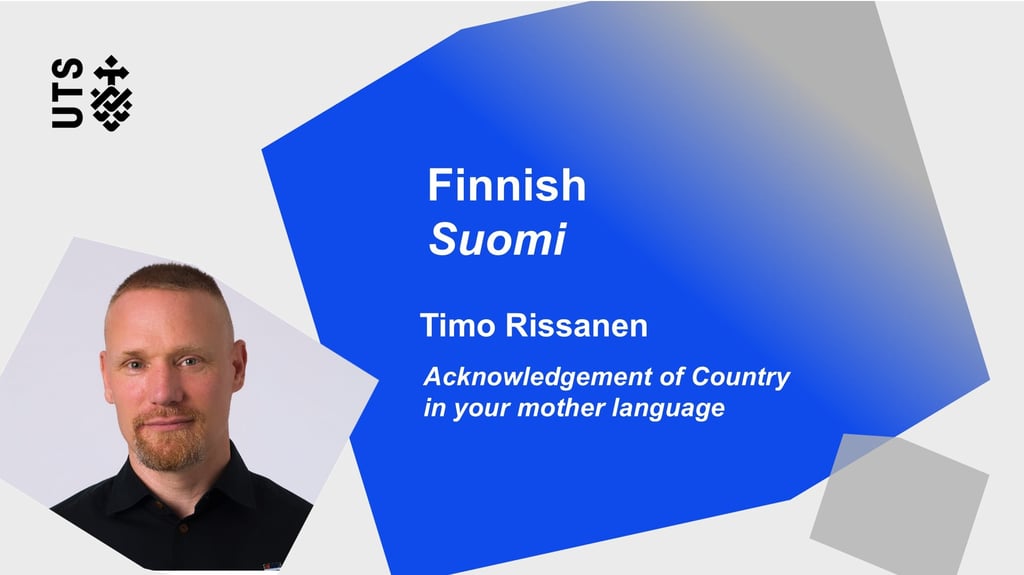
“I am Finnish, and I Acknowledge Country”. 
 
Speaker 4: 
“I’m Croatian Australian, and I Acknowledge Country”. 
 
Speaker 5: 
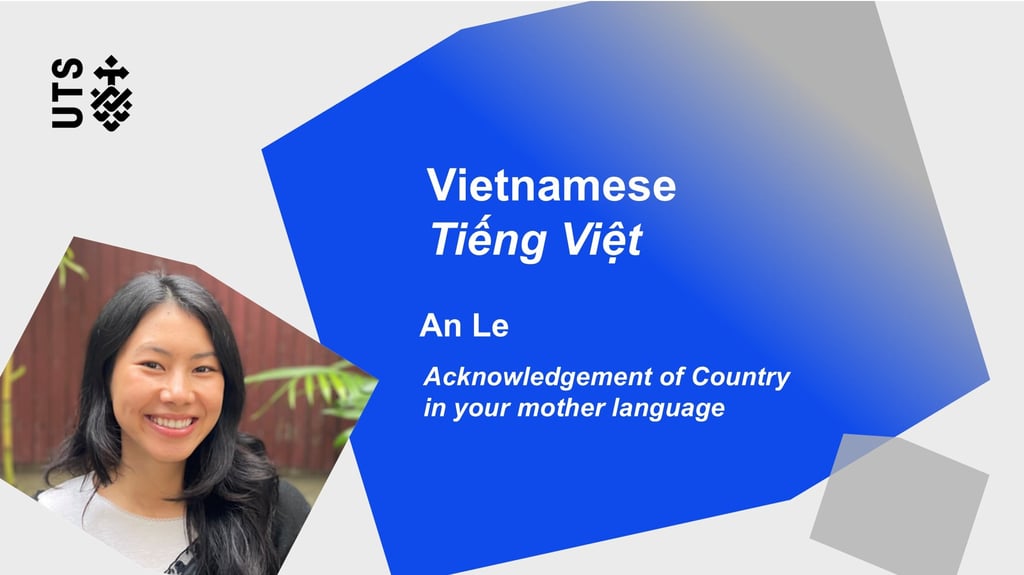
“I am Vietnamese Australian, and I Acknowledge Country”. 
 
Speaker 6: 
“I’m Palestinian Australian, and I Acknowledge Country”. 
 
Speaker 7: 
“I’m Irish Australian, and I Acknowledge Country”. 
 
Speaker 8: 
“I’m Samoan living in Australia, and I Acknowledge Country”. 
 
Speaker 9: 
“I’m Vietnamese Australian, and I Acknowledge Country”. 

Speaker 10: 
“I am Nigerian Australian, and I Acknowledge Country”. 
 
Speaker 11: 
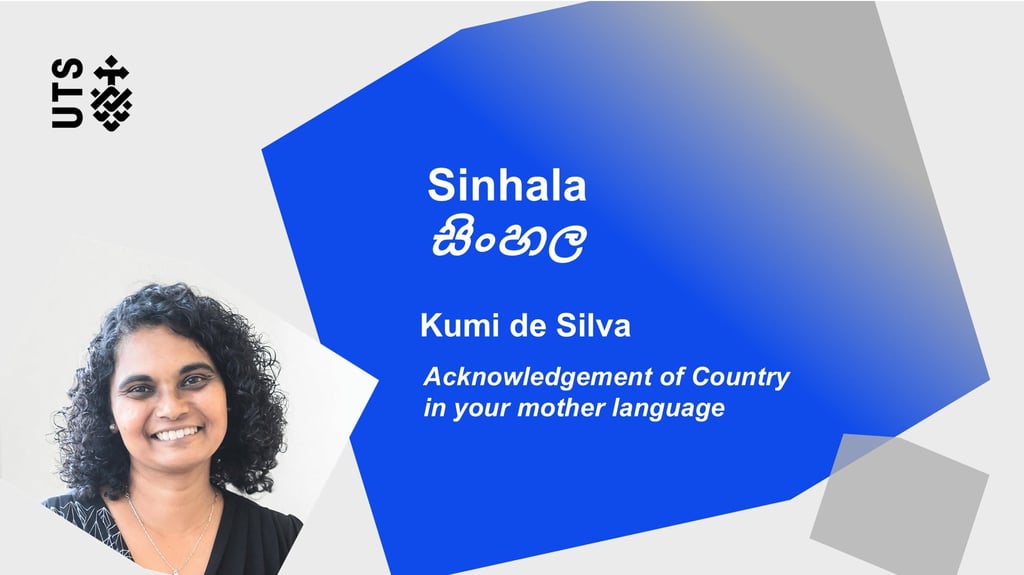
“I am Sri Lankan Australian, and I Acknowledge Country”. 
 
Speaker 12: 
“We are Filipino Australian, and we Acknowledge Country”. 
 
Speaker 13: 
“Can you introduce yourself, and what you do?” 
 
Speaker 14: 
“Hi, I’m Aunty Glendra Stubbs, Yalahdumarang Gallindurra. That’s all I know of my language because we weren’t allowed to speak our language which is really sad. I’m the elder at UTS and it makes me really proud, when young ones come and talk to me, or of all cultures and makes me feel really happy, and we are a Country that values diversity and inclusion and that makes me really proud”. 
 
Speaker 13: 
“How is an AOC different to a Welcome to Country?” 
 
Speaker 14: 
“Okay so an Acknowledgement to Country anyone can do and people are encouraged to do it. So it just says the land that you’re on, the connection, and with things that are important to that Country. A Welcome can only be delivered by Traditional Owners of that land, and so they have to have permission to do a Welcome to Country. I think it’s really important because in my lifetime, there was a time where Aboriginal people weren’t acknowledged in this Country. They weren’t seen as the first people of this Country, and it, it’s a lot’s happened. So, when people found out that there was, the Aboriginal people weren’t Acknowledged, and the history that had happened, there was a Bringing Them Home Report which says the things that happened to our mob, and then 250,000 people walked across the bridge to say, we are sorry, we didn’t know this happened, and we’ll never let it happen again”. 
 
 
Speaker 15: 
“My name is Dr. Elaine Marie Carbonell Laforteza and I’m the Equity and Diversity Project Officer at the Centre for Social Justice and Inclusion and I’m also part of the core committee of the Multicultural Women’s Network”. 
 
Speaker 13: 
“Why is it important to say an AOC in your mother tongue?” 
 
Speaker 15: 
“Well, in Australia we speak over 300 languages, but we do have a monolingual mindset. So when we’re asked to connect to different cultures, and even to consider or think about First Nations communities’ ways of being, doing, and belonging, we’re always encouraged to do so through English or Western whiteness. But what does this actually mean for people whose first language isn’t English? So this project, the Acknowlegement of Country Project ask people, okay how do you say an Acknowledgement of Country in your mother tongue, and I’m hoping that this will help people connect and care for Indigenous sovereignty and think about reconciliation on that deeper, more meaningful level. This project also asks for First Nations stories, especially about language loss, language revival, and strength. So the sharing of those stories is super important so that we can actually reflect and move together. So reflect on what that means to thrive together in terms of diversity, not despite it, and to Acknowledge the Country that we’re actually on”. 
 
Speaker 1: 
Original (Turkish) 
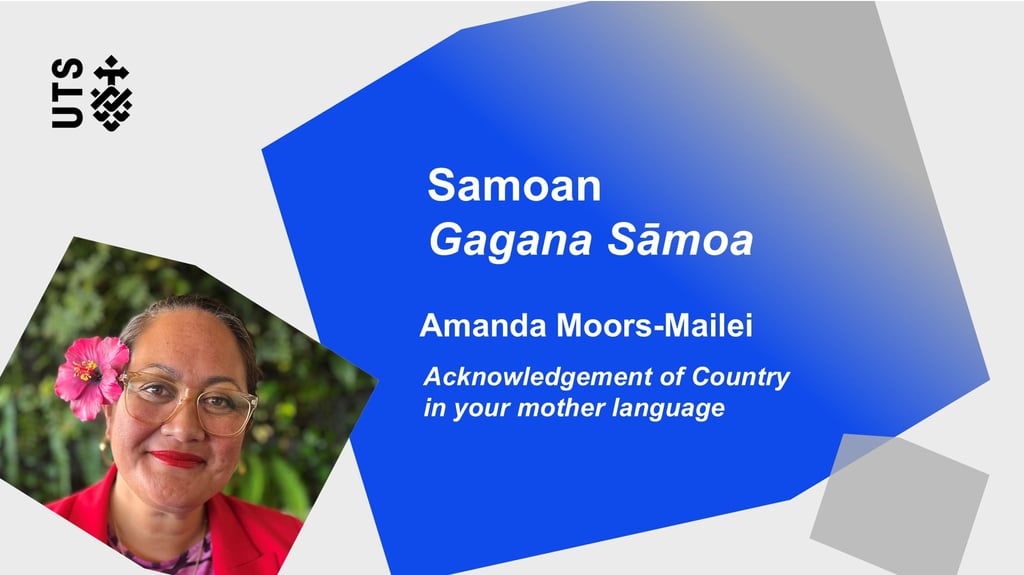
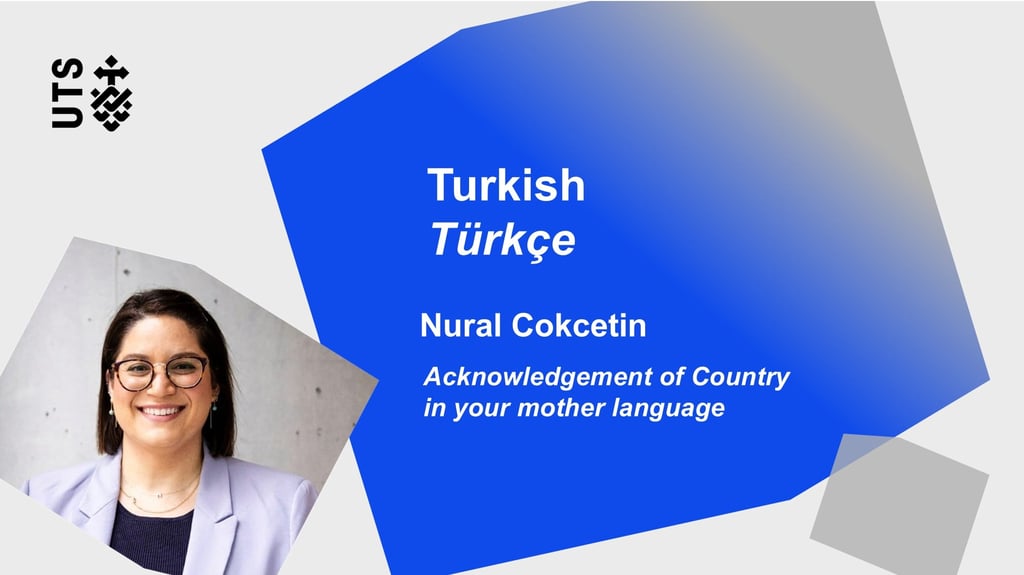
“Bu topraklarin, gökyüzünün ve su yollarinin Geleneksel Sahiplerini taniyor, ve geçmiş ile günümüzün Büyüklerine saygilarimizi sunuyoruz”. 
 
Translation (English) 
“We Acknowledge the Traditional Owners of these lands, skies, and waterways; and pay our respect to their Elders past and present”. 
 

Colourful speech bubbles with greetings in various languages, including "Hello," "Hola," "Ciao," and more, on a white background.

Audio library: Read and listen to an Acknowledgement in your language

We’ve provided examples of Acknowledgements in various languages in our audio library. 
White text on a dark blue background reads "My Language My Country" with colourful doodles of waves, a house, and symbols. Logos of UTS Multicultural Women's Network and Impact Studios are present.

Podcast: My Language My Country

This podcast is a six-part series exploring our connections with First Nations ways of being through the many languages we speak.

Why does it matter?

Our community shares why it’s important to them to conduct an Acknowledgement in their mother language.
Thanks to those who brought this project to life 

We offer our special acknowledgement and heartfelt thanks to the First Nations contributors to this project: Aunty Glendra Stubbs, Professor Lindon Coombes, Dr. Lachlan McDaniel, Dr. Mariko Smith, and Dr. Debra Dank.  

This project was made possible through the support and collaboration of the Multicultural Women’s Network, the Centre for Social Justice and Inclusion, Impact Studios, UTS Shopfront, and the Faculty of Design and Society.   

We would especially like to thank Dr. Elaine Laforteza, Leah Subijano, An Le, Masako Fukui, Sarah Gilbert, Jane Curtis, Regina Botros, Alexandra Morris, Thomas Ricciardiello, Marianna Longmire, Tiffany Dimmack, Claudia Taranto, and Marrickville West Public School.   

Finally, our heartfelt thanks to everyone across the UTS community – staff and students – who shared an audio recording, helped create our audio and video assets, joined us as podcast guests, or featured in the exhibit.