

Engineering intelligent systems.
Our laboratories give you access to advanced tools for designing and testing robotics, automation, and embedded technologies in environments that mirror real-world challenges. Here, students gain hands-on experience with control systems, researchers develop intelligent solutions for manufacturing and transport, and industry partners collaborate on next-generation automation projects. These spaces are designed to help you move from concept to application quickly and confidently, with expert support and industry-standard resources available at every stage.

Manufacturing and Materials Laboratory
Our upgraded Manufacturing and Materials Laboratory is designed with tools to create, test, and prototype with confidence. The space supports advanced materials testing, machining, and additive manufacturing, enabling rapid iteration and sustainable design. Whether you’re working on aerospace components, biomedical devices, or industrial applications, you can collaborate with experts to explore new materials and production techniques and bring your ideas to life.

Infrastructure Robotics Laboratory (CB02.02.082)
The Infrastructure Robotics Laboratory leads innovation in robotics for the inspection and maintenance of civil structures. This space is designed to reduce risks for workers by enabling remote data collection and maintenance in hazardous environments. Its research strengths include advanced sensor development, data fusion, machine learning, and robotics—bridging fundamental research challenges with real-world industry needs to deliver safer, smarter solutions.

The Intelligent Robotics Laboratory (CB02.11.101)
This laboratory develops robots that work safely alongside humans, supporting them in a wide range of tasks. These systems are designed to understand and respond to human intentions, creating seamless and intuitive collaboration. The goal is to reduce both the mental and physical load on workers while keeping humans firmly in control, with robots providing essential, intelligent assistance.
Human Robot Interaction Laboratory (CB02.11.121)
The Human–Robot Interaction Laboratory is at the forefront of social robotics, advancing research that brings robots beyond industrial environments and into everyday life. This space explores how people engage with robots, with the goal of making robotic systems more intuitive, approachable, and trusted. By bridging the gap between emerging robotics technologies and public acceptance, the lab helps shape solutions that feel natural and safe for human interaction.
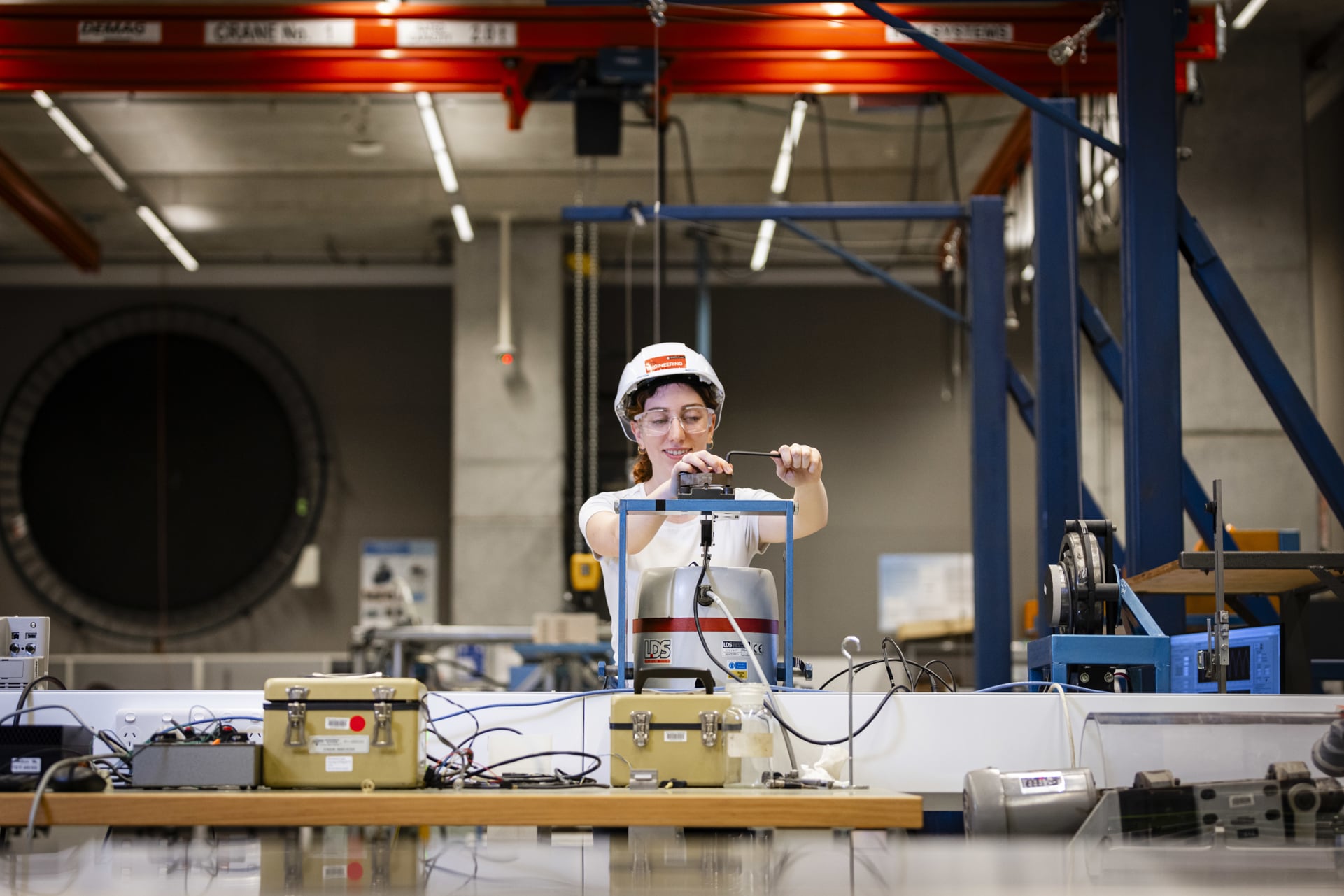
Dynamics and mechanics of solids laboratory (CB11.B4.105)
The Dynamics & Mechanics of Solids Laboratory is a hands-on teaching and research space where students learn how forces, stresses and motion shape real-world structures and machines. The lab supports second and third-year mechanics and dynamics units, honours projects and postgraduate research, from tensile testing and beam bending to vibration and modal analysis. Students gain practical experience with industry-grade test rigs, instrumentation and data acquisition systems while working directly with academic staff and research teams.

Mechanical Design Studio (CB11.B4.109)
A hands-on, team-based studio where final-year (and advanced) UTS engineering students tackle real-world design challenges, from concept to prototype. Students use mechanical, manufacturing and control theory plus modern design practices to deliver functional devices or systems, often for industrial or research clients.