Past visitors and seminars

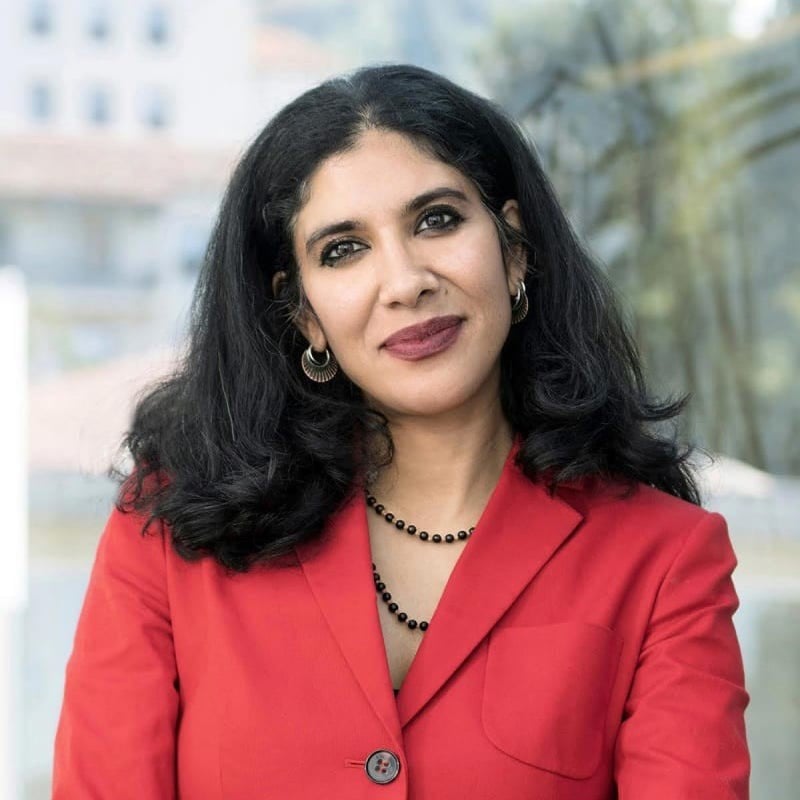
Professor Sonia Katyal

Professor Sonia Katyal

Associate Dean, Faculty Development and Research

University of California, Berkeley, School of Law

View profile

The Gender Panopticon: Artificial Intelligence, Gender, and Design Justice

The Gender Panopticon.

Seminar: The Gender Panopticon: Artificial Intelligence, Gender, and Design Justice

(00:32:12)

Seminar: The Gender Panopticon: Artificial Intelligence, Gender, and Design Justice transcript

Thank you very much. As the Chair in Gender and the Law and the Faculty of Law at the University of Technology, Sydney, I'd like to welcome you all today. My name is Professor Ramona Vijeyarasa, and it's a real pleasure to welcome Professor Sonia Katyal to the faculty.

I'll return to Sonia in just a moment, but I'd like to start by acknowledging that the UTS campus stands on the unceded land of the Gadigal people, and I pay my respects to Elders past and emerging. This land always was and always will be the land of the First Nations people. So this programme, we have a visiting fellowship programme, thanks to the generous funding of the Minderoo Foundation.

I'd also like to acknowledge the Minderoo Foundation for enabling this conversation today. Professor Sonia Katyal, I'm sure many people know, is the co-director of the Berkley Centre for Technology and the Law and the Roger J Traynor Distinguished Professor of Law. When Sonia came in today, it was quite clear that many people are very familiar with her work.

She's very established in the field of technology, IP and civil rights, including anti-discrimination law, privacy law and freedom of speech. Sonia mentioned to me here that she was coming to look at some of the artwork in Sydney, especially around the Biennale. So if you haven't been, I do recommend you see it because it's truly, truly wonderful, especially the work at the White Bay Power Station.

So some of her new work is looking at this unsettled question of the relationship between digital art and freedom of expression and what generative AI might mean for creativity. Sonia's not talking about that project today, but I thought I'd put it out there for those of us interested in that new emerging area of work. What Sonia is presenting is a paper called the Gender Panopticon, Artificial Intelligence, Gender and Design Justice.

So what Sonia I'm hoping we'll get into today is what happens when binary systems of gender meet binary systems of code. And what does that mean for the potential erasure of certain gender diverse people, especially non-binary and transgender populations? So thank you very much, Sonia. I imagine you'll speak for around 30 or so minutes and we'll open up to Q&A.

Oh, thank you. It's so lovely to be here. I have to say in the States, we just have so much admiration for the work that's done by this faculty and others in Sydney.

And it's I hope that this is the beginning of a longer conversation between scholars that are working in similar areas in the US and also here. I, you know, I've just gained so much insight from from work that is being done by folks around this table. And I just particularly your project on the gender index is really it's extraordinary and I'm so excited to hear more about it.

So I thought what I would do for my talk today is actually talk a little bit about the trajectory of projects that I've been doing around the relationship between gender technology and and property theory. And I would say that like a lot of the projects that I'm going to be talking about are projects that are sort of orientated around what used to be kind of a very unique place that I felt that I that I that I was part of a very small number of people who are both interested in theories of intellectual property and technology. I was trained as an intellectual property lawyer. 

I also trained as a civil rights lawyer and always thinking about the conversation between sort of the old areas of law and sort of new areas of technology. But at the same time, I've always had this kind of corner work where I focused a lot on gender and sexuality. Some of the work that I started off my legal career doing was work about section 377 in in India and the constitutional sort of issues that were around sodomy laws in in previously colonised areas.

So that was some of the work that I was doing. And then and then over time, I started to realise that these two areas that seem so distinct this area of kind of intellectual property and information law and gender and technology and LGBTQ rights. There was actually a much deeper conversation that sort of needed to happen between these areas.

And so this is what led me to do a bunch of projects kind of trying to introduce a conversation between these different areas. And so I thought maybe for this talk, I would talk a little bit about some of my past work. And then I would talk a little bit about kind of where I where I'm focussing my work today. 

I will also say that this work is is is is more conceptual and sort of abstract. But it is meant in service of the idea of gender self-determination. It is it is work that I hope will live on past the changes that we are now seeing in the law in the United States and that come with changes in the administrations in the United States.

And so so part of the project is very much informed by that. I will say that a lot of the sort of birth of these projects were done in the Obama era where I was trying to sort of encourage a different conversation with legislators and judges that were more that were more that had a closer affinity to the idea of LGBTQ rights. Obviously, we're in a different moment now. 

Hopefully that will change. So so this work called the Numerous Processes of Sex was a work that I published in the University of Chicago Law Review some years ago. And the idea that sort of motivated this was kind of to think about how legal constructs of property theory and actually private law can kind of affect our thinking on constructs of sex and gender and to think more about how exploring these areas of law could lead us to sort of unresolved parallels, but also unresolved opportunities.

And so the thesis that I took in this earlier paper was actually to study the parallel between sex and gender and how it related to the comparison of property and intellectual property. And my thesis in this article was that sex is to gender as property is to intellectual property. And the idea behind this was that instead of thinking of sex as a construct of sort of biology or medicalisation alone, it was helpful for the law in particular to reconceptualise the assignation of sex as it functions in the law beyond frameworks of kind of tangible property.

And so the idea is that we just as structures of property law are limited by this numerus clausus theory, the idea that there's only a few standardised sort of formations of property in the law. I drew a parallel to say that the exact same thing happens when we think about sex and gender, that there is a numerus clausus of sex that forecloses opportunities for kind of individualised reformations of gender and reformations of identity. And so the results of this is that our system of sex regulation looks a lot like our system of property regulation. 

It has borders. It's fixed. There's a sense of rivalrousness between male and female.

It's premised on sort of a notion of scarcity in the sense that it's hard to sort of make changes in the assigned sex that one faces at birth. And it's premised on this kind of rigid polarity between male and female. And it drew on the sort of seminal article by a UCLA law professor named Cheryl Harris, who wrote an article called Whiteness as Property, which talked about how ideas of whiteness as identity actually linked very closely to ideas of property, that the reputational property one has in whiteness is sort of similar to a kind of property entitlement.

And so then I sort of turned to gender and I explored in this article the idea that gender functions more like intellectual property. It is viewed by my colleague at Berkeley, Judith Butler, as performance, right? It is a creation that is sort of much more intangible. It's permeable. 

It's malleable. It's non-rivalrous, right, as we see by the experiences of many transgender and non-binary individuals. And it's ultimately deeply sort of non-exclusive. 

And that is to say that it's much more of a kind of performance that relates to one's fluidity of identity for some, right, than it does with this kind of rigid notion of the polarities of male and female. And so this account tries to kind of move gender away from a series of social constructions and tries to think about its function in the law as a series of sort of intangible possibilities of expression. An essence that is not natural, it is not fixed, but it resembles and it can be regulated in the same way that we think of intellectual property through this lens, the idea of fluidity, creativity, empowering kind of reformations of scripts that we associate with gender and performance.

And that if we do this, we kind of map new possibilities for sort of thinking about how the law can regulate. And so I wrote that piece in 2017. It was actually meant to be a philosophy theory piece.

And then the world changed, at least for those of us in the United States in 2016, and we saw a very different set of kind of conversations that were happening around sex and gender. And so we saw these very different sets of conversations happening around sex and gender, particularly with respect to the kind of alienation and targeting of transgender and non-binary individuals in the United States. I don't mean to suggest that that only happens in the United States. 

It happens in many places in the world, but it was a very distinct shift in terms of the way that we were thinking about gender regulation. At the same time, there was also this really important sort of development that was happening in the world that I inhabit, which is also the world of tech and information law, which had to do with artificial intelligence. And so there were these two really significant things that were happening. 

And in my place in the world, what I'm really struck by, particularly because I teach so many students at Berkeley that go on to be part of the tech world, is that my students are a perfect, I think, representation of the gender fluidity of the youth today. So many of them have embodied this notion of gender fluidity, and so many of them go on to work at tech companies, and they build products that in many ways are both indirectly and directly informed by the fluidity that they inhabit. And so I started thinking about artificial intelligence, and I started thinking about artificial intelligence because so many of my trans and non-binary students would come to class and talk about their experiences interacting with AI-driven technologies.

And so I started noticing that there was a real lack of conversation, both among law professors, but also among technologists, about how artificial intelligence is informed by this binary system of gender. And so while the tech world, I think, is pretty well aware of this issue regarding lack of diversity and sexism, I really did feel like there was a space in the world where legal scholars were not really focussing on how technology itself was interacting with ideas of gender core categorisation, and also how their building of products reflected a much more simplified set of principles around gender than what I see in the world that I inhabit. And so I started thinking about the categorisation and mapping of gender by automated private technologies and how that poses implications for civil rights.

And the idea of the second paper that I wrote called the Gender Panopticon was the idea that when a binary system of gender merges with a kind of binary system of code, the result really invisibilizes transgender and non-binary populations and erases them from view. And so, you know, and I think that gender regulation is something that I think is very prevalent in the worlds that we live in. But also when we design technology, gender also pervades the way that we design technology.

So think about the fact that many bots and AI agents are cast as female. There are lots of conversations happening in AI where researchers have documented issues with data collection and categorisation in AI, some of which I've written about elsewhere that produce a wide range of disparate impacts that are faced by communities of colour. But we really haven't yet really thought about how these systems of AI are interacting and imposing expectations and scripts around individuals that are also being regulated by AI.

And so we, in this paper, I wrote it with one of my undergraduate students, which was an unusual thing, but this particular student was incredibly brilliant and talented. Her name is Jessica Jung. She is a trans female.

And she and I sort of tried to kind of select a bunch of different technologies that were driven by AI that illustrated this problem of sort of the binary system of gender being imposed on individuals. And we also talked about how the erasure of the kind of gender fluidity in this world of technology has really serious consequences beyond invisibility, because it means that certain populations get denied the same rights and services as other individuals. And especially in this world where our current administration really does seek to define individuals' sex as being something that is determined at birth.

We also felt that this current moment also institutionalises a form of gender surveillance as a consequence. And so while there's a lot of scholarship that focusses on the protection of transgender identity in the law, this article was really motivated by trying to show that automated technology facilitates the standardisation of gender identity. And that it forms what we see as a panopticon. 

Many of you may be familiar with the panopticon written about by Jeremy Bentham. It refers to the design of a prison that facilitates constant surveillance by placing guards in a central tower, and it creates this kind of sense of conscious and permanent visibility that assures the automatic functioning of power. And this design creates an illusion of solitariness within the cells, but it also ensures that the person is never sure about whether or not they're being watched.

And this is a quote from Michel Foucault. It is at once too much and too little that the prisoner should be constantly observed by an inspector. Rather, he says, the inmate must never know whether he is being looked at at any one moment, but he must be sure that he may always do so.

The primary purpose of the panopticon is to compel individuals to internalise the overseeing gaze of authority and to discipline and change their behaviour to conform with the perceived expectations of authorities. And so by creating this illusion of constant surveillance, you internalise the idea of constantly being observed and you change your behaviour, eventually changing your identity as a person. And so this metaphor obviously is incredibly salient, right? It is crucial to understanding surveillance in real space, but it is particularly prescient when we think about the experiences that are faced by individuals who are transgender or non-binary identified.

As scholar Toby Beauchamp has explained, quote, surveillance is a central practise through which the category of transgender is produced, regulated and contested. And so what we tried to do was look at a bunch of different technologies to kind of highlight how these technologies were imposing these sorts of binary views of the world. And much of our work was really informed by the work of someone named Oz Keys, who studied a lot of papers on kind of gender recognition in the sort of information tech space and found that 95% of them relied on an entirely fixed sort of binary system of gender.

And so what we argued is that we all face some degree of surveillance, right? But the effect of surveillance is felt, I think, particularly intensely by individuals who are transgender and non-binary precisely because there is such an absence of clarity regarding the legal protections that they enjoy with respect to different aspects of their lives. And like many minority groups, trans and non-binary individuals have a very sort of complicated, one might even say a paradoxical relationship to technology. In the world of kind of trans theory, right, the marriage of technology and futurism has empowered us to think of worlds beyond gender, right? So many individuals in those populations are sort of drawn to ideas of science fiction and futurism.

And at the same time, when we think about the way that populations interact with technologies, they experience, I think, significant amounts of bias, censorship and surveillance. And so we looked at a variety of different technologies. We first looked at the kind of experiences that individuals face when they go through airports, the kind of biometric scanning, advanced imaging technology.

Many people don't realise this, but when you step into the sort of portal that is used to kind of scan your body, automated body scanning, there's actually a button that the TSA agent or security agent presses that determines whether or not you're male or female. It's a pink button or a blue button. And then the device orients its scanning around a perception of genitalia.

And this has really affected individuals who are transgender because of their interaction, use of prosthetic devices, and it causes individuals such significant sort of issues when travelling that there's a whole sort of, you know, there's a whole cultural population around this idea of travelling while trans, where trans individuals have told stories of their experiences. And our article opens actually with one of those stories. But then there are also issues of facial recognition. 

So, some years ago, Uber changed its policy and required drivers to pull over periodically and get their faces scanned to make sure that they were actually the individual that was licenced to drive the car. The thing that happened was that many individuals who are transgender were not being recognised by these systems. So you had months where transgender Uber drivers in the hundreds were literally having to pull over over and over again, sometimes tens of times in one day to reauthenticate their faces because the systems were not recognising who they were.

Then we also see something that has also been really well documented on platforms, which is the kind of over surveillance of trans and non binary and often queer communities on the Internet. So, in the United States, there's a number of laws that have been passed to prevent trafficking, and those laws have been interpreted by the platforms to really prevent a lot of kind of interactions and conversations and sort of identity performances by trans and non binary individuals. And it documents how individuals that are LGBT identified often face way more sort of shadow banning or different kinds of restrictions around content on platforms.

And so, when we talked about the kind of significance of these sort of issues, we talked about how many of these technologies create a kind of automated misrecognition, which leads to not just misgendering, but also erasure. It leads to classifying entire populations as error classifications in the world of technology, rather than kind of communities that are deserving of recognition and dignity and respect under these technologies. And, of course, these issues are also magnified when we think about race, because there's a parallel that one can often draw in terms of the way that racial minorities are often surveyed by these systems.

But what we also tried to kind of talk about was that these systems also operate as barriers to individuals' rights to exercise certain rights, a right to travel, for example, a right to hold an occupation, a right to expect the same levels of privacy protections that everyone else receives, a right to speak and express oneself freely on various technology platforms. And each creates an unequal system that's premised on surveillance, sorting and misrecognition. And just as an example of this, I want to just draw your attention to something that I read recently.

Many, many years ago, in one of the papers that Os Keyes sort of pointed to, there was a statement that was made by someone working in technology in the United States who said, Oh, you know, someday we can actually imagine technologies that scan individuals before they enter gender segregated restrooms to make sure that, you know, the individuals that are entering the restrooms are, you know, properly female or properly male. And this was pointed to by Os Keyes as an example of kind of how extreme technology could become. And it turns out, actually, that in some airports in the United States, these technologies have actually been deployed so that if you are a trans individual trying to use a restroom that corresponds with your identity, you may actually face being scanned before you can enter.

And obviously, the implications of that are pretty significant. So, I don't want to sound dismovement, but I also really want us to understand that this isn't, you know, as compared to the numerous clauses paper, which was much more theoretical. This is actually trying to sort of document what's happening kind of in the lives of trans and non-binary populations in the United States, where the technologies are being developed that basically erase the existence of trans individuals.

And so, at the end of the paper, we tried to kind of talk a little bit about some of the solutions, right? And we talk about how privacy, at least as framed in the United States, is a limited solution. And so, we instead really embrace this idea of gender self-determination as something that can be coded. And we drew on a writer named Sasha Costanza-Chock, who is a professor at MIT, a trans woman who wrote a book on the concept of design justice.

And the idea here is using the data that we already have about intersectional identities to inform the design of technologies. And that that can be one way that we can develop technologies that are more inclusive. That's one sort of set of possibilities.

But the other sort of challenge is that many individuals within those populations do not necessarily want to be recognised by the law. Understandably so, right? Because of the sort of deep distrust that many populations have about state recognition. So, it becomes a tension.

And this is actually, I think, a really fruitful tension for technology to explore and experience, right? Which is, how do we think about allowing individuals to be invisible if that's what they prefer? How do we allow individuals to be visible if that's what they prefer? And so, at the end, let me just make sure. Sorry, my slides got a little out of order. OK, and then at the end of at the end of this, we sort of argued that these technologies create kind of what we see as a sort of data related double bind.

The invisibility of data regarding transgender and non-binary individuals fuels machine learning outcomes. And it leads to products that are built that do not embrace the kind of fluidity of gender or the populations of trans and non-binary individuals that I think we see at least particularly in terms of my corner of the world today. And that the erasure of these populations means that it subjects them to even greater surveillance and standardisation.

And the reason that I think it's so important to study these systems is because it shows us a window into the ways that we're all regulated by gender. And it shows us the importance of sort of recognising how gender self-determination is something that we should all really strive for and something that we should all really seek to protect. And so at the end of the day, I want to sort of end this part of the paper with like an irony, right? Which is this this notion of trapdoor, which was something that was articulated by one of my colleagues, Eric Stanley at Berkeley, where they write the promise of positive representation ultimately gives little support or protection to many, if not most trans and gender non-conforming people, particularly those who are low income or of colour.

The very people whose lives and labour constitute the ground for the figuration of this moment of visibility. So while trans people are often offered many doors to visibility, resources and recognition, there are also many traps because the accommodating forces only operate in support as they replicate or fail to challenge existing power structures. And so we sort of thought that it was a really important observation to talk about with respect to AI, because I can do a lot of really wonderful things and it can also do a lot of really harmful things.

And so this is the central challenge, right? That it's not enough just to ask for recognition of a population. It also requires this notion of kind of design justice. And so now I'll just talk for a minute. 

Is that okay? If I just one more minute or so, and then I'm going to talk a little bit about what I'm currently working on, which is about the idea of sort of going back to the idea of theory and property and talking about gender as the idea of a commons. And this draws on work that is often done by many individuals in the sort of sci-fi world, but also in the kind of trans theory world that write about ideas of gender galaxies, three dimensional nonlinear spaces where every gender has a location that is not fixed and that offers an endless possibility of gender expression. And I think we see this actually in the worlds of, at least I see it certainly in the worlds of, the students that I teach at Berkeley. But I also think that it's a really interesting way of thinking about gender, right, which is again through this lens of intellectual property, through this idea of of thinking about how to regulate gender as a kind of unlimited resource and intellectual commons that empowers more fluidity and multiplicity, allowing us to kind of transcend the strictures of sex and gender in the process. 

And so this work um draws on what Ramona was talking about. This work actually draws on the work um that is being done by a number of AI artists, but it's also being done by a number of artists that that really I think in in many ways provide us with insights not just about the possibilities of gender self-determination but also the limitations of of the worlds that we inhabit today but but to avoid being entirely dystopian and to instead think about sets of possibilities. 

And so that's work that I'm doing now. Um and I also have a number of other projects actually that are in my other area that I work on which is uh uh intellectual property and trademark law and trade secrecy. And so if any of you want to engage with me on any of those projects, I'm totally happy to send you way too many unfinished papers and thoughts. But I just really want to thank you so much for listening and engaging with this work. I just, I'd love to hear your thoughts.

Thank you so much, Sonia. I think there's legal scholars in the room who really come at law from many different angles and your two papers that you presented in that presentation really speak to so many of those different areas. I also think it's really interesting when you can write a paper at a moment in time and when you think about the surveillance state that has been growing in the US, how some of your ideas just become increasingly relevant especially with the roll back, push back against diversity included. So thank you.

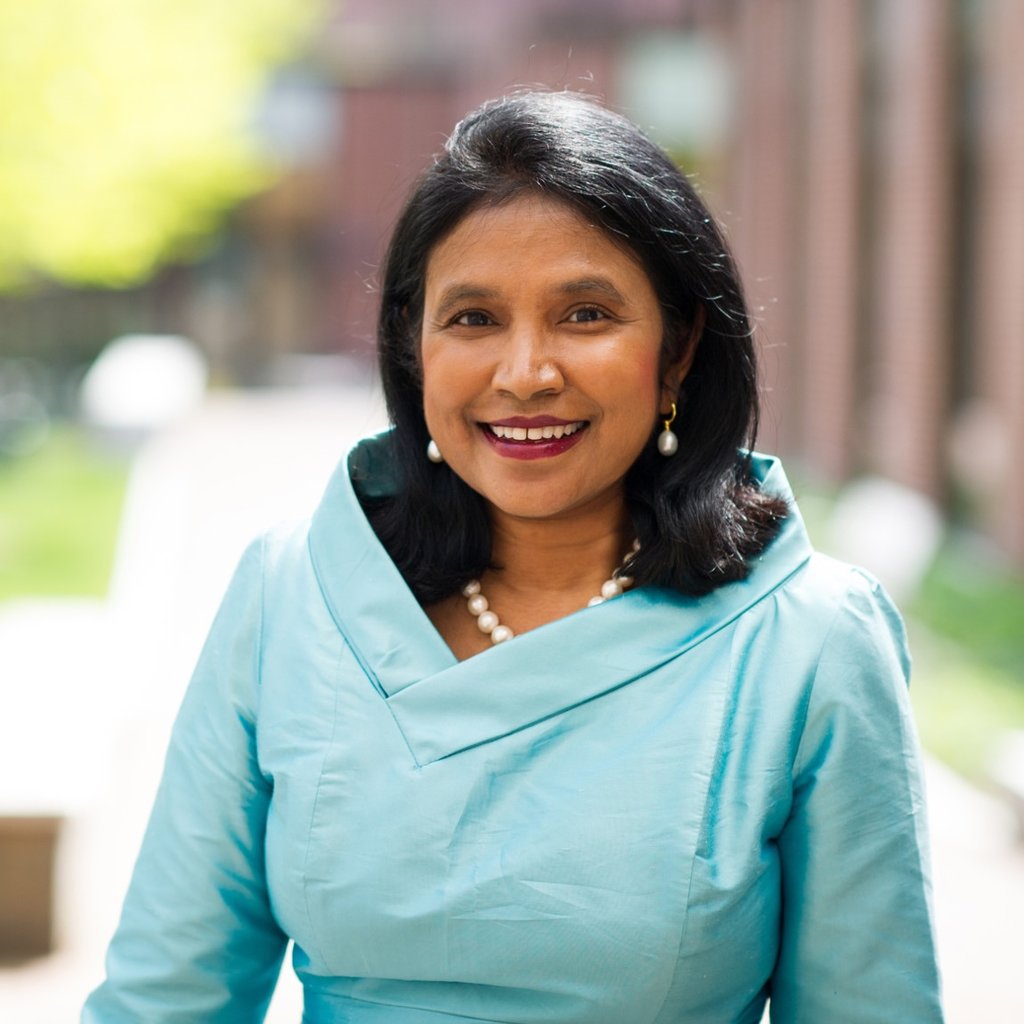
Distinguished Professor Rangita de Silva de Alwis

Distinguished Professor Rangita de Silva de Alwis

CEDAW Committee member

University of Pennsylvania Carey Law School

View profile

CEDAW and women’s rights in the age of AI

Gender and the Law Speaker Series: CEDAW and women's rights in the age of AI with CEDAW Committee member, Distinguished Professor Rangita de Silva de Alwis

Seminar: CEDAW and women’s rights in the age of AI

(00:34:44)

Seminar: CEDAW and women’s rights in the age of AI transcript

Excellent. Welcome everyone to the Gender and the Law speaker series. My name is Professor Ramona Vijeyarasa.

And it is an absolute pleasure to host Distinguished Professor Rangita de Silva de Alwis. I would like to start by acknowledging that we are on the unceded land of the Gadigal people and we pay our respects to our elders past, present and emerging. Here at UTS, we acknowledge that these lands have always been the places of law and they exist within plural legal wells.

And for those of us who were here at yesterday's CEDAW fireside chat, one of the Distinguished Professor's biggest contributions has been in the field of women, peace and security. And earlier this year, she was the rapporteur of the addendum to the very renowned UN Security Council Resolution 1325 from 2000. So in celebration of its 25th anniversary, the CEDAW committee produced an addendum that really speaks to the role of women as custodians for culture and cultural identity, which is so often under threat in times of conflict.

So I particularly wanted to acknowledge that among the Distinguished Professor's many contributions to international law. Distinguished Professor Rangita de Silva de Alwis has a very long CV. She's over here from the Carey Law School at the University of Pennsylvania and was very recently reelected, most importantly, to the UN CEDAW committee for her second term.

So it's a real privilege for us to have her. She's only in Sydney with us at UTS and will be flying out this afternoon. So we will hand over to the professor to give her talk for around 35 to 40 minutes.

We'll have a brief period for Q&A and anyone has a burning desire for a quick one to one before we get Rangita into a taxi over to the airport. Rangita de Silva de Alwis will be talking today about CEDAW and women's rights in the age of AI and the implications for women's rights of new technologies. Thank you very much.

Thank you, Ramona. As you know, I'm very proud of your visionary leadership and the ways in which you have created an incubator for cutting edge ideas that also impact on the CEDAW's new direction. So thank you for the work that you're doing here.

So my talk today is centred around some of the work that I'm doing, an article that is a work in progress still on gender based digital malcontent and its impact on democratic gender issues. So I want to start with recalling, because of that universal truth, Greek mythology, especially the Greek myth of Prometheus who stole fire from the gods. And as you know, fire has the power to sustain human civilisation, but it also has the power to destroy human civilisation.

So AI, like the gift of fire, is a double edged sword with great promise, with the potential for great promise and the potential for peril. Writing in Democracy and Disagreement, my former president of the University of Pennsylvania, Amy Gutmann, posits a conception of democracy that centres moral discussion in political life, which she calls deliberative democracy. I posit whether online forums, which are the new public square, can provide a forum for deliberative democracy.

And are online forums moral and deliberative? That is the question that I wish to pose. I will address first the direct online attacks on women in political leadership and public participation, such as human rights defenders, whistleblowers and journalists. And secondly, look at the indirect chilling of women's participation in public life due to algorithmic bias and LLMs, which are trained on historically discriminatory data.

Together, both these direct and indirect attacks can erode the potential of reasoned deliberative discourse online. So given the paucity of time, I will only address the first part of my paper, but I will start in this given your interest in the ways in which I interact on the CEDAW committee with on my constructive dialogues with different elements. I would like to address my interventions on technology with state parties.

And then my second part will address the tech-based violence and the chilling effect on women's political participation and the shrinking of the civic space for women in public life. So in 2023, I was invited by the South Korean Constitutional Court to present a keynote at its 35th anniversary. I spoke of the policy lessons that I had learned from the South Korean case of the ninth room case, where hundreds of young women were lured into chat rooms on Telegraph and blackmailed to create sexually explicit videos that were then disseminated online.

Today, the Netflix film Cyber Hell dramatises this case of illicit seduction of young women and girls, some of them middle school age. The sheer scale and muted nature of the content remains staggering. At the South Korean Constitutional Court, I noted that the first social media platform, Facebook itself, grew out of a history of misogyny.

The genesis of Facebook, as many of you know, was FaceMash, which was to rate young women's sexual appeal at my alma mater, Harvard, and other Ivy League campuses in the US. So I argue that around the world, online misogyny is a mirror image of offline misogyny, and that while offline misogyny bleeds into online misogyny, the lines between the two are often blurred. Digital violence is ubiquitous, because unlike physical violence, digital violence is omnipresent.

So when South Korea came before the CEDAW committee in 2024 as one of the world's most advanced digital societies, I mentioned that South Korea continues to witness a dizzying rise in cyber sexual violence, targeting girls and adolescents. And as country rapporteur for South Korea, in my constructive dialogue, I said to South Korea, the significant rise in anti-feminist rhetoric in the political space parallels a culture of anti-feminism rapidly proliferating among young men online. Further, in the concluding observations, I asked the state to develop a regulatory framework to address the increasing use of new digital technologies for online gender-based violence, including cyber-stalking, cyber-bullying, harassment, extortion, doxing, and the non-consensual sharing of intimate images.

And so what I want to highlight is that the High Commissioner for Human Rights took something out of the concluding observations that I wrote, and he quoted my concluding observations to the state party, and this was the paragraph that he used, given the rise of political rhetoric that is anti-feminist. So I had written, the committee remains concerned about the pervasiveness of stereotypes concerning the roles and responsibilities of women and men in the family and society, which overemphasises women's traditional roles as mothers and wives, thereby undermining women's social status, autonomy, and professional opportunities. In particular, the committee notes with concern the significant rise of anti-feminist political rhetoric, which has sparked a populist narrative that weaponises feminism and creates a binary opposition between so-called family values and feminist values.

So this is really what the High Commissioner for Human Rights took, because this is not only limited to South Korea, but this is pervasive around the world, the weaponisation of feminism and this opposition between so-called family values and feminist values, especially among young men who have started to identify themselves in South Korea as victims of reverse feminism, and which is threatening to reverse prior gains, engendering anti-feminist hate speech, both online and offline. And then when I was the country reporter to Thailand last year, I said the same to Thailand, and for the first time used the term manosphere in the CEDAW committee. So I said the rising misogyny in the online and offline manosphere must be addressed through policymaking, so as to replace the culture of misogyny with a culture of respect for all women and girls, and to exercise due diligence in creating a culture of respect for women and of gender equality in the private sector, particularly in the innovation economy, given Thailand's aspiration to build a Southeast Asian Silicon Valley.

So I urged that due diligence obligations in the private sector, particularly in the innovation economy, creates a culture of respect for women, and to create regulatory safeguards and guardrails on artificial intelligence so as to comply with human rights standards, and to mitigate bias in algorithms and large language models to develop a comprehensive strategy to eliminate discriminatory stereotypes and patriarchal attitudes, both online and offline. I've often argued that the new forms of discrimination lie not only in laws and regulations, but in algorithms. This is the newest area of discrimination that we need to address in terms of anti-discrimination policies.

I was also the country reporter to Tualu, which is facing, as all of you know, a climate emergency and existential crisis due to sea level rise. You may know that the Tualu Constitution now enshrines statehood in perpetuity, and it has created the world's first digital twin, even as the country slowly disappears into the sea. And that itself brings about its own dangers, a digital twin. 

So I called upon Tualu to develop a framework for digital governance and cyber security that protects the rights of women and girls, including their rights to privacy on Metaverse. In Fiji, during the constructive dialogue, I noted that the de-platforming of women in public leadership is a threat to deliberative democracy. I asked the government, given that several women public leaders have been targeted, would the government consider specific provisions criminalised in the sharing of non-consensual intimate partner images? Because at the very moment that I was in Fiji, I may have referenced this yesterday, the Minister for Women's Affairs had just resigned because of a non-consensual sharing of intimate image abuse.

And I said the consequences are dire. Online abuse de-platforms women in leadership, creating a chilling effect on women in political office and public life, violating women's democratic deliberations and information integrity. Further, I asked, with the rapid pace of technology development and the dizzying changes in AI, what specific ways are you working with platform providers like TikTok and Meta to address gender hate speech, disinformation and misinformation? I referred to the recent online bullying of women in leadership, including a recent complaint by the vice chancellor of the University of Fiji, who also happened to be a former UN special rapporteur.

I emphasise that image-based abuse or revenge porn is pervasive and destructive, disrupting women's lives and public discourse in Fiji. Women and girls experience 10 times more online violence than men in Fiji. You might also find my dialogue with New Zealand on indigenous women's inclusive data governance pertinent. 

I asked New Zealand, how would you understand your obligations and responsibilities to indigenous women with respect to Maori data sovereignty and governance, especially in relation to new technologies and e-commerce? How are Maori women included in data governance? And given the fact that Article 2 of the Maori language version of the Treaty of Waitangi uses teanga, which translates to treasures, which refers to all dimensions of a tribal group's estate, material and non-material, and sacred places, ancestral lore and genealogies, how would you then categorise sovereignty of data as teanga, as what I would call the non-material heirlooms of the Maori people? And how would you define this as valued treasure to the Maori people in terms of the sovereignty of the data? The idea that data is of strategic value to all indigenous people and the Maori is compliant with the full potential of CDoS, GR 39 and 40. In 2021, the Waitangi Tribunal found that the Maori relationship to data is part of the Maori knowledge system, and therefore the way that the digital domain is governed and regulated has important potential implications for the integrity of the Maori knowledge system. As many of you know, data is the new oil. 

It's the new gold. So who owns the data? Who controls the data? And the labelling and the annotating of the data matters to indigenous data governance. In the age of AI, where historically biassed data can perpetuate stereotypes or inaccuracies without proper safeguards and representation, there is a possibility that this could unintentionally reinforce old patterns of misrepresentation about the Maori people.

The United Nations Declaration on the Rights of Indigenous People establishes the rights of indigenous peoples to maintain control, protect and develop their cultural heritage, traditional knowledge and traditional cultural expression. And I argue that in the age of AI, the right to control and protect the cultural heritage would include the right to protect and control and develop their right to the data and the data sovereignty of the Maori people, including indigenous values, history, legal systems, connecting stories of the past, the present and the future, with the same kind of intentionality of traditional native instruments and stated differently, indigenous data and AI must be married as a means towards decolonising the data. To me, that is really the newest challenge for the CEDAW committee. 

How do we decolonise data, given the fact that the data can perpetuate the discriminatory histories of people, especially women, women of indigenous identity? So as many of you know, as I said before, technology is a double-edged sword. Data points are snapshots of the world we live in, reflecting real world biases and the large data gaps we see are partly due to the gender digital divide. And scholars have highlighted the garbage in garbage out problem in training data sets for AI, showing how the lack of diversity in the data, the lack of diversity among developers can result in coded and automated biases.

So as you know, the international framework itself is struggling to keep pace with the rapidly changing ecosystem of the cyberspace. On December 2024, the United Nations General Assembly adopted a treaty entitled the countering the use of information and communications technologies for criminal purposes, better known as the Cybercrime Convention. And I'm glad that Australia is a signatory to this Cybercrime Convention. 

Now, there are four aspects of the Cybercrime Convention that are specific to gender and have specific gender implications. One being online grooming. And although the convention hasn't defined grooming as part of a gendered aspects of criminal activity online, the chilling sexual abuse involves gaining access to the child, especially girl child, through sequential relationship forming online.

Cyber trafficking over the last few decades, social media platforms such as Facebook, Snapchat, WhatsApp have been used to recruit victims, largely women and children through either direct messaging or catfishing. Thirdly, the non-consensual distribution of intimate images, which you're all aware of and is more widely known as revenge porn and cyber scams. And I argue that cyber scams and data breaches may carry differential gendered impact.

In cases where medical data is exposed, for example, revealing the personal information of women, such as in relation to reproductive care, would have harmful gendered consequences. So, in my different scholarships, I presented three elements of harm. Firstly, a notable characteristic is the ability for online offenders to remain anonymous to their victims.

This veil of anonymity provided by the digital realm not only enables their actions, but also emboldens them in their abusive behaviour. Secondly, the geographic distance facilitated by online platforms allows offenders to engage in abusive conduct from afar. And thirdly, the automation capabilities offered by technology amplifies the scope and impact of abusive behaviour through this pylon effect.

And you may have heard about the United States' recent case, the massive social media adolescent addiction multi-district litigation. How many of you have heard of that case? Okay, so many of you have. And so, I'm not going to belabour this point, but the case involved Kaylee, a 20-year-old who was a minor when the case began.

She said she became addicted to Google's LinkedIn and Meta's Instagram at a young age because of their attention-grabbing design, such as the infinite scroll that encourages users to keep looking at new posts. A Los Angeles jury found Meta and Google negligent for knowingly designing social media platforms that are harmful to young people in this $6 million verdict that will serve as a bellwether for numerous similar cases. Now, my colleague, Veena Khan, who is at Columbia and was the former chair of the U.S. Federal Trade Commission, has argued in the Harvard Law Review that divisive and inflammatory content is good for business.

Deterioration of privacy and confidentiality is good for business. Reforms to make the site less addicting is bad for business. In their article, Deep Fakes, a Looming Challenge for Privacy, Democracy, and National Security Law, Professors Bobby Chesney and Daniel Citron discuss two legal approaches to deep fakes, user accountability as well as platform accountability.

My own colleague at the University of Pennsylvania Law School, Gideon Pachmowski, offers a third solution, manufacturer accountability, focussing on the companies developing AI tools. And as AI technology is a product, the time, he argues, has come to apply the law of product liability to AI producers. So in terms of the CEDAW, we are looking at due diligence obligations in cases where we see that these technologies that are being developed transnationally have an effect around the world domestically.

So I think this idea of due diligence gives us even greater power and resonance when it comes to CEDAW's work on transnational impact of technologies. So I was, as you mentioned, Ramona, I was privileged to write an addendum on Women, Peace, and Security to GR 30, Prevention of Conflict, Conflict, and Post-Conflict. And I focus on cyberspace as the new battleground, especially for women.

And I'm not going to go into this large addendum, but I did write that targeted hate speech can have a chilling effect on the participation of women in peace building. And that is the relationship with Women, Peace, and Security, that peace builders are being impeded because of the online spaces, particularly attacks on women in political leadership and in peace building and in times of crisis. As we know, deepfake pornography has been weaponised against female politicians and journalists to undermine their credibility.

And as I did in Fiji, I have expressed grave concern with respect to the alarming number of incidents of abuse, harassment, and defamation directed at women politicians and political activists on social media platforms. So according to UN Women, globally, women hold 27.5% of seats in national parliaments and make up 22.4% of cabinet ministers. So we have to ask ourselves, can we afford to lose more women to politics because of the chilling effect of online hate speech and the ways in which it has been argued that increasing awareness of the power of artificial intelligence coincides with growing public anxiety about the future of democracy.

In a landmark U.S. Senate Judiciary Subcommittee titled The Good, The Bad, and The Ugly AI-Generated Deepfakes in 2025, a report found that deepfake pornography increased by 464% between 2022 and 2023. 464% increase. The top 10 deepfake pornography sites had 300 million video views just in 2023. 

98% of all deepfake videos are pornography and 99% of those are targeted towards women. And at the end of this subcommittee hearing, it was stated, these are serious human rights abuses. So the ways in which this is defined now as human rights abuses give us great hope on the CEDAW and other human rights treaty bodies that we can define this abuse as human rights violations.

As you know, a 2019 video of then Democratic House Speaker Nancy Pelosi looking and sounding drunk emerged and was circulated on social media. The targeting of women politicians is particularly concerning because it adversely impacts our democracy. This continues to happen. 

The Italian Prime Minister Meloni, the U.K.'s Deputy Prime Minister Angela Rayner, Germany's Foreign Minister Annalena Baerbock are among the most prominent examples of female politicians who have been targeted by sexualised deepfake. Now, I'm going to look at the ways in which women in the media have been affected by deepfakes and other hate speech. UNESCO's report, The Chilling, a global study of online violence against women journalists show that 73% of women journalists have faced online harassment.

And according to the UNESCO report, the freedom of women journalists and human rights defenders include the ways in which deep platforming women's voices undermine equal access to the digital public space, creating a chilling effect on democratic deliberations with disproportionate impact on women journalists. The UNESCO report writes, we've seen how these experiences are seeing women moving away from public facing roles, pulling back from on-air positions or removing bylines or leaving journalism entirely. The toll on mental health and fear for physical safety indicates that a significant proportion of women journalists have considered leaving the industry altogether.

So the weaponisation of social media against women journalism is best embodied in the case of Nobel Prize winning journalist Maria Ressa, who often says that what she has experienced is death by a thousand cuts. So Maria Ressa, you may know, is a Filipino-American journalist who is the CEO of Rappler in the Philippines. And in 2022, when she won the Nobel Prize, my students in my AI and bias class dedicated our report, Digital Demons, to Maria Ressa.

And when she came, when the Philippines came before the CEDAW, I raised both Article 7 of the Universal Declaration of Human Rights, which enshrines equality before the law, and the Philippine Constitution's Article 3.1, which guarantees the due process law and the equal protection of the law. And I said, and this is quoting from my constructive dialogue, in the aftermath of the acquittal of Rappler, the media organisation founded by Maria Ressa, the Nobel Prize winning journalist, how will you strengthen the human rights and access to justice for all women journalists and human rights defenders? How would you review the laws of procedure and the rules of evidence followed by the justice sector, so as to ensure that law is not weaponised as a tool against women journalists and other human rights journalists? And in the face of an explosion of online violence against women, especially human rights defenders facing trial, how can the justice system address digital attacks, including doxing and deepfakes and other forms of misogynistic abuse that creates intimidating tactics in the process of a fair trial? As you can imagine, at that time, during Duterte's regime, the response that I got from the Attorney General's Department, who constituted the high level delegation to the CEDAW was that, Madam, we are all human defenders, you're dropping the rights, we were told that we are all human defenders, and this term human rights defenders should not be limited to only Maria Ressa, we are the real human defenders of the Philippines. So next I look at the way in which women whistleblowers have been muffled. 

Much has been written and discussed about the way in which tech can be used to stifle dissent and the civic space of human rights defenders. Less has been written about the way in which women whistleblowers can be muffled in tech spaces. My newest work addresses sexism and discrimination in Silicon Valley and the correlation, if not the causation, with algorithmic bias and technology-facilitated gender-based bias. 

One case that I wish to share with you is the alleged silencing of Kelly Stonelake, a Silicon Valley whistleblower. Stonelake brought an action against her former employer, Meta Platforms, for sex discrimination and retaliation under the state law against discrimination. Although she had excelled in her roles at Meta, Stonelake would go on to experience offensive sexist comments from colleagues and clients and to be held to different standards by multiple other male bosses.

And what was most direct was that she had identified serious product stability issues and product safety issues that put children at risk of immediate exposure to hate speech, sexual harassment, racism, and bullying due to some of the virtual reality platform expansion. And Stonelake was being asked to lead the go-to-market process when she joined a colleague and called for a pause on the rollout. Meta's leadership ordered Stonelake to silence her female colleague and when she refused, excluded her from weekly leadership meetings and denied her a promotion and asked her to go on medical leave for alleged mental instability.

So you can see the way in which the case is turned against her in ways that are so, to a large part, so usual. I mean this is normalising the ways in which these platforms behave.

So recently July 2025 the UN human rights committee uh asked CEDAW for comments on their new general comment on the freedom of association under article 22 of the ICCPR, the international convention on civil and political rights. And after its first draft, the committee invited treaty body members, including the CEDAW committee to submit comments ahead of its second reading.

I'm not going to take you through my entire comment, but what I wrote in it was that a dystopian reality is being facilitated through a technology based smart software both in the home and in the car. The overall effect of this activity can be a shrinking of the civic space for women as they are being watched, surveyed and effectively controlled.

Although the internet of things can impact both women and men given historical power differences and ways in which women's freedom of assembly has historically been heavily restricted through legal, social, and economic barriers designed to keep them out of the public sphere and political power, the impacts of IoT and other new technologies may be felt more intensely by women.

So finally, Ramona, I want to end by looking at the human rights risks which extend far beyond algorithms to the realities of people in the supply chains. So my most recent research is on the hidden human rights risks in AI supply chains. The physical infrastructure powering AI, minerals, water, labor, often involves exploitative practices, including child labor and unsafe working conditions in places like the DRC.

I'm following this case that was brought before the United States courts where in the DRC forced child labor was being used to mine cobalt in not only the most unsafe circumstances but where children have become disabled, and even lost their lives because of safety, lack of safety in the cobalt mines in the DRC. And as you know everything we touch in terms of our instruments but also in terms of AI relate to cobalt but also the three T's – tin, tungsten and titanium, which is being extracted especially in the African continent and the ways in which um this undermines equity and consent and reinforces asymmetrical power dynamics in the digital economy.

While human rights standards of labor rights are being ignored and the ways in which finally the labor rights must apply to data annotation and data labelling which is carried out in the global south in places such as Kenya where content moderators who scrub data of graphic videos involving animalism and others undergo severe mental health problems.

So in the final analysis, Amy Gutmann, my former president, argues that the lack of political success of marginalized groups does not stem from a lack of delegative competency, but rather from a lack of power. So I take that argument further to posit that it is that power and control of hegemonic groups that drives online spaces and it is that powerlessness that drives women out of public spaces including online spaces. So finally these are the new and growing challenges for the CEDAW and all human rights treaties and we hope that you join us in bending the ark of the moral universe towards justice. Thank you. 

Thank you very much Rangita for the breadth of issues that you've um put on the table for us to discuss and also getting us a sense of what is coming from jurisdictions that I think we don't normally tap into as well. So that was incredibly interesting.