


Our vision
Despite decades of progress, gender inequality remains a pervasive global challenge. No country has achieved equality between women and men and hard-won gains continue to be threatened by discrimination, regressive political shifts, emerging technologies and persistent structural barriers embedded within legal systems.
Laws too often fail to advance equality: they are underutilised as tools for reform, continue to contain explicit and hidden forms of discrimination and are frequently drafted without drawing on the full breadth of global experience and best practice. As a result, women continue to face unequal access to economic opportunities, disproportionate care responsibilities, barriers to representation and systemic disadvantages that are reinforced rather than removed by law.
Our vision is a world in which the law actively enables equality, inclusion and dignity for all. Through pioneering research, evidence-based advocacy and global engagement, we seek to reimagine how laws are designed, evaluated and implemented so that women’s lives and experiences are meaningfully reflected in legal systems.
By advancing gender-responsive law reform, addressing emerging challenges such as the gendered impacts of artificial intelligence and identifying global best practices, we aim to accelerate progress towards gender equality while creating more equitable outcomes for diverse communities, including gender-diverse people, First Nations peoples and culturally and linguistically diverse populations.
Our team
Our collaborators

Advisory board
 |
Professor Surya Deva Professor Surya Deva is a professor at the Macquarie Law School and Director of the Environmental Law Research Centre and B&HR Access to Justice Lab at Macquarie University. He is also the UN Special Rapporteur on the right to development. Deva is an internationally recognised scholar in the field of business and human rights. He served on the UN Working Group on Business and Human Rights (2016-22) and was one of the founding Editors-in-Chief of the Business and Human Rights Journal. He also researches in the areas of comparative constitutional law, international human rights law, sustainable development, climate change and gender equality. He has published extensively in these areas and has delivered keynote addresses at several international conferences. Two of his UN reports were cited by the Inter-American Court of Human Rights in its advisory opinion on climate emergency and human rights. |
|
|
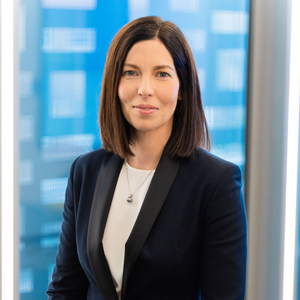
Chantelle Stratford PSM Chantelle Stratford is a leading global gender equality expert, feminist policy strategist and Principal Gender Specialist at VOX FEMINA, an international feminist consultancy focused on eradicating gender inequality. Chantelle has represented Australia’s interests in women’s rights and economic equality across the United Nations, OECD, G20, APEC and other global fora. As Chair of APEC’s Policy Partnership on Women and the Economy, she played a pivotal role in centring gender equality in regional economic policy. A former Head of Australia’s Office for Women, Chantelle led major reforms in gender budgeting, pay transparency, paid parental leave, housing, skills, women’s safety, the care economy and industrial relations. She received a Public Service Medal in the 2024 Australia Day Honours for outstanding leadership and innovation in gender equality and women’s policy. Chantelle serves on the boards of the International Women's Development Agency, Global Sisters and NCWA and is a Women’s Leadership Institute Australia Fellow. |
 |
Sophie Farthing Sophie Farthing is Head of Responsible Technology Programs at the Human Technology Institute at the University of Technology Sydney. A human rights policy lawyer, her work focuses on human centred approaches to new and emerging technologies. In 2025, Sophie was a member of the Australian Human Rights Commission (AHRC) Expert Reference Group on Neurotechnology and Human Rights. Previously, Sophie was the Senior Policy Adviser to the Australian Human Rights Commissioner, leading the Human Rights and Technology Project at the AHRC from 2017 to 2021. Sophie has also worked in legal policy roles at the Public Interest Advocacy Centre in Sydney, at Liberty (National Council for Civil Liberties) in the United Kingdom and was appointed the Research Assistant to Baroness Hale of Richmond in the United Kingdom Supreme Court. |