

The purpose of INSIGHT’s Advisory Committee (IAC) is to bring together community, consumer, industry and government representatives to provide the Institute with independent, external advice.
The committee consists of up to eight external members drawing from a diverse range of experiences and backgrounds from industry, government, consumer groups and the community. At least half of these members are non-academic and not from the higher education sector. There are also four internal UTS staff members. In line with INSIGHT’s commitment to equity and health justice, we seek to foster a diverse and inclusive IAC. Members serve a three-year term with the possibility of one additional term extension.
Do you have the skills and experience to contribute meaningfully to the IAC? We welcome expressions of interest to insight@uts.edu.au.
External members
Chris Cunningham
Chris Cunningham is from the Ngāti Raukawa, Ngāti Toa, Te Ātiawa and Te Ātihaunui-a-Pāparangi tribes of Aotearoa, New Zealand.
He is Professor of Māori & Public Health in the Research Centre for Hauora & Health at Massey University’s Wellington campus
Originally training in Quantum Chemistry, he has been a health researcher for over thirty years. Chris has a broad research portfolio covering public health and Māori health, with a focus on inequity, housing, longitudinal research and machine learning.
Chris has supervised over 50 Māori PhD and post-doctoral candidates.
Current projects include Indoor Air Quality in NZ Schools, Indigenous Governance, Cultural Competency in Health Professional Education, Medications Use in Older Māori, Loneliness and Social Isolation, Exceptional Cancer Survivorship, Housing & Health and longitudinal research including Te Hoe Nuku Roa: Best Outcomes for Māori and Growing Up in New Zealand.
Jan Nicholson
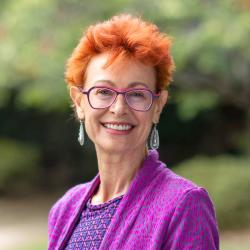
Jan M. Nicholson, Adjunct Professor in the Judith Lumley Centre at La Trobe University, is a child and family researcher. With a background in psychology and public health, Jan has expertise in life course epidemiology, early childhood interventions and implementation science.
Across her 37-year research career, Jan has attracted over $50M in research funds and published 218 peer-reviewed journal papers, 13 book chapters and 7 substantive research reports. Her research has led to the adoption of evidence-based practices in the family, health and early childhood sectors at institutional, state and national levels.
Jan was a founding investigator and Chair of the Consortium Advisory Group for “Growing Up in Australia – the Longitudinal Study of Australian Children” and a founding Board Member of the Parenting and Family Research Alliance.
Past roles include the Inaugural Roberta Holmes Chair for the Transition to Contemporary Parenthood Program, Director of the Judith Lumley Centre at La Trobe University, and Research Director of the Parenting Research Centre.
Jo Fuller
Jo Fuller graduated as a social worker in 1981 and completed a Master of Social Work in 1999. She worked as a social worker at Concord Hospital, NSW, until 1990 and as Deputy Social Work Manager at the Austin Hospital, Victoria until 1993.
From 1993 to 2001, Jo was the manager of the Northern Centre Against Sexual Assault in Victoria. She was also involved in a range of statewide and national peak bodies that advocated to eliminate violence against women, including being convenor of the Victorian Centres Against Sexual Assault Forum, an inaugural member of the board of the National Association of Services Against Sexual Violence, and a member of the Victorian Community Council Against Violence.
From 2001 to 2002, Jo worked for the NSW Health Department as the Senior Policy Analyst for Sexual Assault and Domestic Violence.
In early 2003, Jo joined Western Sydney Local Health District, holding various senior management positions within Community Health, including Program Lead Priority Populations for Western Sydney Local Health District since 2017 with responsibility for services such as Aboriginal Health, Youth Health, Integrated Violence Prevention and Response, Multicultural Health, Out of Home Care and Vulnerable Families.
Since the early 1990s, Jo has been on boards and management committees with a variety of community-based organisations with a focus on women in both Victoria and NSW. She has been on the Board of the Women’s Activities and Self-Help (WASH) House in Mt Druitt since 2005 and on the Board of Directors of Mt Druitt Ethnic Communities Agency since 2007. She is the current Chairperson.
Jo has a particular passion for working with the most vulnerable and disenfranchised in our community. She is committed to ensuring that the community receives the best possible service from community health services and from those non-government organisations with which she is involved.
Jo Watson
Jo Watson (BASoc.Sc, MPH, FAICD) is the Deputy Chair of the Pharmaceutical Benefits Advisory Committee (PBAC), an independent statutory body established to make recommendations and give advice to the Commonwealth Minister for Health and Aged Care about medicines listed on the Pharmaceutical Benefits Scheme.
Jo is the Deputy Chair of the MBS Review Advisory Committee (MRAC), an independent non-statutory committee to advise Government on publicly funded services listed on the Medical Benefits Schedule.
Jo is also Chair of the Consumer Consultative Committee within the Office of Health Technology Assessment and was the Deputy Chair and Director on the Board of the Consumers Health Forum (CHF), the peak national health consumer organisation in Australia from 2012 to 2024.
She has been a community representative and patient advocate in the Australian HIV response since the early nineties, including as the Executive Director of the National Association of People Living with HIV Australia (NAPWHA) from 1998 to 2014.
She has contributed to health policy reform and analysis in the areas of Communicable Diseases, the National Medicines Policy, and PBS programs over the past several decades, including contributions to peer-reviewed publications and national and international research projects.
Michael Nilsson
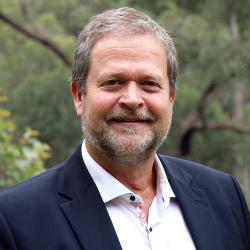
Professor Michael Nilsson, MD, PhD, FAFRM (RACP), is the Director of the Centre for Rehab Innovations (CRI) at the University of Newcastle, Australia.
As a senior leader in health care and academia, Michael has led medical research institutes, university hospital clinics and clusters, and research centres of excellence. He is an internationally recognised clinical academic and leader in Rehabilitation Medicine and translational neuroscience.
Over the course of his career, Michael has made significant contributions in areas of long-term recovery and health preservation in neurological conditions, with a particular focus on stroke. With a strong dedication to translating research into actionable solutions, he demonstrated that functional recovery after stroke can be influenced by clinically important modulators such as stress, the environment, physical activity, and specific neuroactive agents.
In parallel multidisciplinary studies, Michael developed and evaluated AI-based clinical decision support tools for stratification of individuals to tailored holistic rehabilitation programs in different care settings. He collaborates with multidisciplinary national and international teams in health, academia and business. He has professorial affiliations with the University of Gothenburg, Sweden; NTU/LKC Medicine, Singapore; and La Trobe University, Melbourne, Australia.
Samia Robbins

Having graduated in International Business from UTS in the year 2000, Samia has grown her career in Sustainability through supporting business change in the energy transition.
Originally from the U.K., Samia moved to The Netherlands as a consultant in 2021 to lead an Energy Advisory team with a focus on Hydrogen infrastructure projects.
Today, Samia is hands-on, deploying healthy and carbon-neutral buildings in the built environment, as Strategic Lead for a global engineering company. Her work is transferable to multiple markets, including Healthcare.
Translating complex challenges and turning them into positive solutions lies at the heart of Samia’s ambition. People, the planet and building good friendships along the way keep Samia enthusiastic and sparkling.
Internal members
Angela Dawson
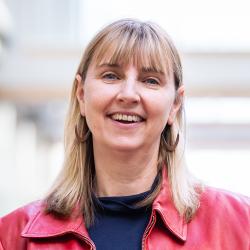
Professor Angela Dawson is a public health social scientist with expertise in maternal and reproductive health service delivery to priority populations in Australia and low and lower middle-income countries.
Angela has undertaken research into the delivery of reproductive health services in humanitarian emergencies, the management and referral of women who have experienced domestic violence as well as access to abortion and emergency contraceptive pills in Australia and internationally.
Angela was an NHMRC Translational research fellow examining approaches to counselling women with FGM/C at the point of care and the recipient of the Sax Prize for research impact.
Angela currently leads an NHMRC Ideas grant examining the health of refugees over generations. She is the co-chair of the Australasian Sexual and Reproductive Health Alliance (ASRHA), a Fellow of the Public Health Association of Australia, a member of the Interagency working group of reproductive health in crisis and an Associate Editor of the journal BMC Pregnancy and Childbirth.
Faye McMillan
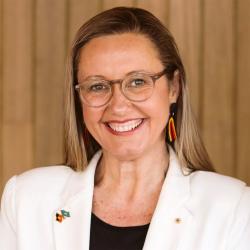
Faye McMillan is a proud Wiradjuri yinaa (woman) originally from Trangie, NSW, now living and working between rural/regional and urban NSW. In 2023/24 she will be completing the Commonwealth Fund Harkness Fellows program. During their year in the United States, Harkness Fellows conduct internationally comparative research on a key health care delivery or policy issue with mentorship from leading U.S. experts. She will be looking at Rural and Remote workforce development and the participation of First Peoples in the health workforce with a particular focus on the profession of pharmacy. In 2023 she was made a Fellow of the Pharmaceutical Society of Australia as well as being awarded the University of Wollongong Alumni award for Professional Excellence. In 2022 she was named as the Pharmaceutical Society of Australia, Australian Pharmacist of the Year. In the 2021 Queen's Birthday Honours List she was awarded the Australian Medal (AM) in the General Division of the Order of Australia for "significant service to Indigenous Mental Health, and to tertiary education". Furthermore, in March of 2021, she was named one of two Deputy National Rural Health Commissioners and in 2019 she was honoured to be named as the NSW Aboriginal Woman of the year. She is a Senior Atlantic Fellow for Social Equity (Atlantic Institute), as well as being a Senior Fellow with Advance HE. She is a founding member of Indigenous Allied Health Australia (IAHA) and was a board member of IAHA from 2009-2017 (and chairperson from 2010-2016). She joined UTS in Oct 2022 with over 20 years of experience in the Higher Education Sector and over 30 years in the health sector.
Susan Morton
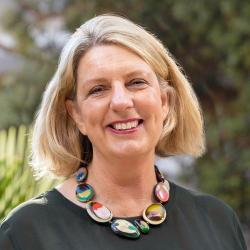
Professor Susan Morton is an internationally recognised expert in transdisciplinary life course research.
Susan is a Public Health Physician who undertook her medical training in Auckland, New Zealand, in the 1990s before taking up a Commonwealth Scholarship at the London School of Hygiene and Tropical Medicine, where she completed a PhD in life course epidemiology working on revitalising the Aberdeen Children of the 1950s cohort study. Her time in Europe introduced her to the value and utility of longitudinal studies and the extraordinary evidence that can emerge from following ordinary lives over time.
On returning to New Zealand in 2003, Susan successfully led the establishment of a cross-faculty Research Centre at the University of Auckland (He Ara ki Mua). She designed and led the multi-disciplinary and multi-institutional team of researchers who established the contemporary longitudinal study of child and family wellbeing – Growing Up in New Zealand – from its inception.
Professor Morton has been working across traditional research boundaries for almost two decades to undertake research that is driven by an explicit aim to provide robust scientific evidence to inform strategies and policies at national and international levels to improve population health for all and to reduce inequities in health outcomes within and across populations. She has a successful track record of establishing meaningful partnerships with cross-sectoral policy agencies and technical experts, as well as with diverse communities, to ensure that the research she leads is context-relevant, translatable and impactful.
In February 2023, she took on a new challenge to be the inaugural Director of a new pan-University Research Institute at UTS in Sydney – called INSIGHT – whose overarching goal is to provide innovative solutions to improve life course health and wellbeing.