

  • University of Technology Sydney home
  • Home

    Home
  • For students

  • For industry

  • Research

Explore

  • Courses
  • Events
  • News
  • Stories
  • People

For you

  • Libraryarrow_right_alt
  • Staffarrow_right_alt
  • Alumniarrow_right_alt
  • Current studentsarrow_right_alt
  • Study at UTS

    • arrow_right_alt Find a course
    • arrow_right_alt Course areas
    • arrow_right_alt Undergraduate students
    • arrow_right_alt Postgraduate students
    • arrow_right_alt Research Masters and PhD
    • arrow_right_alt Studying online
  • Student information

    • arrow_right_alt Current students
    • arrow_right_alt New UTS students
    • arrow_right_alt Graduates (Alumni)
    • arrow_right_alt High school students
    • arrow_right_alt Indigenous students
    • arrow_right_alt International students
  • Admissions

    • arrow_right_alt How to apply
    • arrow_right_alt Entry pathways
    • arrow_right_alt Eligibility
arrow_right_altVisit our hub for students

For you

  • Libraryarrow_right_alt
  • Staffarrow_right_alt
  • Alumniarrow_right_alt
  • Current studentsarrow_right_alt

POPULAR LINKS

  • Apply for a coursearrow_right_alt
  • Current studentsarrow_right_alt
  • Scholarshipsarrow_right_alt
  • Featured industries

    • arrow_right_alt Agriculture and food
    • arrow_right_alt Defence and space
    • arrow_right_alt Energy and transport
    • arrow_right_alt Government and policy
    • arrow_right_alt Health and medical
    • arrow_right_alt Corporate training
  • Explore

    • arrow_right_alt Tech Central
    • arrow_right_alt Case studies
    • arrow_right_alt Research
arrow_right_altVisit our hub for industry

For you

  • Libraryarrow_right_alt
  • Staffarrow_right_alt
  • Alumniarrow_right_alt
  • Current studentsarrow_right_alt

POPULAR LINKS

  • Find a UTS expertarrow_right_alt
  • Partner with usarrow_right_alt
  • Explore

    • arrow_right_alt Explore our research
    • arrow_right_alt Research centres and institutes
    • arrow_right_alt Graduate research
    • arrow_right_alt Research partnerships
arrow_right_altVisit our hub for research

For you

  • Libraryarrow_right_alt
  • Staffarrow_right_alt
  • Alumniarrow_right_alt
  • Current studentsarrow_right_alt

POPULAR LINKS

  • Find a UTS expertarrow_right_alt
  • Research centres and institutesarrow_right_alt
  • University of Technology Sydney home
University of Technology Sydney home University of Technology Sydney home
  1. ... Research at UTS
  2. ... Research centres and ins...
  3. ... UTS WHO Collaborating Ce...
  4. ... What we do
  5. 3. Education
  6. Scoping study: Improving the quality of nursing and midwifery education and regulation in Pacific Island countries and areas

Scoping study: Improving the quality of nursing and midwifery education and regulation in Pacific Island countries and areas

explore
  • 3. Education
    • arrow_forward Provision of technical support to strengthen nursing education in Vanuatu – Phase 3
    • arrow_forward Strengthening Health Workforce Education in PNG
    • arrow_forward Strengthening Health Workforce Education in PNG – Stage 2
    • arrow_forward Scoping study: Improving the quality of nursing and midwifery education and regulation in Pacific Island countries and areas
    • arrow_forward Integrating Health Projects in Papua New Guinea
    • arrow_forward PNG Health Practitioners Registration System Launch
    • arrow_forward Provision of technical support to strengthen nursing education in Vanuatu – Phase 1 & 2
    • arrow_forward Regulation Support in Papua New Guinea
    • arrow_forward PNG Schools of Nursing and Community Health Worker Principals Meeting
    • arrow_forward Consultancy with the School of Nursing, Fiji National University
    • arrow_forward DFAT AAF: Faculty Development Program
    • arrow_forward Pacific Open Learning Health Net Review
    • arrow_forward PNG's New Health Plan
    • arrow_forward Scaling-up nursing through Global Nursing/Midwifery Faculty Development

In January 2021, World Health Organisation Collaboration Centre with University of Technology Sydney (WHO CC UTS) completed the WHO, South Pacific Chief Nursing and Midwifery Officers (SPCNMOA), scoping study to provide recommendations, including a roadmap, for improving the quality of nursing and midwifery education and regulation in Pacific Island countries and areas. WHO CC UTS in collaboration with WHO Division of Pacific Technical Support (DPS) and the Ministries/Departments of Health in the Pacific Island countries and areas, set up and convened virtual meetings and consultations to perform a desktop review of; publications and grey literature drawn from regional and national reports, peer reviews papers and minutes from regional meetings of both nursing and other healthcare leaders to develop a strategic roadmap for improving the quality of nursing and midwifery within the region.
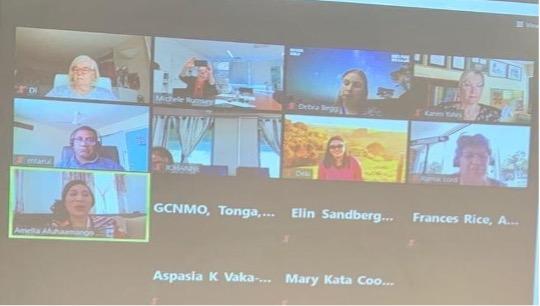
Zoom screengrab

The scoping study is timely as the Pacific Health Ministers at the 13th Pacific Health Ministers Meeting in 2019 committed to ‘identifying the health workforce indicators needed for decision–making for the issues of development shortages, retention and regulations of the health workforce across primary health care and specialised services in the Pacific. Meanwhile, the Universal Health Coverage (UHC) goals were again emphasised at the 68th Regional Committee Meeting of WHO Western Pacific Region, to put health workers as a priority action domain to achieve UHC and to strengthen the regulatory systems to improve the quality and safety of the health system’s performance. Key areas identified to support the nursing and midwifery community include good governance, accreditation, regulation, quality education and strong professional associations (M. Rumsey, 2020).

The second half of the review focuses on recommendations and frameworks to create the Roadmap for Improving Quality of Nursing and Midwifery Education and Regulation in Pacific Island Countries. The roadmap acts as a guide for nursing and midwifery to develop a regional partnership in which strategic planning can be applied to ensure qualifications and quality assurance. The outlined roadmap focuses on whole programs and cadres of nurses and examines local and regional standards and competencies that are generic and relevant across countries and levels of nursing. Regional quality improvement programs aim to build the nursing and midwifery workforce capacity and ensure continued improvements into the future. As the program matures, it will provide the basis for benchmarking minimum regional qualification standards.

A set of guiding principles of the partnership was applied in the development of the Roadmap as in line with the ‘grounds up’ approach advocated by WRPO’s Vision for the Future. The key principles include safety, respect, collaboration, beneficence and reciprocity, relationship-based and justice (M Rumsey et al., 2021). Applying a ‘grounds up’ approach was prioritised in the scoping review as it can help improve ownership and engagement of key stakeholders, whereas top-down approaches potentially alienate member countries, and the locus of control won’t be placed with the broader Pacific community.

The review further provides a thorough and well-justified process for the roadmap that will enable the development of a regional framework with a set of agreed principles, practices, procedures, and standardised terminology. This allows effective comparability of qualifications among Pacific Island Countries, harmonise qualifications wherever possible, and create acceptable regional standards and practices.
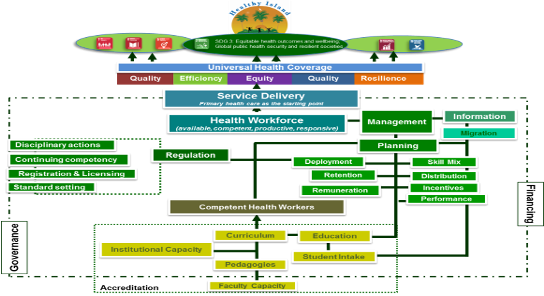
health education flowchart

Source: WHO Workforce Development in the Pacific, 2017: scoping paper, p6 (18)

To find out more, please click here.

Please find the final scoping report with roadmap here.


Rumsey, M. (2020). Global Health and Nursing. In J. Daly & D. Jackson (Eds.), Contexts of Nursing (6th Edition ed.). Australia: Elsevier.

Rumsey, M., Neill, A., Simpson, C., Stowers, P., Daly, J., & Brooks, F. (2021). Development of PARcific approach: participatory action research methodology for collectivist health research. Qualitative Health Research(manuscrip in press).

Acknowledgement of Country

UTS acknowledges the Gadigal people, the Boorooberongal people of the Dharug Nation, the Bidiagal people and the Gamaygal people upon whose ancestral lands our university stands. We would also like to pay respect to the Elders both past and present, acknowledging them as the traditional custodians of knowledge for these lands.

University of Technology Sydney

City Campus

15 Broadway, Ultimo, NSW 2007

Get in touch with UTS

Follow us

  • Instagram
  • LinkedIn
  • YouTube
  • TikTok
  • Facebook
  • WeChat

A member of

  • Australian Technology Network
Use arrow keys to navigate within each column of links. Press Tab to move between columns.

Study

  • Find a course
  • Undergraduate
  • Postgraduate
  • How to apply
  • Scholarships and prizes
  • International students
  • Campus maps
  • Accommodation

Engage

  • Find an expert
  • Industry
  • Research
  • News
  • Events
  • Experience UTS
  • Stories
  • Alumni
  • Giving

About

  • Who we are
  • Faculties
  • Learning and teaching
  • Sustainability
  • Initiatives
  • Equity, diversity and inclusion
  • Campus and locations
  • Rankings and ratings
  • Leadership and governance

Staff and students

  • Current students
  • Help and support
  • Library
  • Policies
  • StaffConnect
  • Working at UTS
  • UTS Handbook
  • Contact us
  • Copyright © 2026
  • ABN: 77 257 686 961
  • CRICOS provider number: 00099F
  • TEQSA provider number: PRV12060
  • TEQSA category: Australian University
  • Privacy
  • Copyright
  • Disclaimer
  • Accessibility

We use cookies and similar technologies to provide a better experience

We use scripts (e.g. cookies) that read, store, and write information on your browser. The information we process include your IP address, session details and browsing activity. We use this information to improve our website, personalise your experience and support marketing efforts. Learn more in our Website Privacy Notice.

Close

This banner is displayed for testing purposes only. You may close it by clicking the “X”, or simply ignore it. We apologise for any inconvenience.