

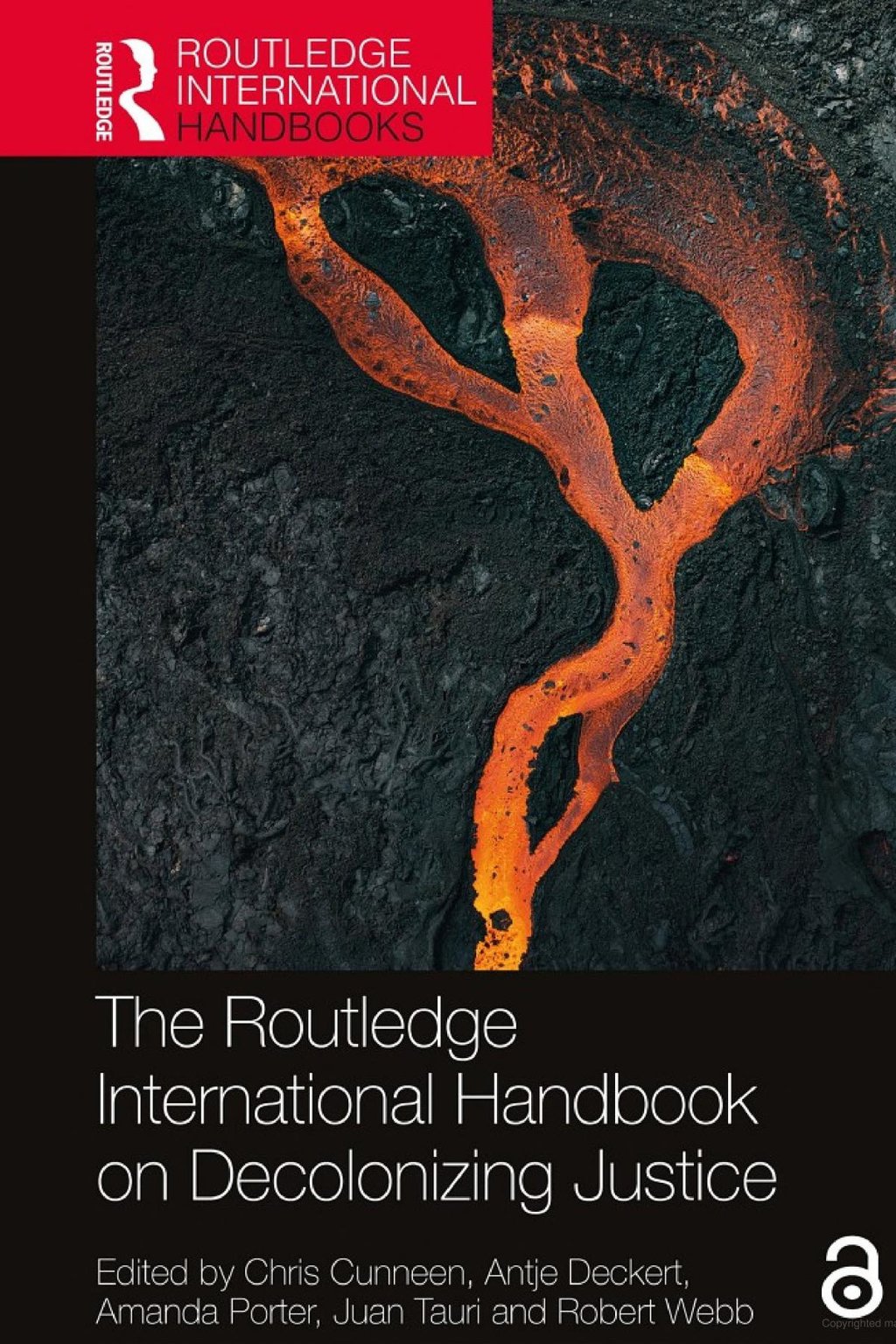
The Routledge International Handbook on Decolonizing Justice
Edited By Chris Cunneen, Antje Deckert, Amanda Porter, Juan Tauri, Robert Webb
The Routledge International Handbook on Decolonizing Justice focuses on the growing worldwide movement aimed at decolonising state policies and practices, and various disciplinary knowledges including criminology, social work and law. The collection of original chapters brings together cutting-edge, politically engaged work from a diverse group of writers who take as a starting point an analysis founded in a decolonising, decolonial and/or Indigenous standpoint. Centring the perspectives of Black, First Nations and other racialised and minoritised peoples, the book makes an internationally significant contribution to the literature.
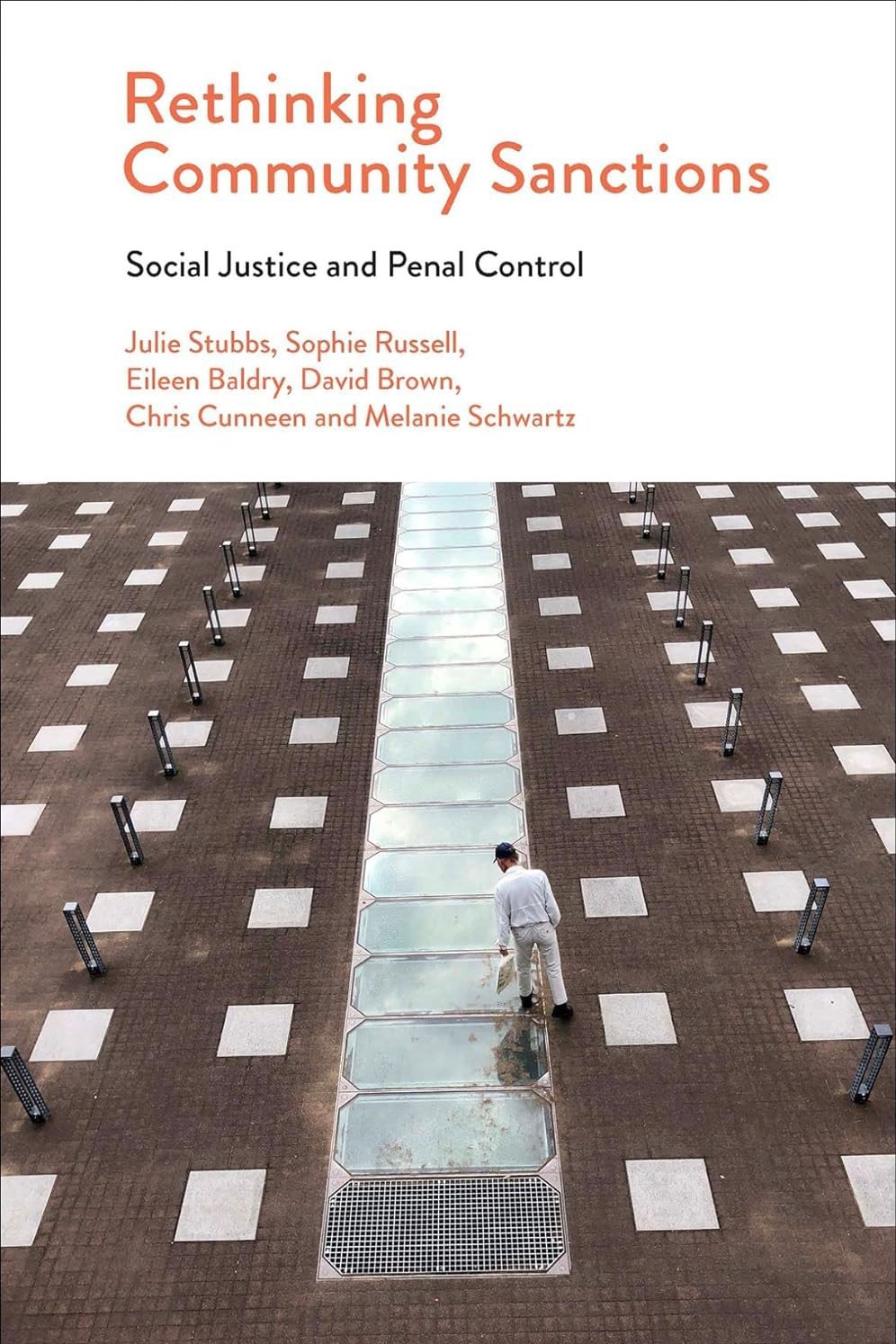
Rethinking Community Sanctions
Social Justice and Penal Control
By Julie Stubbs, Sophie Russell, Eileen Baldry, David Brown, Chris Cunneen, Melanie Schwartz
Rethinking Community Sanctions: Social Justice and Penal Control redresses the invisibility of community sanctions in a popular imaginary dominated by the prison, resulting in their being seen as 'not prison', 'not punishment', a 'let off', or expression of mercy.
Based on insights from interviews with key participants in 3 Australian jurisdictions, case studies of selected programs and policies, and the international literature, the authors focus on the effects of community sanctions among groups vulnerable to penal control: First Nations peoples, women, and those with disabilities, along with those at the intersections of these groups.
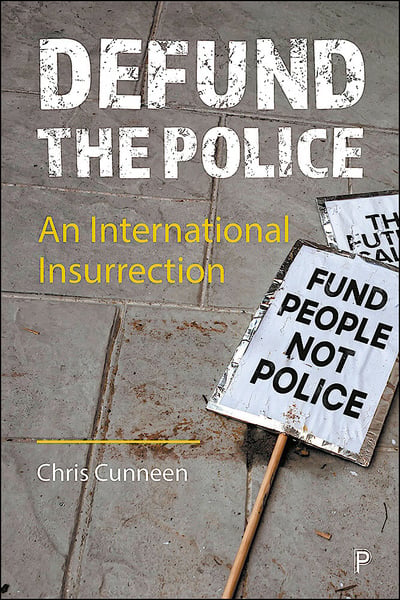
Defund the Police
An International Insurrection
By Chris Cunneen
The police are viewed as guardians of public safety and enforcers of the law. How accurate is this? Given endemic police violence which is often aimed at racialised and minoritised groups and the failure of many attempts at reform, attention has turned to community-generated models of support. These include defunding the police and instead funding alternatives to criminalisation and incarceration.
This book is the first comprehensive overview of police divestment, using international examples and case studies to reimagine community safety beyond policing and imprisonment.
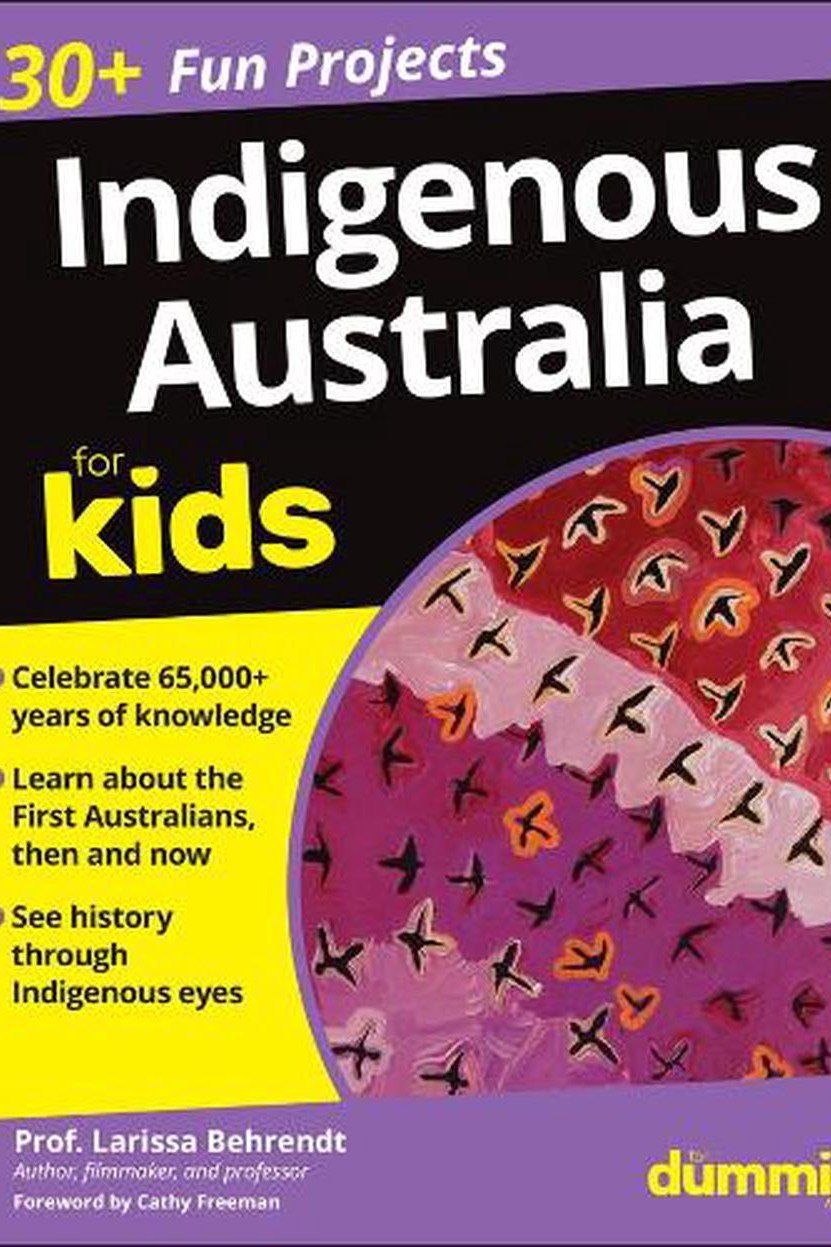
Indigenous Australia For Kids
A ‘For Dummies’ Title
By Larissa Behrendt. Foreward by Cathy Freeman
Indigenous Australia For Kids For Dummies is here to share the history, struggles and triumphs of the diverse peoples that make up Australia’s Indigenous communities. Did you know that Australia is home to the world’s oldest culture? Experience 60,000 years of history and culture, plus, get right up-to-the-minute, with amazing facts about Indigenous sports and entertainment figures and info on what matters to Indigenous peoples today.
This interactive book has loads of features that will engage and excite readers aged 10–15 years old – and their teachers and parents! Discover profiles of celebrated Indigenous people like Cathy Freeman and Albert Namatjira, as well as fun research projects and hands-on activities that bring Indigenous Australia to life.
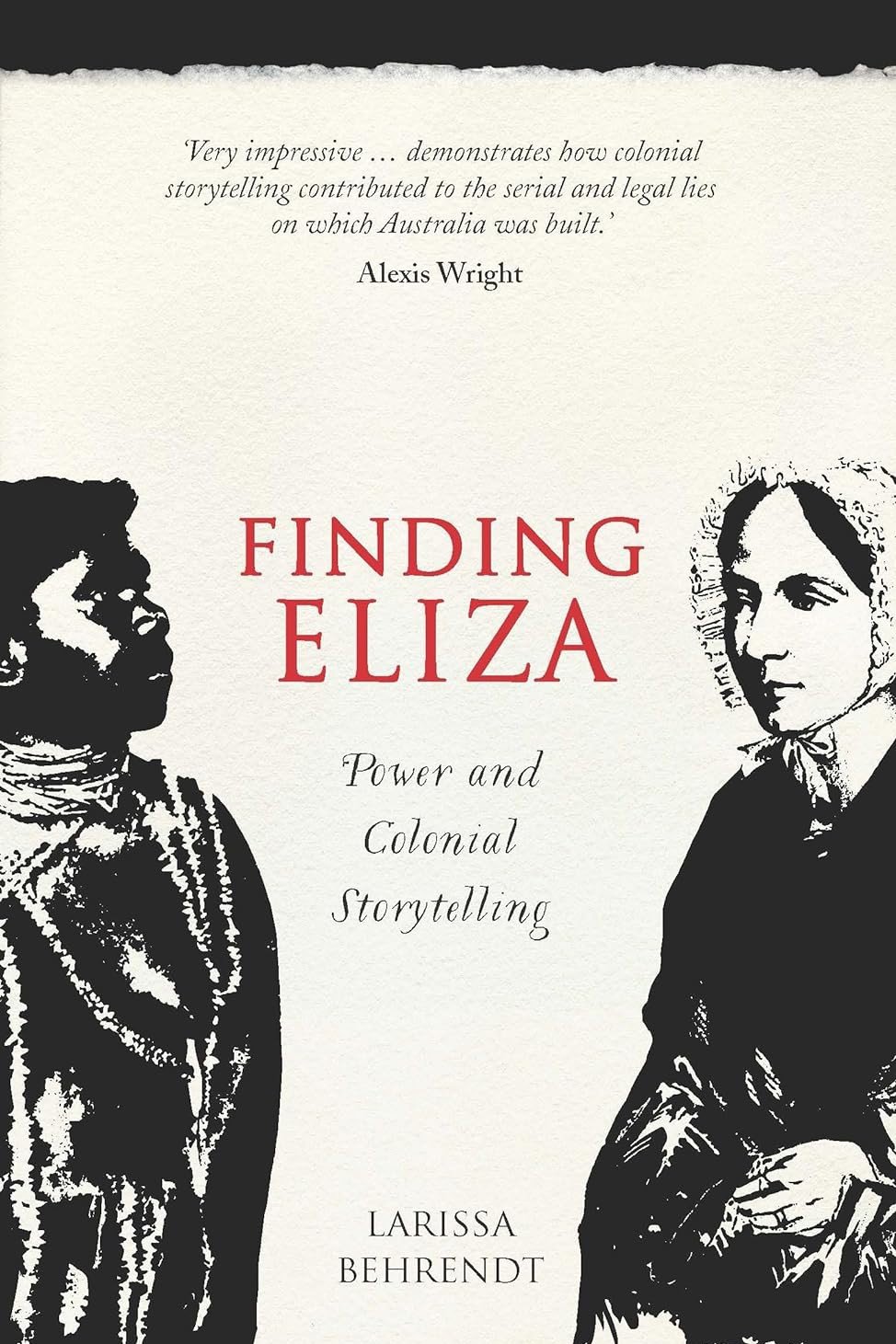
Finding Eliza
Power and Colonial Storytelling
By Larissa Behrendt
Aboriginal lawyer, writer and filmmaker Larissa Behrendt has long been fascinated by the story of Eliza Fraser, who was purportedly captured by the Butchulla people after she was shipwrecked on their island off the Queensland coast in 1836. In this deeply personal book, Behrendt uses Eliza’s tale as a starting point to interrogate how Aboriginal people – and indigenous people of other countries – have been portrayed in their colonisers’ stories.
Exploring works as diverse as Robinson Crusoe and Coonardoo, Behrendt looks at the stereotypes embedded in these accounts, including the assumption of cannibalism and the myth of the noble savage. Ultimately, Finding Eliza shows how these stories not only reflect the values of their storytellers but also reinforce those values – and how, in Australia, this has contributed to a complex racial divide.
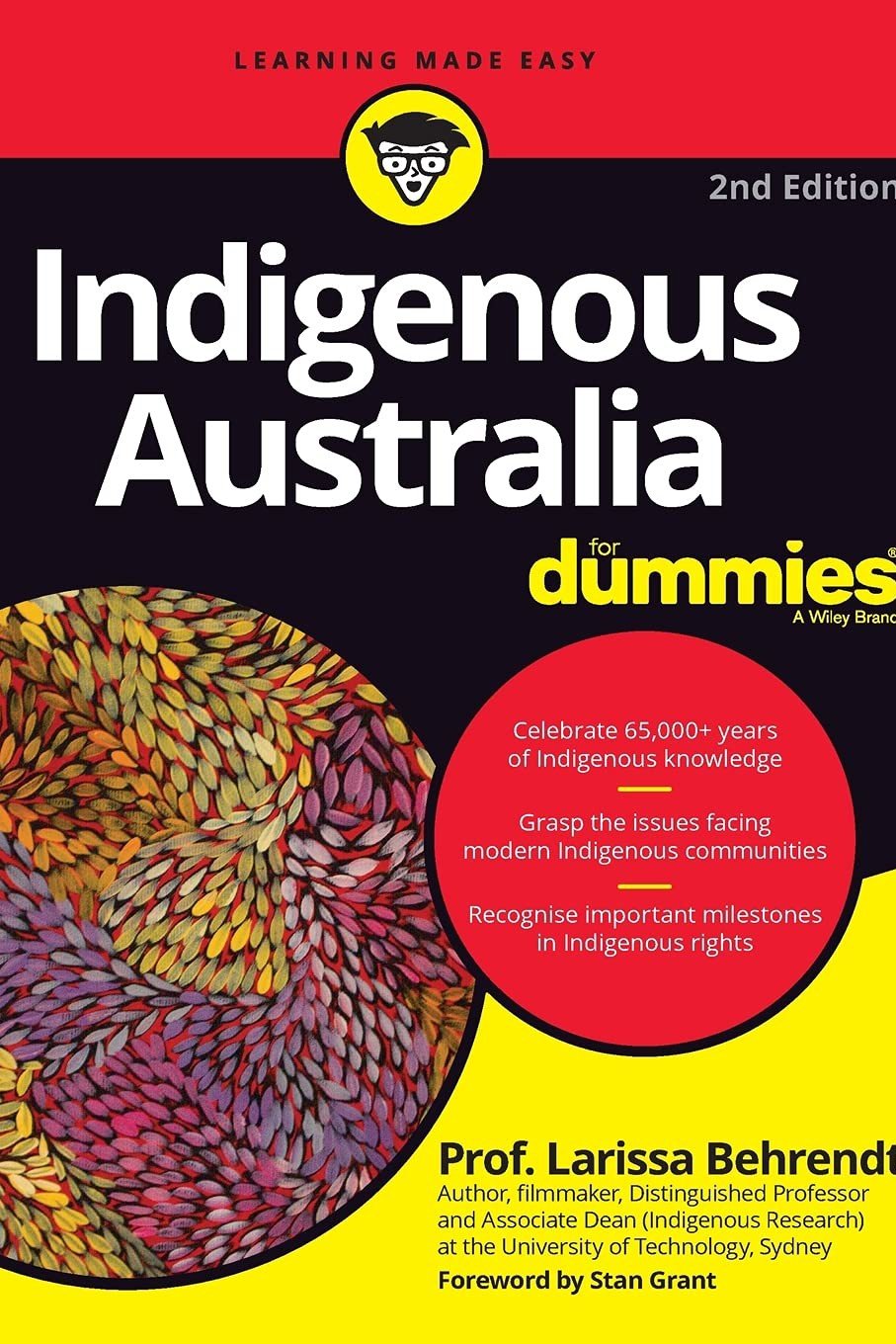
Indigenous Australia For Dummies
Second edition
By Larissa Behrendt. Foreward by Stan Grant
What is The Dreaming? How many different Indigenous tribes and languages once existed in Australia? What is the purpose of a corroboree? What effect do the events of the past have on Indigenous peoples today? Indigenous Australia For Dummies, 2nd Edition answers these questions and countless others about the oldest race on Earth. It explores Indigenous life in Australia before 1770, the impact of white settlement, the ongoing struggle by Aboriginal and Torres Strait Islander peoples to secure their human rights and equal treatment under the law, and much more.
Celebrating the contributions of Indigenous people to contemporary Australian culture, the book explores Indigenous art, music, dance, literature, film, sport, and spirituality. It discusses the concept of modern Indigenous identity and examines the ongoing challenges facing Indigenous communities today, from health and housing to employment and education, land rights, and self-determination.
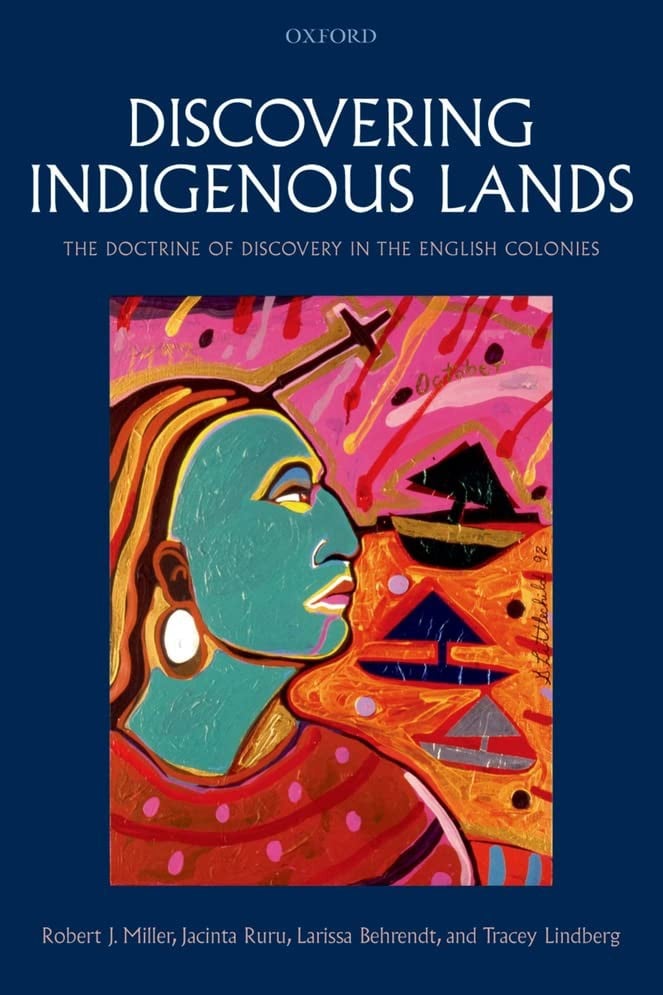
Discovering Indigenous Lands
The Doctrine of Discovery in the English Colonies
By Robert J. Miller, Jacinta Ruru, Larissa Behrendt, Tracey Lindberg
This book presents new material and shines fresh light on the under-explored historical and legal evidence about the use of the doctrine of discovery in Australia, Canada, New Zealand and the United States.
These lands were colonised by England under the doctrine of discovery, an international legal principle. From the fifteenth to the twentieth centuries, Europeans used it to justify their sovereign and property claims over these territories and peoples. The doctrine gave Europeans automatic rights over indigenous lands and peoples. English colonial governments and colonists across these lands all utilised this doctrine and still use it today to assert legal rights to indigenous lands and to assert control over indigenous peoples.
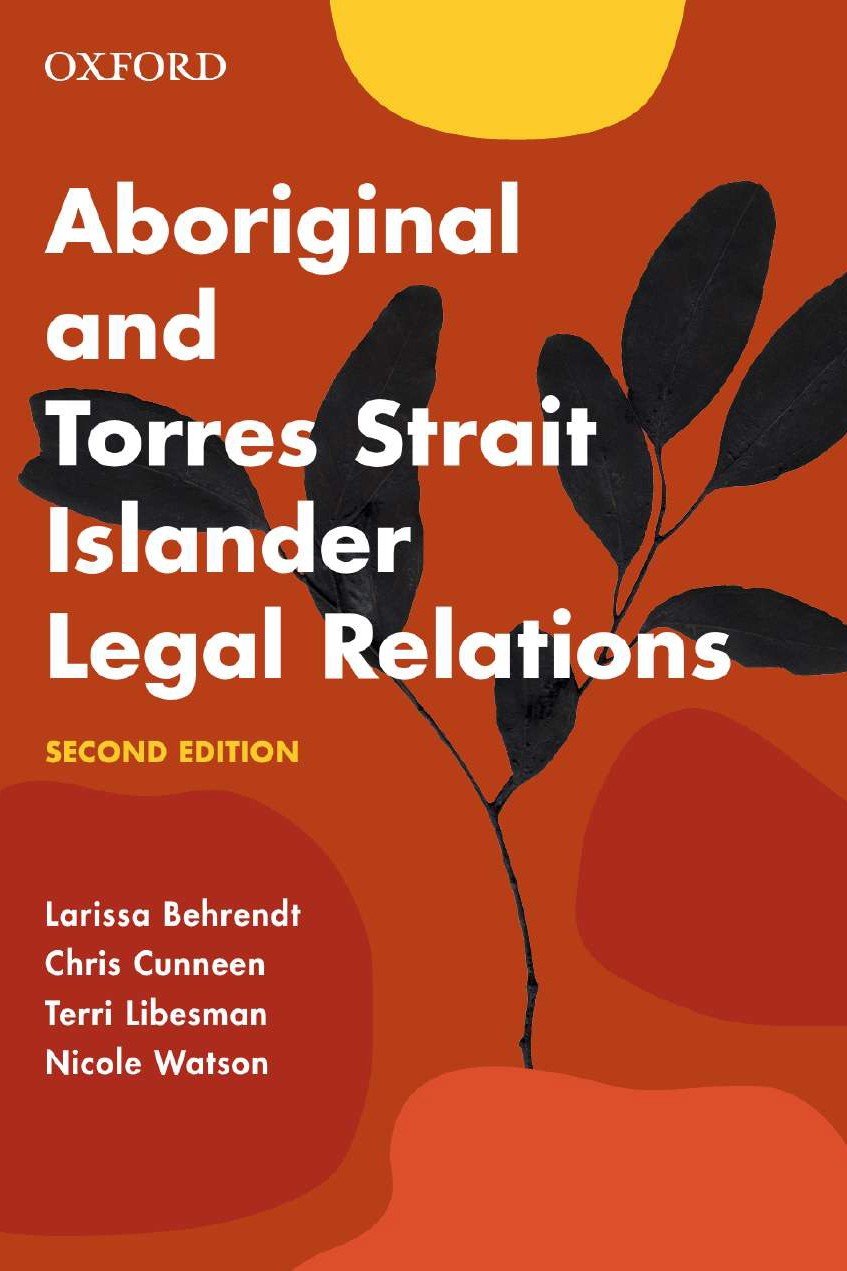
Aboriginal and Torres Strait Islander Legal Relations
Second edition
By Larissa Behrendt, Chris Cunneen, Terri Libesman
Aboriginal and Torres Strait Islander Legal Relations, second edition, introduces readers to the major issues faced by Aboriginal and Torres Strait Islander people under the Anglo-Australian legal system, with a focus on the impact of historical and contemporary law and policy.
It engages readers in key debates, such as reparations for the Stolen Generation and changes to the Constitution, and explores how the law can play a role in providing a framework for recognising Aboriginal and Torres Strait Islander peoples’ rights.
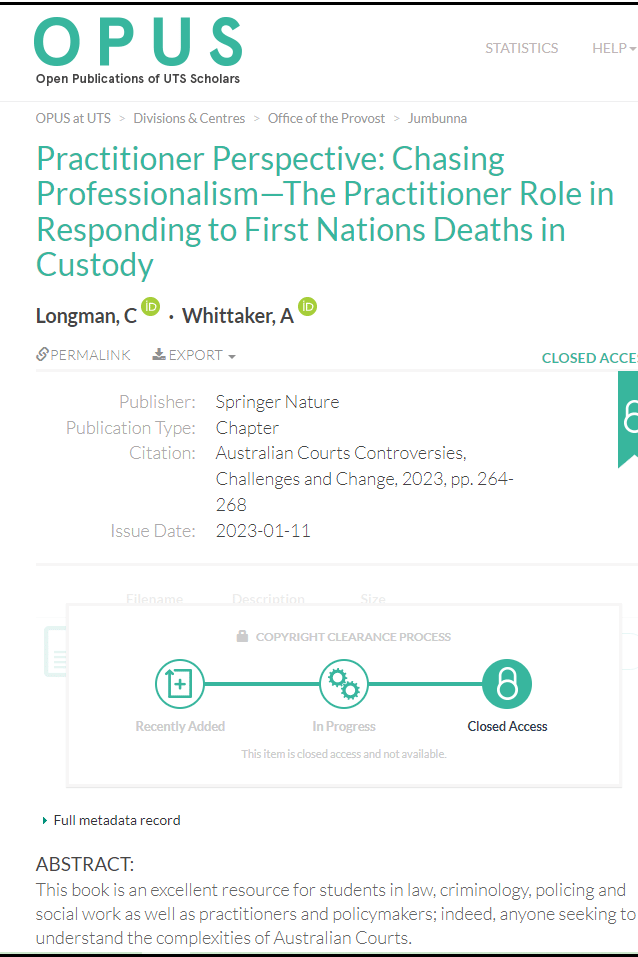
Practitioner Perspective
The Practitioner Role in Responding to First Nations Deaths in Custody
By Craig Longman and Alison Whittaker
A chapter from Camilleri M & Harkness A (Eds), Australian Courts Controversies, Challenges and Change (Springer Nature, 2023).
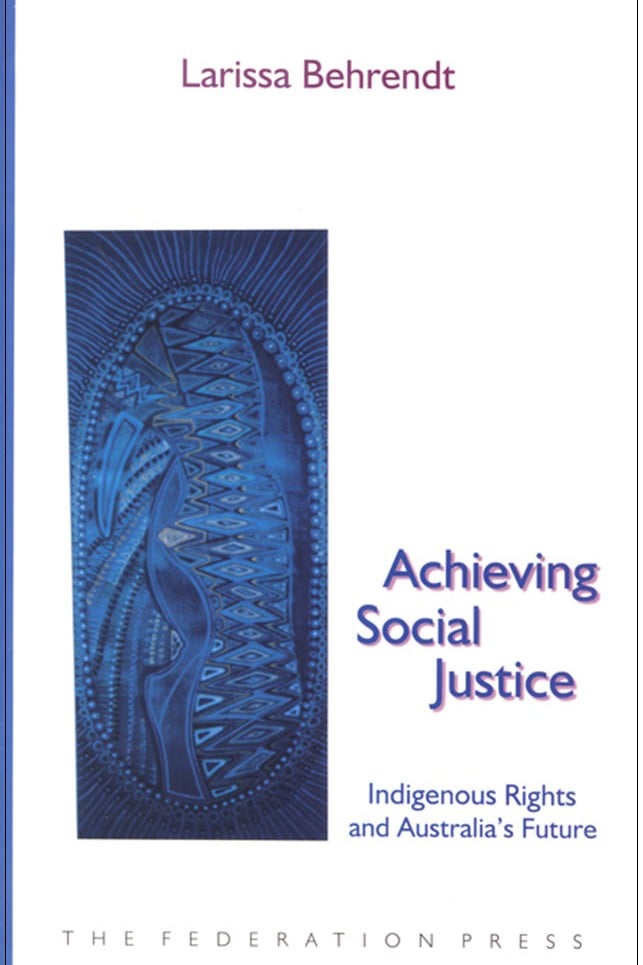
Achieving Social Justice
Indigenous Rights and Australia's Future
By Larissa Behrendt
Larissa Behrendt attacks the chasm which has grown between Indigenous lives and aspirations in Australia, and the psychological terra nullius which continues, despite Mabo, to pervade so much of Australia’s mythology and policy.
She proposes longer term, aspirational initiatives leading to institutional change that will facilitate greater rights protection and the exercise of self-determination, including a preamble to the Constitution
a treaty, the national self-image, economic redistribution, alternative institutional forms, regional framework agreements, a more energised politics and Constitutional protection.
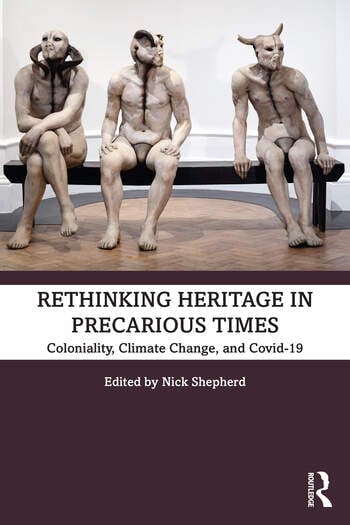
Rethinking Heritage in Precarious Times
Coloniality, Climate Change, and Covid-19
Edited by Nick Shepherd
Rethinking Heritage in Precarious Times sets a fresh agenda for Heritage Studies by reflecting upon the unprecedented nature of the contemporary moment. In doing so, the volume also calls into question established ideas, ways of working and understandings of the future.
Rethinking Heritage in Precarious Times argues that we need the deep-time perspective that Heritage Studies offers, as well as its sense of transgenerational conversations and accountabilities, in order to respond to these many challenges – and to craft open, creative and inclusive futures. It will be essential reading for academics and students engaged in the study of heritage, anthropology, memory, history,and geography.
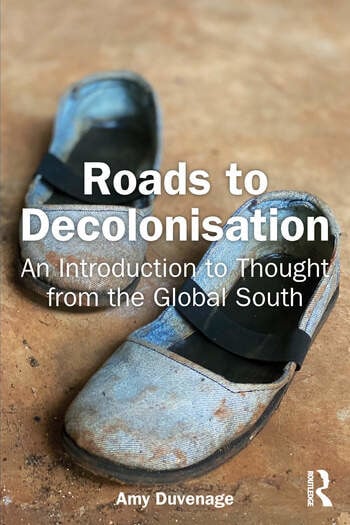
Roads to Decolonisation
An Introduction to Thought from the Global South
By Amy Duvenage
Roads to Decolonisation: An Introduction to Thought from the Global South is an accessible new textbook that provides undergraduate students with a vital introduction to theory from the Global South and key issues of social justice, arming them with the tools to theorise and explain the social world away from dominant Global North perspectives.
Arranged in four parts, it examines key thinkers, activists and theory-work from the Global South; theoretical concepts and socio-historical conditions associated with 'race' and racism, gender and sexuality, identity and (un)belonging in a globalised world, and decolonisation and education; and challenges to dominant Euro-American perspectives on key social justice issues, linking decolonial discourses to contemporary case studies.
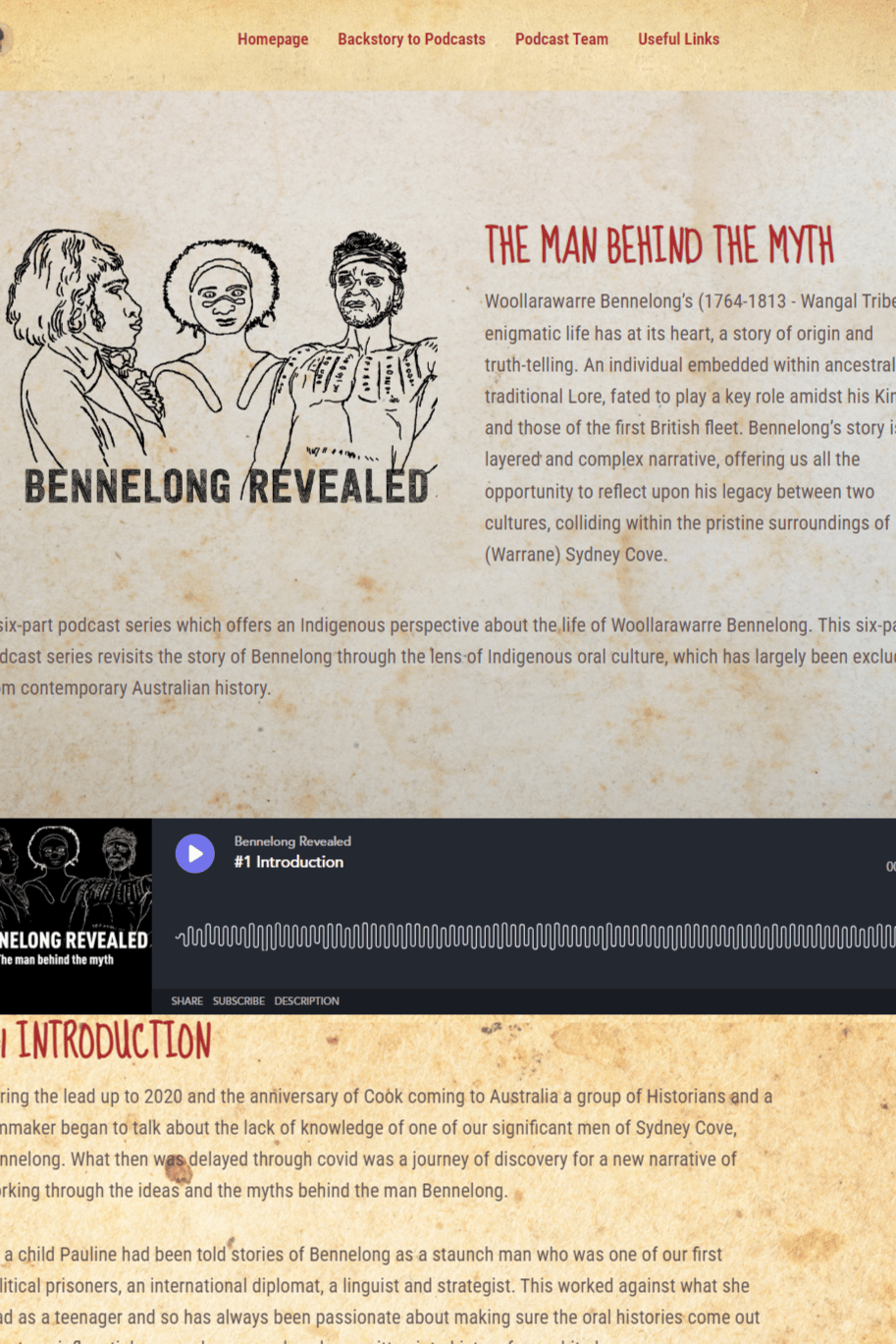
Bennelong Revealed
The Man Behind The Myth
Woollarawarre Bennelong’s (1764-1813 – Wangal Tribe) enigmatic life has at its heart, a story of origin and truth-telling. An individual embedded within ancestral traditional Lore, fated to play a key role amidst his Kin and those of the first British fleet. Bennelong’s story is a layered and complex narrative, offering us all the opportunity to reflect upon his legacy between two cultures, colliding within the pristine surroundings of (Warrane) Sydney Cove.
A six-part podcast series which offers an Indigenous perspective about the life of Woollarawarre Bennelong. This six-part podcast series revisits the story of Bennelong through the lens of Indigenous oral culture, which has largely been excluded from contemporary Australian history.
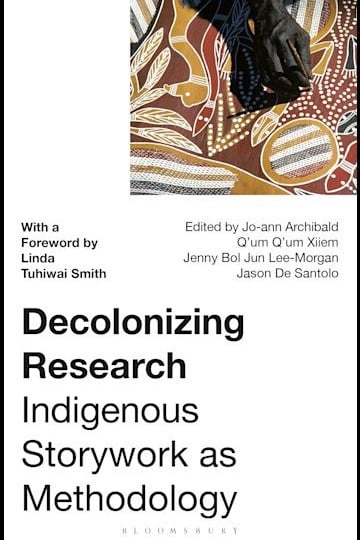
Decolonizing Research
Indigenous Storywork as Methodology
Edited by Jo-ann Archibald Q’um Q’um Xiiem, Jenny Bol Jun Lee-Morgan, Jason De Santolo
From Oceania to North America, indigenous peoples have created storytelling traditions of incredible depth and diversity. 'Indigenous storywork' captures how storytelling serves as historical record, teaching and an expression of culture and identity. Yet these traditions have too often been relegated to myth and legend, distorted or erased altogether.
Decolonizing Research brings together indigenous researchers and activists from Canada, Australia and New Zealand to assert the value of indigenous storywork as a research focus, and to develop methodologies that rectify colonial attitudes in scholarship. By treating storywork on its own terms, the contributors show how such scholarship can advance indigenous rights and self-determination.
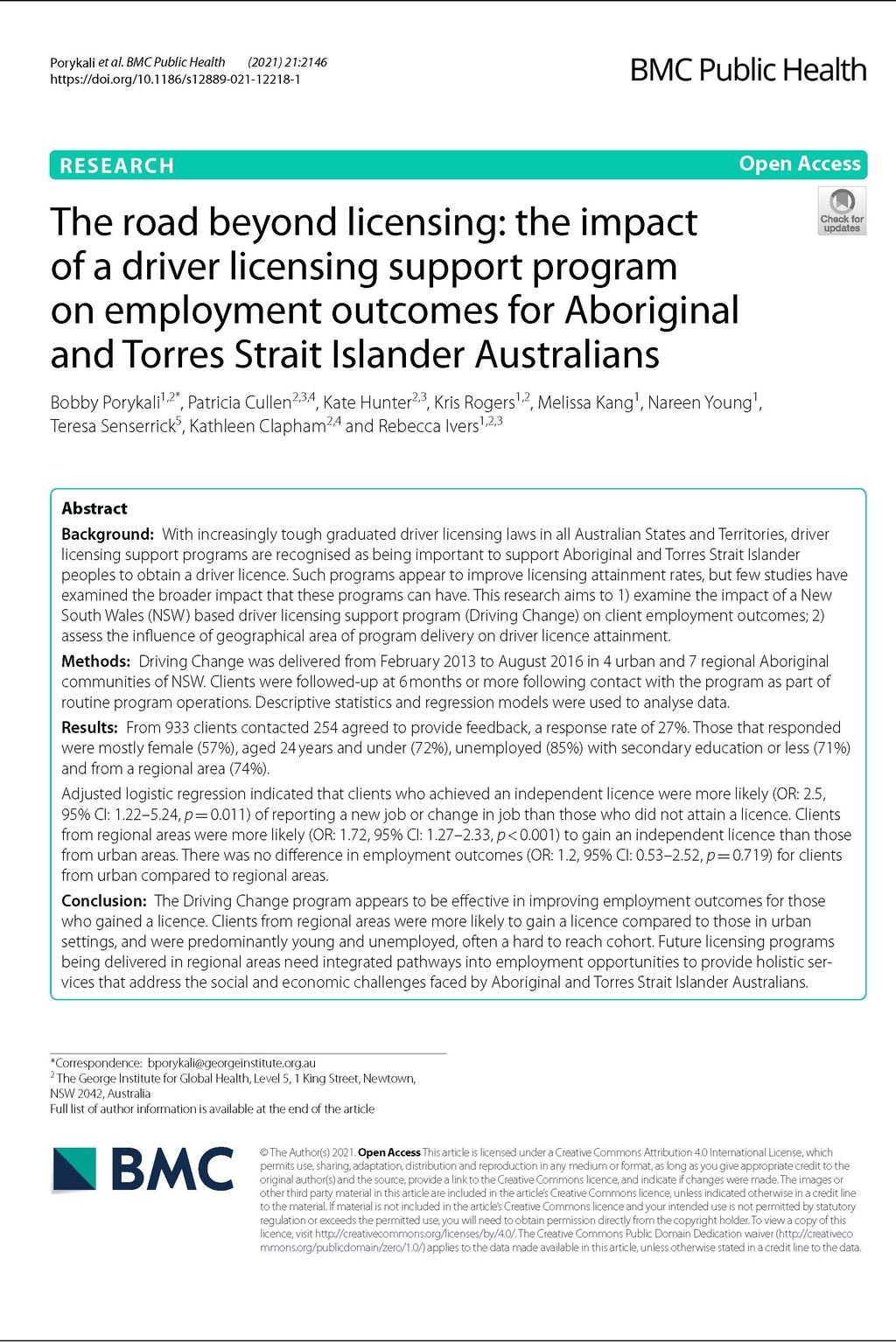
The road beyond licensing
The impact of a driver licensing support program on employment outcomes for Aboriginal and Torres Strait Islander Australians
By Bobby Porykali, Patricia Cullen, Kate Hunter, Kris Rogers, Melissa Kang, Nareen Young, Teresa Senserrick, Kathleen Clapham and Rebecca Ivers
Background: With increasingly tough graduated driver licensing laws in all Australian States and Territories, driver licensing support programs are recognised as being important to support Aboriginal and Torres Strait Islander peoples to obtain a driver licence. Such programs appear to improve licensing attainment rates, but few studies have examined the broader impact that these programs can have. This research aims to 1) examine the impact of a New South Wales (NSW) based driver licensing support program (Driving Change) on client employment outcomes; 2) assess the influence of geographical area of program delivery on driver licence attainment.

Restoration from out-of-home care
Evidence from the pathways of care longitudinal study and experiences of parents and children
By B.J. Newton, Ilan Katz, Paul Gray, Solange Frost, Yalemzewod Gelaw, Nan Hu, Raghu Lingam, Jennifer Stephensen
Background: Restoration of Aboriginal children (also called reunification) is an under-researched area despite being the preferred permanency outcome for children.
Objective: To investigate the rate of restoration for Aboriginal children, the factors that influence restoration, and to explore the experiences of parents whose Aboriginal children have been restored, and their children.
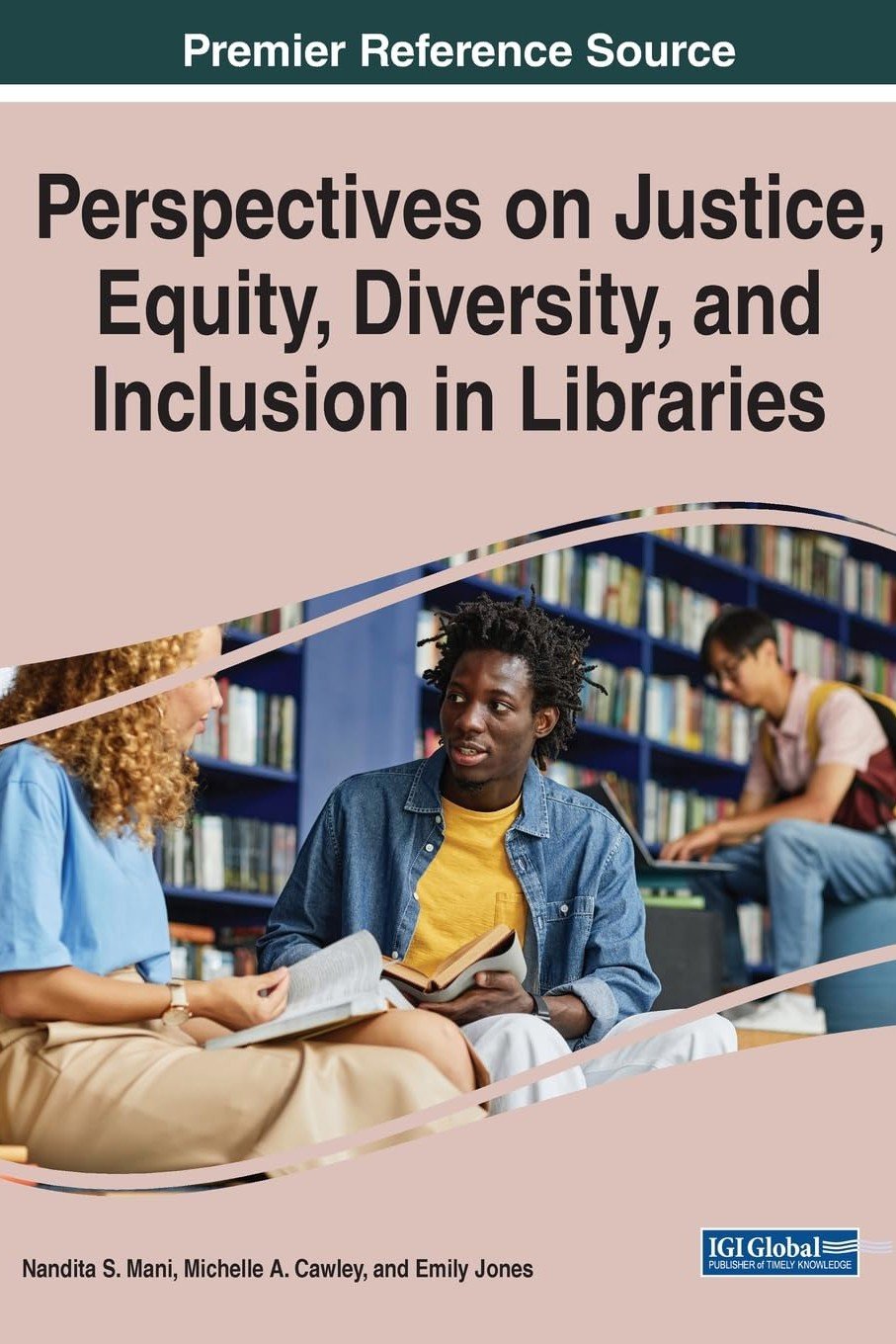
Challenging the Silences
Leading Change to Support Indigenous Representation and Priorities in Australian Libraries
By Kirsten Thorpe, Monica Galassi, Lauren Booker and Tracy Barber.
The complex history of Indigenous and coloniser relations in Australia has shaped how Indigenous peoples engage with libraries and archives, now challenged to respond to Indigenous calls for better representation and engagement with collections.
This chapter discusses an Indigenous-led staff capability program designed to increase Indigenous representation and priorities in Australian libraries. By addressing historical gaps in Indigenous perspectives within library and information studies curriculum, the program supports Indigenous self-determination and sovereignty, and helps implement protocols for engaging appropriately with racist and offensive legacy materials in collections.
Source title: Perspectives on Justice, Equity, Diversity, and Inclusion in Libraries
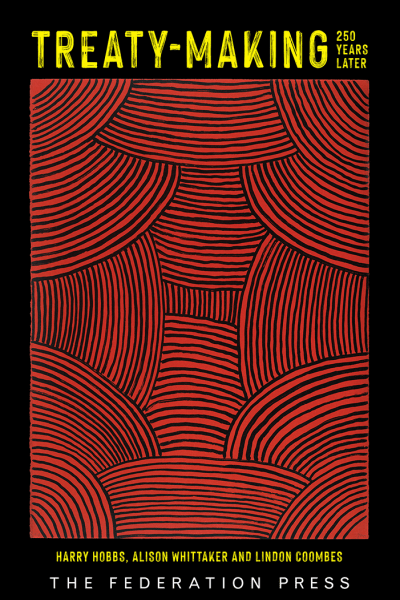
Treaty-Making
250 Years Later
By Alison Whittaker, Harry Hobbs, Lindon Coombes
This continent was colonised without consent, and no treaty followed. Australia remains one of few nations without a treaty with its Indigenous people.
Victoria, South Australia, the Northern Territory and Queensland have recently committed to treaty processes with Aboriginal and Torres Strait Islander nations within their borders – the first time any Australian government has done so. It's momentous, but not without challenges given this history.
In this collection, Indigenous and non-Indigenous scholars and policy-makers from Australia and New Zealand engage with the legal, historical and political dimensions of treaty-making. Their contributions provide a roadmap for developing a treaty relationship that delivers justice.
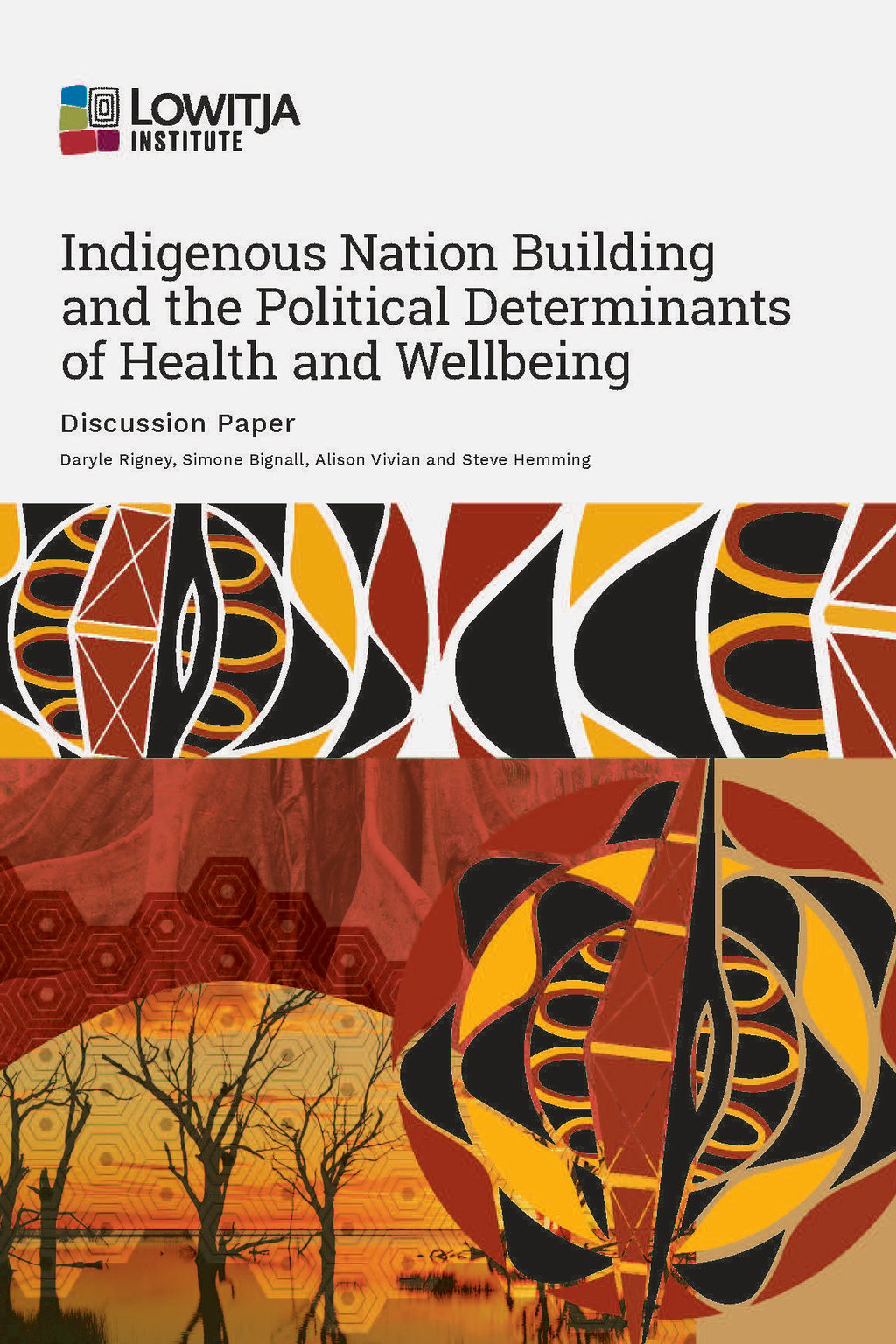
Indigenous Nation Building and the Political Determinants of Health and Wellbeing
Discussion paper
By Lowitja Institute and Daryle Rigney, et.al.
This discussion paper sets a framework for Aboriginal and Torres Strait Islander peoples to take control of their health and wellbeing through nation building.
The key finding in the paper outlines that Indigenous nation building enables healthy futures for Aboriginal and Torres Strait Islander peoples because it comprehensively enacts self-determination and so addresses the broad social, cultural and political determinants of health and wellbeing.
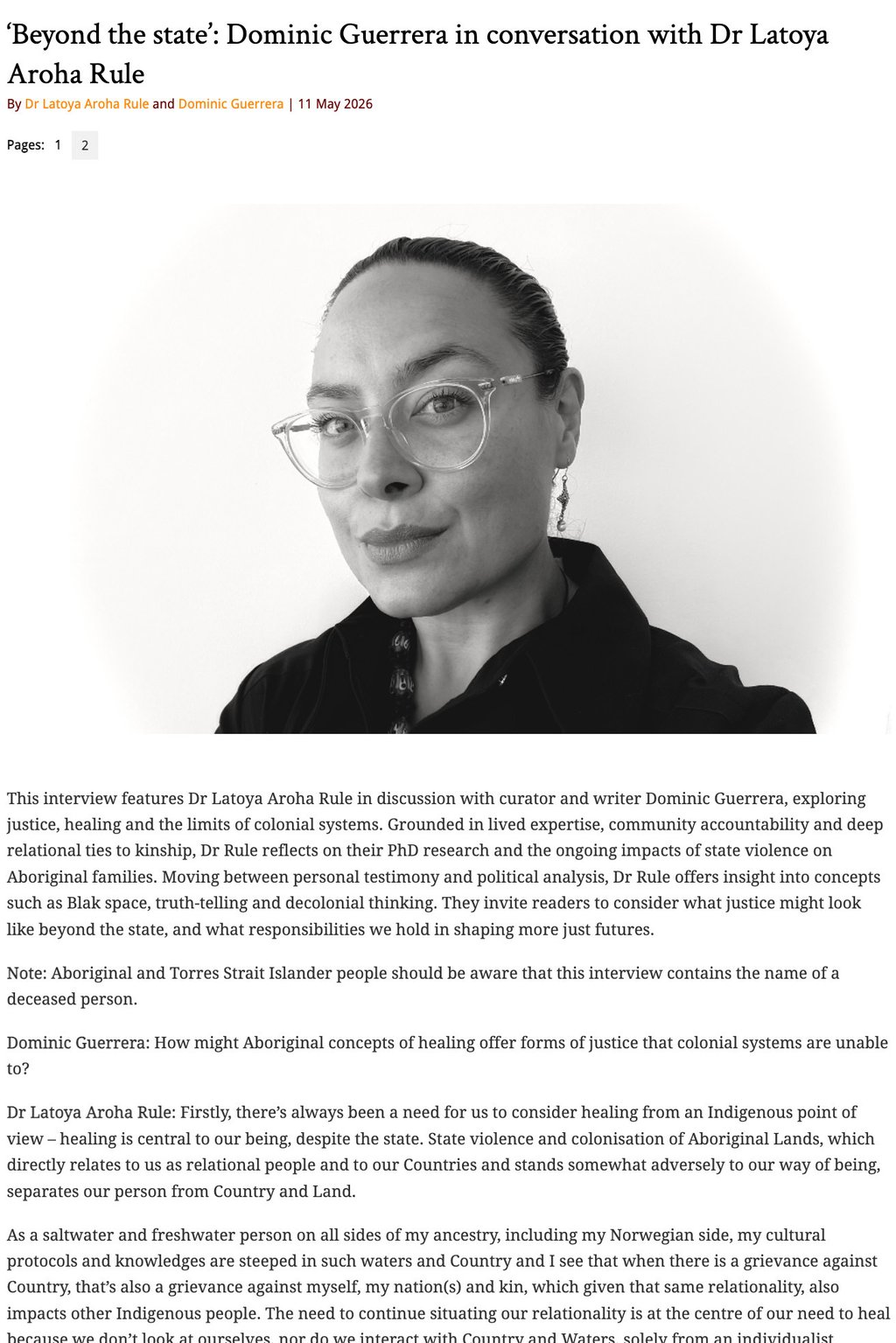
‘Beyond the state’
By Latoya Aroha Rule and Dominic Guerrera
This interview features Dr Latoya Aroha Rule in discussion with curator and writer Dominic Guerrera, exploring justice, healing and the limits of colonial systems. Grounded in lived expertise, community accountability and deep relational ties to kinship, Dr Rule reflects on their PhD research and the ongoing impacts of state violence on Aboriginal families. Moving between personal testimony and political analysis, Dr Rule offers insight into concepts such as Blak space, truth-telling and decolonial thinking. They invite readers to consider what justice might look like beyond the state, and what responsibilities we hold in shaping more just futures.
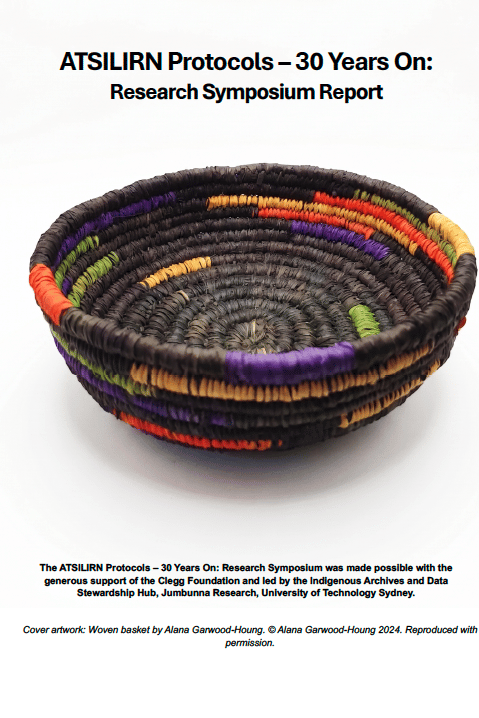
ATSILIRN Protocols
Research Symposium Report
By Rebecca Bateman, et. al
The symposium brought together practitioners, researchers, and advocates to reflect on thirty years of the Aboriginal and Torres Strait Islander Library, Information and Resource Network (ATSILIRN) Protocols for Libraries, Archives and Information Services, first published in 1995 and last updated in 2012. This Report brings together participants' reflections on future direction for the ATSILIRN Protocols.
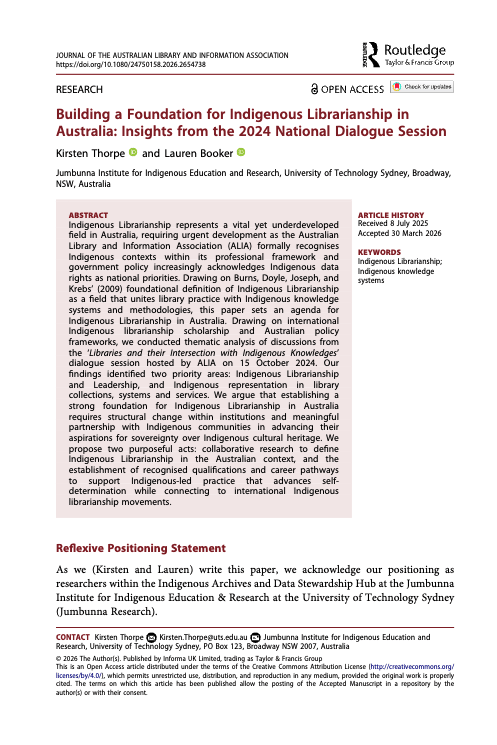
Building a Foundation for Indigenous Librarianship in Australia
Insights from the 2024 National Dialogue Session
By Kirsten Thorpe and Lauren Booker
Indigenous Librarianship is vital yet underdeveloped in Australia, as ALIA recognises Indigenous contexts and policy increasingly prioritises Indigenous data rights. Building on Burns, Doyle, Joseph and Krebs' (2009) definition, this paper sets an agenda for the field, drawing on scholarship and ALIA's 2024 dialogue session on Indigenous knowledges.
We identified two priorities: Indigenous librarianship and leadership, and Indigenous representation in collections and services. A strong foundation requires structural change and partnership with Indigenous communities advancing cultural sovereignty. We propose collaborative research to define the field, and recognised qualifications and career pathways for Indigenous-led practice.