

Addressing the complex challenges of international development and aid effectiveness through research, innovation and partnership.
ISF is recognised for its research leadership in aid effectiveness and international development to address the global challenges of sustainable and equitable development.
For the past 20 years, we have worked in partnership with government, private sector, NGO and civil society stakeholders to create change towards sustainable futures. Our international development team has experience working in government and commercial environments at an international level.
This work spans urban and rural areas at regional and national levels and through community-based engagement.
ISF's strengths include:
- an integrated approach to achievement of the Sustainable Development Goals (SDGs), working across multiple goals
- frameworks and tools to support the process of ‘evidence to impact’
- expertise in gender equality, citizen voice and good governance
- skills in building monitoring and evaluation (M&E) capacity
- established local networks and partner researchers in multiple countries.
Our experience with a diverse range of technical, economic and policy skills allows us to develop research solutions that create change in a personalised and effective manner. We seek to creative effective and lasting programming and policy change through our work
Our specialist skills include:
- academic independence, quality, credibility and rigour combined with practitioner experience
- experience working at strategic, program and project levels and linking realities on the ground to influence policy
- strategic influence to leverage change through sound research design, a collaborative approach and effective communication
- innovation in research approach and methods, and leadership in participatory research design
- commitment to ethical principles of participation and equity
- partnership approaches to working and effective cross-cultural expertise and experience.

Pacific Women-Led Multi-Hazard Early Warning Systems
Improving gender equity in early warning systems for disasters in the Pacific.
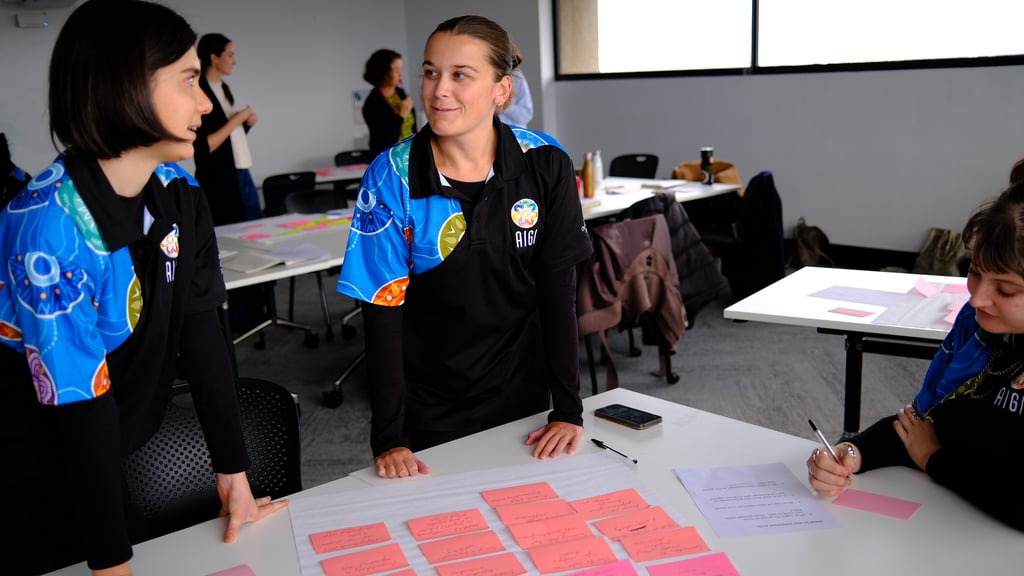
Developing monitoring, evaluation and learning with the Australian Indigenous Governance Institute
Australian Indigenous Governance Institute (AIGI) staff and collaborators to develop AIGI’s approach to organisational monitoring, evaluating and learning...
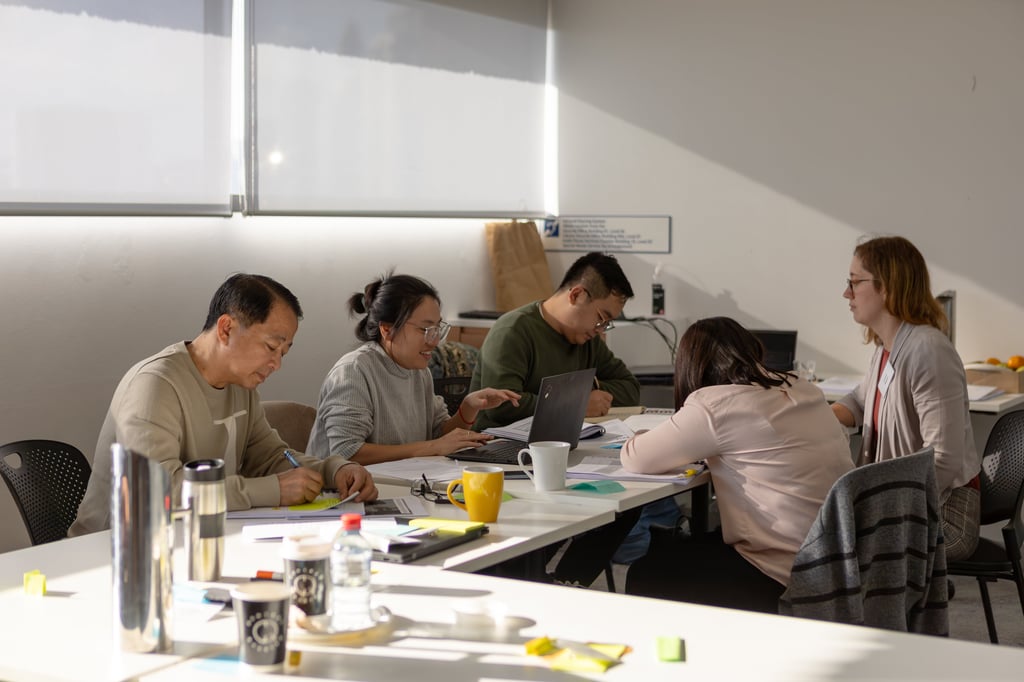
Evaluation Course for the Cambodian Ministry of Economy and Finance
Building on a successful Evaluation short course delivered in 2024, the UTS Institute for Sustainable Futures (ISF) are delivering another course to train 20...
Evaluation of the Health Security Initiative's Applied Research Program
UTS-ISF conducted an end of program evaluation of the Applied Research Program under the Health Security Initiative (HSI).
Developing Guidance Notes and providing training for KONEKSI research partners
UTS-ISF developed Guidance Notes on Partnerships, Gender Equality, Disability & Social Inclusion (GEDSI), and Impact, and facilitated webinars for 2024 KONEKSI grantees.







View more projects
Community resilience case studies on climate change and disasters in Fiji, Kiribati, and Timor Leste
PROJECT | 2023-2024
Exploring insights from Community Resilience Case Studies on climate change and disasters in Fiji, Kiribati, and Timor Leste.
Organisational capacity strengthening and international volunteering
PROJECT | 2022-2025
ISF researchers are working with the Australian Volunteers Program and a selection of their partners in the Asia-Pacific to undertake research on partners’ experiences of organisational capacity strengthening.
Assessing the research to policy interface in Lao PDR
PROJECT | 2022-2023
The Australian Centre for International Agricultural Research (ACIAR) has commissioned the Institute for Sustainable Futures (ISF) to undertake theory-based outcome evaluations that assess how research contributed to outcomes, including policy, in three sectors in Lao PDR: fisheries, forestry and water resources.
Australia Pacific climate partnership monitoring, evaluation, reporting and learning (MERL) services (phase 2)
PROJECT | 2022-2024
The Australia Pacific Climate Partnership supports the integration of climate and disaster resilience across Australia’s aid program in the Pacific. The organisation has developed a Phase 2 Monitoring, Evaluation, and Learning (MEL) Plan which outlines a comprehensive approach to monitoring progress, evaluating impact and reporting and learning from experience. The Climate Partnership is partnering with UTS-ISF to ensure for effective and efficient implementation of the Climate Partnership MEL plan. The researchers from UTS-ISF will lead a suite of specific activities including outcome harvesting exercises, participatory workshops, learning and reflection sessions, case studies and reports, which will generate learnings to improve program performance, contribution and impact.
Read a case study about community resilience in Fiji here
Read a case study about community resilience in Kiribati here
Read a case study about community resilience in Timor Leste here
Read a synthesis report about community resilience here
Client: Palladium - Australia Pacific Climate Partnership Support Unit
Location: Pacific region
Researchers: Anna Gero, Tazrina Chowdhury, Keren Winterford, Jessie Meaney-Davis, Tamara Megaw
Australia – SPC partnership evaluation 2022: institutional strengthening and partnership mechanisms
PROJECT | 2022
The Government of Australia and the Pacific Community (SPC) have jointly commissioned the Institute for Sustainable Futures at the University of Technology Sydney (ISF) and CoLAB Consulting, Fiji, to conduct a partnership evaluation.
From July to November 2022, researchers from ISF and CoLAB Consulting, Fiji are undertaking an evaluation of the contribution and impact of the current ten-year partnership between the Government of Australia (GoA) and the Pacific Community (SPC).
Girls’ civic engagement and activism for gender equality in Asia-Pacific: breaking down barriers and unlocking their potential
PROJECT | 2021
This regional research sought to understand what support young female advocates across the Asia-Pacific region need from their governments, supporters and key stakeholders to become active change agents who promote gender equality and inclusive societies.
Based on learnings from current and emerging actions, this research was intended to influence and inform the actions of government and civil society as well as inform the strategic direction of Plan International in its efforts to support and catalyse girl and youth-led movements. The research featured three stories of successful youth activism and was also aimed to support female youth advocates in their ongoing work for gender equality and social inclusion in the Asia-Pacific.
The research was carried out remotely by a research team that included ISF researchers and researchers in Fiji and Indonesia. The research output is shared by Plan International as part of its focus on girls leadership in the region and also contributes to the annual Asia-Pacific Girls report containing a comparative leadership index report prepared by Plan International.
Location: Bangladesh, Fiji, Indonesia, Philippines, Solomon Islands, Timor-Leste, Tonga, Vietnam
Client: Plan International Asia-Pacific Hub
Researchers: Tamara Megaw, Keren Winterford, Sandra Dewi Arifiani, Iris Low
Research outputs
The 2021 Asia-Pacific Girls Report: Voice, Choice and Power (2021) (Report)
Australian volunteers program impact areas evaluations
PROJECT | 2018-2021
ISF was tasked to assess effectiveness and impact of different kinds of volunteer work against the Australian Government stated goals.
“I’m prepared”: gender equality and empowerment for refugee women
PROJECT | 2016-2021
Research partners to support gender equality outcomes of refugee women in the return and reintegration process.
Gender transformative social accountability in WASH
PROJECT | 2018-2021
Explores social accountability in the context of inclusive WASH, with a focus on improving water service levels in rural Bangladesh.
Development in the urban era
PROJECT | 2019
ISF was asked to lead a steering group responsible for collaborative development with Department of Foreign Affairs and Trade (DFAT) and sector stakeholders of an approach to better integrate urbanisation into development programming in Asia and the Pacific.
Location: Australia, Asia, Pacific
Client: DFAT - Research for Development Impact Network (RDI Network)
Research outputs
Development in the urban era: six strategies for better managing urbanisation in Asia and the Pacific (2019) (Report)
Pacific women Tonga evaluations
PROJECT | 2019
Evaluating the impact, value for money and insights of gender equality programs in Tonga.
RDI Network workshop: enhancing research use in international development
PROJECT | 2019
In 2019, ISF took part in the Research for Development Impact Network (RDI Network)'s Enhancing Research Use in International Development workshops.
Over two days, research advocates from across 12 organisations in the international development sector met to discuss the constraints associated with research and to identify ways in which more dynamic connections between research, policy and practice can be built and constraints can be shifted.
The research advocates were supported by a four-person facilitation team and worked with other participating organisations to develop a sense of mutual support, test solutions, and reflect on ‘what worked’ and what did not.
Location: Australia, Asia, Pacific
Client: ACFID/Research for Development Impact Network (RDI Network)
From urban waste to sustainable value chains: linking sanitation and agriculture through innovative partnerships in Sri Lanka
PROJECT | 2018-2021
This applied research project in Sri Lanka connects the waste management, sanitation and agriculture sectors through the circular economy, to improve food security and environmental health.
Act for peace community-based protection approach
PROJECT | 2018-2019
Together with Act for Peace, ISF prepared a briefing note on Act for Peace’s Community-Based Protection Approach, which aimed to build a common understanding among Act for Peace and partners.
Location: Sydney based
Client: Act for Peace
Partner: Act for Peace
Researchers: Keren Winterford, Tamara Megaw
We Rise phase 2 mid-term evaluation
PROJECT | 2018-2019
ISF conducted an independent assessment of ‘We Rise Phase 2’, a program funded by AusAID and led by the We Rise Coalition.
Location: Fiji
Client: Department of Foreign Affairs and Trade (DFAT)
Researchers: Keren Winterford, Caitlin Leahy
Research outputs
Demonstrating impact and outcomes across scales
PROJECT | 2018
ACFID and the Research for Development Impact Network led work on demonstrating impact across scales. ISF contributed through leadership and workshop facilitation.
The work explored future directions for monitoring and evaluation and sector effectiveness.
Location: Sydney based
Client: ACFID / Research for Development Impact Network
Researcher: Keren Winterford
Research outputs
Demonstrating outcomes and impact across different scales (2018) (Report)
ACFID and RDI Network (2018) Workshop outcomes report
Monitoring, evaluation and learning for agribusiness in Papua New Guinea
PROJECT | 2018
This MEL activity assessed an agribusiness project focused on cocoa smallholder farming and contributed to ongoing evaluation.
The assessment highlighted the value of local ownership and private-sector approaches.
Location: PNG
Client: i2i Development
Researcher: Keren Winterford
Caritas strengths-based approach research
PROJECT | 2017
ISF analysed the impact of strengths-based approaches in Caritas Australia projects in Malawi and Zimbabwe.
Location: Malawi
Client: Caritas
Researchers: Ian Cunningham, Keren Winterford
Research outputs
Strengths-based approaches in Malawi and Zimbabwe (Report)
Evaluation of the Fiji community development program
PROJECT | 2017
ISF undertook an end-of-program evaluation of DFAT’s Fiji Community Development Program, assessing impact and lessons for future work.
Location: Fiji
Client: DFAT
Researcher: Keren Winterford
Research outputs
Fiji Community Development Program end of program evaluation and management response (Mixed)
FemLINKpacific evaluation IWDA
PROJECT | 2017
ISF assessed the outcomes and impacts of FemLINKpacific programming and strategic plan implementation.
Location: Fiji
Clients: FemLINK, IWDA
Researchers: Keren Winterford, Caitlin Leahy
Social audit handbook: Timor-Leste
PROJECT | 2017
The Social Audit Handbook supports civil society organisations in conducting social auditing processes.
Location: Timor-Leste
Client: The Asia Foundation
Researchers: Keren Winterford, Caitlin Leahy
Research outputs
Matadalan Kona-Ba Auditoria Sosiál Ba Timor-Leste (Handbook)
Pacific risk resilience programme mid-term evaluation
PROJECT | 2015-2017
ISF led a mid-term evaluation of a major regional resilience initiative focused on risk governance.
Location: Pacific
Client: UNDP
Research outputs
Pacific Risk Resilience Program mid-term evaluation report (Report)
Child health now evaluation
PROJECT | 2015-2016
ISF partnered with World Vision to evaluate its global Child Health Now campaign.
Location: Sydney based
Client: World Vision
Researchers: Keren Winterford, Jenni Downes
Revision of BORDA’s global monitoring and evaluation framework
PROJECT | 2015-2016
ISF and BORDA reviewed global monitoring systems for decentralised wastewater treatment programs.
Location: Global
Client: BORDA
Researchers: Freya Mills, Cynthia Mitchell
Short-term monitoring and evaluation support to the Department of Women, Fiji
PROJECT | 2015
ISF supported strengthening MEL systems for programs focused on gender equality and empowerment.
Location: Fiji
Client: DFAT
Partners: Ministry of Women, Fiji
Researcher: Keren Winterford
AusAID program WASH performance assessment framework and guidance
PROJECT | 2014-2015
ISF developed a performance framework to support monitoring and management of WASH initiatives.
Location: Australia, Asia, Pacific
Client: AusAID
Evaluation of child-centred climate change adaptation in the Pacific
PROJECT | 2014
ISF delivered an independent evaluation of a program linking climate adaptation with advocacy and community action.
Location: Fiji, Tonga, Kiribati
Clients: FSPI, Plan International Australia
Evaluation of Pacific Australia climate change science adaptation planning program
PROJECT | 2014
ISF conducted an evaluation of PACCSAP to inform future planning and strengthen adaptation approaches.
Location: Pacific
Client: Australian Government – Department of the Environment
Fiji community development program mid-term review
PROJECT | 2014
ISF conducted a mid-term review to assess contractor performance and inform program improvements.
Location: Fiji
Client: DFAT
Researcher: Keren Winterford
Research outputs
Fiji Community Development Program mid term review report and management response (Report)
Exploring the link between child and youth participation and development effectiveness
PROJECT | 2013-2017
This research explored how participation contributes to development effectiveness through field-based work.
Location: Sydney based
Client: ChildFund
Partners: ChildFund, Live and Learn, Transform Aid International
Researchers: Keren Winterford, Anna Gero
Research outputs
Development futures: alternative pathways to end poverty
PROJECT | 2013
ISF hosted a major conference on future development pathways with cross-sector stakeholders.
Location: Australia
Working in decentralised service systems: challenges and choices for the Australian aid program
PROJECT | 2012-2015
This evaluation examined how Australian aid supports decentralised service systems across multiple sectors.
Location: Indonesia, PNG, Philippines
Clients: ODE, DFAT
Researchers: Keren Winterford, Anna Gero, Juliet Willetts
Research outputs
Independent review of Indonesia World Bank Rural Water Supply and Sanitation Program and policy facility
PROJECT | 2012-2013
ISF led the independent review of the Third Water and Sanitation for Low Income Communities Project (PAMSIMAS) and the Water Supply and Sanitation Policy Formulation and Action Planning (WASPOLA) Facility, two AusAID-funded initiatives working to strategically, and at a large-scale, address access to water, sanitation and hygiene in Indonesia.
Location: Indonesia
Client: Australian Agency for International Development (AusAID)
Research outputs
Ethical principles and guidelines for development research and evaluation
PROJECT | 2012
ISF supported development of ethical research guidelines for the non-government sector.
Location: Australia, Asia, Pacific
Client: ACFID
Research outputs
Principles and guidelines for ethical research and evaluation (Guide)
Australia Indonesia partnership climate change and environment sector strategy and adaptation program design
PROJECT | 2011-2012
ISF provided strategic advice on theories of change and MEL approaches for climate programs.
Location: Indonesia
Client: AusAID
Innovation in the Pacific: strengths-based approaches and participation in Solomon Islands
PROJECT | 2011
ISF researched strengths-based practice and participation with SINPA partners.
Location: Solomon Islands
Client: SINPA
Research outputs
Exploring processes for participation and accountability (Learning paper)
Exploring SINPA’s strengths-based practice (2011) (Report)
Working effectively with women and men in WASH
PROJECT | 2009-2012
ISF developed guidance materials to support gender outcomes in WASH programs.
Location: Fiji, Vanuatu
Clients: AusAID, Australian Development Research Award
Partners: IWDA, Live and Learn Environmental Education
Researchers: Juliet Willetts, Naomi Carrard
Research outputs
Working effectively with women and men in WASH programs (2010) (Guide)
Working effectively with women and men in WASH programs – flash cards (2010)
Working effectively with women and men in WASH programs – Fiji case study snapshot (2010)
Working effectively with women and men in WASH programs – Vanuatu case study snapshot (2010)
How do we better address gender in Pacific water and sanitation initiatives? Fiji case study (2009)
How do we better address gender in Pacific water and sanitation initiatives? Vanuatu case study (2009)
Gender Pacific WASH website