• Posted on 30 Jun 2023
  • Updated on 30 Jun 2023
  • 27-minute read

ISF researchers are working with the Australian Volunteers Program and a selection of their partners in the Asia-Pacific to undertake research on partners’ experiences of organisational capacity strengthening.
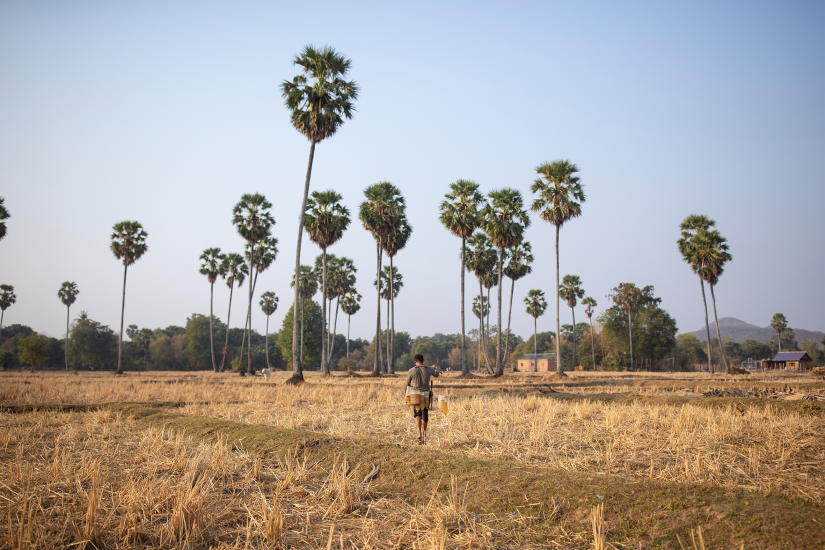
Boy walking through a plain

The Australian Volunteers Program matches a broad range of skilled Australians with partner organisations overseas, to support these organisations to achieve their own development goals. The program is an important part of the Australian Government’s aid program, connecting volunteers to communities throughout the region, and using global volunteering as a people-centred approach to capacity strengthening. The program’s overarching goal is to support locally-led change and the realisation of the Sustainable Development Goals through global volunteering. 

UTS Institute for Sustainable Futures (ISF) researchers are working with the Australian Volunteers Program and a selection of partners in Indonesia, Fiji, Vietnam and Sri Lanka to undertake research on processes and outcomes of organisational capacity strengthening, as defined by both partner organisations and the Australian Volunteers Program. Together, they are exploring the following questions, with partners taking a lead role in researching their own experiences and ISF researchers providing regular technical support:

  1. How is organisational capacity strengthening understood in different contexts in which the Australian Volunteers Program works?

  2. What changes are experienced by partner organisations to their organisational capacity over the research period?

  3. Who or what contributed to organisational capacity strengthening in the partner organisations?

  4. In what ways has the Australian Volunteers Program contributed to organisational capacity strengthening? 

  5. Do changes in organisational capacity enable partner organisations to achieve their development objectives, and if so how, if not why not? 

  6. Informed by the research findings, in what ways can international volunteering best support organisations to achieve development outcomes?

  7. Informed by the research findings, what lessons can be learned about researching organisational capacity strengthening in the context of international volunteering? 

The research is to be managed through a partnership approach. Research governance will operate as a global research project and also as country-level research activities and primarily be sustained through annual cycles of reflection and planning. Outcomes from country level governance activities, including reflection on research practice and recommendations for refinement, annual partner health checks will feed into global level governance processes inclusive of all POs participating, together with UTS-ISF and Australian Volunteers Program staff.

The global research synthesis report for Year 1 (2024) is available at the link below. Synthesis reports for Year 2 and Year 3 will be uploaded on this page in 2026 and 2027 respectively.

Tune into Episode 1 of the ISF Podcast, The Ripple Effect. Explore the ripples of change that partnerships create in the pursuit of a sustainable future.
eAVeSPMhxkc

Transcript

Welcome to the Ripple Effect, a podcast series where we dive into international development research and impact. Together we’ll learn about the experience of research from those at the frontline, and how their experiences are making a difference. Grab your headphones, settle in, and let’s get started.

Welcome to today's podcast, where we dive deep into the topic of researching organisational capacity strengthening. I'm your host, Keren, speaking to you from Gadigal Land in Sydney, Australia. Thanks for tuning in to this first episode of our podcast series.

In today’s episode, we’ll be sharing with you about an action research project which has been carried out by the Australian Volunteers Program, its partners in Fiji, Indonesia, Sri Lanka and Vietnam, and the Institute for Sustainable Futures at the University of Technology Sydney.

The Australian Volunteers Program is an Australian government-funded initiative that supports global volunteering. The focus of our three-year action research is to explore organisational capacity strengthening—how and why this happens, and the broader development outcomes achieved through this change.

We will be discussing today what it means to carry out this research in partnership and also what we’ve learnt so far about organisational capacity strengthening. We have a great line-up of four guest speakers to share with you their experience, and I’m going to invite each of them to introduce themselves now.

Hi, everyone. I’m Quyen Mai, Deputy Director at the Centre for Knowledge Co-Creation and Development Research, known as CKC, a young woman-led non-profit organisation in Hue City, Vietnam. We specialise in social consultancy and research and community development with a focus on women’s empowerment, green energy, and cultural preservation. My pleasure to be here today.

Hi, everyone. I’m Qunson Marynathan. I’m from Sri Lanka, working for the Organisation of People for Engagement and Enterprise (OPEnE), focusing on community capacity building, and I’m a Monitoring and Evaluation Coordinator here. Nice to be here and happy to be talking to you all.

Hello, everyone. I’m Nimesha Gunasinghe, Monitoring, Evaluation and Learning Coordinator for the Australian Volunteers Program, South Asia and Africa Region, supporting the countries of Tanzania, South Africa, Nepal, Sri Lanka and Bhutan. Happy to be here today in this discussion.

Hello, everyone. My name is Huong. I’m the Regional Monitoring, Evaluation and Learning (MEL) Coordinator of the Australian Volunteers Program. I’m based in Hanoi, Vietnam, supporting the program in East Asia, covering Cambodia, Laos, Mongolia and Vietnam.

Great to have you all here. I’m really looking forward to hearing what you’ve got to say today with us. So our research, as you all know, is focused on organisational capacity strengthening, and this is a term that’s used a lot in international development. So what does our research understand of this term? We understand organisational capacity strengthening as an ongoing process of maintaining and increasing the capabilities of individuals, teams and organisations in order to achieve a range of positive, sustainable outcomes. And this definition is used internationally as well.

An important aspect of this research, as you’ll hear more, is we’re using that term very loosely and we really want to understand, more importantly, what organisational capacity strengthening means to partner organisations that we’re working with.

Another important part of the research is how we’re carrying out research. Our research is locally led, adaptive and emergent, and there’s multiple layers of inquiry and learning at the organisational level, at the country level, and then also at the multi-country level. We’re taking a partnership approach to carry out our research with shared responsibility and, importantly, this broad perspective of organisational capacity strengthening so that each of the organisations that are participating, such as those represented today with Quyen and also Qunson, they can make sense of this term themselves.

So firstly, I’d like to ask a question to Qunson and also Quyen. What has the project meant for your organisations? And what’s been your journey so far being involved in this project to date?

Yeah, very interesting. So CKC is a young organisation, so capacity strengthening is critical for us. The last few years has been a building up phase for CKC and we feel that at this moment we need a plan for the next stage of development. So participating in this research has been a timely opportunity for us and the research has been effectively integrated into our regular capacity assessment.

First, it has provided us with an up-to-date approach that has proved to be useful and beneficial for organisations just like us. We use the five-capacity approach here and it has enabled us to look at capacity strengthening in the whole process, considering both internal and external factors. Built on that, the research also helped us to build a very strong scientific framework that will help us to gain input for tailored methods and tools that we think are very suitable for our condition and resources at the moment.

In the first year, we have applied the photovoice and tools to collect data, and this is the first time we conducted this type of tool ever, and we are very excited. The third thing I also have to mention is that the project has provided generous technical and financial support to help us to dig into the data, to analyse and to read it. So it enabled us to come up with a suitable strategy for the next phase that we are asking, as I mentioned before.

For the journey, personally, I think that the journey as a research is quite similar to some other research that we have done, but the experience along the way is very interesting. There are so many surprises and so many moments for me that I learned a lot. As I just mentioned, this is the first time we conducted the photovoice tools that gave us the opportunity to sit together with other local partners that we have been working with for a long time, but we never sat together before. Now we really sit down and talk and discuss what capacity means to us and how we should improve from what we have achieved. Also, we have the chance to sit with other CKC teams across the whole globe. This is a really first-time experience for CKC and also for me to learn and to exchange experience. So the bottom line is that the journey for me has been full of achievements and the change is very enormous and very beneficial for us.

Thank you, Quyen. Just like Quyen said, this is also a good journey for us here at OPEnE. We kind of already had capacity building and capacity strengthening programs running at our organisation, but we are also relatively young, just an eight-year-old organisation started with three members and now we are at about forty-two people. On the way, we had to look into ways where we had to change the methods and strategies to strengthen the organisation. Our vision and mission didn’t change, but the ways in which we can build our organisation for the better, we were looking for different ways. We had already had these five capabilities tool adapted, but it was not very regular. With the help of the Australian Volunteers Impact Program, we were able to fine-tune it.

Just like Quyen said, it was a new endeavour for us to engage with the photovoice tool. To be very honest, it seemed very easy in the beginning when we adapted it, we said, “OK, we are going to do this.” When we started, we understood both the strengths and weaknesses of the organisation and also the difficulty in carrying out this research. Unlike most researchers, this is a participatory action research where all the people in the organisation, or at least the key people, had to participate, rather than just one analyst doing some research and analysing.

The most important part of this research is that it is participatory action research. When we asked our people to participate in the research, it was very obvious that most of them didn’t know the full idea about the organisation—how it started, what it’s doing, where it has to go. Everybody had an idea about their role, what they had to do, what they are supposed to do, and they were all good. But when it came to thinking about or analysing or assessing the organisation, it seemed like not everyone was in the know.

It was an amazing journey for us to start from involving everyone into the project, into the research, and then making everyone understand the organisation. That itself was a capacity strengthening for the organisation. We are only halfway through, I guess, because we are continuously evolving and we are continuously using these tools. Especially the photovoice tool proved to be useful because when we got some photographs and asked people to analyse and see what they see and then express what they understand, it was always a different perspective from a different person. It gave us an understanding that not everyone is looking at the organisation in the same way. So we had to make sure that from within, inside the organisation, the staff had to have an understanding of what capacities they need to build upon and what capacities the organisation needs strengthening.

It was a good beginning. I would say it’s too early to conclude, but it was a good beginning and we’ve been through it at least for a year now that I’m into the organisation for the past one year. I’m hoping for the best.

Great. Thanks so much. Great to hear about your journey so far. I’m interested, Nimesha and Huong, you’ve been supporting four organisations each in Sri Lanka and Vietnam, and you’ve been supporting them in this research. What would you say has been unique about this approach that’s been carried out in this research?

In contrast to traditional research methodologies, in participatory action research, it gives participants a sense of ownership over the research process and also about the outcomes. Our participants are active collaborators and provide strong commitment to both process and the outcome of the research. I think this has been a unique feature in this research methodology, empowering participants to take actions based on the research findings.

Another thing is collaborative knowledge creation. This process empowers our stakeholders, all partners, partner organisations, and whoever is involved in this research to co-create and facilitate this process of co-creation of knowledge. They pool together their resources, their knowledge, their expertise, and make decisions about the research and the way forward plans. They interpret their data based on their expertise. More ownership and collaborative knowledge creation is another unique feature I’m seeing in this approach.

Also, I think this process enables us to build deep trust among our partners and researchers. This research has been running over three years, so there has been a deep understanding among our partners. It enables our data collection process to collect more depth of data and, when analysing, to have a deep understanding about the context. Those are some of the key unique things I’m seeing in this research.

On the other hand, I think it’s very time-consuming as well, because it’s more participatory and involves more engagement with stakeholders. So, it needs more time and resources in our engagement as well. Those are some unique features I’m seeing compared to other research methodologies.

Yeah, I agree with Nimesha, and from my experience in Vietnam, I’d just like to add on two more things. The first I see as unique in this research project is the transfer of knowledge—it’s a coaching and mentoring process. We, the MEL coordinator, learned from UTS and ISF, and then we pass on the knowledge to the partner organisation. We discuss together and we do the research together. So it’s a process of learning and growing professionally for all of us involved in the projects.

And I believe, as Qunson mentioned, that we have different points of view, different perspectives on the one change at the organisation. So it’s the exchange of knowledge that is different to other research projects.

The second point I think is also unique in this project is the opportunity for the participating organisation to share experience and to have cross-learning. So the organisation not only works with the program in the country, but they also have the opportunity to collaborate with other partner organisations in other countries where the Australian Volunteers Program operates.

Great, that’s wonderful. Really good to hear about the participatory action research, both the positives and also some of those challenges as well, and the realities of ensuring learning and development and growth. Yeah, it takes time and effort from everyone.

I’m interested—we’ve talked about we’re only partway through the research, so this is a three-year research project and we’re nearly towards the end of year one. Qunson and Quyen, I’m interested to hear from you: what do you think has been the most interesting findings from the research on organisational capacity strengthening in this first year so far?

Yeah, so it has been very interesting, and we have found out a lot of results. Just to state that CKC has been working with Australian Volunteers since day one, the very first day that we established, and in this first year of the research, we have found out a lot of positive results in all aspects of organisational capacity strengthening. We feel like it’s like harvesting time for us after seven years of establishment, that we are now broadening our coverage, defining our visibility in the local area.

There are some key things about the research findings that I would like to highlight. After the first year, everyone had come into one line. Before the research, people talked about capacity strengthening, but then each of us had some different perspective of what capacity is and how we should strengthen it. Especially with our partners, they also held different perspectives and expectations on CKC capacity strengthening. But then after this one year, after we conducted the workshop with photovoice, everybody came together and now we have agreed what capacity strengthening would mean to CKC and in what way CKC wants to achieve this process with AVI and also with the research after three years.

Now we have set the common ground for CKC, which is very important in participatory action research like this. I think when everybody is clear and going in one direction, it is very important.

Secondly, the first-year finding has also confirmed that CKC has come to a new phase. Maybe we could not say that we are young anymore, but we should look for a new phase and a higher stage of development. In this way, we think that we should be better prepared and need a new set of strategies for capacity strengthening to achieve a new set of targets in these three years.

Lastly, it’s like connecting the dots for us when looking at the findings, because we see the big picture of how volunteerism in general, and how Australian Volunteers in particular, have played a vital role in the development of CKC capacities. We see traces, evidence in all of the onset of different capacities—five different capacities—that in their own way, Australian Volunteers play some kind of role or contribute something in each step of our development in capacity. So I think it’s really interesting for us to look back and also to look forward to how we should collaborate with AVI and how we should integrate volunteerism in our stage two development in the next few years.

So the case was similar to what CKC went through, like Quyen said. We also had to start with the research, thinking we already have this 5C tool in place and we are just adapting the photovoice tool—let’s dive into it. Once we started going, we understood—I think there are three major findings I could point out.

One is that we thought everyone in the organisation is fully aware of the organisation. Unfortunately, it turned out not everyone has the same understanding of the organisation. That was a key finding for us, because it’s not just that we have to train people on the project and how to do their job, but it seems like we have to train them fully to understand the organisation as well.

The second finding is that in the senior management, the perspective or the understanding of different levels or capabilities of the organisation was different. For example, if somebody scored the organisation to be eight out of ten in one aspect, another senior manager would say, “No, it’s only five out of ten.” So the difference was very prominent. It was also very important for us that we were able to understand from everyone’s background and everyone’s measure of the development or the capacity, they gave us different scores. So the finding is that not every one of us is looking at the same thing in the same way. That was very important because it shows us the pluralistic perspective from within the organisation.

The third one is, although we have been analysing our gaps and filling in the gaps for the past years, we found out that there are a few things that can be easily achieved than other things in terms of capacity strengthening. By doing this research, if we clearly identified the gaps or the areas of improvement, and if we prioritise the areas of improvement that could be done within a short time period or with less cost or with less resources, then we could prioritise them and can easily reach them.

I would say those are the three main findings that we got through this research.

Right, thanks so much both for sharing. It’s so interesting to hear the value of surfacing those diverse perspectives and that recognition that not everyone sees the organisation in the same way, and different people have different perspectives on what is organisational capacity strengthening and the value of establishing that common ground to move forward as well. That’s really exciting to hear.

As we’ve mentioned before, this research has intentionally taken a strong partnership approach. It’s enabled each of these sixteen organisations who are part of this research across the four country contexts to essentially choose their own adventure, to design the research activities relevant to their own context, their own organisational context, their own country context, and to prioritise what they want to learn from the research to benefit their own development going forward.

Our institute, the Institute for Sustainable Futures, prioritises and values this strong research approach. We think that research and research outcomes are more relevant when research is carried out through a partnership approach and that research findings are best used by those at the core and at the heart of the research.

I’m interested in asking all of you now, from your perspective, what do you think has been the benefit of partnering and doing the research in the way that we have? We’ve talked about participatory action research. We’ve talked about involving everyone in the research at that organisational level. Huong has spoken about the value of mentoring and train-the-trainer and sharing of knowledge and diffusion of knowledge.

I’m interested in your views on what you think has been the value of the way that we’ve carried out this research through this partnering approach.

Yeah, Keren, that’s a good question. I think we have seen benefits in different fronts. As an organisation that is developing for the past eight years in a country like Sri Lanka, where it was all rehabilitation, now we are trying to move into development. It’s really, really difficult at a time like this, having a research like this.

The organisation also had decided to do a monitoring, evaluation, accountability and learning framework—a MEAL framework—for the organisation, and I’m responsible for doing that. These processes come hand in hand: we are doing this research on one hand, and we are also doing some capacity building from some of the funding partners, and we are also developing a MEAL program framework for our organisation. This is extremely beneficial because we are doing the same or similar analysis in two or three different ways, and whatever our findings here, it can be immediately applied to the development of our MEAL framework. That’s a very important benefit of what’s going on.

Then the support and collaboration that we get, like from Nimesha—Nimesha is just a phone call away and we can always reach out to her and ask anything, although we haven’t bothered her too much, but she’s always there, available to answer and to advise or to collaborate. It’s a good thing that, outside Sri Lanka, we haven’t had real interaction or exchange with any other organisations other than the funding partners. This is the first time I think we were able to share something with another organisation like CKC and a person like Quyen, getting into contact with someone, sharing our knowledge a little bit further, getting exposed to other similar organisations is another benefit. It’s not just outside Sri Lanka, but also within Sri Lanka, where the partner organisations are. When we get into a discussion, a meeting, we get different perspectives from different organisations. That’s another level of benefit because it also brings up the network. We are also having another meeting on the 22nd of October, again with another partner organisation, discussing about the research and the progress. That has been one other benefit.

Finally, I would say the most important benefit of them all is that, like the research says, it’s participatory action research. We were able to make sure almost everyone in the organisation took part. That’s been a real capacity strengthening for the individuals at the organisation. So I would say that was the most important benefit we got through this research.

Yes, I totally agree with Qunson here, and we also share the same experience like what Qunson just mentioned. For CKC, I just want to emphasise that in our name, we value the co-creation. So the approach of this research is totally highly aligned with what we are doing and what we are looking to achieve in the future. I think the co-creation and co-learning process not only happens at the organisational level, but also at the individual level. Everybody is included, everybody can take part, everybody can raise a voice and contribute to the process. This process is an up-to-date and rigorous process where you always have input and it makes for ongoing decision-making processes. So the result this year will be the input for the next year, and it goes on as long as we are conducting this approach. I think it’s really beneficial for us not only in one time or in one moment, but it’s an ongoing process of receiving this benefit, exchanging, adjusting from everybody, and then achieving more.

I believe for small organisations at the local area, having this kind of need to connect, to build this participatory action, but it’s quite limited for us to reach out. It’s impossible for CKC to meet OPEnE, and impossible for Quyen to meet Qunson, but in this research, it makes everything possible, and now we are here. From this point, we also come to the second benefit that we can exchange innovative solutions and scale them up. Just like CKC here in the first year, we have learned from OPEnE a very innovative, quantitative approach to assess organisational capacity that we could not have done before. Now we have learned from OPEnE, we have shared a lot of experience with Qunson here, and we think that next year we will apply this approach to CKC. We also believe that the story that CKC brings to the research has also been shared, applied or scaled up in some other partner organisations in the research as well.

To come to the last point, I think the benefits are enormous. I feel like sixteen organisations are together building a very strong foundation, and this strong foundation helps us to develop higher and stronger to earn more opportunities. From this research, CKC has already reached out to a lot of opportunities that we are working on at the moment, and I’m very excited if I can share the result of this opportunity soon in the near future. Yeah, it’s a very interesting opportunity for us.

I agree and just want to supplement two points to what Quyen and Qunson have mentioned. From the program perspective, I see the biggest benefit for us is an opportunity to get further evidence of how volunteers contributed to the capacity strengthening at partner organisations. Another benefit is the connection and partnership among partner organisations is developed and strengthened. We have local NGOs, INGOs, research organisations and also government academic institutions participating in this research, so the knowledge is diverse and we get the connection with those organisations and collaboration and partnership.

Yeah, I think this research process has immense benefit to all of us as being part of this research process, as my colleagues explained. So I would like to reiterate the importance of the knowledge sharing and recycling process—knowledge recycle—because in this participatory action research, we collect the data, and we reflect on the data; based on that, we change our strategies. So it’s a real benefit to all of us.

Also, adding to that, the deep understanding of the local context—I think this provides a deep understanding of the context of our partners, the context of our partner organisation’s operating context and the type of our partnerships. It gives a sense of deep understanding to all of us, especially for our program, the Australian Volunteers Program, to understand about our partnerships and the partners’ context. This research platform is where we have deep understanding and deep relationships with our partners. That’s one thing. Another thing is this provides context-specific solutions, like the partner capacity building, which is one of our program outcomes—how the volunteers support for the partner capacity building. We believe that this research enables us to solve real-world problems with specific context solutions which are adaptable and sustainable. This is one of the great benefits as a program, as the Australian Volunteers Program. We are looking to see the impact results of our program, and this research will definitely help us to see that benefit.

Great. Thanks so much. Thanks to all of you for sharing today. It’s been really rich insights in terms of the ways of working both at this global multi-country research process, but also in your organisations as well, to hear how the research is really touching each staff member in your organisation and how it’s aligning to the work that you’re doing and the ways that you work as well.

So a huge thanks to all four of you for sharing today. It’s been a really rich conversation. And so that wraps up our episode for today. We hope you’ve enjoyed the conversation and you’ve got some insights from it.

If you have any thoughts or questions, please feel free to reach out to us at the Institute for Sustainable Futures at UTS through our LinkedIn page or also through our website or contact me directly as well.

We hope you keep in touch and hope you continue to be engaged in the work that we’re doing. Please look out for the next episode in this podcast series as well, where we’ll be sharing more from those that we’re working with and to understand what impact we can make in terms of international development outcomes. And as Nimesha says, that are context-specific, that are relevant and that are really meaningful to those that we work with.

Thanks again for listening.

Keren Winterford

Keren Winterford

Program Lead - International Development

DVC (Research)

Anna Gero

Anna Gero

Research Director

DVC (Research)

Tamara Megaw

Tamara Megaw

Research Principal

DVC (Research)

Jessie Meaney-Davis

Jessie Meaney-Davis

Senior Research Consultant

DVC (Research)

Locations

  • Asia-Pacific region
  • Fiji
  • Indonesia
  • Vietnam
  • Sri Lanka

SDGs  

Icon for SDG 17 Partnerships for the goals

This project is working towards UN Sustainable Development Goal 17.

Read about ISF's SDG work

Explore International development

Institute for Sustainable Futures; International development

Research Centre

Years

  • 2022-2025

Client

  • Australian Volunteers Program


Share