Online echo chambers and fading social memory are driving a resurgence of preventable diseases.

Key takeaways

  • Misinformation is a social identity issue, not an information deficiency.
  • Standard debunking can be ineffective or counterproductive by drawing attention to false claims.
  • Falling vaccination rates compound the silent pandemic of antimicrobial resistance (AMR), which threatens global healthcare as pathogens develop resistance to existing treatments.

The latest UTS Curiosities Live event brought together Distinguished Professor Steven Djordjevic and Professor Marian-Andrei Rizoiu to explore why vaccine-preventable diseases like polio and measles are resurging, and why scientific evidence alone is rarely enough to sway public opinion.

Hosted by ABC broadcaster and science journalist Tegan Taylor, the conversation highlighted the complex interplay between microbiology, digital networks, and human behaviour.
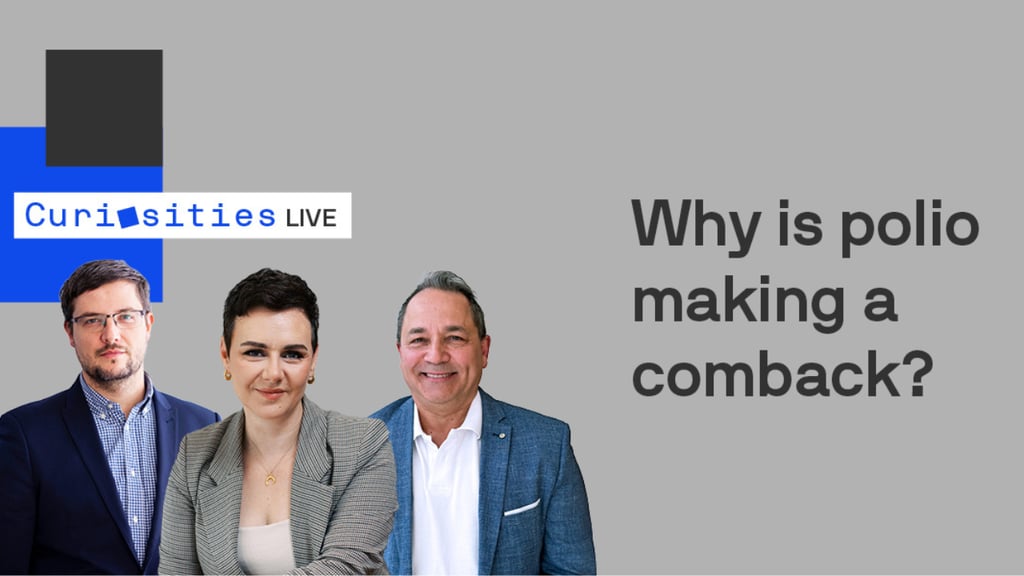
collage of headshots of all three speakers

WEBVTT

1
00:00:05.910 --> 00:00:21.609
Tegan Taylor: Good evening. Welcome to Curiosities Live! I'd like to begin by acknowledging the traditional owners of the lands from which we're all joining today. Pay my respects to elders past and present. My name is Tegan Taylor. I'm an ABC broadcaster and health and science journalist

2
00:00:21.610 --> 00:00:33.999
Tegan Taylor: And I'm your host for this session this evening. We're here to discuss why diseases like polio and measles, diseases we've made such strides at reducing, why they're making a comeback.

3
00:00:34.000 --> 00:00:42.619
Tegan Taylor: We'll look at the science, but we'll also discuss why scientific evidence isn't always enough to influence the decisions people make.

4
00:00:42.620 --> 00:00:52.820
Tegan Taylor: And what this means for all of us. So, joining me are two UTS experts who bring very different but complementary perspectives to this conversation.

5
00:00:52.820 --> 00:01:03.790
Tegan Taylor: Distinguished Professor Steve Djordjevic is an infectious disease expert whose research spans microbiology, genomics, and antimicrobial resistance. Steve, please give us a wave.

6
00:01:05.370 --> 00:01:17.289
Tegan Taylor: And, Professor Marin Andre Rizoiu is a data scientist whose research looks at how information, influence, and misinformation spread through online networks. Andre, wave, please.

7
00:01:17.700 --> 00:01:35.890
Tegan Taylor: Here he is. This is a conversation that we want you to be part of. I would love to fold your questions throughout the discussion, and I'll also dedicate some time to Q&A towards the end. So if you have a question at any time throughout the discussion, you can see in the chat there's a link to Mentimeter.

8
00:01:35.890 --> 00:01:40.249
Tegan Taylor: That is the Q&A platform for tonight, so click on the Mentimeter link.

9
00:01:40.250 --> 00:01:47.220
Tegan Taylor: Have it there, ask your questions, and if you see a question someone else has asked that you want to know, you can upvote it.

10
00:01:47.630 --> 00:01:54.380
Tegan Taylor: That's how I'll know what you're most keen to know about. So, Mentimeter, the link is in the chat.

11
00:01:54.410 --> 00:02:09.140
Tegan Taylor: But I want to start with a little bit of scenes that are what's happening, why we're seeing things like polio and measles come back. Steve, polio and measles as our examples, these are both vaccine-preventable diseases. What does that actually mean?

12
00:02:10.979 --> 00:02:17.279
Steven Djordjevic: So it means that if a substantial proportion of the population, is vaccinated.

13
00:02:17.769 --> 00:02:25.939
Steven Djordjevic: Then we have this thing called herd immunity, and that… that… then rates of vaccination for each infectious disease is different.

14
00:02:26.309 --> 00:02:37.839
Steven Djordjevic: But once we get herd immunity, the ability of the infectious agent to spread from person to person is severely diminished.

15
00:02:37.839 --> 00:02:50.879
Steven Djordjevic: And that's really important because there are vulnerable populations in the community, such as the frail, elderly, and some Indigenous populations that are in remote locations.

16
00:02:50.979 --> 00:02:59.409
Steven Djordjevic: They are unable to receive the vaccine, and so when we have good blanket cover through herd immunity, they are protected.

17
00:03:00.660 --> 00:03:05.780
Tegan Taylor: When I say making a comeback, what does this mean? Like, what are we actually seeing here?

18
00:03:07.030 --> 00:03:09.710
Steven Djordjevic: So, what happens is,

19
00:03:09.970 --> 00:03:18.459
Steven Djordjevic: So, again, it's different for each of the infectious diseases. So, what's happening… one of the reasons why we are seeing infectious diseases,

20
00:03:18.460 --> 00:03:31.759
Steven Djordjevic: resurging that have traditionally been well controlled by vaccination is because we are… the population is not sufficiently covered by vaccination, because people are becoming hesitant to vaccinate.

21
00:03:31.890 --> 00:03:36.929
Steven Djordjevic: And so what happens then is that, the…

22
00:03:37.100 --> 00:03:53.639
Steven Djordjevic: the community spread from person to person starts to creep up, and as an infectious agent replicates, it has its capacity to, I might say increase its abolence, but it becomes more virulent, more people get exposed, more people succumb to this infection.

23
00:03:54.230 --> 00:03:56.090
Steven Djordjevic: And that's very problematic.

24
00:03:57.280 --> 00:04:06.339
Tegan Taylor: You mentioned, hesitancy there, vaccine hesitancy. Andre, what does that look like in practice? What kind of attitudes are we seeing shift?

25
00:04:07.740 --> 00:04:15.020
Marian-Andrei Rizoiu: We are observing people starting to question, sometimes they question the efficacy of the vaccine itself.

26
00:04:15.850 --> 00:04:25.509
Marian-Andrei Rizoiu: you know, the typical saying of, I took the flu last year, and I still got the flu. People don't… there's… there is a lack of understanding of how it actually works.

27
00:04:25.510 --> 00:04:35.129
Marian-Andrei Rizoiu: The concept of… of herd immunity is very… it's kind of poorly understood also, so that's not the most… that's not the…

28
00:04:35.130 --> 00:04:47.420
Marian-Andrei Rizoiu: That's not what people know more… most. But I guess where we start seeing an uptick into these alternative views is when we see penetration of online social platforms and discussion places.

29
00:04:47.520 --> 00:04:54.810
Marian-Andrei Rizoiu: Where people start congregating online and exchanging ideas, and that's where they start forming these thematic groups.

30
00:04:55.000 --> 00:04:56.870
Marian-Andrei Rizoiu: pages,

31
00:04:57.080 --> 00:05:15.580
Marian-Andrei Rizoiu: WhatsApp groups where they start exchanging these alternative views and endorsing and reinforcing, views, that are detrimental. So there will be… there will be references to authority, of how… how immunization programs are just a way of controlling, controlling, or so on and so forth.

32
00:05:15.580 --> 00:05:24.850
Marian-Andrei Rizoiu: And they keep propagating this type of information, which then, in time, being repeated, leads to this hesitancy that Steve was referring to.

33
00:05:25.130 --> 00:05:36.840
Tegan Taylor: I definitely want to get into that pathway in a second. Steve, what's it like as someone working in health to hear that those are the sort of attitudes that people are being drawn to?

34
00:05:38.360 --> 00:05:48.380
Steven Djordjevic: Well, it's… it's sort of sad. We're sort of almost like a victim of our own success. So, I think I want to zoom out a little bit, if I may, Tegan, because…

35
00:05:48.480 --> 00:06:03.809
Steven Djordjevic: we should remember the number of deaths that are associated with infectious diseases. I mean, infectious diseases is the number one killer of humans in history, full stop, and not by a small margin. It's like, you know, hundreds of millions of deaths.

36
00:06:03.980 --> 00:06:14.090
Steven Djordjevic: associated with quite a large number of vaccine-preventable diseases, which have now… so vaccination is interesting, because in some instances, we…

37
00:06:14.090 --> 00:06:24.350
Steven Djordjevic: don't see the organism, appearing anymore. So things like, we don't see, smallpox, smallpox being almost completely eradicated.

38
00:06:24.520 --> 00:06:36.910
Steven Djordjevic: And that's because the vaccines have worked really effectively, and it's also because the infectious agent, has succumbed to that vaccination regime. Then we have diseases like influenza.

39
00:06:36.910 --> 00:06:47.009
Steven Djordjevic: Which, have killed more than 200 million people worldwide, and still kill many people every, every winter, or every year.

40
00:06:47.460 --> 00:06:57.650
Steven Djordjevic: And these viruses are able to chop and change their genetic makeup very, very frequently as they pass through animal populations.

41
00:06:58.580 --> 00:07:03.600
Steven Djordjevic: And so what happens is every year we need to get vaccinated, okay? And the vaccine

42
00:07:03.770 --> 00:07:19.359
Steven Djordjevic: may not prevent you from getting an infectious disease, to get the full-blown influenza, but what you will experience is an ameliorated form of that flu, okay? And we should also differentiate flu from the common cold, because the word flu

43
00:07:19.360 --> 00:07:30.180
Steven Djordjevic: is used very, very frequently. If you have the flu, you are bedridden at least for 3 days, you have a raging temperature, you have body aches, and you really feel

44
00:07:30.340 --> 00:07:33.360
Steven Djordjevic: Whereas a cold, a head cold, is very different.

45
00:07:35.020 --> 00:07:49.770
Tegan Taylor: Deb, you did such a good job there of explaining something very, very complicated in just a couple of minutes, and yet, it still took you a couple of minutes to explain that. You couldn't put that in a tweet, or in a simple post on social media.

46
00:07:50.540 --> 00:07:58.970
Tegan Taylor: Andre, is that part of the problem here? We're so used to having such small bites of information that even, sort of, generous nuance gets lost?

47
00:08:00.220 --> 00:08:08.730
Marian-Andrei Rizoiu: There are multiple components here. Yes, definitely the expectations on how we receive information is definitely…

48
00:08:08.970 --> 00:08:28.289
Marian-Andrei Rizoiu: has definitely changed, and yes, there are significant chunks of, of the online population, or the population that… that will consume information in the form of, either short messages, tweets, Facebook posts, or more recently, reels on… on Instagram, so…

49
00:08:28.290 --> 00:08:44.830
Marian-Andrei Rizoiu: yes, Steve did an amazing job describing it in just a minute, but then if I am used to flipping through TikTok reels, one after the other, that is not what I would expect to receive. But…

50
00:08:45.160 --> 00:08:51.280
Marian-Andrei Rizoiu: the way we perceive the information and we consume it is one way. However, the…

51
00:08:51.610 --> 00:08:55.129
Marian-Andrei Rizoiu: What our research… my research has shown in,

52
00:08:55.210 --> 00:09:10.289
Marian-Andrei Rizoiu: in the past years is that it is mainly the phenomenon on how people consume this information, which is the real culprit, which is one of the main culprits here. So, this misinformation around vaccines is actually

53
00:09:10.320 --> 00:09:25.749
Marian-Andrei Rizoiu: part of the general phenomenon of misinformation at large. And our audience has probably met this term before, over and over again. We hear about conspiracy theories, we hear about

54
00:09:25.770 --> 00:09:40.980
Marian-Andrei Rizoiu: political misinformation, and so on and so forth. So the question now comes on why… why the prevalence of misinformation? I guess that's one of the big… the big ticket items here is… so our… our info… our research actually shows

55
00:09:41.280 --> 00:09:47.060
Marian-Andrei Rizoiu: That even the term misinformation is slightly misleading, because this… it has nothing to do with information.

56
00:09:47.160 --> 00:09:49.619
Marian-Andrei Rizoiu: Misinformation is not an information problem.

57
00:09:49.650 --> 00:10:00.110
Marian-Andrei Rizoiu: misinformation is a, is a, sort of, is a social identity issue. So, people do not consume the inform… the misinformation because

58
00:10:00.110 --> 00:10:13.600
Marian-Andrei Rizoiu: they do not have access to the right information. We all have access to it. In fact, Stephen was saying it, that information about vaccines has never been more abundant. There's… there's never been a single… a single period in the life cycle of

59
00:10:13.660 --> 00:10:27.680
Marian-Andrei Rizoiu: humanity, where it would have been as easy as it is for us now, today, to find all the information I want about every other vaccine that I want, together with all the scientific results, the replication results, the field studies, and so on.

60
00:10:28.190 --> 00:10:38.670
Marian-Andrei Rizoiu: it's not about that I can't find the information, it's not that our… that people that believe these alternative views cannot find the information. So if it's not an information problem, then what is it?

61
00:10:38.670 --> 00:10:48.730
Marian-Andrei Rizoiu: So, what we find it is, is that misinformation is, is just one way that groups people together. Let me give you an example.

62
00:10:48.810 --> 00:10:54.420
Marian-Andrei Rizoiu: Back in the days, Joel's a bit my age, there was,

63
00:10:54.790 --> 00:11:08.179
Marian-Andrei Rizoiu: back where I grew up, in a small town where I grew up, I either liked soccer, or I didn't have lots of friends. So, there was not a lot of options out there. So, of course I like soccer, like everyone else. But today, with our digital… with our digital environment.

64
00:11:08.300 --> 00:11:22.729
Marian-Andrei Rizoiu: no matter how fringe my ideologies and my worldviews are, I will get, I will find someone online that has… that shares those views. So what the… the digital communication environments of social media platforms,

65
00:11:23.560 --> 00:11:33.210
Marian-Andrei Rizoiu: mainly the social media platforms. What they allow, they allow us now to reach… to be connected to all… to a very wide, set of individuals out there.

66
00:11:33.420 --> 00:11:42.580
Marian-Andrei Rizoiu: And then I can always connect to people that think similar to me. So then I can start embracing those communities, and those communities that start functioning

67
00:11:42.580 --> 00:11:57.400
Marian-Andrei Rizoiu: as both endorsers, so people there, they understand me, they feel me, they think like me. So I get the homophily, I have the feeling of belonging, I have my… it fulfills my psychological needs. But also, they function as a filter.

68
00:11:57.560 --> 00:12:15.889
Marian-Andrei Rizoiu: Because the information that flows through those communities is always aligned to the communities themselves. So, on one hand, I have people that constantly endorse what I'm saying, and give me the thumb up, no matter what I say, things that probably wouldn't be acceptable in the… in my offline immediate community, in my family, my group, my…

69
00:12:16.050 --> 00:12:28.599
Marian-Andrei Rizoiu: my school, but then there I get endorsed, but also I get the information through those communities, and that gets filtered. Corporate that to the fact that almost half of the adult population today gets their information

70
00:12:28.610 --> 00:12:36.930
Marian-Andrei Rizoiu: from their social media groups. And you start getting these phenomena where you can actually live in these bubbles, and you get completely disconnected from reality.

71
00:12:37.080 --> 00:12:44.160
Marian-Andrei Rizoiu: You… you… and then these communities can pick up, and then they can drift as much to the left, to the right, to the center as you want, so…

72
00:12:44.160 --> 00:12:58.680
Marian-Andrei Rizoiu: Then we start… and that's not, and that's what partly explains the phenomena that we are seeing today, together with things like political polarization and so on and so on. But to stay within this field, it's really what explains at least partially, the

73
00:12:58.720 --> 00:13:04.090
Marian-Andrei Rizoiu: The emergence of such a wide set of anti-vaccination views.

74
00:13:04.290 --> 00:13:20.450
Tegan Taylor: this sense of an echo chamber, the self-fulfilling communities that we surround ourselves with. So you're asking your questions by using the Mentimeter link there. We've had a question come through that I am going to treat as if it was asked in good faith, and I think we can use it as a bit of an example

75
00:13:20.450 --> 00:13:28.580
Tegan Taylor: of how to debunk misinformation. Someone has asked, don't vaccines cause autism? Can we use this as a bit of an example to

76
00:13:28.580 --> 00:13:37.440
Tegan Taylor: talk about the truth of what we know, but also in a way that we know is evidence-based. Steve, I might start with you.

77
00:13:39.480 --> 00:13:44.370
Steven Djordjevic: So, to just follow on a little bit from what Marian-Andre said.

78
00:13:44.510 --> 00:13:54.650
Steven Djordjevic: It's important… so, the scientific process is constantly challenging information. So, we constantly debate data.

79
00:13:54.830 --> 00:14:11.970
Steven Djordjevic: And we… and we re… we… we go forward in the way we… we think about a problem based on the reiteration of data that supports… even if we look at it 9 or 10 different ways, it still comes to a particular pathway that's supportable by the data.

80
00:14:12.110 --> 00:14:23.079
Steven Djordjevic: Whereas I think when you're in a… when you're in an environment that Marian-Andre was talking about, then that filter, that… that ability to challenge is severely diminished.

81
00:14:23.080 --> 00:14:23.690
Tegan Taylor: Hmm.

82
00:14:23.940 --> 00:14:27.690
Steven Djordjevic: So, to get back to this autism question, I think,

83
00:14:28.480 --> 00:14:33.370
Steven Djordjevic: There, is no real evidence that vaccines cause autism.

84
00:14:34.560 --> 00:14:43.589
Steven Djordjevic: there… the evidence has been widely, widely disputed. There has been a number of studies which challenge

85
00:14:43.710 --> 00:14:45.220
Steven Djordjevic: That link.

86
00:14:45.440 --> 00:14:47.240
Steven Djordjevic: And there is no…

87
00:14:47.610 --> 00:14:55.500
Steven Djordjevic: Serious demonstrable evidence to support the fact that… to support the contention that vaccines cause autism.

88
00:14:56.350 --> 00:14:57.790
Tegan Taylor: Alright, Andre, how do you do?

89
00:14:59.620 --> 00:15:03.899
Marian-Andrei Rizoiu: Hi, this is… I really like how Steve positioned this, because

90
00:15:04.260 --> 00:15:11.740
Marian-Andrei Rizoiu: This… the scientific method of always inquiring, always going after what we know and questioning ourselves is actually not…

91
00:15:11.970 --> 00:15:16.949
Marian-Andrei Rizoiu: Doing us a favor when it… when we talk about communication in the community at large.

92
00:15:17.090 --> 00:15:26.470
Marian-Andrei Rizoiu: the number of times I hear, but the science doesn't know. The science contradicts themselves, even the researchers can't agree. This is… this is the thing that I…

93
00:15:26.470 --> 00:15:37.690
Marian-Andrei Rizoiu: here, and I see in these groups over and over again, the scientists can't agree. They can't… they can't set the… they can't be on the same, on the same view. And

94
00:15:37.690 --> 00:16:00.640
Marian-Andrei Rizoiu: This is not a sign that science doesn't work, it's just a sign that that's how science works, is that we keep updating our views. Now, in this context, I happen to know quite a bit about where this originated. It was… it originated to one paper that was published, that was published ever since it was retracted, debunked multiple times.

95
00:16:00.670 --> 00:16:09.799
Marian-Andrei Rizoiu: it has been, it's demonstrated right now as being, invalid, scientifically, over and over again. So, as far as scientists see this.

96
00:16:09.840 --> 00:16:18.870
Marian-Andrei Rizoiu: we… we have strong proof that that was false… that was proper false information. If you want, really, the term misinformation, it's… that was misinformation.

97
00:16:19.330 --> 00:16:24.680
Marian-Andrei Rizoiu: Probably not intentional, but still doing the harm. The issue now with… with…

98
00:16:24.960 --> 00:16:27.319
Marian-Andrei Rizoiu: With it is that once this type of

99
00:16:27.580 --> 00:16:33.750
Marian-Andrei Rizoiu: this type of narratives, opinions, they are released in the wild, almost like Pandora's box.

100
00:16:33.860 --> 00:16:38.580
Marian-Andrei Rizoiu: And the point is that no amount of debunking is going to help.

101
00:16:38.910 --> 00:16:46.219
Marian-Andrei Rizoiu: Because at that point, Sharing the misinformation, sharing this point, like, like this, like the view

102
00:16:46.320 --> 00:16:51.999
Marian-Andrei Rizoiu: vaccines cause autism, or vaccines are just the attempt of Bill Gates to inject chips into my arm.

103
00:16:52.400 --> 00:16:55.880
Marian-Andrei Rizoiu: They,

104
00:16:56.530 --> 00:17:05.749
Marian-Andrei Rizoiu: These… these type of… these type of opinions, they… when people emit them, they don't necessarily believe them, they don't document them either.

105
00:17:05.810 --> 00:17:22.780
Marian-Andrei Rizoiu: emitting such opinions is usually done to signal ingrouping. It's almost like saying, I belong to this community, I belong to this group. In fact, we know that most people that share misinformation, they don't even read it. They don't even open it. There's been multiple,

106
00:17:22.780 --> 00:17:29.320
Marian-Andrei Rizoiu: empirical experiments where they… we've seen that this test, they didn't, they don't even open it. So, if they don't…

107
00:17:29.390 --> 00:17:32.230
Marian-Andrei Rizoiu: And now this is the conundrum, right?

108
00:17:32.760 --> 00:17:47.869
Marian-Andrei Rizoiu: if they don't necessarily listen to the information, and you already have the Pandora from the genie from the Pandora's box that got out, what can you do, right? So if miso… if telling them what's right doesn't really make for what

109
00:17:47.970 --> 00:17:50.530
Marian-Andrei Rizoiu: For the wrong information, then what can you do?

110
00:17:51.350 --> 00:17:57.229
Tegan Taylor: well, what can you do? Because you're our guy on that, if… like, what… what's the approach?

111
00:17:58.000 --> 00:18:00.330
Marian-Andrei Rizoiu: Well, I'll have to prefix by saying that

112
00:18:01.110 --> 00:18:07.990
Marian-Andrei Rizoiu: we don't really know exactly. We know… we know some things that work, but we do not have the definitive answer, which is perfectly fine.

113
00:18:08.030 --> 00:18:22.420
Marian-Andrei Rizoiu: Right? For science, it's perfectly fine to accept that we don't know everything, and that we're still working on it. So, a couple of things that we do know that work. First of all, we do know that, that critical thinking, works. So, what we would call

114
00:18:22.510 --> 00:18:33.709
Marian-Andrei Rizoiu: pre-bunking. So these are concepts in misinformation science. Debunking is when you're trying to correct something that is wrong, and you're essentially saying, no, no, that's not true, because here's all the facts.

115
00:18:34.160 --> 00:18:40.199
Marian-Andrei Rizoiu: Debunking is good, debunking is great, it has its purpose, because it keeps us on course, it keeps us sane.

116
00:18:40.270 --> 00:18:54.309
Marian-Andrei Rizoiu: It doesn't work in convincing people otherwise. And that's been repeated over and over and over again. The only people that go to the debunking websites are those that don't trust the misinformation in the first place. So it's essentially preaching to the choir a bit.

117
00:18:54.600 --> 00:19:08.119
Marian-Andrei Rizoiu: That is the debunking. We do know that pre-bunking works. So, for example, teaching, teaching people proactively, giving them the information proactively, usually, usually, works.

118
00:19:08.320 --> 00:19:26.050
Marian-Andrei Rizoiu: works better, not always the same way. So, what we… what we've seen is that people tend to get in the world of misinformation. They tend to go because, they are in a period in their life where they have a, they have a confusion and an unhappiness, the typical two components.

119
00:19:26.050 --> 00:19:29.219
Marian-Andrei Rizoiu: And what they do at that point, let's, let's say,

120
00:19:29.270 --> 00:19:42.370
Marian-Andrei Rizoiu: let's say that you have a… or an individual that starts searching for information about the safety of vaccines. And honestly, it doesn't take long to be online and to search online before you find this alternative.

121
00:19:42.390 --> 00:19:51.139
Marian-Andrei Rizoiu: And let's say that they start engaging a bit with the information, and they get curious, right? We're all curious, like, is this really true?

122
00:19:51.460 --> 00:20:02.559
Marian-Andrei Rizoiu: So, it turns out that consuming this information is almost like a radicalization pathway, and you have different stages of how extreme the consumption is. At the beginning, I start by just curious, like, whoa, is that?

123
00:20:02.750 --> 00:20:05.059
Marian-Andrei Rizoiu: Is that it? Can that be true?

124
00:20:05.270 --> 00:20:15.619
Marian-Andrei Rizoiu: In the second phase, there is a tentative disclosure, we call it the tentative disclosure phase, where the individual, say, goes to the GP and asks, but doctor, don't vaccines cause autism?

125
00:20:16.550 --> 00:20:28.490
Marian-Andrei Rizoiu: The worst thing that can happen at this point is that the GP answers with a condescending tone, or with a condescending message, because obviously the GPs are there to give them the information. They are in the business of

126
00:20:28.850 --> 00:20:46.399
Marian-Andrei Rizoiu: the scientific approach and giving them the information, and they do exactly what I just told you doesn't work. They debunk, or even worse, they have a condescending reaction, which then sends the person straight back into the arms of the alternative community, which then embraces them and says.

127
00:20:46.450 --> 00:20:49.549
Marian-Andrei Rizoiu: She said that. He doesn't want you to know the truth.

128
00:20:49.720 --> 00:20:57.850
Marian-Andrei Rizoiu: And then from here on, something weird happens. People start living a sort of dual lives. They emerge increasingly into their communities of alternative views.

129
00:20:57.950 --> 00:21:05.060
Marian-Andrei Rizoiu: While increasingly getting disconnected from their, from their, normal life. Then what, furthermore.

130
00:21:05.060 --> 00:21:21.320
Marian-Andrei Rizoiu: there's a point where they become active, they don't just consume the information, but they become active parts… they take active part in the life of the newly found community, and they start emerging into the community. And that's when we see… we start seeing the erratic effects. They stop doing their hobbies, they stop seeing their friends.

131
00:21:21.450 --> 00:21:26.409
Marian-Andrei Rizoiu: They sometimes even start cutting contact with their… with their family.

132
00:21:26.950 --> 00:21:37.820
Tegan Taylor: Is that necessarily going… like, does one always lead to the other? Are you always going to see someone who starts on this pathway down at this very, isolated, erratic end?

133
00:21:37.950 --> 00:21:48.889
Marian-Andrei Rizoiu: No, no, no, no, we don't… we find that, we find that not everyone needs to traverse the entire pipeline. We do know that it can… some people can… can move back.

134
00:21:48.910 --> 00:22:00.270
Marian-Andrei Rizoiu: There is op-ramps, there is interventions at each of the stages, and we also know that the time it takes to go… to traverse the pipeline can vary a lot.

135
00:22:00.330 --> 00:22:20.180
Marian-Andrei Rizoiu: It can be as little as, you know, a couple of weeks, six weeks, to go entirely. So, it is quite very dependent on each individual. What I described to you is more of a bird's-eye view of the… of how this flows, but now people will start… and actually, most people actually stop at the first and second and third phase, but why…

136
00:22:20.180 --> 00:22:25.860
Marian-Andrei Rizoiu: This pipeline is relevant is because at the last stage, these individuals are capable of violent extremist acts.

137
00:22:25.860 --> 00:22:38.390
Marian-Andrei Rizoiu: So that's when they… when suddenly you can… you're seeing, people that, for reasons that are not religious and not, and not political, they can start committing violent acts, which is… which…

138
00:22:38.390 --> 00:22:46.450
Marian-Andrei Rizoiu: was not very common. Most of… most of radicalization literature concentrates on religious and political radicalization.

139
00:22:47.770 --> 00:22:51.099
Tegan Taylor: And so, it's rare, but obviously this is a very, kind of.

140
00:22:51.800 --> 00:23:07.080
Tegan Taylor: It's a big deal. We want to know about that. So your questions are coming through via Mentimeter. It's really fascinating seeing them. Keep them coming. I'm going to fold as many into the chat as we can. We'll also come to them at the end. There is one person who's written, as a polio survivor.

141
00:23:07.340 --> 00:23:16.650
Tegan Taylor: 73 years later, I am alive. Had an amazing life, and still significantly disabled. It's very difficult in parallel with aging.

142
00:23:16.680 --> 00:23:30.309
Tegan Taylor: You don't hear many first-person stories like that these days, which is a good thing, but Steve, do you think people like that sharing their stories is a way for people to understand what they're dodging when they participate in vaccination?

143
00:23:31.180 --> 00:23:35.990
Steven Djordjevic: I'm glad that person asked that question, because we have,

144
00:23:36.440 --> 00:23:40.000
Steven Djordjevic: First of all, polio myelitis is

145
00:23:40.220 --> 00:23:53.430
Steven Djordjevic: A debilitating, viral infection that attacks the motor neurons in the nervous system, and so what happens, often they get different forms of paralysis.

146
00:23:54.360 --> 00:24:13.280
Steven Djordjevic: And, many of them… many, many polio, people can survive to quite long lengths of time. And there's a very famous book, was published in 1955, called I Can Jump Puddles, by Alan Marshall, and, that's a story about how he,

147
00:24:13.620 --> 00:24:15.609
Steven Djordjevic: how he, I think,

148
00:24:15.830 --> 00:24:21.570
Steven Djordjevic: dealt with, or dealt with his, he obtained at the age of 6, I think, if I recall correctly.

149
00:24:22.020 --> 00:24:34.929
Steven Djordjevic: And, it's interesting that polio… so even though you can recover from the infection, you can have long-term, lifetime sequelae, like this person that's asked the question is, clearly indicated, happens.

150
00:24:35.410 --> 00:24:40.870
Steven Djordjevic: And so, it's important that, that we…

151
00:24:41.220 --> 00:24:55.779
Steven Djordjevic: try to acknowledge that people can leave, really, and contribute importantly to life after polio and other disease… infectious diseases. But if we can prevent those infectious diseases through vaccination programs.

152
00:24:55.810 --> 00:25:04.450
Steven Djordjevic: Which we have done very, very successfully. And so I, I think that's… that's a really good message for people.

153
00:25:04.640 --> 00:25:18.289
Steven Djordjevic: that, there are people who actually lived through that year, the last hundred years where polio was very, very important. So there are many survivors that would really understand the importance of vaccination, as I suppose, my message.

154
00:25:18.810 --> 00:25:31.050
Tegan Taylor: Absolutely. Andre, so much of what we see on social media that really cuts through is story-based. An individual story is sometimes much more compelling to me than 10,000 people in a study, even though it shouldn't be.

155
00:25:31.630 --> 00:25:35.609
Tegan Taylor: What is the role of storytelling in helping cut through misinformation?

156
00:25:36.630 --> 00:25:42.139
Marian-Andrei Rizoiu: It's one of the biggest, one of the best interventions that we see in the later stages.

157
00:25:42.330 --> 00:26:02.190
Marian-Andrei Rizoiu: So, as we move into beyond just the curiosity, where simple information would be enough, as we move into an active consumption, that is what we find one of the very few interventions at work stories. And particularly for polio and vaccine-preventable diseases, I think

158
00:26:02.210 --> 00:26:08.080
Marian-Andrei Rizoiu: We need to actually put our finger on one fact, is that most often.

159
00:26:08.140 --> 00:26:11.120
Marian-Andrei Rizoiu: What we see is that vaccines are being withheld.

160
00:26:11.370 --> 00:26:15.690
Marian-Andrei Rizoiu: from children. So it's, it's… and I find that to be…

161
00:26:16.250 --> 00:26:30.470
Marian-Andrei Rizoiu: You know, to be unfair, particularly since the people that consume them, that have hold these views, and will withhold vaccination, they are vaccinated themselves.

162
00:26:31.110 --> 00:26:48.470
Marian-Andrei Rizoiu: Because somebody else vaccinated them. So, vaccines typically are with help from children. So, in case of polio, this is… I think this discussion, and this example, I'm really… I'm happy that our listener had the courage to… to… to bring it up.

163
00:26:48.610 --> 00:27:01.480
Marian-Andrei Rizoiu: It is exactly very tragic, because polio is making a comeback, and it's affecting people that did not choose to not get vaccinated. It's affecting children that were… that for… for…

164
00:27:02.130 --> 00:27:08.540
Marian-Andrei Rizoiu: For whom vaccination was withheld by their parents, due to their parents, their parents' ideology.

165
00:27:08.740 --> 00:27:18.409
Marian-Andrei Rizoiu: worldviews, parents who themselves are immune to polio because they were vaccinated by the previous generation. Do you find the… do you see the irony of this?

166
00:27:18.640 --> 00:27:36.289
Tegan Taylor: Yeah, and I was thinking of what we were talking about before with herd immunity, and the fact that vaccination often feels like an individual decision. I'm choosing this for myself, or I'm not choosing this for myself. We do it for the good of the herd, but we're also making decisions for other people, too.

167
00:27:36.360 --> 00:27:41.759
Tegan Taylor: Steven, how do you kind of engage with that idea of who you're making a decision for?

168
00:27:43.730 --> 00:27:56.219
Steven Djordjevic: Well, I have to reiterate those views. I mean, I don't know how someone could take their child to a medical center with a vaccine-preventable disease.

169
00:27:56.550 --> 00:28:02.229
Steven Djordjevic: And… Particularly if it is… it is somewhat life-threatening.

170
00:28:02.840 --> 00:28:12.599
Steven Djordjevic: or can have, lifelong post-infection sequelae. So I think… I think there's some serious questions that need to be asked on a whole range of moral and ethical,

171
00:28:12.950 --> 00:28:14.200
Steven Djordjevic: Bright me and stay.

172
00:28:14.610 --> 00:28:20.299
Steven Djordjevic: But what I… what I really would like the audience here to really understand is that

173
00:28:21.100 --> 00:28:28.570
Steven Djordjevic: It's concerning to me why vaccination, is being challenged more and more these days, and it comes at a time

174
00:28:28.990 --> 00:28:34.819
Steven Djordjevic: When vaccination is more important than perhaps it's ever going to be, because

175
00:28:35.260 --> 00:28:44.860
Steven Djordjevic: We have… we have to remember that life expectancy in a developed nation has increased by about 30, 35 years in the last century.

176
00:28:45.640 --> 00:28:55.950
Steven Djordjevic: And that is primarily because of… Sanitation, clean water, nutrition, Vaccination, and antibiotics.

177
00:28:56.120 --> 00:29:04.050
Steven Djordjevic: And we are now in the middle of a silent pandemic, and I really want our audience to understand that. We're in an antimicrobial-resistant silent pandemic.

178
00:29:04.160 --> 00:29:09.130
Steven Djordjevic: So more and more and more bacteria have acquired the capacity

179
00:29:09.310 --> 00:29:16.510
Steven Djordjevic: to counteract the effects of antibiotics. We are so reliant on antibiotics, we can't have any surgeries.

180
00:29:16.670 --> 00:29:23.540
Steven Djordjevic: and expect to survive them. We can't… it's important for childbirth, it's important for…

181
00:29:23.790 --> 00:29:30.379
Steven Djordjevic: Treating infectious diseases, particularly bacterial infect… Bacterial infectious diseases.

182
00:29:30.720 --> 00:29:42.269
Steven Djordjevic: and also some parasitic diseases. It doesn't work for viruses at all, and there's a problem there, because when we present to an emergency ward or a doctor.

183
00:29:42.270 --> 00:30:01.240
Steven Djordjevic: a doctor cannot tell whether we have a viral or a bacterial infection, and they usually administer antibiotics. So, for many infections, like influenza, colds and flus, the patient doesn't want to walk out of a GP without a script, and so that script is most likely to be an antibiotic. So, we are facing

184
00:30:01.430 --> 00:30:09.910
Steven Djordjevic: an era whereby antibiotics are beginning to not work as well. We're not generating any new antibiotics, at any appreciable rate.

185
00:30:10.170 --> 00:30:22.229
Steven Djordjevic: And so, the reliance on vaccination is incredibly important now, particularly for viral infections, and particularly, I think it has a lot…

186
00:30:22.230 --> 00:30:32.669
Steven Djordjevic: great area to grow in our intensive animal industries, where I think vaccination really needs to take off so we can reduce the total tonnage of antibiotics used globally.

187
00:30:33.540 --> 00:30:51.020
Tegan Taylor: I'd love to unpack that a little bit more, because you were talking about viral diseases, and the two diseases we're sort of headlining with today are polio and measles. They're both viral diseases. Antibiotics don't do anything to stop you from getting them or make you better if you do. Can you unpack a little bit more about the relationship between these two things?

188
00:30:51.860 --> 00:30:59.659
Steven Djordjevic: Yeah, so… So, viral… viruses, things, like you mentioned, are measles, polio.

189
00:30:59.820 --> 00:31:06.440
Steven Djordjevic: And then we have bacterial infections like whooping cough, and the bubonic plague.

190
00:31:06.620 --> 00:31:11.390
Steven Djordjevic: So, those infections, well.

191
00:31:11.410 --> 00:31:27.739
Steven Djordjevic: Bacterial infections respond very, very well to antibiotics, but they also, if we can use vaccines so that we don't have to use antibiotics, that's even better. But for viruses, we only have vaccines, and we have physical things like wearing masks, hand sanitisation, distancing.

192
00:31:27.750 --> 00:31:33.200
Steven Djordjevic: Because viruses are usually spread most rapidly by, aerosols.

193
00:31:33.690 --> 00:31:48.590
Steven Djordjevic: fecal, oral route, or, or sexually. So, so viruses… the only other armory that we have for viruses is… is in the last 20 or 30 years, we've developed antiviral therapies, and,

194
00:31:48.740 --> 00:32:02.590
Steven Djordjevic: They are available for people that have very, very life-threatening viral infections, and they can give you those, like they can give an antibiotic, but they are not antibiotics. They target specific enzymes within the replication pathways of viruses.

195
00:32:02.640 --> 00:32:13.269
Steven Djordjevic: So, it's really important that we understand that, because we need to really rationalize the use of antibiotics around the world, not only for human health, but also for animal health.

196
00:32:14.030 --> 00:32:23.939
Tegan Taylor: Andre, it's two big problems that are both collective problems, right? There's the vaccine push, and there's the antibiotics. Please don't use them unless you absolutely have to.

197
00:32:24.230 --> 00:32:34.590
Tegan Taylor: Are we, as a society, becoming more individualistic and less collective? Is this something that is potentially behind these problems?

198
00:32:36.020 --> 00:32:44.010
Steven Djordjevic: Well, I think… I would say that's potentially true, but I think Marian-Andre is probably a better expert to answer that question.

199
00:32:44.010 --> 00:32:45.709
Tegan Taylor: Yeah, would you like to talk to that, Andre?

200
00:32:46.790 --> 00:32:53.089
Marian-Andrei Rizoiu: I'm wondering about this. They… I don't think I have a definitive answer to this,

201
00:32:53.480 --> 00:33:01.530
Marian-Andrei Rizoiu: society definitely feels more divided. It almost feels like we can't… it's increasingly difficult to get to

202
00:33:01.680 --> 00:33:07.080
Marian-Andrei Rizoiu: To agree, just thinking of politics, but…

203
00:33:07.830 --> 00:33:20.240
Marian-Andrei Rizoiu: Does it mean that our… that our… that our society of our… or our… the way we function, the way, as humans, anything change? It's unlikely. Humans don't evolve that fast, so it's… there's…

204
00:33:21.560 --> 00:33:29.750
Marian-Andrei Rizoiu: I haven't thought about this, actually, in those terms, so I would assume this came from a question from our audience, a really astute question, but.

205
00:33:29.750 --> 00:33:32.509
Tegan Taylor: It's come from me, so I'm the astute one.

206
00:33:32.510 --> 00:33:47.830
Marian-Andrei Rizoiu: I would probably go with the underlying… the underlying stratum of what makes us as humans. Our psychology, the way we interact, our needs, has not changed. That has not changed in probably tens of thousands of years, or more.

207
00:33:48.030 --> 00:33:53.230
Marian-Andrei Rizoiu: Things did change, and that are really the way we mediate interactions.

208
00:33:53.230 --> 00:34:16.060
Marian-Andrei Rizoiu: And now, increasingly, what will change also is the introduction of generative AI and chatbots and personal assistance in the form of artificial intelligence. That is probably going to be the new wave of societal altering technologies. So we are in the middle of a technological revolution, not as much as a human and societal revolution, per se, so I would

209
00:34:16.060 --> 00:34:35.999
Marian-Andrei Rizoiu: If I would… if I would have… if I would summarize that, I would say I don't think that we as humans, the way we interact… we interact change, but what… it may look like we are more egoisting, more individualistic, because of the… the information we are exposed to and the way we… we interact, and some of our cultural evolution, probably some of what we expect out of life.

210
00:34:36.310 --> 00:34:42.299
Marian-Andrei Rizoiu: And, so it's very contextual and societal, and more… mostly technological, I would say.

211
00:34:42.920 --> 00:34:56.870
Tegan Taylor: Well, let's talk a bit about technology. There's a couple of questions coming through about social media. One person says, what role do social media platforms have in monitoring this misinformation? Another says, I can't help but think

212
00:34:56.909 --> 00:35:08.550
Tegan Taylor: that whatever we do to help solve these problems, they will pale in comparison to what could be done if we had better regulation on social media platforms. Andre, what do we need to do in the social media space?

213
00:35:09.280 --> 00:35:11.920
Marian-Andrei Rizoiu: I'll need to… in order to tell you

214
00:35:12.360 --> 00:35:19.420
Marian-Andrei Rizoiu: what… the reluctance and what can be done. I'll need to tell you, maybe take a step back and tell you how social media platforms work.

215
00:35:19.480 --> 00:35:36.140
Marian-Andrei Rizoiu: There is a saying in the… in the… in the web research and in the IT world, if you don't… if you don't pay for the product, you are the product. And, social media platforms are free to use for ev… for everyone, but how… but they require a lot of… they have large costs.

216
00:35:36.160 --> 00:35:48.109
Marian-Andrei Rizoiu: uploading all those images takes a lot of space, and so on and so forth. So, there must be a reason why that product is offered for free, to us to use.

217
00:35:48.110 --> 00:35:57.240
Marian-Andrei Rizoiu: And the answer to that is actually quite simple. It is not offered for free. They are just, we are paying with something else. What we are paying with is our attention.

218
00:35:57.490 --> 00:36:03.900
Marian-Andrei Rizoiu: So, the currency of the social media world is human attention.

219
00:36:04.000 --> 00:36:22.080
Marian-Andrei Rizoiu: Attention is simply where do we… what are we concentrating, what are we looking at right now? For example, I like to think that our audience is concentrating their attention fully on us, on our discussion here, and that is the currency that we are, we are, we are holding.

220
00:36:22.350 --> 00:36:24.149
Marian-Andrei Rizoiu: Now, what do you do with attention?

221
00:36:24.210 --> 00:36:41.960
Marian-Andrei Rizoiu: well, social media platforms, they transform into money via advertisement. So, you know, that little adverts that go on the side of our screen, they will keep popping us and try to sell us products, exactly what happens on TV, like, exactly what happens on billboards, on… on the street. So…

222
00:36:41.960 --> 00:36:50.149
Marian-Andrei Rizoiu: It is important to understand that in social media world, attention is everything, because attention is directly monetized and transformed into revenue.

223
00:36:50.250 --> 00:37:04.499
Marian-Andrei Rizoiu: Now, and that explains a number of things, for example, that we start seeing. The design of the social media platform is not… is not by chance. A lot of the designs are actually designed for… for keeping people hooked.

224
00:37:04.840 --> 00:37:18.400
Marian-Andrei Rizoiu: the way the recommender of social media platforms works. It is done to recommend new products that the individuals would like to see, therefore stay more on the platform, therefore give more of their attention.

225
00:37:18.400 --> 00:37:32.080
Marian-Andrei Rizoiu: The infinite scroll of TikTok, Instagram, and similar platforms, it is being shown to be one of the most addictive, addictive patterns. Regular, regular stimuli, irregular,

226
00:37:32.230 --> 00:37:46.200
Marian-Andrei Rizoiu: Sorry, I have a lapses here, but the idea is it's been shown that when the stimuli comes repeatedly, but then the reward comes intermittently, that's intermittently, that is the most addictive pattern. And you know how we know it?

227
00:37:46.670 --> 00:37:47.610
Tegan Taylor: shades.

228
00:37:47.610 --> 00:38:02.859
Marian-Andrei Rizoiu: pokey machines, exactly. You keep pulling the lever, and the money comes every now and then completely unpredictable. So it's been shown over and over and over again that that is the design of addiction. How does it work on TikTok? I scroll, I scroll, I scroll…

229
00:38:03.000 --> 00:38:08.350
Marian-Andrei Rizoiu: Oh, something good, I like it! I scroll, I scroll. Oh, something else I like! I scroll, I scroll.

230
00:38:08.470 --> 00:38:11.620
Marian-Andrei Rizoiu: And so, Pokemachine, TikTok.

231
00:38:12.280 --> 00:38:22.190
Marian-Andrei Rizoiu: Same design, not the same… not the same thing, but same design. So… so where… then… the first question was, what is the role of social media platforms in regulating this information?

232
00:38:22.600 --> 00:38:34.749
Marian-Andrei Rizoiu: It depends. If in the absence of… in the absence of, regulation, their… their natural… their natural instinct of regulating misinformation is precisely zero.

233
00:38:34.860 --> 00:38:46.589
Marian-Andrei Rizoiu: And the reason for it is… there's… it's twofold. One, they've… all the social media platforms, they span out of the technology… the technological world, mainly the Silicon Valley in California.

234
00:38:47.030 --> 00:38:53.030
Marian-Andrei Rizoiu: So, they see themselves as enablers. They see themselves as the providers of the piping.

235
00:38:53.800 --> 00:39:01.269
Marian-Andrei Rizoiu: And… and they charge for the usage of the piping with attention. So…

236
00:39:01.300 --> 00:39:19.579
Marian-Andrei Rizoiu: there's… that has been, for a long time, the position that social media platforms have adopted, that they have no role in controlling, moderating anything that flows onto their platform. There's been exceptions, they've… they control quite well what's being, what's being advertised.

237
00:39:19.580 --> 00:39:21.689
Marian-Andrei Rizoiu: So, for example, they will have

238
00:39:21.730 --> 00:39:32.590
Marian-Andrei Rizoiu: a lot of controls around political advertisement, paid advertisement. But the organic content, so what regular people post on their social media, it's completely unmoderated.

239
00:39:32.810 --> 00:39:36.439
Marian-Andrei Rizoiu: But there is a reason for it. We know that

240
00:39:37.080 --> 00:39:48.880
Marian-Andrei Rizoiu: they optimize everything for engagement. The moment when you introduce any controls, any controls, anybody that has tried to solve a problem where they have competing interests.

241
00:39:48.990 --> 00:39:53.879
Marian-Andrei Rizoiu: For example, you want something… you want to buy something good, but you also want it to be cheap.

242
00:39:54.230 --> 00:40:01.740
Marian-Andrei Rizoiu: It turns out that the solution you get, the optimal solution, is neither the best nor the cheapest that you can get on the market.

243
00:40:01.920 --> 00:40:14.080
Marian-Andrei Rizoiu: Logical, right? That's called multi-objective optimization. So, when you're trying to optimize multiple objectives at the same time, you end up with a solution which is the best on both objectives, but on each of the objectives, it is inferior.

244
00:40:14.100 --> 00:40:23.119
Marian-Andrei Rizoiu: Now, think about it. I have a company that optimizes on attention, and then I want them to suddenly start optimizing on safety.

245
00:40:23.400 --> 00:40:24.620
Marian-Andrei Rizoiu: Truthfulness.

246
00:40:25.090 --> 00:40:37.800
Marian-Andrei Rizoiu: Doesn't matter what. It is a second objective. You'll end up with a solution which, on the original criteria, which is simply attention equals money, it will be inferior. Essentially, and then I'm translating this.

247
00:40:38.040 --> 00:40:45.169
Marian-Andrei Rizoiu: The moment when you ask a company to regulate into the content to make it safer, you're asking them to reduce their income.

248
00:40:45.470 --> 00:40:46.500
Marian-Andrei Rizoiu: by default.

249
00:40:46.630 --> 00:40:57.760
Marian-Andrei Rizoiu: Which then leads us to what can we do? And this is the second question of our audience. Shouldn't we regulate and legislate it? And that is increasingly

250
00:40:57.950 --> 00:41:07.479
Marian-Andrei Rizoiu: the… the understanding of communities that that is increasingly the pathway forward. I mean, Australia has been… has been done the… some of the bravest first moves in treating… in,

251
00:41:07.660 --> 00:41:12.829
Marian-Andrei Rizoiu: delaying social media, access, the… the infamous

252
00:41:12.890 --> 00:41:30.130
Marian-Andrei Rizoiu: ban on access to social media for… for children under 16, which I'm a big… I'm a big fan, I'm not gonna hide it. And I think that it… it is that type of approach that we need to take. We need to understand and recognize that these platforms, they have

253
00:41:30.370 --> 00:41:44.569
Marian-Andrei Rizoiu: they have effects on our mental well-being, so at the personal level, but also the societal level. And, if I'm not mistaken, there's been a big landmark process that was… the suit that was just settled in the US exactly on this type of harm.

254
00:41:44.610 --> 00:41:56.830
Marian-Andrei Rizoiu: So the mo… which basically makes us in the… in the research world say that, social media platforms have their… their big tobacco moment, right now. And…

255
00:41:57.030 --> 00:42:00.180
Marian-Andrei Rizoiu: The same way as the tobacco industry did not regulate itself.

256
00:42:00.380 --> 00:42:03.649
Marian-Andrei Rizoiu: And it had to be regulated,

257
00:42:04.000 --> 00:42:15.880
Marian-Andrei Rizoiu: There's a significant chunk of the scientific community in the web research that is of the opinion that regulation is the way to address some of these symptoms.

258
00:42:16.390 --> 00:42:26.880
Tegan Taylor: So we have some regulation coming, but if I'm understanding you correctly, it's never going to be a perfect system. There's always going to be a trade-off, not just on the quality side, but also on the regulation side.

259
00:42:27.090 --> 00:42:33.679
Tegan Taylor: Steve, how do scientists and health professionals need to rethink how they communicate evidence in the light of this?

260
00:42:36.130 --> 00:42:38.269
Steven Djordjevic: It's a really good question.

261
00:42:39.310 --> 00:42:54.709
Steven Djordjevic: Well, I think… I think the scientific community, the medical community, use the sciences as a base for its decision making, and I don't think we wavered from that. You saw during the COVID pandemic, we got sort of scientific updates almost daily coming through.

262
00:42:54.780 --> 00:43:03.209
Steven Djordjevic: So, I still think that's the best way to come through. I don't know how you inform the consumer of that knowledge.

263
00:43:03.310 --> 00:43:05.600
Steven Djordjevic: And how they process that knowledge.

264
00:43:05.730 --> 00:43:15.090
Steven Djordjevic: Other than… other than to let them know that there is a lot of shortcomings to having uncontrolled

265
00:43:15.640 --> 00:43:32.959
Steven Djordjevic: uncontrolled access to social media platforms without doing the due diligence to… to… to look at the validity of the information that they're consuming, and to ask questions, and to self-interest… but not only to self-introspect, but also to understand why… why this information is relevant to it, and why they're reading it.

266
00:43:32.960 --> 00:43:40.479
Steven Djordjevic: And I don't know if that's the role of the scientific community to do that. I'm not saying

267
00:43:40.750 --> 00:43:47.900
Steven Djordjevic: I'm trying to wash my hands of it. I'm just saying that I don't know how… how we can do that from a scientific perspective.

268
00:43:48.060 --> 00:43:51.560
Steven Djordjevic: But there is certainly something that needs to be done.

269
00:43:51.820 --> 00:43:57.839
Tegan Taylor: I do know that someone who works in infectious diseases loves washing their hands of things, Steve, so I'm gonna…

270
00:43:58.220 --> 00:44:03.499
Tegan Taylor: call you out on that. So what role, if any, do you see scientists having, Steve?

271
00:44:04.250 --> 00:44:05.270
Steven Djordjevic: Sorry, what was the question?

272
00:44:05.270 --> 00:44:09.590
Tegan Taylor: what role, if any, do you see them having? Like, surely you've got to be part of the solution.

273
00:44:10.040 --> 00:44:28.940
Steven Djordjevic: Well, look, I just think we… well, we do it all the time. We debunk the autism, you know, vernacular. I mean, I can't believe one deep… well, actually, it's actually two papers. I can't believe that two papers debunked from the Lancet Journal, has… has that… that,

274
00:44:30.030 --> 00:44:43.400
Steven Djordjevic: misinformation providers have grappled onto two papers. I mean, any scientist worth their salt would probably read 50 papers a week, and like… and we would rank them, and and so two papers that have been

275
00:44:43.980 --> 00:44:49.939
Steven Djordjevic: thoroughly debunked. I mean, they have been debunked by enormous,

276
00:44:50.130 --> 00:45:07.579
Steven Djordjevic: patient number studies, the two ones that I read recently that completely debunked that whole concept of autism. So, if people want to grab onto that, I mean, I don't think that scientists have a solution for how they deal with

277
00:45:07.740 --> 00:45:11.340
Steven Djordjevic: And the validity and quality of the scientific data.

278
00:45:11.470 --> 00:45:16.079
Steven Djordjevic: And to get back to that whole concept that scientists don't agree on things, well, you know.

279
00:45:16.230 --> 00:45:32.739
Steven Djordjevic: If you look at a mobile phone today, and you look at a mobile phone 20 years ago, they're remarkably different, and different mobile manufacturing companies, you know, had different strategies on what's the best way to move their mobile technology forward. Some of them failed, some of them did…

280
00:45:32.740 --> 00:45:44.070
Steven Djordjevic: did really well, and now we have a product that's infinitely better than what it was 20 years ago. And it's the same for car manufacturers, so I think a process where you've got vigorous debate.

281
00:45:44.260 --> 00:46:03.160
Steven Djordjevic: And you've got… you have to have certain scientific standards before you can… you can posit a hypothesis or a theory, and then you continually test that hypothesis with reiterated data over… over… over many years. And then you've got technological developments that occur in science, so we could do things today that we couldn't do 20 years ago, because we've got

282
00:46:03.160 --> 00:46:06.999
Steven Djordjevic: Absolutely new technologies, like genomics technologies.

283
00:46:07.000 --> 00:46:16.990
Steven Djordjevic: And so, it's a good thing when scientists change and modify hypotheses. It's actually the system working. It's like evolution, it's…

284
00:46:16.990 --> 00:46:27.710
Steven Djordjevic: It's like… it's like data evolution, okay? It's like everything on this planet has gone through a really severe process of evolution, and what is here?

285
00:46:27.710 --> 00:46:33.050
Steven Djordjevic: Has… has gone through Many failures before it's got to where it's got to.

286
00:46:33.400 --> 00:46:37.659
Tegan Taylor: Passionate accuracy, Steve. Andre, I could see you put your hand up before.

287
00:46:37.660 --> 00:46:57.030
Marian-Andrei Rizoiu: Yes, I did, I did, because… because I really love the point that Steve made, and I wanted to… I didn't want to… I didn't want to interrupt, but there were two points there. One, Steve mentioned the… mentioned the communication, for example, during… during the change in communication, and the updating, and the evolution in the communication.

288
00:46:57.030 --> 00:46:57.860
Marian-Andrei Rizoiu: I think…

289
00:46:58.080 --> 00:47:05.719
Marian-Andrei Rizoiu: The answer that I would put to it, before I go into the detail, I think that we need to make a distinction between science and science communication.

290
00:47:06.050 --> 00:47:18.789
Marian-Andrei Rizoiu: And they tend to be very different branches, right? A good… a good scientist will know how to communicate to other scientists, because we speak pretty much the same language. Then science communication to the general public, I think it's…

291
00:47:18.980 --> 00:47:27.480
Marian-Andrei Rizoiu: completely different skill set, to be honest. So, just picking up on an example, right? Let's think the COVID times, the early COVID days,

292
00:47:28.620 --> 00:47:29.610
Marian-Andrei Rizoiu: what…

293
00:47:29.610 --> 00:47:49.930
Marian-Andrei Rizoiu: we… what you saw in this… what we saw in the scientific world is that we kept seeing the scientific hypothesis being refined and updated and improved, and the process, the evolutionary process that Steve was talking about, that was science at its finest, working and delivering those results in… in incredibly short times.

294
00:47:49.930 --> 00:47:55.509
Marian-Andrei Rizoiu: That was… that was probably one of the apex of… of our… of our, of our…

295
00:47:55.550 --> 00:48:00.860
Marian-Andrei Rizoiu: medical research community producing that, that, that…

296
00:48:01.060 --> 00:48:06.829
Marian-Andrei Rizoiu: the shot in such a record time. But let me tell you how it was seen in social media.

297
00:48:07.110 --> 00:48:18.139
Marian-Andrei Rizoiu: Social media groups, first of all, you have a bunch of people that are… that are scared of a new development situation. Then you… then you start having contradictory advice.

298
00:48:18.140 --> 00:48:37.530
Marian-Andrei Rizoiu: Wear masks, don't wear masks, stay 10 kilometers, stay 5 kilometers. And then they start seeing the scientists. This guy says that we should wear masks, the other guy says that we should stay 5 kilometers away, and then they… and then a third guy comes out next week, and he contradicts both of the previous two guys, and what the public sees is not evolution.

299
00:48:37.710 --> 00:48:48.659
Marian-Andrei Rizoiu: The public sees confusion, because in… we need to understand that what… we need to make a difference between what society needs and what we need to solve the problem, which was a scientific approach.

300
00:48:49.230 --> 00:48:50.760
Marian-Andrei Rizoiu: Exactly as Steven.

301
00:48:51.430 --> 00:48:56.339
Marian-Andrei Rizoiu: described it. But then, what does the public need? The public also needs leadership.

302
00:48:56.420 --> 00:49:12.169
Marian-Andrei Rizoiu: Right? And we started conflating the… they were conflated at the time. The public needed reassurance, they needed leadership, they needed more than just a solution. They wanted to understand what is happening, but most of the public was not equipped with the… with the

303
00:49:12.170 --> 00:49:19.269
Marian-Andrei Rizoiu: With the knowledge to understand, and that's often a problem… that's often actually an issue, is that a lot of these concepts

304
00:49:19.520 --> 00:49:26.129
Marian-Andrei Rizoiu: That the misinformation, consumers and sharers push are quite complex.

305
00:49:26.300 --> 00:49:34.360
Marian-Andrei Rizoiu: And then… Our… our… every human's immediate instinct is to simplify the question.

306
00:49:34.430 --> 00:49:48.080
Marian-Andrei Rizoiu: So, what am I to believe? I'm gonna… am I gonna believe that science is this complex machinery that keeps updating its hypothesis, and then… and then we have genomics, and we have all these new tools, or am I gonna believe that they have no clue what they're doing, and in fact, it's a big plot?

307
00:49:48.420 --> 00:49:57.809
Marian-Andrei Rizoiu: Conspiracy theories are always simple, are extremely simple. And this is where debunking them with science makes it an impossible task.

308
00:49:58.180 --> 00:50:05.810
Marian-Andrei Rizoiu: I mean, how can you convince someone whose entire belief system is around 3 or 4 points.

309
00:50:05.940 --> 00:50:12.240
Marian-Andrei Rizoiu: in the space, and how can you use scientific knowledge to… it's not… it's not usable, so…

310
00:50:12.500 --> 00:50:15.410
Marian-Andrei Rizoiu: that's what I wanted to make the difference between the, the…

311
00:50:15.510 --> 00:50:29.289
Marian-Andrei Rizoiu: the science and science communication, that's where I… there is… there is a… this leads me to the second point, is how do we actually communicate? And this is very important, and that brings you to what we said earlier, where… where we discussed how do you talk to people.

312
00:50:29.290 --> 00:50:46.099
Marian-Andrei Rizoiu: is by meeting them where they are. So what we found that works best is when communication is adapted to the environment, or to the cohort that you are targeting. So if I'm targeting an academic population, then I will talk as expected by the academics. But if I'm talking to the public.

313
00:50:46.100 --> 00:50:50.720
Marian-Andrei Rizoiu: If I'm talking to a particular… a particular segment of the population.

314
00:50:50.720 --> 00:51:12.189
Marian-Andrei Rizoiu: that I want to address, then I need to adapt my language, not only to what they expect, but also to the platform. We see that the same population, when you reach them via different social platforms, they will have different… they will have different expectations. If you want to reach users of TikTok, then it needs to be 60 seconds long.

315
00:51:12.190 --> 00:51:13.540
Marian-Andrei Rizoiu: filmed…

316
00:51:13.540 --> 00:51:38.359
Marian-Andrei Rizoiu: filmed, up in front by the phone, saying, hey guys, I just got out of the show, but let me tell you how to vaccinate, to be sure, right? But if I do it on YouTube, then we sit down at a big desk with a bookshelf behind us, and we make a one-hour video in good lighting, and… right? So even those little cues are extremely important to get our message across.

317
00:51:38.360 --> 00:51:54.249
Marian-Andrei Rizoiu: to the audience. We actually find that when you customize your message to the audience as they expect it, you improve the penetration of the message by at least three times to up the… up to 6 times. So even by just adapting the message.

318
00:51:54.290 --> 00:52:04.989
Marian-Andrei Rizoiu: we get to where we want. And then, whenever I tell this to people in marketing, they tell me, great, Andre, you just rediscovered hot water. That's what we've been doing for all this time.

319
00:52:06.500 --> 00:52:17.449
Marian-Andrei Rizoiu: But that's what us scientists, we need to start getting good at. Also, we need to… we need to get our science communication up to speed and make the distinction between the science and how we communicate it.

320
00:52:17.870 --> 00:52:36.880
Tegan Taylor: I'm never going to say, it's a bad idea to talk about how important science communication is. So you've been asking your questions via Mentimeter, I've been seeing you upvoting them, I want to get to as many as we can now. So we might do a bit of a rapid fire round, Andre and Steve. I might start with this one. Steve, for you.

321
00:52:36.880 --> 00:52:43.159
Tegan Taylor: What could be the worst case scenario if we continue with these declining vaccination rates?

322
00:52:45.380 --> 00:52:52.239
Steven Djordjevic: Well, declining vaccination rates would be disastrous, so we will see diseases that…

323
00:52:52.450 --> 00:52:58.300
Steven Djordjevic: have been well controlled. Things like measles, diphtheria,

324
00:52:59.030 --> 00:53:07.809
Steven Djordjevic: We've all seen polio research, and then we're going to actually go backwards. So, as I mentioned right at the beginning of my talk.

325
00:53:08.040 --> 00:53:20.619
Steven Djordjevic: We're a victim of our own success, and we've lost… we've lost corp… we've lost memory, social memory, of what it was like to live in an era before, before the 1900s, right?

326
00:53:20.990 --> 00:53:30.820
Steven Djordjevic: So, life expectancy worldwide was 32 before 1900, okay? So, and in developed countries, it was 56. So.

327
00:53:31.320 --> 00:53:40.289
Steven Djordjevic: if you want to go back to those… those scenarios, then, I don't, and I… and I think

328
00:53:40.430 --> 00:53:46.220
Steven Djordjevic: That's a… that's a real threat that we really need to be making sure we meet.

329
00:53:46.410 --> 00:53:50.560
Steven Djordjevic: Our… our herd… herd immunity levels of vaccination.

330
00:53:50.980 --> 00:53:52.560
Steven Djordjevic: Because our children.

331
00:53:52.730 --> 00:54:02.280
Steven Djordjevic: And our elderly, and anyone who's immunocompromised on cancer therapies are all extremely vulnerable, and more so now because of antibiotic resistance.

332
00:54:04.100 --> 00:54:15.539
Tegan Taylor: Great answer. This one I'm going to put to you, Andre. Are younger generations more vulnerable to health misinformation because of social media, or are we all equally susceptible?

333
00:54:16.130 --> 00:54:16.820
Marian-Andrei Rizoiu: Hmm.

334
00:54:16.910 --> 00:54:21.149
Marian-Andrei Rizoiu: We actually find that younger generations tend to be a bit more resilient.

335
00:54:21.240 --> 00:54:38.350
Marian-Andrei Rizoiu: The… some of the, some of the more, some more susceptible cohorts are the older cohorts. And the reason is actually quite simple, if you think about it. The young generation, they are digital, they, they, they, they were born in social media. They were using phones before they could speak.

336
00:54:38.490 --> 00:54:50.899
Marian-Andrei Rizoiu: So, their… their resilience is, is significantly higher, because they will question it. Whereas the older cohorts, there's… they have less,

337
00:54:51.210 --> 00:54:53.179
Marian-Andrei Rizoiu: defense mechanism.

338
00:54:53.260 --> 00:55:08.989
Marian-Andrei Rizoiu: But the same was true before, right? When the printing press came out, that was… it was also used to spread ideas, at that time religious ideas, of course, but still ideas nonetheless. So, we do find that the younger… the younger people are… are more resilient to…

339
00:55:08.990 --> 00:55:14.699
Marian-Andrei Rizoiu: conspiracy theories and… and these more run-of-the-mill, anti,

340
00:55:14.880 --> 00:55:34.090
Marian-Andrei Rizoiu: misinformation. However, they do… they do have other… they are exposed to other issues, particularly the… the mental impact of social media use, constant comparison with… with any… with impossible beauty standards, and so on and so forth, and… and AI chatbots and assistants.

341
00:55:35.620 --> 00:55:41.240
Tegan Taylor: Lots of… lots of questions… lots of questions along the lines of, if I'm talking to someone.

342
00:55:41.510 --> 00:55:49.610
Tegan Taylor: who's starting to talk about these views, how do I respond to them? So, for example, Ugh.

343
00:55:50.450 --> 00:55:59.160
Tegan Taylor: Faced with someone who holds onto misinformation or disinformation, is there space for patience, curiosity, and care when faced with them? Andre?

344
00:55:59.470 --> 00:56:08.400
Marian-Andrei Rizoiu: Yes, yes, awesome question, awesome question. And honestly, it's probably one of the most important ones out there, because the way we react

345
00:56:08.530 --> 00:56:09.480
Marian-Andrei Rizoiu: ease.

346
00:56:09.710 --> 00:56:21.510
Marian-Andrei Rizoiu: going to decide whether there is a chance to come back from it, or whether… or whether we are pushing down that line. And it's misinformation in general. So, anti-vaccination is one.

347
00:56:21.560 --> 00:56:33.220
Marian-Andrei Rizoiu: But we see… we start seeing increasing, increasing, levels of toxic masculinity and, and, you know, the type of manosphere, Andrew Tate-type content among our children. It's…

348
00:56:33.220 --> 00:56:49.900
Marian-Andrei Rizoiu: they tend more to be more like life values and life worldviews rather than misinformation per se. There is some falsehoods in there, but it's just more like opinion, toxic opinions, harmful opinions. The way we react to those is the same way that we react to any type of misinformation.

349
00:56:49.960 --> 00:56:54.540
Marian-Andrei Rizoiu: The worst thing you can do, and remember what we were talking about earlier, is,

350
00:56:54.670 --> 00:56:56.550
Marian-Andrei Rizoiu: Is the stigmatizing response.

351
00:56:57.070 --> 00:57:04.490
Marian-Andrei Rizoiu: So, the way to approach is, with… with understanding. Try to… trying to understand the reasons why the person

352
00:57:04.650 --> 00:57:09.040
Marian-Andrei Rizoiu: starts, embracing these, these ideologies, which is…

353
00:57:09.380 --> 00:57:28.630
Marian-Andrei Rizoiu: Remember, it's not an information problem. Don't go and counter the information. There is a reason why that family member, that friend, that colleague, that student, is starting to exhibit those ideologies, and that's because they start hanging out in those groups. Why are they hanging out in those groups?

354
00:57:28.690 --> 00:57:34.590
Marian-Andrei Rizoiu: And that's going… going and understanding… going and asking questions,

355
00:57:35.080 --> 00:57:51.710
Marian-Andrei Rizoiu: with empathy, things like, why… why is it attractive to you? Trying to understand the logic behind it. Why is that person joining there? What do you find interesting in it? What does it give you? How do you feel when you… when you engage in these bits? So.

356
00:57:51.870 --> 00:57:59.969
Marian-Andrei Rizoiu: Just relating and consider… those people are people, and they are there because of a series of events that happen in their lives.

357
00:58:00.350 --> 00:58:20.149
Marian-Andrei Rizoiu: That is the only way to get to the bottom of it. I'm going to give you an example of why what happens is not what was real. For example, we were tracing during the Melbourne lockdowns, we were tracing this lady online that was organizing online protests, and she was single-handedly responsible for a number of

358
00:58:20.250 --> 00:58:33.319
Marian-Andrei Rizoiu: a number of these actions. But what we find is that she was actually… what we found via looking through it is that she was suffering from a condition that was… that she could not get treated because of the hospital

359
00:58:33.320 --> 00:58:44.290
Marian-Andrei Rizoiu: Of the hospital lockdowns. So, the real reason why she was pushing this, this, this entire organization, which seemed to be, which seemed to have a

360
00:58:44.780 --> 00:58:49.479
Marian-Andrei Rizoiu: A ideological view was actually the constant suffering she was going through.

361
00:58:49.740 --> 00:58:50.070
Tegan Taylor: the.

362
00:58:50.070 --> 00:58:57.730
Marian-Andrei Rizoiu: there is, you know, give her the procedure, and you're removing the real reason of why that's happening.

363
00:58:58.110 --> 00:59:07.430
Marian-Andrei Rizoiu: Please, please, please, please do not stigmatize that person, because that's the surest way to make sure that they go straight back into that community that they came from.

364
00:59:08.080 --> 00:59:08.720
Tegan Taylor: Empathy.

365
00:59:08.720 --> 00:59:26.500
Marian-Andrei Rizoiu: Empathy, trying to understand what they gain out of it, why are they there? What do they find? Trying to decompose what are the positives that they actually draw from that community, because you need to understand, when they spend time in those communities, they get something back. It's not as simple as saying, stop doing it.

366
00:59:26.870 --> 00:59:46.109
Marian-Andrei Rizoiu: Because they will be giving out part of themselves, they will be giving up true friendships, kinships, they will be giving up the endorsement and the moral support. You can't just tell them, stop doing that. It's not as easy as that, so understanding the pluses that they get from that community, and working backwards from there. So, absolutely empathy.

367
00:59:46.110 --> 00:59:47.490
Marian-Andrei Rizoiu: Absolutely empathy.

368
00:59:48.230 --> 01:00:04.220
Tegan Taylor: Fantastic, such a good, having that script there. A question here that I might put to you, Steve. This one says, there are many evidence-based strategies healthcare providers can use to help reduce misinformation. However, it requires training, and they are already time-poor.

369
01:00:04.360 --> 01:00:11.269
Tegan Taylor: How, Steve, do you see this being able to be incorporated into a health practitioner's very busy training practice?

370
01:00:12.850 --> 01:00:18.870
Steven Djordjevic: Yeah, there's… there's a lot of demands on being, on… on… on becoming a medical professional.

371
01:00:19.130 --> 01:00:29.410
Steven Djordjevic: You know, there's… there's all… there's… it's so vast, the amount of information they need to consume, and remaining up-to-date is very important, so it's sad that

372
01:00:29.600 --> 01:00:42.360
Steven Djordjevic: that that's… that is happening. We all… budgetary constraints are a problem for many, many things, and I… it would be good… it would be good to have that, supported, because

373
01:00:42.640 --> 01:00:46.329
Steven Djordjevic: I think people like to listen to

374
01:00:46.350 --> 01:01:04.190
Steven Djordjevic: I mean, if you… if you read some of the reasons why people go to GPs, a lot of times they don't go to GPs necessarily because they're seriously ill, but because they're a little bit lonely, they want to have a chat, and I think that is the best avenue to educate them the way,

375
01:01:04.380 --> 01:01:12.760
Steven Djordjevic: To improve how they're feeling and their lot in life, rather than necessarily coming from a scientist like me, which is going to give it to fans.

376
01:01:13.820 --> 01:01:16.790
Tegan Taylor: Andre, what kind of training would you like to see those

377
01:01:17.080 --> 01:01:20.909
Tegan Taylor: GPs, those kind of first port of call practitioners get.

378
01:01:24.480 --> 01:01:39.119
Marian-Andrei Rizoiu: recognizing symptoms, by recognizing the sim… being informed of what happens, of what's happening, and being informed of the best… the best, way to address it. So.

379
01:01:39.350 --> 01:01:41.690
Marian-Andrei Rizoiu: And, you know, the…

380
01:01:41.830 --> 01:01:57.439
Marian-Andrei Rizoiu: the member of our audience pointed out very, very well that they are already very busy. And when we go to a GP, the question is always, what's wrong? What can I help? What's the symptom? Let's debug it. Let's try to get to the bottom, and let's fix it. Whereas.

381
01:01:57.530 --> 01:02:04.249
Marian-Andrei Rizoiu: Steve already pointed out that people don't necessarily go to the GP just for that. GPs are also seen as sources of authority.

382
01:02:04.740 --> 01:02:08.680
Marian-Andrei Rizoiu: So, we need to understand the doctors, the…

383
01:02:08.780 --> 01:02:19.480
Marian-Andrei Rizoiu: for some of the communities, the religious leaders, the teachers, they are sources of authority in our life, and then we will turn to them when we have those questions. So.

384
01:02:19.650 --> 01:02:38.039
Marian-Andrei Rizoiu: I may go to the GP because I think that I have something, and I would like them to, to be the final decision maker. They'll say to me, no, you don't. So then I'll go home and I'll sleep… I'll sleep, happily. But… so they are these… they are the sources of authority, and people will come to them.

385
01:02:38.040 --> 01:02:41.579
Marian-Andrei Rizoiu: So they are perfectly placed. They are really perfectly placed.

386
01:02:41.580 --> 01:02:55.439
Marian-Andrei Rizoiu: to address this. But they need to recognize it, they need to know how to react to it, and what works and what doesn't. And it's not, again, like with many things, you've heard me digressing in other types of misinformation, because the solutions are not specific to this type of misinformation.

387
01:02:55.500 --> 01:03:13.410
Marian-Andrei Rizoiu: toxic masculinity for our adolescents is the teachers and the peers. And peers are extremely important. Each other, we do have our… the Are You Okay? Day. We already know how to do it. We have programs that train us how to spot… how to spot mental health issues in our peers.

388
01:03:13.410 --> 01:03:19.830
Marian-Andrei Rizoiu: Why shouldn't we have programs that teach us how to spot these harmful ideologies in our peers?

389
01:03:20.340 --> 01:03:23.880
Marian-Andrei Rizoiu: And what to do. Like, the first, right, the first respondent.

390
01:03:25.210 --> 01:03:44.810
Tegan Taylor: Couple more questions, before we wrap. Two that I might put together to put you to put to you, Andri. One says, I'm doing my PhD on health misinformation. I found evidence that while debunking can help, the way it's done can reinforce the false narratives. For example, it strengthens the links between concepts.

391
01:03:44.860 --> 01:03:51.290
Tegan Taylor: And another person saying, I don't understand what pre-bunking is, and what it works. Can you give us a refresher?

392
01:03:51.850 --> 01:04:02.539
Marian-Andrei Rizoiu: Yeah, so debunking can work in those… in those initial… in those initial phases, right? In that initial phase where I have an uncertainty, I… I generally want the information.

393
01:04:02.730 --> 01:04:17.639
Marian-Andrei Rizoiu: And then the pre-bunking… debunking can work because, that… that helps, for example, search engines to deprioritize the information. And even if it's presented to the individuals, it will help up to a point. But our, our,

394
01:04:17.870 --> 01:04:28.099
Marian-Andrei Rizoiu: our PhD student here is right, that it can make things worse. And it can make things worse in a couple of ways. First of all, it draws attention. Most things online

395
01:04:28.140 --> 01:04:43.440
Marian-Andrei Rizoiu: have a limited life cycle. And that's because our… remember, again, the online attention? That's a finite resource. It's one of the few fin… no, it's a very finite resource. We all have this limited cognitive capacity. We can't hold more than X things in our head at the same time.

396
01:04:43.460 --> 01:04:55.990
Marian-Andrei Rizoiu: So, as a society, we have this fixed capacity, so for new things to come in, obviously other things need to fade out, which means that most things, they just fade out by themselves. Now, when you're doing debanking.

397
01:04:56.320 --> 01:05:00.180
Marian-Andrei Rizoiu: You are essentially trying to put out a fire with a bucket of petrol.

398
01:05:00.340 --> 01:05:00.879
Marian-Andrei Rizoiu: With a button.

399
01:05:01.300 --> 01:05:09.799
Marian-Andrei Rizoiu: That's pretty… that's usually what happens. So, you're drawing even more attention to it. And then there is bad ways of doing debunking.

400
01:05:10.250 --> 01:05:13.090
Marian-Andrei Rizoiu: So, how do you debunk vaccine spaus autism?

401
01:05:13.700 --> 01:05:16.069
Marian-Andrei Rizoiu: The wrong way of doing it is

402
01:05:16.410 --> 01:05:29.500
Marian-Andrei Rizoiu: vaccines do not cause autism, because our, our, our… what the audience hears is, vaccines, blah, blah, blah, blah, blah, autism, right? So we don't repeat the… the fake information. And I already forgot the second question, sorry.

403
01:05:30.640 --> 01:05:31.530
Tegan Taylor: pre-bunking.

404
01:05:31.800 --> 01:05:49.880
Marian-Andrei Rizoiu: Pre-banking. What is pre-banking? Pre-banking is a tricky one. Pre-banking is when you have hints that some information will be… will appear in the population, and you're sort of… you're seeding the right version of it. So, for example, it happens often in electoral process, where you sort of have ideas of what

405
01:05:49.930 --> 01:05:54.800
Marian-Andrei Rizoiu: What the electoral misinformation will be about, and you're starting to give the right information.

406
01:05:55.100 --> 01:05:56.470
Marian-Andrei Rizoiu: But…

407
01:05:56.480 --> 01:06:06.639
Marian-Andrei Rizoiu: Another way is not on information, the pre-banking, but rather on skills. What we find is that giving people critical skills, critical thinking skills, is

408
01:06:06.640 --> 01:06:22.380
Marian-Andrei Rizoiu: even more important. So, how do you… the same way as you… as you give skills to people to identify, to identify hawks… hawks emails and… and, and, not spam, but, the phishing emails, right? Is it too good to be true?

409
01:06:22.500 --> 01:06:33.120
Marian-Andrei Rizoiu: do you see things that are… that are wrong? So, teaching them to decompose a claim instead of just accepting it wholeheartedly and then parroting it back.

410
01:06:33.300 --> 01:06:48.629
Marian-Andrei Rizoiu: So, pre-banking is… is… usually is understood in this more limited form, is giving the… trying to seed the correct version of the information, or the date… the scientific-backed version of the information. Let's put it this way, because in online there is no correct and incorrect, it's just…

411
01:06:49.020 --> 01:06:53.189
Marian-Andrei Rizoiu: different views. Or developing the critical skills.

412
01:06:54.410 --> 01:07:01.880
Tegan Taylor: One more question from the audience I might put to you, Steve. This person says, will we ever be brave enough to mandate vaccination?

413
01:07:05.140 --> 01:07:05.810
Steven Djordjevic: Nope.

414
01:07:06.280 --> 01:07:12.740
Steven Djordjevic: That's 51. Nope.

415
01:07:17.450 --> 01:07:21.319
Steven Djordjevic: People don't like to be told what to do, that is what I've sort of…

416
01:07:21.570 --> 01:07:27.019
Steven Djordjevic: In my own, just through my interactions in life with different types of people, so…

417
01:07:27.320 --> 01:07:32.850
Steven Djordjevic: I don't know… I mean… I, I think for,

418
01:07:33.010 --> 01:07:42.149
Steven Djordjevic: the vaccines that are given to children, like, you know, rubella, measles, diphtheria, I think that they should be mandatory.

419
01:07:42.260 --> 01:07:47.359
Steven Djordjevic: Because, that child, It's vulnerable.

420
01:07:47.510 --> 01:07:51.429
Steven Djordjevic: And it's vulnerable to the decision-making of the carer.

421
01:07:51.800 --> 01:08:07.330
Steven Djordjevic: And I think society has the fiduciary responsibility to look after that child, irrespective of whether or not a parent wants to override it. And I know that's a very controversial thing to say, but I think that's in the best interest of that child.

422
01:08:08.720 --> 01:08:23.079
Steven Djordjevic: So, I mean, I would probably be in favor of it being mandatory, and even if we do get people who conscientiously object, so long as we reach that herd immunity level, you know, there is a bit of room for tolerance there.

423
01:08:23.380 --> 01:08:24.170
Steven Djordjevic: About you.

424
01:08:24.490 --> 01:08:26.389
Steven Djordjevic: That's about the best way I can answer it.

425
01:08:27.130 --> 01:08:43.480
Tegan Taylor: Fair enough. Well, we have covered so much ground in the last hour and a bit. It's almost time for us to say goodbye, but before we go, I just wonder if you could distill all the things we've talked about today into one thing. One thing that anyone listening could do tomorrow?

426
01:08:43.720 --> 01:08:45.440
Tegan Taylor: What would it be?

427
01:08:45.880 --> 01:08:47.349
Tegan Taylor: Steve, I might start with you.

428
01:08:49.810 --> 01:08:51.970
Steven Djordjevic: Embrace vaccination.

429
01:08:52.229 --> 01:08:58.449
Steven Djordjevic: 2… To alleviate the scourge of antimicrobial resistance.

430
01:08:59.160 --> 01:09:08.040
Steven Djordjevic: That's because that's my area, that's my deep area of expertise, and I know probably better than most people on this planet how bad the AMR problem is.

431
01:09:08.340 --> 01:09:08.960
Tegan Taylor: Yeah.

432
01:09:09.290 --> 01:09:10.170
Tegan Taylor: Andre?

433
01:09:12.990 --> 01:09:18.379
Marian-Andrei Rizoiu: It's a very good question. I would go with, question everything.

434
01:09:18.700 --> 01:09:21.050
Marian-Andrei Rizoiu: If in doubt, Google it.

435
01:09:21.790 --> 01:09:28.269
Marian-Andrei Rizoiu: And, and one of the most important lessons that I learned, coming again from science is

436
01:09:28.660 --> 01:09:35.529
Marian-Andrei Rizoiu: Go get your news directly from the… from the main webpage of the news producer.

437
01:09:36.520 --> 01:09:37.569
Marian-Andrei Rizoiu: So…

438
01:09:37.960 --> 01:09:54.819
Marian-Andrei Rizoiu: essentially going beyond… trying to bypass the information… the news sources of… from social media. So if you want to know what's going on within the world, get… pick your favorite news producer, doesn't really matter which one. There's… there's paper… there's scientific papers that show that it doesn't matter which one you pick.

439
01:09:54.890 --> 01:09:59.089
Marian-Andrei Rizoiu: As long as you go directly on their… on their main page and you read from there.

440
01:10:00.300 --> 01:10:04.630
Tegan Taylor: Well, I'm gonna add my own, based on things that both of you have said, but particularly you, Andri.

441
01:10:04.740 --> 01:10:27.629
Tegan Taylor: empathy and curiosity in the way we approach these conversations with the people that we love, or that we come into contact with. Well, thank you so much for joining us tonight. Thank you, Steve and Andre, for such a fascinating and timely discussion. I thank you for your questions, they've really helped shape the conversations. You can continue exploring this topic in our Curiosities video series on the UTS website.

442
01:10:27.630 --> 01:10:30.490
Tegan Taylor: But we'll leave it there for now. Thank you again for joining us.

443
01:10:30.490 --> 01:10:31.920
Tegan Taylor: Have a great evening!


A victim of our own success

Distinguished Professor Steven Djordjevic, an infectious disease expert whose research spans microbiology, genomics, and antimicrobial resistance, pointed out that the success of modern medicine has inadvertently created a lapse in social memory.

“We're a victim of our own success,” he said. “Infectious disease is the number one killer of humans in history, full stop, and not by a small margin.”

He noted that vaccination remains crucial for herd immunity, especially to protect vulnerable groups who cannot be vaccinated themselves.

“When we have good blanket cover through herd immunity, they are protected,” he said. 

“One of the reasons why we are seeing infectious diseases resurging that have traditionally been well controlled by vaccination is because the population is not sufficiently covered by vaccination – because people are becoming hesitant to vaccinate.”

Misinformation as a social identity issue

Addressing the digital networks driving vaccine hesitancy, Taylor asked: “Is that part of the problem here? We're so used to having such small bites of information that even, sort of, generous nuance gets lost?”

Data scientist Professor Marian-Andrei Rizoiu explained that online social platforms allow fringe ideologies to connect and flourish, though the medium itself is only part of the equation.

“Misinformation is not an information problem. Misinformation is a social identity issue,” Professor Rizoiu said. 

“People do not consume the misinformation because they don’t have access to the right information. We all have access to it.”

He explained that online platforms allow individuals to easily find like-minded groups, regardless of how fringe their views are, with online communities functioning as both endorsers and a filter.

“The information that flows through those communities is always aligned to the communities themselves.”


Please do not stigmatise that person, because that's the surest way to make sure that they go straight back into that community that they came from.

Professor Marian-Andrei Rizoiu

Pre-bunking vs. debunking

When asked about specific myths, such as the debunked link between vaccines and autism, the experts noted that attempting to correct established misinformation often fails.

“There is no real evidence that vaccines cause autism,” Professor Djordjevic said, pointing out that the original claims relied on a retracted paper that has been repeatedly disputed by large-scale studies.

Professor Rizoiu added that once a claim enters public discourse, “no amount of debunking is going to help,” because sharing such content is often a signal of group belonging rather than a factual claim.

“The only people that go to the debunking websites are those that don't trust the misinformation in the first place. So, it's essentially preaching to the choir.”

Addressing the power of personal experiences over statistics, Taylor asked: “What is the role of storytelling in helping cut through misinformation?”

Professor Rizoiu said personal stories are one of the very few effective interventions in later stages of engagement, where scientific data alone fails to break through. He also advocated for ‘pre-bunking’ by seeding correct science-backed information and developing critical thinking skills.

Professor Rizoiu emphatically warned against condescending responses, particularly from medical professionals during initial inquiries.

“If an individual, say, goes to the GP and asks, ‘Don't vaccines cause autism?’, the worst thing that can happen is that the GP answers with a condescending tone … which then sends the person straight back into the arms of the alternative community.”

Platform design and attention economics

Professor Rizoiu explained that social media platforms are inherently disincentivised from moderating misinformation because their business models rely on capturing human attention.

“In the social media world, attention is everything, because attention is directly monetized and transformed into revenue,” he said. 

“The moment when you ask a company to regulate the content to make it safer, you're asking them to reduce their income.”

Comparing modern social media feed design to gambling, he noted:

“The infinite scroll of TikTok, Instagram, and similar platforms, that is the most addictive pattern. And you know how we know it? Pokie machines.”

This dynamic, he argued, necessitates external government regulation similar to historical interventions with the tobacco industry.

“Social media platforms have their big tobacco moment, right now,” Professor Rizoiu said. 

“The same way as the tobacco industry did not regulate itself, regulation is the way to address some of these symptoms.”

The antimicrobial resistance threat

Professor Djordjevic emphasised that maintaining high vaccination rates is increasingly urgent due to the growing global threat of antimicrobial resistance (AMR), warning that society is losing its collective memory of life before modern medicine.

“We've lost social memory of what it was like to live in an era before the 1900s,” Professor Djordjevic said. 

“Life expectancy worldwide was 32 before 1900, and in developed countries it was 56.”

He noted how dramatically public health interventions transformed those outcomes:

“Life expectancy in a developed nation has increased by about 30 to 35 years in the last century: that is primarily because of sanitation, clean water, nutrition, vaccination and antibiotics.

“We are now in the middle of a silent pandemic: an antimicrobial-resistant silent pandemic,” he said.

With fewer effective antibiotics available, he said, preventing viral and bacterial illnesses through vaccines is critical to reducing unnecessary antibiotic reliance.

“For viruses, we only have vaccines, and physical things like wearing masks, hand sanitisation, distancing,” Professor Djordjevic said.  

“Embrace vaccination to alleviate the scourge of antimicrobial resistance.”

Moving forward with empathy

When interacting with loved ones or community members who hold conspiratorial or anti-vaccination views, Professor Rizoiu urged an approach grounded in patience and empathy rather than debate.

“Please do not stigmatise that person, because that's the surest way to make sure that they go straight back into that community that they came from.” 

Professor Rizoiu said the best approach is “trying to understand what they gain out of it, why are they there, understanding the pluses that they get from that community, and working backwards from there.”

Closing the panel, Professor Rizoiu offered simple advice for navigating modern media:

“Question everything. Get your news directly from the main webpage of the news producer and try to bypass social media.”


Note: Some quotes have been edited slightly for clarity.

Expore more of the series

Curiosities Live is a UTS public event series exploring big ideas shaping our future. 

Share

Featured researchers

Marian-Andrei Rizoiu

Director, Defence Innovation Network, Faculty of Engineering & Information Technology
Steven Djordjevic

Distinguished Professor, Faculty of Science

News

Has Neoliberalism Turned Activists into Managers?

Many charities and advocacy organisations now operate more like businesses than grassroots movements.

News

After the EU’s offer to Canada, could Australia also embrace a ‘Eurovision’?

Canadian PM Mark Carney’s move to join the EU as an associate member has sparked global discussions about Australia following suit.

News

This sponge has holes. Some find that truly disgusting

Trypophobia is more than an internet meme. It is a genuine psychological experience that can range from mild discomfort to significant distress.

News

A brief history of collage from 12th century Japan to Sydney today

Collage is ancient, with roots going back to the invention of paper in East Asia.