


- Posted on 13 Oct 2026
- 3-minute read
Through the power of advanced artificial intelligence, UTS research could help communities get warnings weeks ahead of floods.
Professor Amir H. Gandomi and a team of international researchers have received the prestigious 2026 Journal of Hydrologic Engineering Best Research Paper Award for their work to improve the accuracy of long-term flood forecasting.
While Australia may be known for its heatwaves, flooding is one of the country’s deadliest natural hazards, with devastating effects on communities and infrastructure. Floods also carry a significant financial cost, resulting in billions of dollars in insured losses and lost economic activity each year.
Combined with urban development, the worsening climate crisis is putting communities increasingly at risk as storms and flooding become more frequent and severe.
Addressing this issue was a key motivation for Professor Gandomi, an expert in machine learning and big data analytics, as better forecasting can help authorities shift from reactive to proactive flood management.
What is exciting is that we are not only improving short-term predictions. Our approach remained highly accurate when looking as far as 12 weeks ahead.
“If we can provide reliable information weeks rather than days ahead, authorities have more opportunity to prepare infrastructure, plan emergency responses and protect communities,” he said.
In the study, the team – including Marjan Kordani, Dr Mohammad Reza Nikoo, Mahmood Fooladi, Dr Iman Ahmadianfar and Professor Rouzbeh Nazari – used two decades of historical precipitation and streamflow data from nine precipitation stations and seven streamflow stations in the DuPage River basin in Illinois, USA.
The researchers developed advanced deep learning models incorporating attention mechanisms to identify important patterns in rainfall and river flow data. They then combined the models’ predictions using a fusion approach to improve forecasting accuracy.
The results demonstrated substantial improvements over the conventional machine learning approaches evaluated in the study. The ensemble deep learning models reduced prediction errors by approximately 38 per cent, while the proposed fusion framework achieved an approximately 47 per cent improvement in predictive performance, as reported in the study.

“What is exciting is that we are not only improving short-term predictions. Our approach remained highly accurate when looking as far as 12 weeks ahead,” Professor Gandomi said. “That additional warning time can be extremely valuable when communities are preparing for floods.”
The study’s findings could have important implications for flood risk management, including disaster preparedness, infrastructure resilience and water resource management.
“The real value of a better forecast is the time it gives people to act,” Professor Gandomi said. “Ultimately, the goal is not simply to predict floods more accurately, but to turn better predictions into better decisions.”
Presented by the Environmental and Water Resources Institute (EWRI) of the American Society of Civil Engineers (ASCE), the award honours the team’s research paper, “Improving Long-Term Flood Forecasting Accuracy Using Ensemble Deep Learning Models and an Attention Mechanism”, published in the Journal of Hydrologic Engineering.
It recognises outstanding research published in this world-leading journal and is selected by its editorial board, highlighting the scientific quality and significance of the team's contribution.
Featured researcher
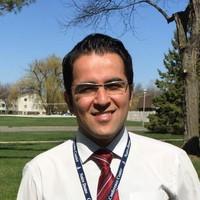
Professor Of Data Science, Faculty of Engineering & Information Technology
News by topic
News
Professor Catherine Kelly appointed Dean of Law
UTS is delighted to welcome Professor Catherine Kelly as our new Dean of the Faculty of Law.
News
What can free‑living Indian street dogs teach us about how to care for pet dogs?
A study of how Indian street dogs live raises questions about what it means to care for pet dogs.
News
La Bola Negra is about the Spanish Civil War – but is unmistakably about our present moment
Set across 1932, 1937 and 2017, new Spanish film La Bola Negra follows three gay men whose lives become connected across generations.
News
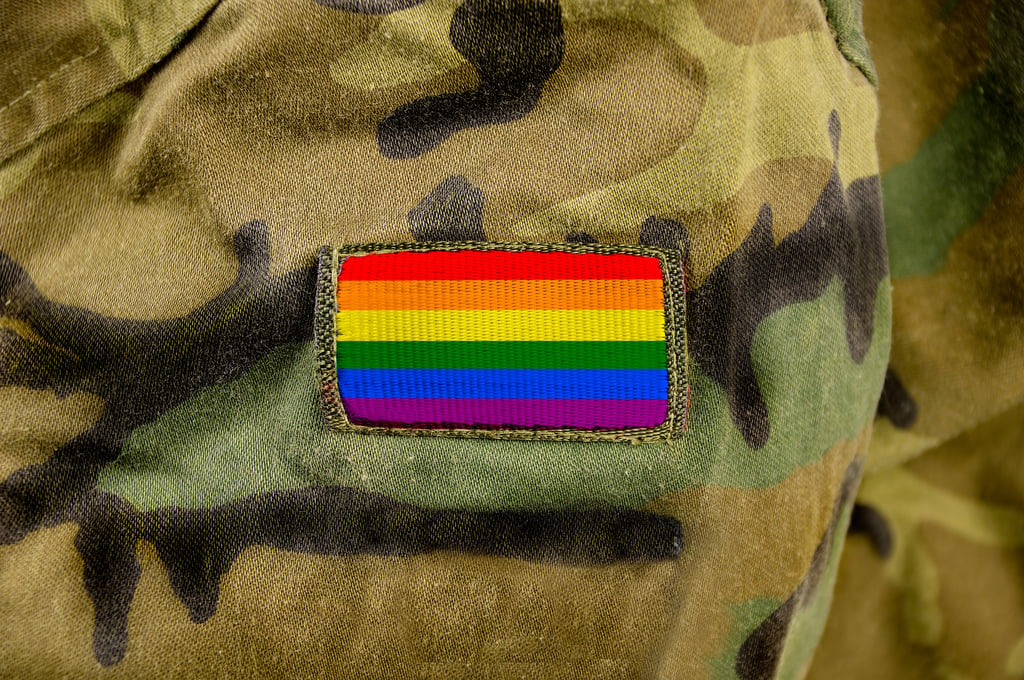
What the Australian government’s apology to LGBTQ+ Defence personnel and veterans means
Current or former Defence personnel can now “apply to have historical homosexual convictions extinguished from their service records”.
News
Professor Catherine Kelly appointed Dean of Law
UTS is delighted to welcome Professor Catherine Kelly as our new Dean of the Faculty of Law.
News
What can free‑living Indian street dogs teach us about how to care for pet dogs?
A study of how Indian street dogs live raises questions about what it means to care for pet dogs.
News
La Bola Negra is about the Spanish Civil War – but is unmistakably about our present moment
Set across 1932, 1937 and 2017, new Spanish film La Bola Negra follows three gay men whose lives become connected across generations.
News
What the Australian government’s apology to LGBTQ+ Defence personnel and veterans means
Current or former Defence personnel can now “apply to have historical homosexual convictions extinguished from their service records”.