

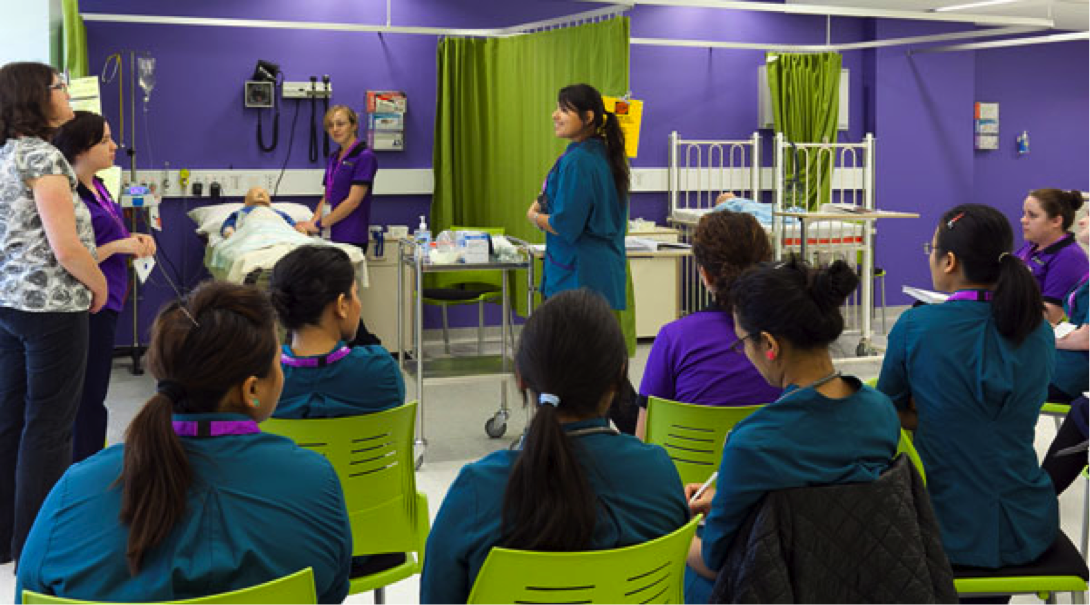
Class running in the simulation suite (Faculty of Health, Building 10)
Lecturer: Faculty: Project: Keywords: | Health lecturer Dr Tamara Power is developing audio-visual vignettes to use in ‘flipping’ activities for the second year subject Medical Surgical Nursing. What the project is aboutStudents have difficulties in connecting with the lifeless, stiff manikins in patient-carer simulations. Introducing video vignettes of patient-carer interactions (in which actors portray the patient), prior to students’ engagement with the manikin simulations themselves, is a focus of this project. In the video vignettes, for example, the patient wears a distinguishable prop (or two) that the manikin also wears. The idea behind this approach is to prepare and assist students in relating to the simulation manikins in laboratory class as ‘real’ patients. Why the project is being introducedPrevious research suggests the usefulness of audio-visual vignettes as a learning strategy for they:
In this project, the combination of audio-visual vignettes, online resources and simulation technology (involving manikins) also promotes the development of a unique patient perspective for these student nurses. The pre-class video vignettes specifically connect the manikins to a “personality” and a human face, creating a more realistic patient-carer relationship for students in the face-to-face laboratory. How the project will be implementedCase study vignettes are filmed using actors to realistically portray:
Students view these vignettes and other resources (including a workbook and a weekly online quiz) via UTSOnline (Subjects are now taught in Canvas) before their laboratory classes. Preparing before class gives students an initial understanding of the patient’s case and required skills, freeing up class time for collaborative activities such as skill practice, discussion and problem solving using the manikin simulation technology. Challenges and considerationsThe team’s biggest challenge was coordinating suitable times when they could all work together and have a lab available to film in. As they weren’t familiar with filming and editing videos, a student was made responsible for filming and editing the videos. Developing case study vignettes requires time and planning. Dr Power suggests being as organised as humanly possible to make the most of funded resources. For example, Dr Power employed external actors for the vignettes and on some occasions it was only after the actor had left that she realised they could have filmed something better or in a different way. Hence, mapping out or storyboarding the desired scenarios ahead of time is recommended. Exploring further |