


Guide dogs offer life-changing independence, but they're not suited to every situation or every person. That's why UTS and Guide Dogs NSW/ACT are working to create the next generation of assistive technology.
Meet Zara Perry. At 19 she’s a full-time athlete, spending up to six days a week training at facilities across Sydney. Around this she fits advocacy work and speaking engagements for schools and organisations.
She also has low vision.
“Because of the nature of the work I'm doing and the routine of my week, I'm navigating a lot of new places,” she says.
Perry was born with a condition called oculocutaneous albinism. This affects her distance vision and her ability to read things up close. She still has some functional sight, but seemingly everyday things can require extensive planning, problem-solving and mental energy.
“You just have to take five extra steps to plan before you walk out the door. But then you also have to have the ability to adapt and evolve as you’re doing your day,” she says.
Featured researcher
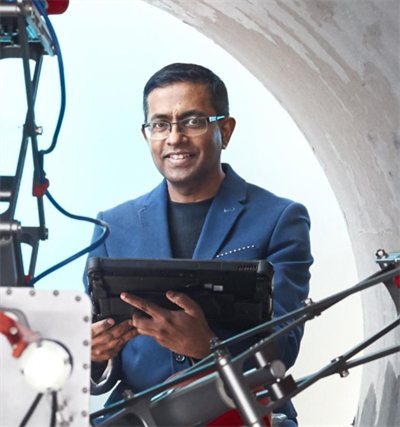
Director, UTS RI, Faculty of Engineering & Information Technology
On a recent trip to an unfamiliar pub, for example, she needed to look at a map beforehand, plan the train trip and changes, and pick a route that had the least road crossings in the dark. Once she got to the venue she then needed to locate the entrance and find her friends inside.
“The actual mental and physical load of having to do those things can often take away from the experience,” she says.
“I will still do it, because I refuse to let things get in the way. But I’m more likely to not stay as long because of the exhaustion.”
Introducing the robotic guide
It’s people like Perry that researchers had in mind when they conceived the robotic guide.
“We set out to give people more options by bringing robotic mobility aids to life,” explains Professor Sarath Kodagoda from the UTS Robotics Institute.
For the last three years, Kodagoda’s team has been working closely with Guide Dogs NSW/ACT to design, build and test the robotic guide.
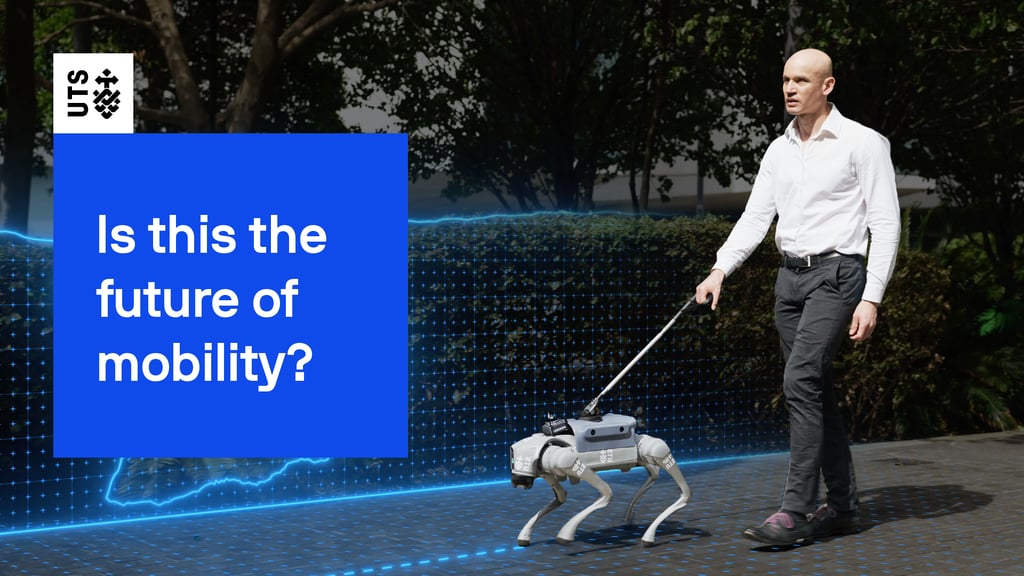
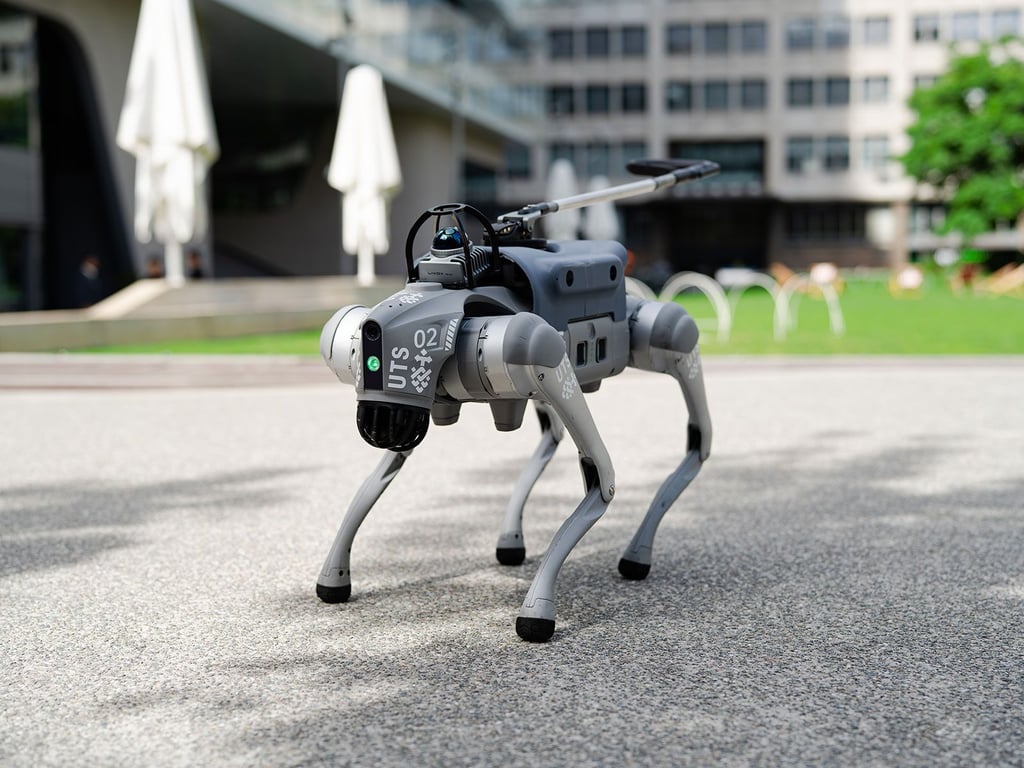
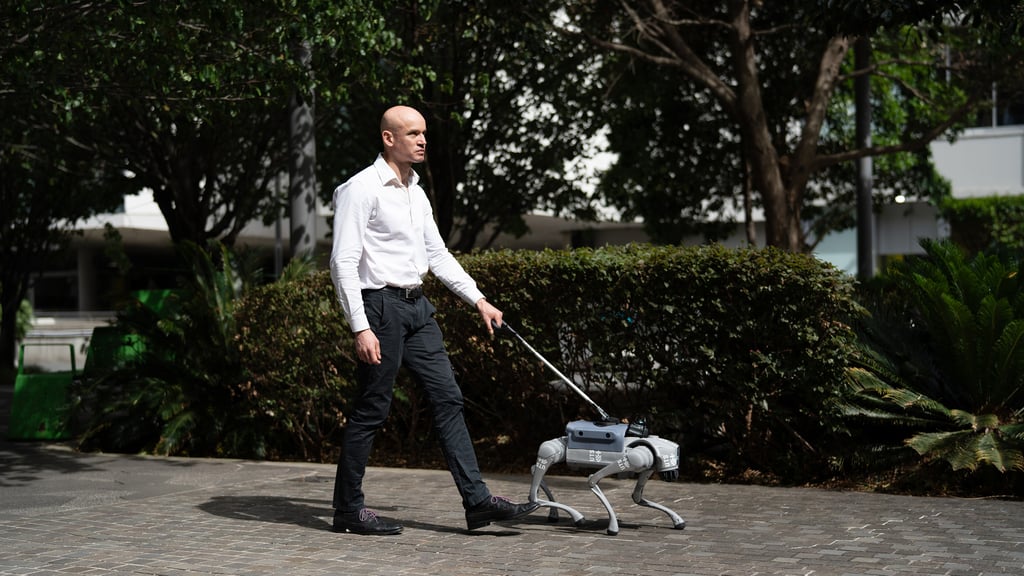
Now at the prototype stage, the guide takes the form of a grey, four-legged robot, encased in what Kodagoda describes as a “cocoon of sensors”. These include cameras that function like eyes, a laser range finder to gauge distance and depth, GPS to tell where it is in space and inertial measurement units to track its movement.
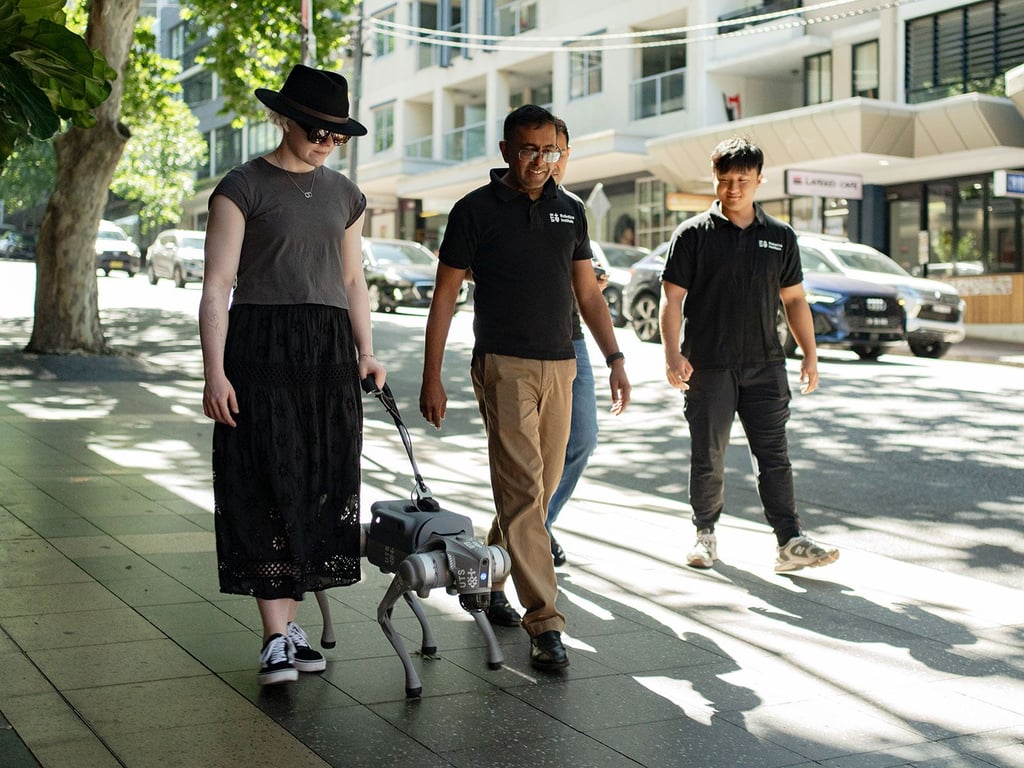
Connected to a handler via a harness, it’s not unlike a guide dog helping someone navigate their surroundings.
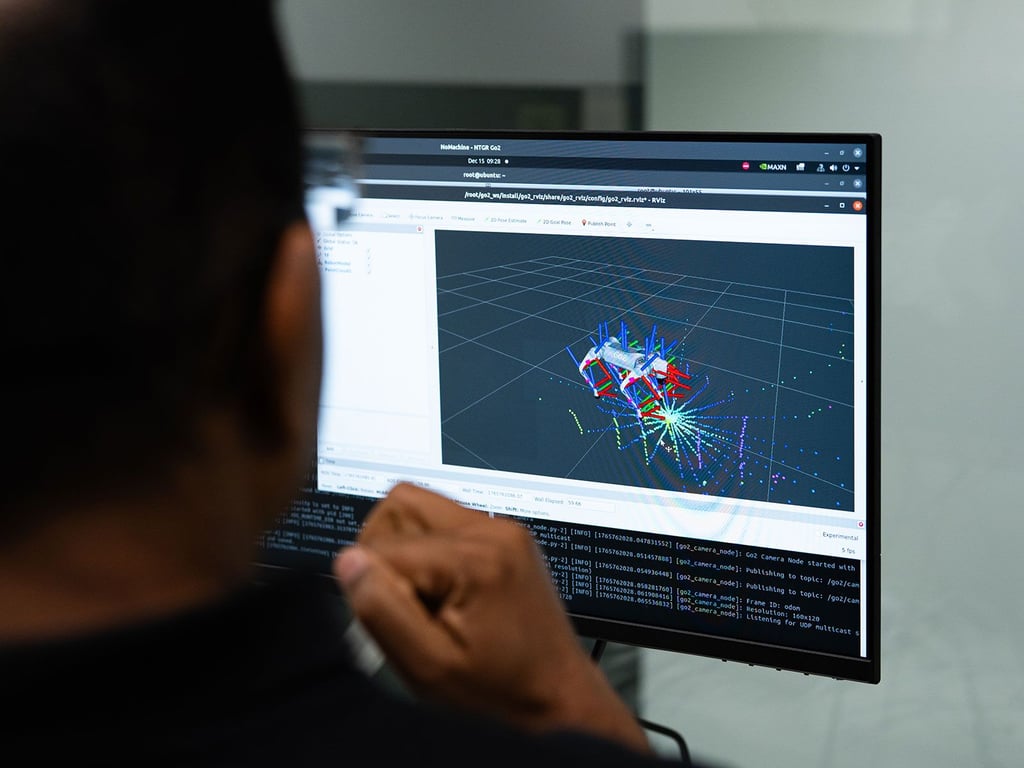
“The robot uses its sensors to understand the environment, especially static versus dynamic objects” he explains.
His team of researchers have finely calibrated these sensors and the guide’s systems to enable it to operate in two distinct but related ways.
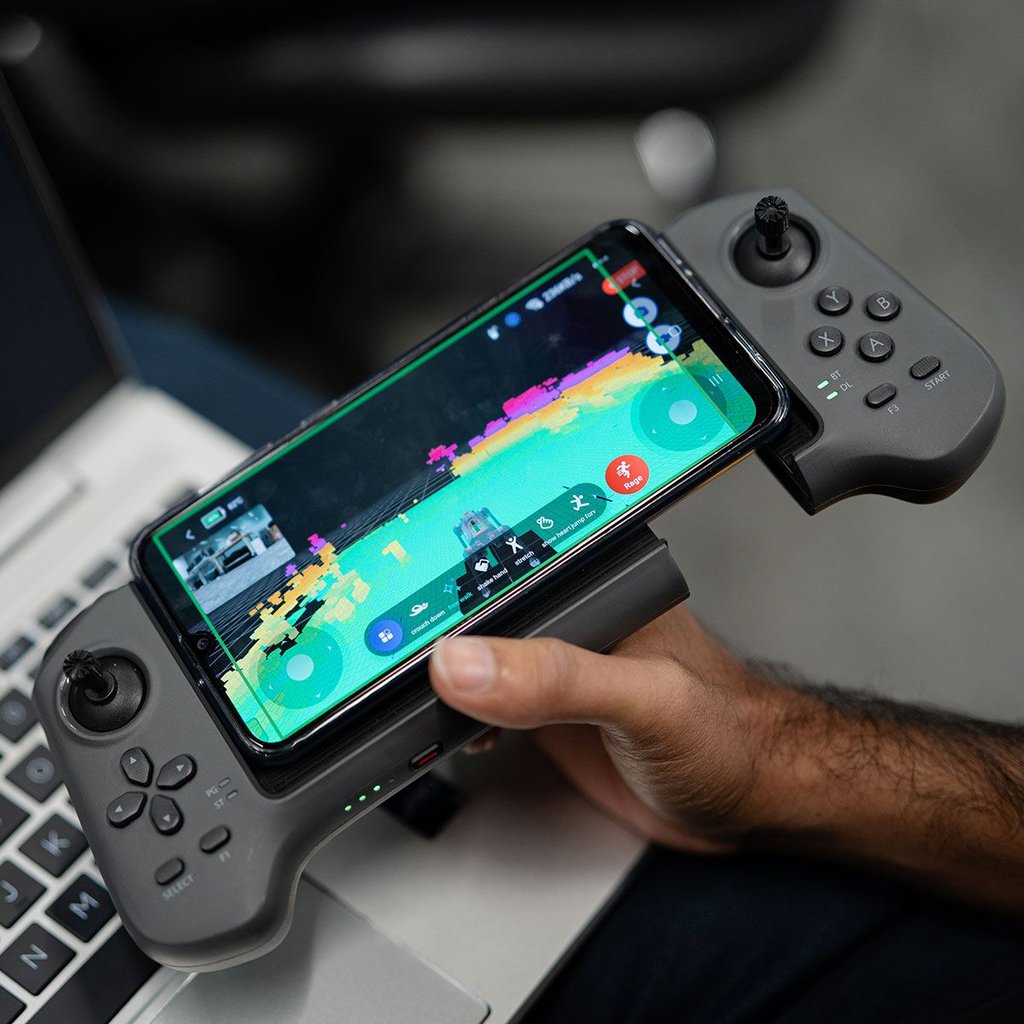
The first is to respond to human commands, allowing a person to provide inputs to the robot as they go. This is useful when someone is familiar with a particular place but needs support to safely navigate it.
The second is autonomous mode. This is where the robot interprets an unfamiliar environment to lead a person through it.
In both modes, the robotic system uses artificial intelligence to process the data it receives, learning and identifying patterns so that it can determine the ideal path through a space.
Seeing and not seeing
As the director of the UTS Robotics Institute, Kodagoda has built a career on what he calls “robotics for good”. He’s interested in the human impact of his creations – in robots that solve real problems for real people.
So when it came to this project, he started by putting on a blindfold, picking up a leash and putting his faith in a guide dog.
“The first step in bringing this idea to life is to experience how people with blindness or low vision navigate the environment,” he says.
Making his way in the dark, he was surprised at how reliant he was on the guide dog.
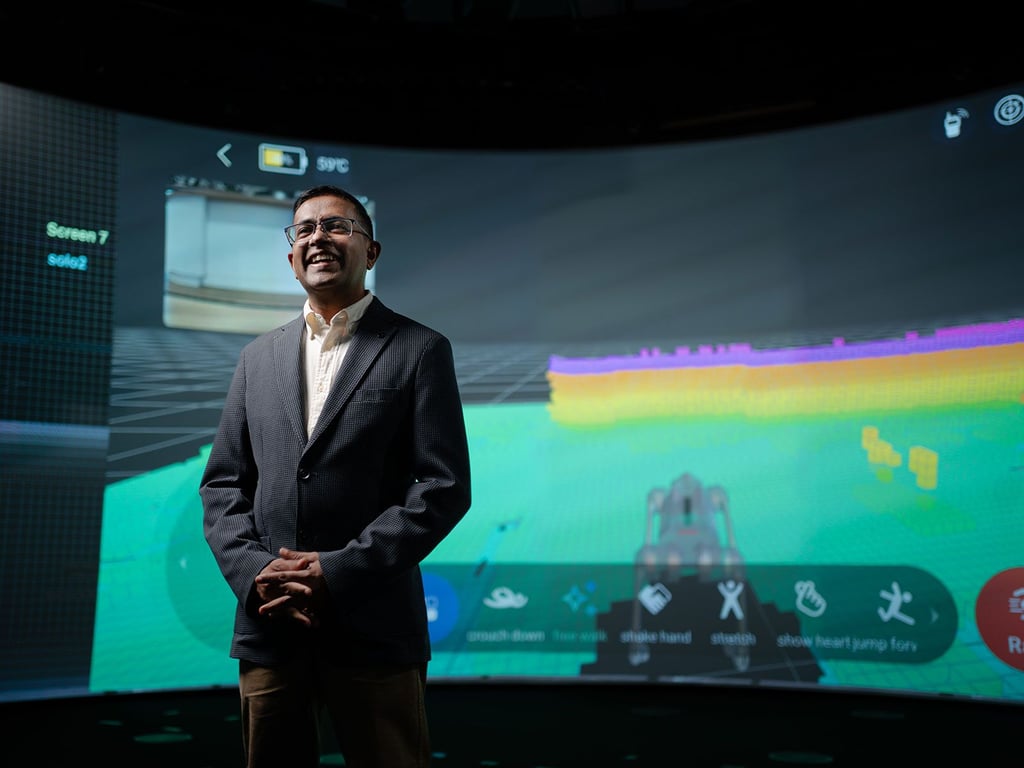
“I found it extremely hard,” he says. “I don’t know what the terrain looks like. I don’t know where I am heading. I have no idea about the objects around me.”
Put simply: “It was eye-opening for me.”
But perhaps the most critical input for this project has been the voices of users, with co-design being a key principle from the outset.
Working with the clients of Guide Dogs NSW/ACT, the first stage of co-design focused on informing the community about the project and using their input to develop the initial prototype.
The next stage involved testing the prototype with real users, like Perry.
“As someone who's going to be using it,” she says, “I want to know that our voices are being heard.”
When it comes to any kind of accessibility or any kind of design that's going to be used by people with disabilities, our voices and our experience and the nuance and difference in that experience needs to be considered.
One of the key pieces of feedback was that the prototype made too much noise, prompting the team to reconceive the guide as a smaller, quieter robot with fewer fans.
“We know we can make the experience for people better,” says Jodi Martin, General Manager of Innovation at Guide Dogs NSW/ACT.
“But it has to be done in away that actually listens to the needs of people, and applies the new technology with them rather than being created in isolation.”
Broadening horizons
“At the moment, there are really two options for people for their main mobility aid: the guide dog or the white cane,” Martin says.
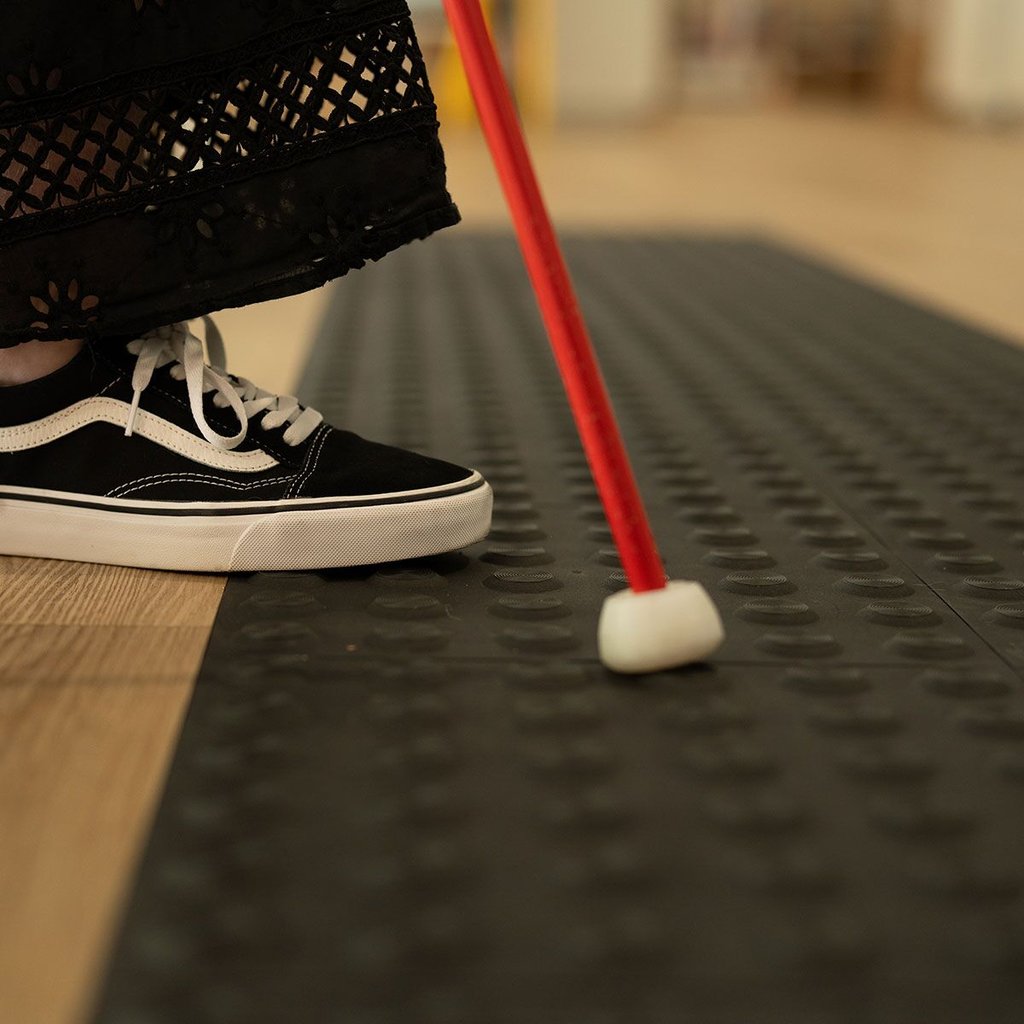
Most people with blindness or low vision use a white cane.
“It’s actually only a small percentage of people who have access to a guide dog,” she adds.
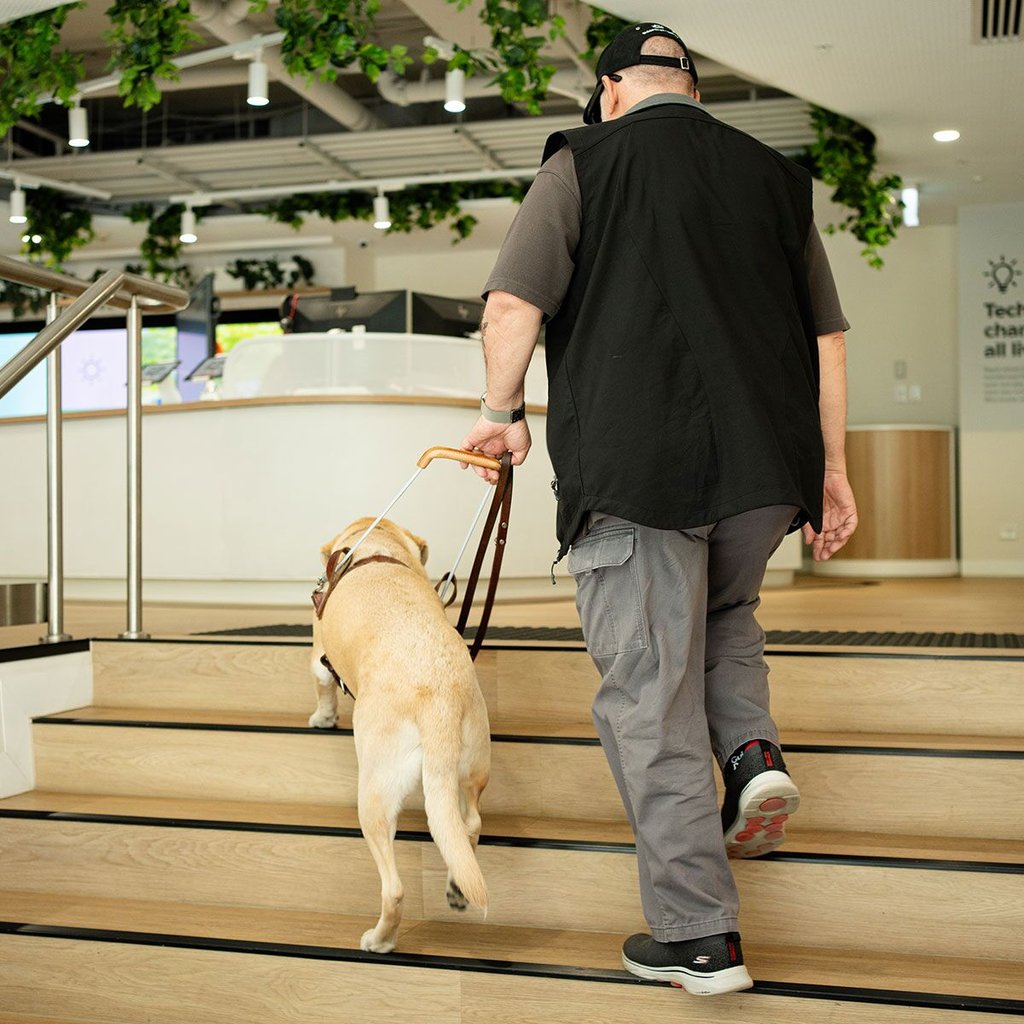
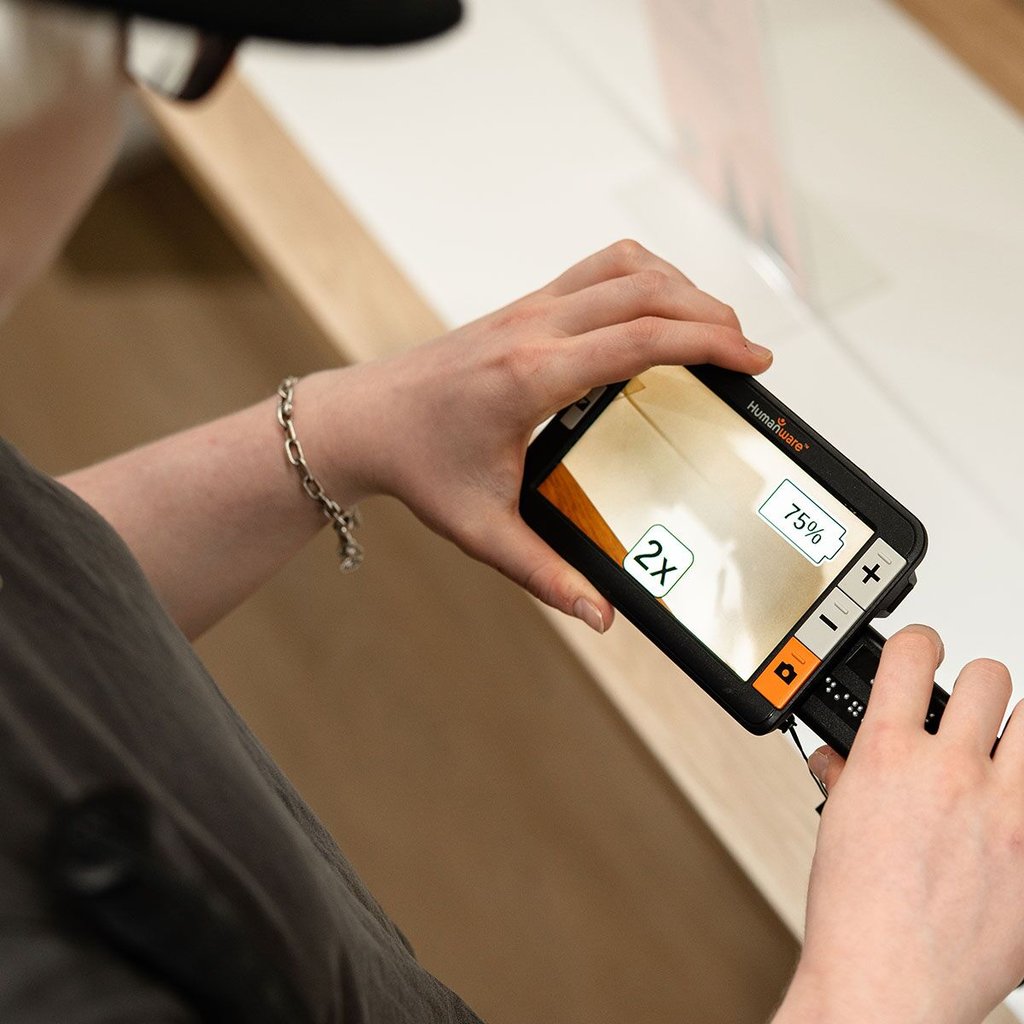
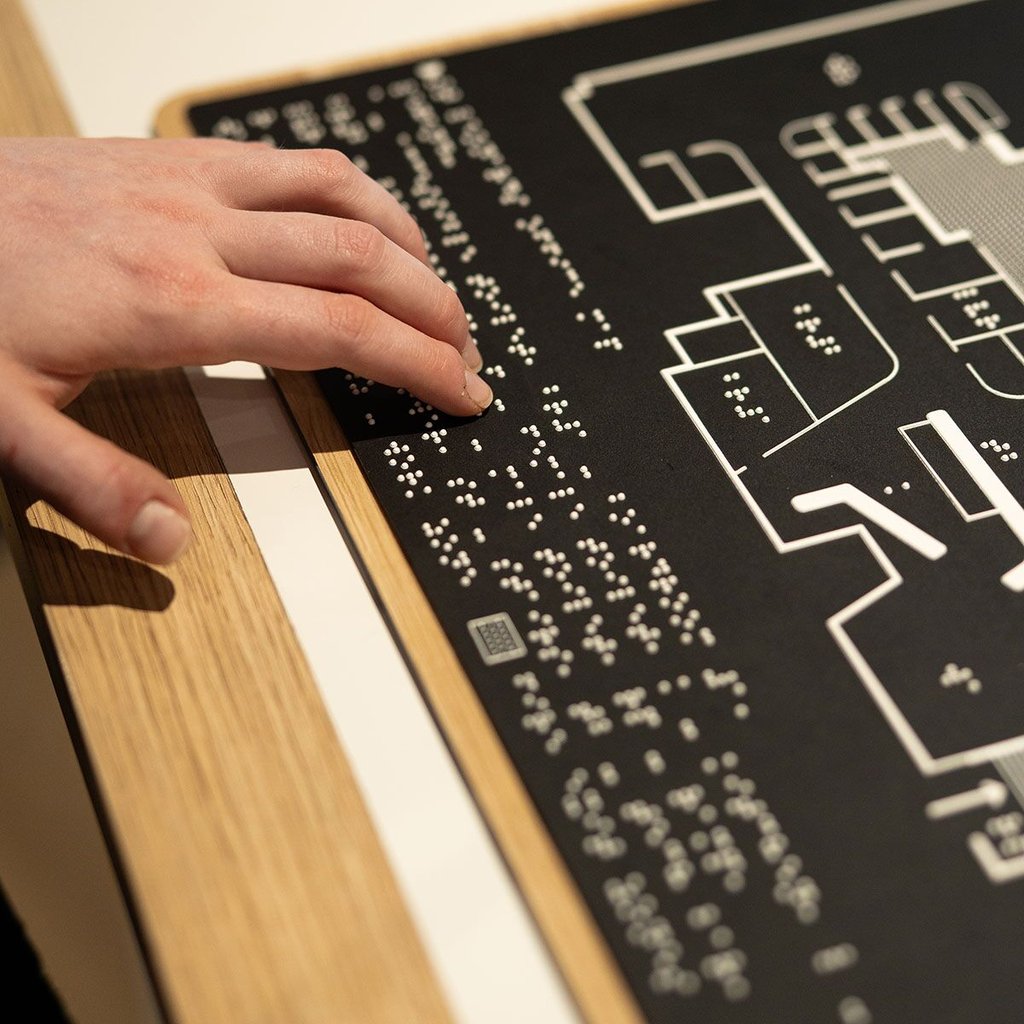
Where the robotic guide is particularly interesting is in its potential to do some of the things that guide dogs and white canes can’t. A guide dog’s main function is to keep users safe while moving through a space – they can’t decide the most efficient route, respond to traffic, or navigate from A to B in an unfamiliar setting.
“The robot can actually pre-map places,” says Martin.
“It can access images on the internet and can create those maps in advance.”
Operating in autonomous mode, the guide can take on some of the cognitive load, both in terms of planning the route then navigating there. It can even allow someone to be spontaneous, something Perry describes as “super exciting”.
Professor Kodagoda demonstrates: “Robot, can you take me to Central Station? That's all I need to say.”
For Martin, this is about choice as much as it is functionality.
“We think that the robotic guide is really going to offer an experience that is better than a white cane,” she says.
“Perhaps not quite as good as a guide dog, but opening up the experience to more people.”
A bold vision
While still only a prototype, the robotic guide has already won at the prestigious Excellence in Robotics Awards, taking out first place in the healthcare category.
In the next stage of development, the team will look at whether the guide should retain its current form or potentially be applied in other ways, such as wearables. Kodagoda says the team deliberately designed the technology in a modular way to make it easier to adapt to different uses.
“I can see a white cane or a guide dog harness having some of this technology added to it,” Martin says.
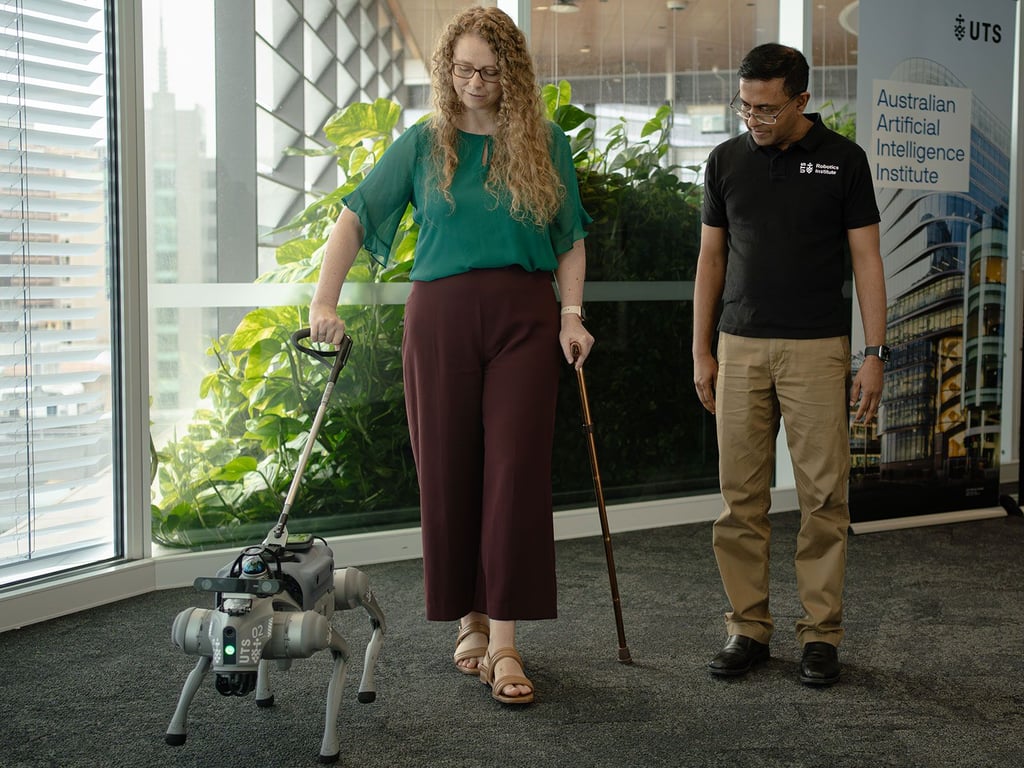
“The way that it is hopefully going to evolve is really exciting because it’s like this middle ground of something that we haven’t really seen before,” Perry adds.
What appeals most to Perry is that it can take on some of the mental load of planning and mapping, while also reducing the immediate in-the-moment strain of navigating the environment.
“I really hope that with this project not only are we creating something that's impactful, but we can change the conversation around assistive technologies and the way that they're developed,” Martin says.
Kodagoda echoes the sentiment. “This project has changed the way that I think about accessibility,” he says.
“Robotics has great potential in helping people with blindness and low vision.”
News
Eye robot: Inclusive mobility aid on leash for national award
An Australian-first robotic mobility aid for people who are blind or have low vision has taken out a leading national robotics award.
Story
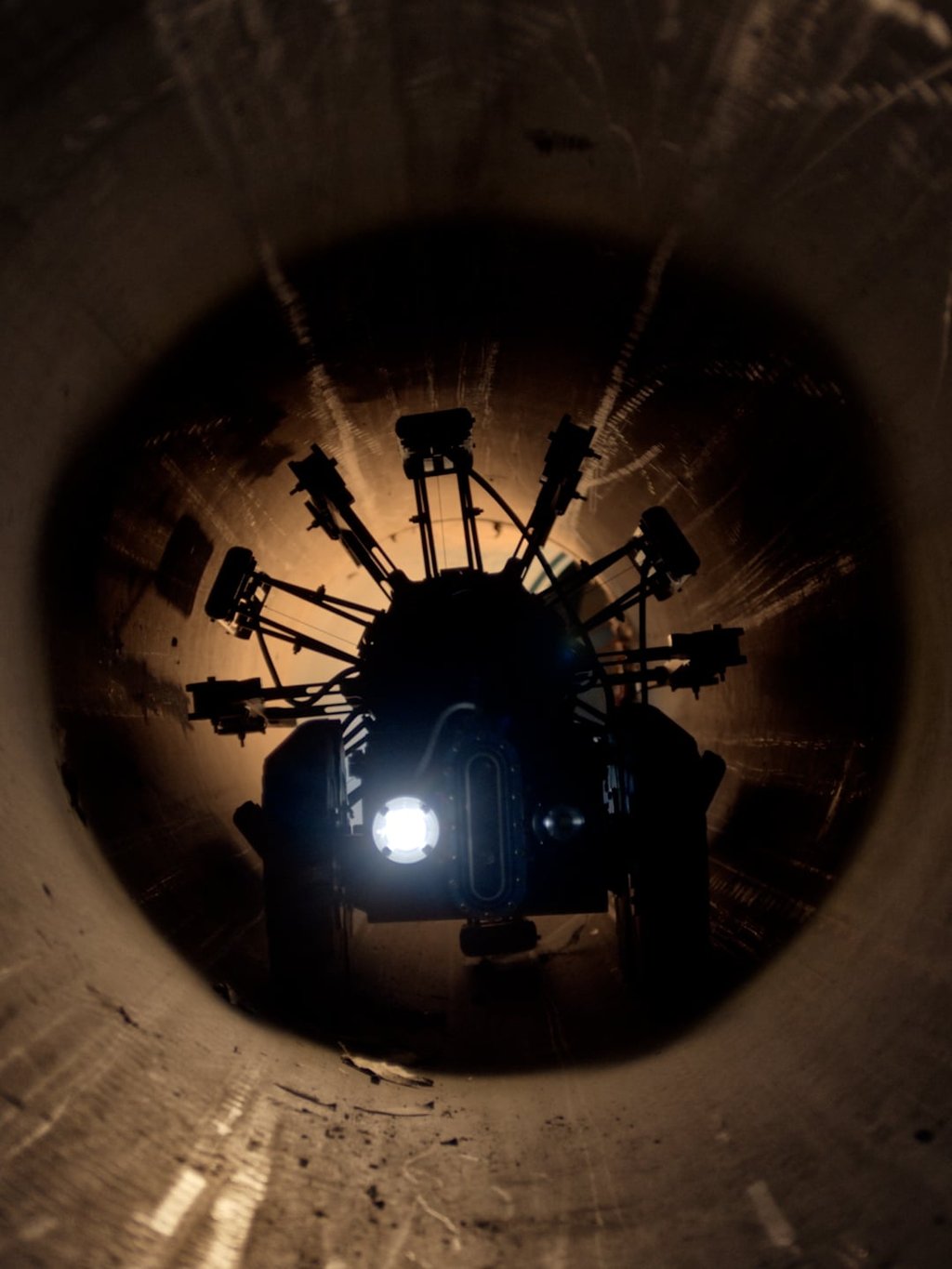
Not just a pipe dream
How AI, data science and robotics are helping protect Sydney’s water supply.
News
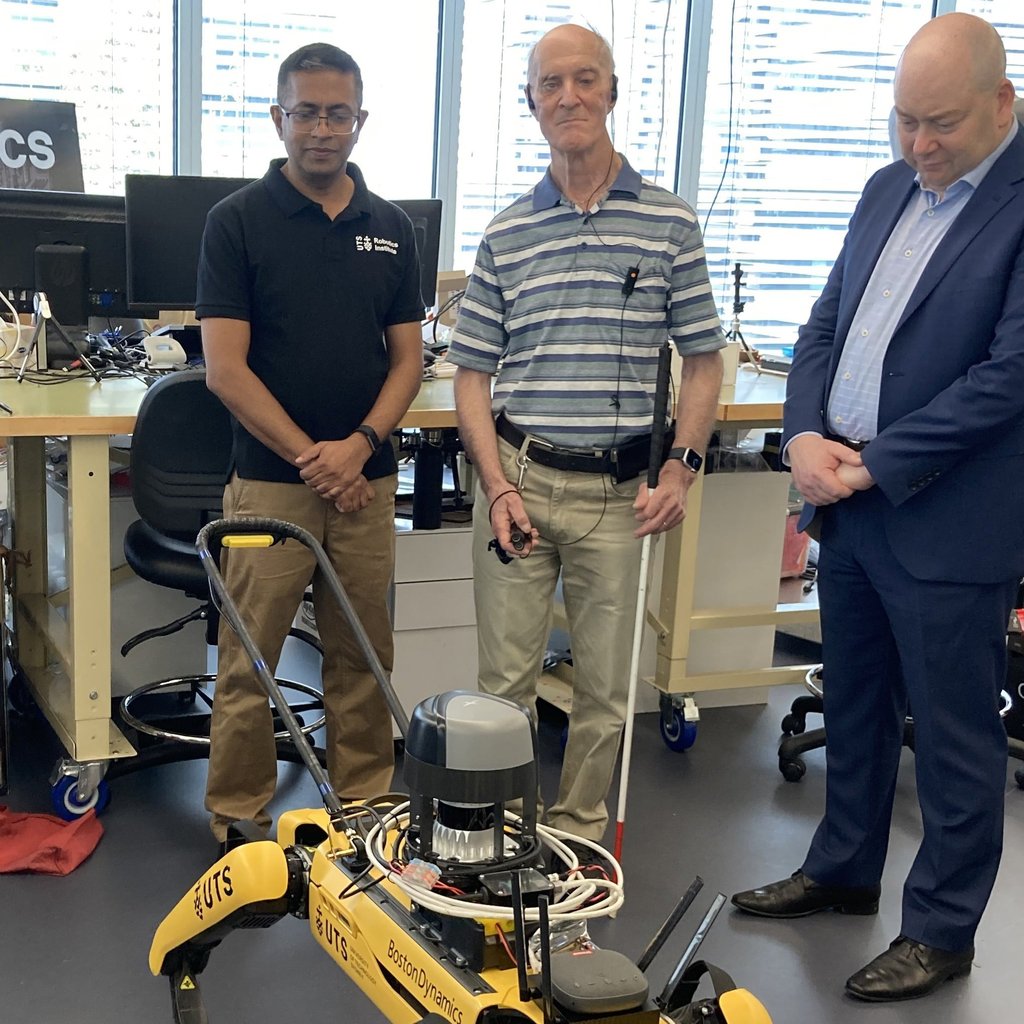
UTS and Guide Dogs NSW/ACT develop future mobility tech
The UTS Robotics Institute and Guide Dogs NSW/ACT have announced a partnership, with funding from TPG and the Australian Research Council, to build the next...
Story
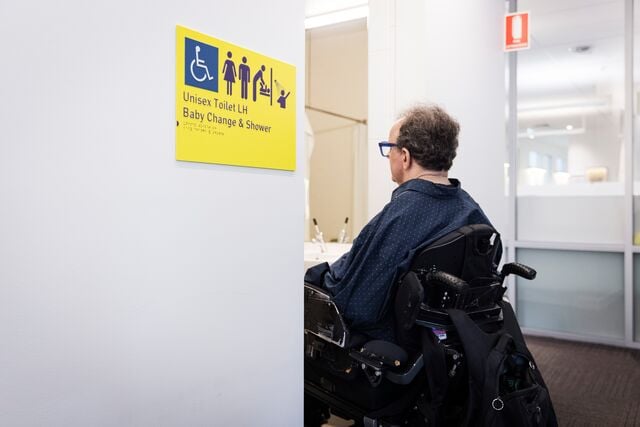
Inclusive by co-design
How UTS researchers are combining lived experience and real-world data to rethink accessible bathroom design.
News
Eye robot: Inclusive mobility aid on leash for national award
An Australian-first robotic mobility aid for people who are blind or have low vision has taken out a leading national robotics award.
Story
Not just a pipe dream
How AI, data science and robotics are helping protect Sydney’s water supply.
News
UTS and Guide Dogs NSW/ACT develop future mobility tech
The UTS Robotics Institute and Guide Dogs NSW/ACT have announced a partnership, with funding from TPG and the Australian Research Council, to build the next...
Story
Inclusive by co-design
How UTS researchers are combining lived experience and real-world data to rethink accessible bathroom design.