


Project details:
Partners
-
UNICEF Cambodia
-
UNICEF China
-
UNICEF East Asia and Pacific
-
UNICEF Kiribati
-
UNICEF Pacific
-
UNICEF PNG
-
UNICEF Laos PDR
-
UNICEF Solomon Islands
-
UNICEF Timor Leste
-
UNICEF Vanuatu
-
UNICEF Viet Nam
Sustainable Development Goals
-
1. No Poverty
-
3. Good Health and Well Being
-
5. Gender Equality
-
6. Clean Water and Sanitation
-
9. Industry, Innovation and Infrastructure
-
13. Climate Action
-
17. Partnerships for the Goals
- Posted on 9 Sep 2024
Climate resilience, safely managed services, innovation and inclusion in water, sanitation and hygiene.
This strategic partnership supports the UTS Institute for Sustainable Futures (UTS-ISF) and UNICEF in to jointly work on emerging topics and knowledge generation that support improved policy and practice in water, sanitation and hygiene. The partnership focuses on:
- climate resilience
- safely managed services
- innovation
- inclusion, gender, rights and accountability.
Research and analysis at global, regional of country level inform UNICEF water, sanitation and hygiene initiatives and make wider sector contributions. The overall goal of the partnership is to:
- generate and share new knowledge that increases progress towards resilient, inclusive, safely managed services
- address knowledge gaps and strengthen analysis and evidence-to-policy links in water, sanitation and hygiene and climate policy in Asia and the Pacific and elsewhere
- build the capacity of UNICEF, UTS-ISF, partner governments and partner research institutions through shared learning and research.
Monitoring water, sanitation and hygiene contribution to community resilience to climate change
To strengthen evidence on the contribution of water, sanitation and hygiene to community resilience to climate change, UTS-ISF and UNICEF developed new guidance as part of the GWP-UNICEF Strategic Framework for Climate Resilient WASH. The new guidance is informed by a literature review on community resilience measurement frameworks and pilots in Papua New Guinea, Cambodia and Timor-Leste. The guidance document was launched at COP30 in November 2025.
Research outputs
Assessment of WASH financing in East Asia
This assessment examines the flows of funding for WASH in key countries in East Asia. The research covers funding from households, governments and donors. It analyses changes in funding levels over time, the correlation of funding levels with WASH service needs and the mechanisms and sectors that are prioritised in WASH financing.
Review of drinking water quality in East Asia and the Pacific
An assessment of the extent to which drinking water quality is a constraint to households reaching safely-managed water status in 27 countries across East Asia and the Pacific, examining water quality monitoring data, processes and protocols.
Implementation of the human rights to water and sanitation
Realising the human rights to safe drinking water and sanitation is a key motivation of both UNICEF and UTS-ISF’s work. This jointly conducted training highlighted the importance of and means to integrate human rights principles into water and sanitation programming and wider engagement with child rights.
Embedding a circular economy for resilience, inclusion and sustainability
Circular economy approaches can strengthen water and sanitation services while driving climate resilience, inclusion and wider sustainability. New thinking and case study insights from UNICEF work across countries in Asia and the Pacific illustrate the potential of circular economy ideas for water and sanitation service systems.
Research outputs
Evidence and actions on sanitation greenhouse gas emissions
What evidence is currently available on sanitation emissions and reduction strategies? This brief provides an overview of established and emergent evidence on emissions from sanitation systems and ideas for entry points to engage.
Research outputs
Climate resilient WASH Climate Rationales in Solomon Islands and Kiribati
Through engagement with local WASH and climate change adaption governance partners, UTS-ISF, UNICEF Solomon Islands and UNICEF Kiribati developed Climate Rationales for Water, Sanitation and Hygiene. These analyses provide a climate science basis for resilient WASH solutions and recommendations on how best to provide WASH services under future climate scenarios.
Laos water safety planning and gender inclusion
Working with UNICEF and the Laos Gender Development Association, UTS-ISF is providing recommendations to improve water safety planning guidelines, life-cycle costing analysis and gender inclusion in water and sanitation projects in the country.
Monitoring the benefits of climate resilient water services in Vietnam
UNICEF and UTS-ISF have designed tools to describe the results of renewable energy solutions for climate resilient water supplies implemented by UNICEF. The monitoring tools focus on rural water service delivery, energy efficiency, and climate resilience indicators for measuring the success of the solutions.
Groundwater data in Vanuatu and the Solomon Islands
Groundwater data is increasingly important to enable management and use of this water resource. In Vanuatu and in the Solomon Islands this project identifies, collates and digitises data on groundwater use, sources, depth quality, lithography, equity and affordability.
Rural sanitation performance monitoring in China
This research develops a method for monitoring the performance of rural onsite sanitation in China from a national level. It includes steps for gathering data on the climate resilience of rural sanitation facilities and their greenhouse gas emissions.
National survey on WASH in Schools in the Solomon Islands
An analysis of WASH service coverage in all schools in ten provinces of the Solomon Islands, documenting current rates of WASH access as well as climate risks.
Improving water availability through nature-based solutions in Timor-Leste
Research examining methods to understand changing water availability related to community-based water catchment management in Timor-Leste, including participatory methods, online monitoring and qualitative study of wider community resilience outcomes.
Costing climate resilient sanitation in the Solomon Islands
Research to determine the cost of moving households from open defecation to basic sanitation across the Solomon Islands through a community-led total sanitation (CLTS) program and the additional costs associated with achieving strengthened climate resilience of basic sanitation.
Saltwater intrusion assessment in Timor-Leste
This project aims to understand the extent of saltwater intrusion in three coastal municipalities, working with Government and UNICEF to identify the spatial patterns of salinity and potential drivers and responses.
Kiritimati on site-sanitation assessment
This research assesses the effectiveness of on-site sanitation technologies in Kiribati including septic systems with soak pits and biofilter systems, providing evidence towards setback distances and insights for improved sanitation planning and public health outcomes.
Costed roadmap for WASH in health care facilities in Fiji
This work developed a national costed roadmap for WASH in health care facilities, focusing on defining strategic activities and associated costs for the five WASH domains: water, sanitation, hygiene, health care waste management, and environmental cleaning. It also addressed the enabling environment, climate resilience and gender and inclusion considerations.
Research team

Professor, DVC (Research)

Associate Director Research, DVC (Research)

Research Director, DVC (Research)

Research Director, DVC (Research)

Research Director, DVC (Research)

Senior Research Consultant, DVC (Research)

Research Consultant, DVC (Research)

Research Consultant, DVC (Research)

Research Assistant, DVC (Research)

Research Assistant, Data Science Researcher, DVC (Research)

International EV Policy Research
A synthesis of global EV policy lessons across six key domains to inform Australia’s next phase of electric vehicle market growth.

Victorian Energy Workforce Projections
The study includes projections for the electricity sector (generation and storage, transmission line construction), an estimate of the overall energy...

Optimising Organic Waste and Cultivating Circularity for Australian Agriculture
Circular economy for Australian agriculture, fisheries and forestry.
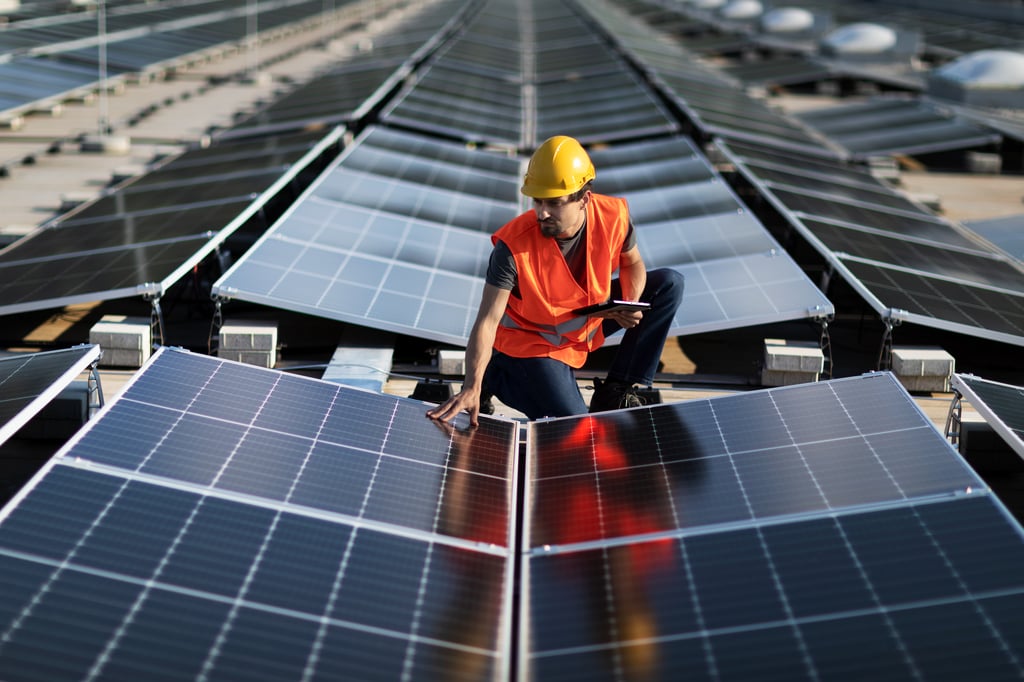
Advanced diagnostics for PV systems
Developing advanced diagnostics to improve fault detection and grid-event analysis in commercial and industrial solar PV systems.
International EV Policy Research
A synthesis of global EV policy lessons across six key domains to inform Australia’s next phase of electric vehicle market growth.
Victorian Energy Workforce Projections
The study includes projections for the electricity sector (generation and storage, transmission line construction), an estimate of the overall energy...
Optimising Organic Waste and Cultivating Circularity for Australian Agriculture
Circular economy for Australian agriculture, fisheries and forestry.
Advanced diagnostics for PV systems
Developing advanced diagnostics to improve fault detection and grid-event analysis in commercial and industrial solar PV systems.