


Project details
Funder
-
Race for 2030
Partners
-
Diagno
-
UNSW
Sustainable Development Goals
-
7. Affordable and Clean Energy
-
11. Sustainable Cities and Communities
- Posted on 15 Jun 2026
Developing advanced diagnostics to improve fault detection and grid-event analysis in commercial and industrial solar PV systems.
Australia's rapid shift toward renewable energy has placed rooftop solar photovoltaic (PV) systems at the centre of the clean energy transition.
Yet for commercial and industrial operators, the full potential of these systems is frequently undermined by faults, degradation, and grid disturbances that in-built monitoring tools are too coarse to detect or diagnose with precision.
Without granular, actionable insights, operators face reactive maintenance cycles, unnecessary downtime, and reduced energy yield, ultimately weakening confidence in solar investment.
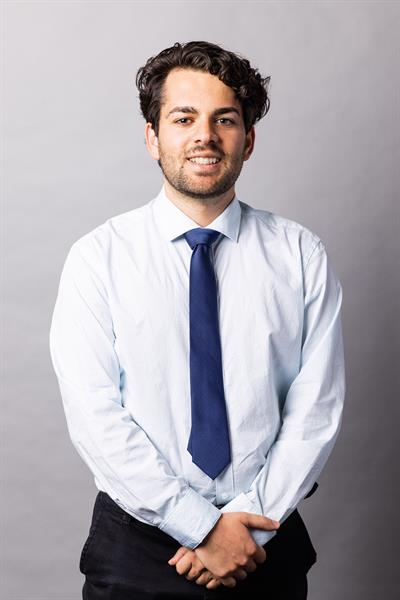
"The size and scale of rooftop and distributed solar continues to expand across the National Electricity Market as households and businesses increasingly invest in distributed generation for both economic and environmental reasons," said ISF Senior Research Consultant Jonathan Rispler.
"With this growth comes benefits for asset owners and the entire electricity system, but for installers and asset managers this comes with the challenge of managing and maintaining growing fleets for their customers. Having smart, timely and insightful monitoring systems becomes essential at scale to ensure that system capacity across a fleet portfolio is generating as expected."
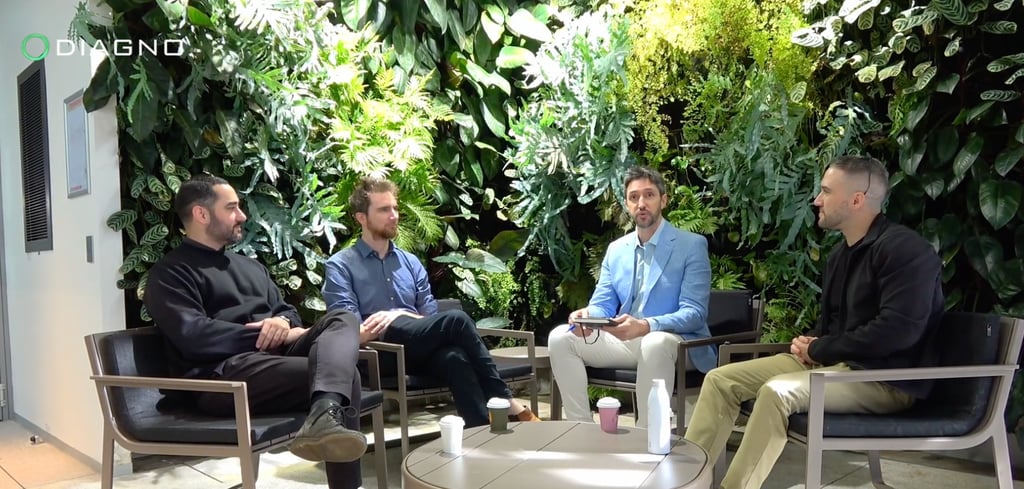
The UTS Institute for Sustainable Futures (ISF) is a co-lead on this RACE for 2030 project, working alongside academic lead UNSW and industry partner Diagno to develop next-generation diagnostic capabilities for PV systems. The research applies data analytics and machine learning to two interconnected diagnostic challenges.
The first focuses on transforming raw inverter error codes into meaningful, traceable fault diagnoses. Rather than simply flagging that something has gone wrong, the research enriches automated fault detection with contextual, device-level information, enabling operators to pinpoint the nature and location of a fault and take targeted corrective action.
This shift from reactive troubleshooting to evidence-based maintenance has direct implications for system uptime, maintenance costs, and the longevity of solar assets.
The second challenge involves accurately distinguishing between faults originating within the PV system itself versus those caused by the broader electricity network. Grid-side disturbances are frequently misattributed, leading to unnecessary site visits and wasted resources.
This project demonstrates how collaboration between universities and industry can translate advanced research into practical tools for commercial solar asset managers.
By drawing on telemetry from peer assets, the research develops a more reliable method for isolating whether an event stems from a network provider incident, a site-specific issue, or a local grid compliance deviation.
Together, these capabilities form a core part of a broader diagnostic platform that moves well beyond the high-level insights offered by conventional monitoring tools.
"This project demonstrates how collaboration between universities and industry can translate advanced research into practical tools for commercial solar asset managers. By leveraging inverter OEM fault codes alongside peer telemetry, we're helping deliver smarter diagnostics that will become increasingly valuable as Australia's distributed solar fleet continues to grow."
ISF's contribution helps position Australia at the frontier of intelligent solar asset management, advancing both the reliability and scalability of the nation's clean energy infrastructure.
Research Output
Researchers

Research Consultant, DVC (Research)
Senior Research Consultant, DVC (Research)

Research Director, Strategic Energy Collaborations, DVC (Research)

Adjunct Fellow, DVC (Research)

Webpage
Salmon farming disclosures
We examined climate-related disclosures for Tassal, Huon and Petuna and identified four key gaps between disclosures and existing climate science and other...

Webpage
MekongELEVATE Research Partnership
MekongElevate is a four-year, multi-country initiative under the Mekong–Australia Partnership that seeks to strengthen the climate resilience of marginalised...
Webpage
Operationalising the WEFE Nexus in Agricultural Water Systems
Addressing water scarcity and navigating Water-Energy-Food-Ecosystem (WEFE) trade-offs in agriculture.

Webpage
International EV Policy Research
A synthesis of global EV policy lessons across six key domains to inform Australia’s next phase of electric vehicle market growth.
Webpage
Salmon farming disclosures
We examined climate-related disclosures for Tassal, Huon and Petuna and identified four key gaps between disclosures and existing climate science and other...
Webpage
MekongELEVATE Research Partnership
MekongElevate is a four-year, multi-country initiative under the Mekong–Australia Partnership that seeks to strengthen the climate resilience of marginalised...
Webpage
Operationalising the WEFE Nexus in Agricultural Water Systems
Addressing water scarcity and navigating Water-Energy-Food-Ecosystem (WEFE) trade-offs in agriculture.
Webpage
International EV Policy Research
A synthesis of global EV policy lessons across six key domains to inform Australia’s next phase of electric vehicle market growth.