Check out the teaching resources we made using the History Lab podcast! There are four mini units that have been designed to be adapted by teachers, university tutors and conveners. They are available on the History Lab website.

Hey History!

A podcast mapped to the Australian curriculum for Stages 2 and 3 history, designed for classroom use.

Each episode has music, immersive sound and stories from Australia's top historians and experts.

Hey History tile

History Bytes

Welcome to 'History Bytes', ACPH's series of history definitions and discussions for students and teachers. Have a browse, take a look and let us know what you think by emailing us at public.history@uts.edu.au.

Find the full video series on the ACPH History Bytes YouTube playlist

History Bytes videos cover a range of topics and terms, such as Public History, Historiography and the History Wars, Teaching and Learning History, Historical Methods, Creative Histories, and Digital Histories. 

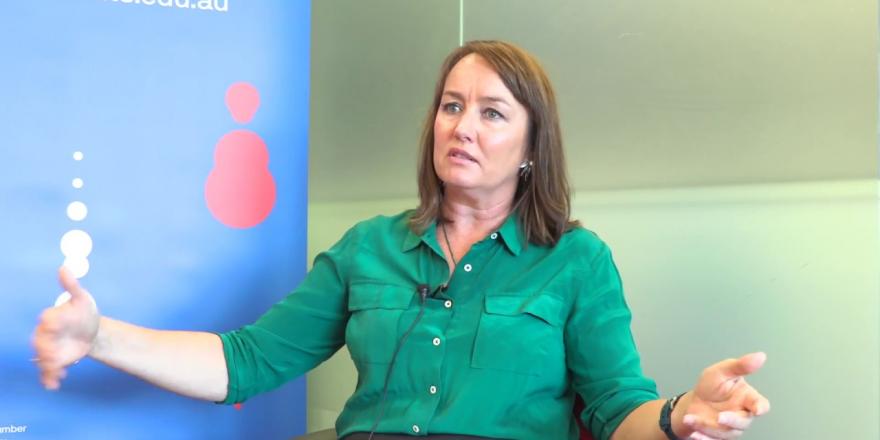
ACPH History Bytes: Professor Heidi Norman on 'What is Aboriginal History?'
IH4QfEn4UgE

Transcript

Well, I think this is where Aboriginal history is an incredibly exciting area.

Aboriginal people have very successfully contested this idea of history that, in the Australian setting, is only a couple of hundred years old, and that it's confined to the archives, to particular written documents.

And certainly that's an important part of Aboriginal history, but what about a history that extends for some 60,000 years, that is over much greater time periods, where the archive is extended to include rock art and oral histories, storytelling that changes over time and has a particular spatial connection—that is to say, it's related to place.

In that sense, Aboriginal history has posed real challenges to the discipline of history.

And when we say the discipline of history, we might think about: how do you go about writing history?

And what Aboriginal worlds have done, in a sense, to history is kind of poke it with a lot of sticks and force it to actually be much more innovative and creative.

And that's picked up in some exciting ways—in thinking about storytelling, in thinking about working across disciplines.

So, for example, Indigenous knowledge holders and scientists working to tell stories of places where, actually, the water source is contaminated, for instance, or tell stories of seasons that far exceed the kind of European four seasons—we might be thinking somewhere between nine and eleven seasons—of understanding the interconnections of weather patterns and providing accounts of the past that are over much longer periods of time than, say, the last couple of hundred years.

And that emerging body of work, characterised by collaborations and knowledge sharing, is referred to as deep history.

So, in this sense, those older categories of modern history and ancient history—they collapse.

And I think in Australia, a place like Australia, this incredibly ancient land, we see the most exciting developments in historiography, or approaches to knowing and doing history.

And Aboriginal worlds are really central to that.

And one other thing I'd add is that Aboriginal societies and communities have also recovered a lot of land—and that's not even across Australia, but those land holdings are quite often of high conservation value.

And as Australia, particularly, and the globe more broadly, confront issues around climate change, this really places storytelling and knowledge of Country as central to our understanding of place and creating a future that we can all, you know, benefit from.

Hey History Teacher! podcast series

Eight professional development, 30 minute podcast episodes including teaching difficult histories, creative history teaching, advice for early-career teachers, and What is great history teaching? Supported by the NSW History Teachers Association.

  • A series of 8 podcast episodes, about 30 minutes long
  • Accessible, teacher-led professional learning
  • For teachers, teacher-educators and pre-service history teachers
  • Draws on in-depth interviews with more than 12 expert history teachers from across Australia
  • Covers topics including: ‘Teaching difficult histories’, Creative history teaching, Really creative history teaching, ‘Teaching First Nations histories’, ‘Advice for early-career teachers’, and ‘What great history teaching looks like in practice’
  • Grounded in current research and evidence
  • Centres the experience and expertise of classroom teachers and educators
  • Designed to be nationally relevant for all history teachers at all stages of their careers, as well as teachers without a history background who find themselves teaching the subject
  • Includes a free, downloadable Tip Sheet for each episode
  • Hosted by historian Anna Clark, and
  • Supported by The History Teachers Association of NSW.

    Explore all episodes