

UTS has an ambitious water saving target to reduce consumption each and every year. The Water Management Plan 2019 - 2021 outlines our management approach and targets. Our long-term trend of improved water efficiency continues, with water consumption in 2024 26% lower than pre-pandemic levels despite an increase in staff and student numbers.
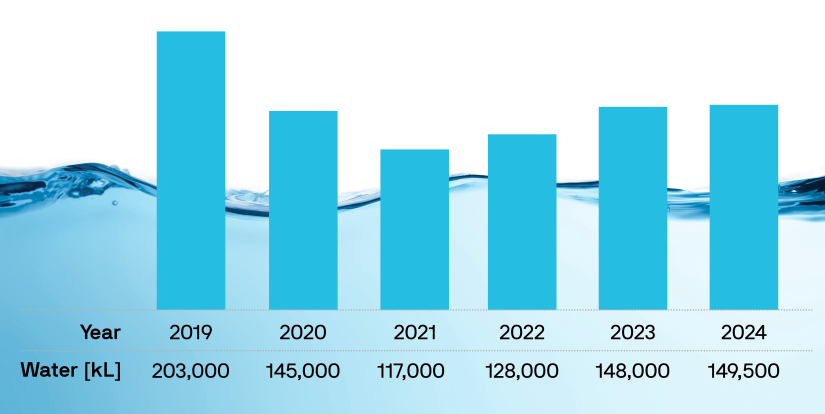
Water efficiency
We have an ongoing program of water saving initiatives including, so far:
- Dual flush toilets in new and refurbished bathrooms
- Waterless urinals
- Tap aerators and automatic taps in bathrooms, kitchens and labs
- Water efficient appliances in kitchens, bathrooms and labs
- New air-conditioning technology that uses less water
- Mechanically driven vacuum aspiration in labs replacing water driven systems
- New web-based water management system
- ‘Smart’ meters and alarm systems to better detect leaks
Landscaping to capture rainwater and minimise water consumption.
The UTS Design Guidelines apply building standards across the campus to minimise water use.
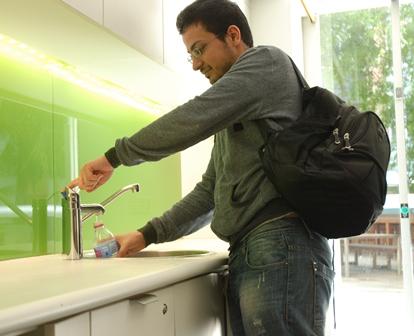
What you can do
- Only put the dishwasher on when its full
- Don’t rinse dishes before putting them in the dishwasher, and if absolutely necessary do it in a plugged sink
- Report leaking taps, toilets, urinals and any other leaks to Building Services.
- Limit showers to four minutes or less
- Never leave taps running
Useful links
Refer to the following useful links for more advice and information on water savings
- Your Home is an award guide, published by ISF in collaboration with the Commonwealth Government and provides lots of great advice on sustainable housing to householders and building professionals including water use
- Sydney Water provides water saving tips and advice on how use less water at home and at work
- Water Efficient Labelling and Standards (WELS) scheme helps Australians compare the water efficiency on a range of appliances and fixtures
- Rainwater tank advice from Sydney Water provides information about installing a rainwater tank and what you need to consider
Waste water management
UTS has established systems to capture, treat and reuse water across campus:
Stormwater Recycling
Rainwater is captured from building roof tops, stored in tanks and treated using ultraviolet light irradiation (UV) and reused for toilet flushing and landscape irrigation. These systems operate in the Dr Chau Chak Wing building (Building 8), the Faculty of Engineering and IT building (Building 11), the Ross Milbourne Sports Hall (in Building 4) and underneath Alumni Green (serving the Vicki Sara building; Building 7).The UTS Haberfield Rowing Club has a wastewater recycling system where stormwater is collected from the roof, stored in a tank, treated and re-used, mostly for washing down boats. Water is also reused from the cooling tower bleed (waste) water in Buildings 1 and 11.
Recycled water meters have been installed to the stormwater tanks in Buildings 7 and 8 to measure recycled water use. These meters can be viewed centrally on the campus-wide EMS (Energy Management System). UTS, as a member of the City of Sydney Council’s Better Buildings Partnership (BBP), contributed to the development of BBP Connection Guidelines for Recycled Water.
Cooling Tower Water Reuse
Water from the cooling tower bleed in buildings 1 and 11 is recovered and reused.
Phosphorus recovery urine diversion technology
Building 11 urinals have been developed with urine diversion technology to in order to Demonstrate the application of plant nutrients reclaimed from urine streams diverted at the source and processed into safe, effective fertilisers tailored for Australian conditions. Working with industry regulators to approve and use the fertiliser on turf, in parks and gardens, agriculture, horticulture and indoor/outdoor green walls.
Water pollution prevention
Green roofs and terraces on Buildings 2, 7, 10 and the Alumni Green capture rainwater, filter it and slow its release into the city’s stormwater system, resulting in improved water quality and a cleaner discharge to natural waterways.
UTS has strict systems and procedures in place for the safe collection and disposal of hazardous waste, including processes to prevent pollution caused by accidents and incidents from entering waterways. Contractors complete induction training prior to commencing work on campus and major projects submit an Environmental Management Plan which outlines how pollution of the water system from soil run-off and hazardous materials will be prevented.
Sustainable water extraction
UTS does not extract any water from aquifers, lakes or rivers as this can have negative environmental impacts. Instead, UTS has a supply agreement with a Waste Water Recycling plant on an adjacent property off campus where recycled water (from stormwater and sewer mining) is extracted and supplied to UTS for landscape irrigation and toilet flushing.