

Lead: Professor Sidney Newton, Faculty of Design and Society

Year: 2021

This project takes an inclusive and embodied approach to ensuring public and private bathrooms are well-designed, more accessible, less hazardous, and healthier for people with disability.

For older people and those living with disability, within the built environment the design of bathrooms is especially significant. Correctly designed private and public bathrooms enable those with restricted capabilities to live more independently at home, and to participate with greater mobility and confidence in the community.

A well-designed bathroom is more accessible, less hazardous, and healthier for everyone. Above all, the provision of well-designed, accessible bathrooms helps ensure that everyone enjoys more equitable access to places of work, education, welfare, entertainment, wellbeing, and in short, to life. 

This project undertakes inclusive empirical research with/by the aged and disability community, in living laboratory (mobile/field) settings. The research will document (accurately 3D scan) in-place accessible bathroom designs; analyse individual use experiences (using sophisticated motion-capture and user biometrics); and listen to (discuss, survey and observe) lived experiences.

The necessary technologies to scan spaces, capture and analyse movements, interpret behaviour, monitor physiology, and record subconscious emotional responses are only now sufficiently accurate, portable, available, affordable and non-intrusive, to enable such a study. The capabilities of these emerging technologies are currently being demonstrated by the study team in the related contexts of urban stress in busy city streets, health and safety on construction sites, and resident experiences of parks and public art.

Outcomes from these projects are identifying the specific design features that most determine pedestrian stress; redefining on-site safety training; and strengthening the value proposition for public art. Never before have they been applied collectively to community-based research of accessible bathrooms.

A proof of concept demonstration study for accessible bathrooms is proposed initially, to collect and analyse representative data and establish a basis for the more ambitious funding applications required if fundamental change in accessible bathroom design standards is to be achieved. 

What impact will we create?

In order to best meet the needs of individuals with disabilities or older people, we must first understand individual experiences. Understanding needs will drive improvements in the building standards, increase value for money, and help avoid expensive demolition or potential relocation during retrofits. Improved bathroom standards will increase independence and mobility as well as making accessible bathrooms safer. Effective accident prevention and supporting people in their homes, can avoid the cost and need for institutional care. 

Who will we work with?

  • Professor Sidney Newton, UTS Faculty of Design and Society (built environment and digital technology)
  • Professor Simon Darcy, UTS Business (disability and design standards)
  • Dr Phillippa Carnemolla, UTS Faculty of Design and Society (disability and aged care space design and inclusive research)
  • Mark Relf – Accessibility Solutions Ltd
  • Farah Madon – Vista Access Architects
  • Physical Disability of Council NSW
  • Spinal Cord Injuries Australia

…and hopefully YOU!

Research design

The project will include an online questionnaire survey of people who use mobility aids or manual or power wheelchairs, as well as piloting of 3D scanning technology capturing how people use AS1428 standard bathrooms. The 3D technologies are able to scan spaces, capture and analyse movements, interpret behaviour, monitor physiology, and record subconscious emotional responses. 

Funding support

  • UTS DVC Research - University Industry Collaboration Funding 

Network research themes

  • Inclusion and Social Participation
  • Social Justice, Diversity and Equity

Preliminary update

This research is a  pilot project to address the actual 'useability' of accessible public bathrooms. This video is of the feedback webinar held on Tues 8 November 2022, and describes the research undertaken and findings from the project, along with next steps for improving these spaces for those that use them.
""

Accessible Bathroom Research Project Findings Webinar

(00:58:52)

Accessible Bathroom Research Project Findings Webinar transcript

So without further ado, please let me introduce Professor Sid Newton from UTS to begin the presentation.

Thank you, well thank you Serena and good afternoon everyone, my name is Sydney Newton. Welcome to the participant project update. Today we'll provide some background to the project, present some key findings and discuss our plans for the future. To begin with, Simon would like to say a few words about John Moxon. Simon.

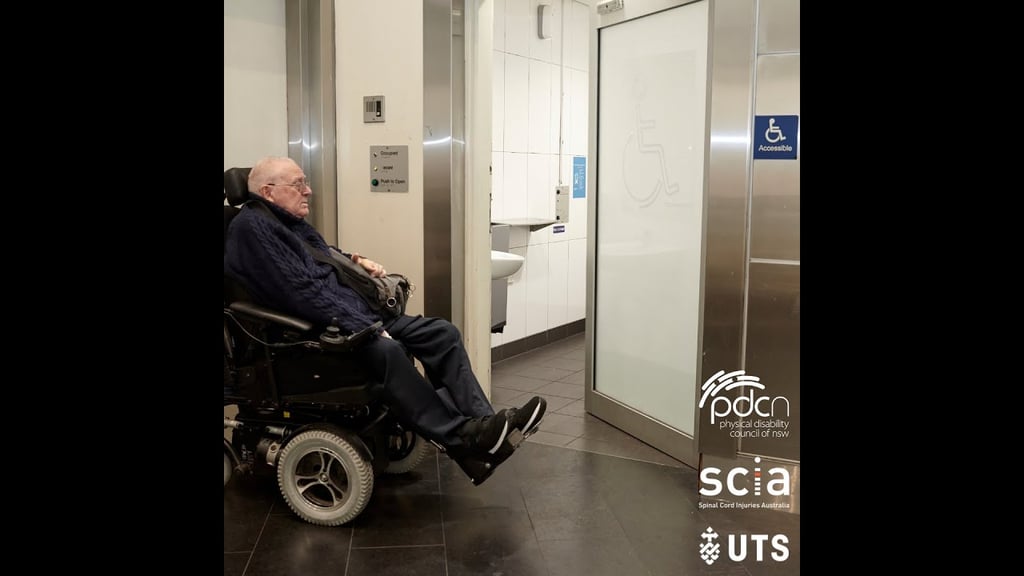
Thanks very much. Simon Darcy, I'm part of the research team, but I've been a member of both PVCN and uh Spinal Cord Injuries Australia previously AQA for many years where I uh was fortunate enough to come under the spell of John Moxon. John's photographed here by Serena uh entering a bathroom which is uh quite to do with what we're talking about today. You know, walking through Parramatta that became his post-retirement stomping ground, John acquired his spinal cord injury following a race car racing accident in 1970, which was the engine of his engineering career. John was an intensely curious person, a solution seeker and became a colleague, friend, confidant and before the term was in common use, a mentor of the first order. Evidence-based policy advocacy was his mantra with PDCN but as he told me sometimes, you've got to break eggs to make a cake and one of my fondest memories was being on the streets with John as part of a major street protest to support Scarlet Finney, a young girl who just wanted to go to school with her friends. On the day of the Federal Court decision, of the Scarlet Finney case verses Baulkham Hills Grammar, and the disability movement in New South Wales flooded the streets. A fantastic memory.

Today is certainly about research and evidence-based policy that John loved so much through good scholarship and strategy for social change.
So with those few words just to celebrate John's life, uh thank you and
we now move on to the research seminar.

Thank you Simon um along with other academic colleague Philippa, we are the research leads from UTS. We did wish to acknowledge the very positive engagement with Physical Disability Council and New South Wales, and Spinal Cord Injuries Australia and I'd like to invite first Diana Lucas, Diane Lucas CEO of SCIA and then Serena Ovens CEO of PDCN to see a few
words Diane thank you I just wanted to highlight how
fantastic it's been to be part of this this research project I think one of the things Susie has who has been leading it
for us has said that it's she was um it's one of the best practice models of collaboration engagement
supporting people with disabilities to participate in the scheme in this project so it's been a fantastic project
to be part of um it's obviously a very very important issue we um and something that is so
important for obviously everyday living as well as the ability to be out and about and to be able to live your life
and not have to worry about um something that it should be available wherever you go so I'm really excited to
be part of it and looking forward to the discussion today and the findings
thank you Diane uh Serena thanks Sid so again as you know I'm
Serena I'm the CEO of the physical disability Council for those that may not know us Peterson is the peak body
for people with physical disability in New South Wales our core work is to achieve equity for people with physical
disability and ensure their full participation in New South Wales society and we do this mainly through systemic
advocacy where a member-based organization so if you're not a member please think about joining us and I'll
get hives to pop the link in the chat for you as well membership is free for people with physical disability and your
voice experiences and opinions are the base for pdcns prioritizing the work we
do to achieve inclusive change today I really like to take this opportunity to thank the UTS team for
the opportunity to partner with them on what is still a major barrier to participation for many access to
accessible bathrooms it's been a pleasure to work with Sid Simon Philippa Barbara and the team and
alongside of spinal cord injuries Australia particularly Susie who's done so much of the work there for them and
I'm eager as you to find out about the research and what it's found and the next steps to using this data to enact
change lastly can I thank the more than 100 participants from pdcn who spent time
inputting to the research project providing your valuable personal experiences ensure that rich detailed
data makes a significant difference in the long run so thank you
and I thank you both so much for your collaboration in making this pilot project such a success we've also
benefited greatly from the enthusiastic and expert support provided by pharah Madden and Mark Ralph in particular
now you'll also note that we've been mostly assisted by our wonderful team of researchers
uh the necessary funding to undertake this work has been generously provided by UTS
and of course the work relied heavily on the participation of you the wheelchair user community
we're especially proud of the number of project participants highlighted here within Asterix who have direct lived
experience of wheelchair use welcome everyone
now there should be no need to convince wheelchair users as to the significance of accessible bathrooms
there is however a real barrier and that is the accessible bathroom use of necessity remains a relatively private
exercise it is something not often considered by the broader community
but it is is you have made abundantly clear in this project a very significant issue if you are a wheelchair user
my colleagues and I were originally approached by Mark Ralph to help him push to improve the current Australian
design standards for accessible bathrooms those standards generally set minimum
standards and that minimum standard tends to be what designers then specify
but minimum specification actively discourages bathroom Innovation and
tends to produce unsatisfactory outcomes perhaps that for perhaps the majority of wheelchair users
minimum standards also tend to set the level of funding allocated to accessible bathrooms
meaning again in other inadequate Provisions for some unsuitable or indeed
unnecessary Provisions for others at that stage of course we get into
having to retrofit bathrooms which everyone accepts is a very expensive option
so best to try and get it right in the first place finally when you look at the evidence
base for the current standards they are based largely on Research from the 1970s
and 1980s those studies were narrowly focused on the scientific measurement of body sizes
and physical abilities with groups of just a few dozen participants
in the decades since which has changed about the people who use Mobility devices how they use bathrooms the
mobility devices themselves and the bathroom products available yet the evidence base for the standards
has not changed the evidence base has not changed in Australia in fact it has not changed
globally our motivation here is that robust empirical and lived experience data of
contemporary bathroom use will greatly strengthen the case for changes to the Australian standards
first and foremost this was a pilot project aimed at demonstrating the feasibility and benefits of working in
close collaboration with the community of wheelchair users it aimed to be inclusive because lived
experience is so vital to understanding how people actually experience accessible bathrooms
it aimed to be embodied because experience is a complex phenomenon
experience is directly impacted by our perceptions our emotions our physiology
and our agency in other words to understand experience
we need to combine multiple lenses how are users predisposed to bathrooms
how do they react to particular bathroom settings what are their motivations
for those complementary lenses we require multiple and complementary research methods
so we have combined a questionnaire survey that asks quite specific things
of many people along with field studies that reveal new aspects of actual use
along with interviews that probe in more depth and explore some of the important
nuances to accessible bathroom use we would like to briefly review each of
those quite separate but intentionally complementary studies
so firstly with the online survey and starting with Simon over to you
thank you very much uh remembering to press the view button again
um so uh we carried out an online survey
um but most importantly and I I am a person whose power wheelchair used to
have been for uh almost 40 years now um we got together a team that included
academics and Industry experts as we've said Mark Ralph and Farah Madden both
the experienced people on the Australian standards committee and uh we then also
engaged uh others from uh those that we we know from the community and we had 20
people test that co-designed uh questionnaire we were able to build in
the comments from power wheelchair users manual wheelchair users others who used
other forms of Mobility AIDS before we learned launched the final survey that
survey uh produce 209 completed responses
and without going into a stat session uh
we collected a series of descriptive statistics as well as uh inferential that look at between group differences
so if I could come over to the next slide please so just some uh 94 were completed by
people with disability the other six percent completed by significant others
for example um parents or uh attendants that we're assisting it was across support needs
from independent users through to those with very high support needs uh the
daily Mobility AIDS and this was a multi-response question so it totals
over a hundred sixty percent power wheelchair uses 55 manual wheelchair
users scooters walking frames and lower limb Prosthetics the age range spans 60
years from uh 28 to 80 and 55 were male
and 44 female one percent identifying as non-binary
so the stats results really showed that there was a um older respond respondent
preference for grab rails given that their disability significantly increases
with age uh and uh they um the higher the support
needs the more space that was required and so this idea of a the footprint
wheelchair footprint coming from the 1970s and 80s where all chairs including power chairs
were much smaller and uh there was also a preference for
those that transferred so if we go to the next slide Sid
so the first stat uh press the button again is eight percent had a left-hand
preference uh next 16 for right hand next 33 with no preference and could use
both but 43 did not transfer while using the
uh public bathrooms coming over said to the next slide
so what did the survey results reveal well uh one public accessible bathrooms
are upper avoided due to issues of access uh there's a major issue to do with
manual door opening uh due to the strength required to open and many
weren't compliant with that strength automatic doors were not available at
most places there's a whole series of issues to do with privacy locks and
security of bathroom doors a lack of space to move around within uh
particularly where you've got a particular side preference to be able to use the various facilities and backrests
and grab rails are contentious uh Philippa will talk more about the qualitative findings but just to tell
you on the survey the open-ended responses uh generated 27 000 words of
qualitative comments from the uh just over 200 users I'm going to hand back to Sid that's
going to put the T technology into this University of Technology study
oh thanks Simon I saw where the online survey successfully produced statistically
significant empirical evidence the field study is more about experimental
experimental in the sense that we're looking to develop and test a range of exciting and often entirely novel
digital Technologies we aim to apply these emerging Technologies collectively to better
understand how people experience the built environment and this is our entire laboratory that
fits with ease into a regular backpack it comprises a discrete 360 video camera
a an iPad Pro with onboard laser scanner
at the an audio recorder with remote lapel mic capability at C
a wristband device that measures various biometric markers d
and the latest in eye tracking glasses that video record whatever the wearer is looking at at e
we then have a suite of sophisticated software that enables us to synchronize
and analyze all of the data from each of the devices recorded over time
the 360 camera records images in every direction at the same time
you can see what a 360 image looks like when projected onto a two-dimensional plane in the bottom left corner
however using specialized apps we can then clear that image or video back and
view it as a single view of field of view drag the cursor to move our field of
view around the space even zoom in and out all in high resolution
the laser scanner in the iPad creates what is called a point cloud of Any Given room
the point Cloud measures the dimensions of every surface in the space with millimeter accuracy
from the correct from the correctly dimensioned representation we can directly create an accurate 3D CAD model
from the cad model we can produce scale drawings of plans elevations sections
that capture the actual layout of the room with all fittings correctly located and
scaled we can then overlay on each individual bathroom some of the critical
requirements of the current standards in purple clear space around the toilet
pan the required location of toilet flushing mechanisms the required location of toilet roll
dispenser points Etc the drawings then highlight where the
actual bathroom layout may not be satisfying the current standards in this case the toilet paper is
presented from the base of the toilet roll mechanism and therefore outside the purple Zone it defines what is required
by the standards
the same iPad laser scanner can also be used to track its own movements through space
so here the red line represents the iPad which we attach to the rear of each
wheelchair for the duration of the simulated bathroom use
each participant then simulates how they would use that particular bathroom including any maneuvering transfer
procedures hygiene Etc the iPad remains attached to the
wheelchair for the duration this simulation then shows how the
movement of the iPad represented by the red line is tracked through the space and recorded
using specialist software we can attach a scaled representation of the particular wheelchair model to the iPad
as it moves through the space taking the wheelchair with it in this way we're able to replay the
actual movement of the wheelchair for each participant as well
the lapel mic records the comments of each participant in real time the audio can then be transcribed and
time stamped for analysis
the biometric wristband records medical grade high resolution and not 60 data
points per second readings of loopholes volume body temperature hand movement
and electrodermal activity all of which offer a unique window into
the emotional and physical state of an individual as they experience the bathroom setting
at the same time the eye tracking glasses or video recording what the user is observing and Tiny sensors in the
glasses tracked the people movement to determine the precise point of focus within the
view
finally we have a suite of incredible software that provides a wealth of visualization and data analysis options
this is where the rubber hits the road never before has such a rich combination
of synchronized data being applied in this way the 360 images can be played in virtual
reality headsets so we can place users designers or researchers right there in
the room for auditing and training the card models can be interrogated to
extract actual dimensions and to check compliance with key parts of the standards
the wheelchair tracking is perhaps the most novel of our Technologies and we're still exploring the potential it offers
to analyze wheelchair and wheelchair user movements to study clearances positions
maneuverability alternative wheelchair designs Etc
all of this information is accurately synchronized and time stamped
software will automatically generate Peak maps of what each participant has
focused their attention on or average multiple heat maps for multiple users
the analysis software can also sequence the areas of attention to determine the order in which
participants visually interrogate the space combined we get objective data on
compliance movement attention and reactions this is truly game changing capability
and all of the technology fits into a small backpack meaning it is highly
portable quick to set up an easy chant to transport into bathrooms across the
country so what have we learned from the field
studies this far some key points first up nobody in our studies touched
the grab rails when required it is the toilet seat that provides the critical Anchor Point
of course when you audit 2021 accessible bathrooms as we now have you very
quickly note that many toilet seats are unstable poorly maintained and loose fitting
with the 360 degree images you can observe the lack of storage space for medical and other required procedures
the lack of General wear spins and no specialist bins for medical waste
our CAD models reveal the impact of adopting the same extra-large toilet roll dispensers in accessible toilets as
in bathrooms more generally in accessible bathrooms the grab rails
compete for the same wall space as the toilet roll dispenser mechanism
the participant commentary recordings voice Commons concerns with the provision of backrests
Biometrics highlight highlight which design features caused the most concern for users
for example in our study it is the Dyson style above access hand dryers as a
particular case in points eye tracking shows an almost Universal
and habitual concern with the locking mechanism of the entrance Door
we do have many other insights from our field studies but at this stage with only 10 up participants involved the
results are more about the proof of concept and potential than they are about drawing strong conclusions
with that I'll now pass over to Philippe to present our interview process phillipa thank you Sid
um and thanks everyone for attending today I um as you can see the survey and
the field studies are so exciting for their scalability um as much as the technology that's being used lots of this part of the
project this next part that I'll be talking about today is the is the quality of a more um in-depth part of the project I had
the privilege of speaking with everyone who completed their field study with Sid
and got to have this really rich discussions that explored how people
interact with accessible bathrooms how they experience all of the different
elements within the bathroom um what what they liked and what they didn't like and
um we uh but we were able to recruit six participants from pdcn and six from scia
we conducted one-on-one interviews I'd like to thank all the participants who spent time with me um up to an hour each
and we recorded and transcribed those um and they're being automatically
analyzed as we speak so what I'm going to be talking today is some of the preliminary findings from that we were lucky to have a
diversity of EX lived experience a range of different types of wheelchairs that
people use are using um as well as catheterization and non-catheterization within our
interviews I'm Sid if you'd like to go to the next slide some of the emerging themes that we
found I mean there's the sheer diversity of use the different ways that people interact with all the different elements
that we find within accessible bathrooms and people's preferences and the role that or how people's unique lived
experiences will inform directly how they interact with all of the items within an accessible bathroom
and some of the features that we would talk about were of course the toilet is front and center but also toilet paper
use preferences um how hand washing and hand drying preferences the types of
grab rails that people use and also entrance security door locks
and layout what was particularly interested is the way that um well people talked about
avoiding public bathrooms altogether and if uh if they're aware of a particularly
poor poorly maintained public bathroom the role that hygiene plays in whether
or not um people will interact with public bathrooms of course
um and but also if they're not avoiding the amount of preparation the need for
preparedness and planning and perhaps to know where the bathrooms are but also when you're using you know the different
designs of bathrooms um the order of accessing paper where to
put catheterization equipment Etc is something that we talked about a
lot and I think it really interesting is look at the variety of risks and safety issues that came out the risks that
people take by simply using a an accessible bathroom um and the role that design plays there
in mitigating those risks or accentuating those risks um hygiene who can talk about public
bathrooms without talking about hygiene everyone's been in one of those absolutely
revolting disastrous bathrooms that we don't have to interact with and we had so many stories of people who
um you know are forced to get quite close and to the bowl of the toilet that you know we really don't don't want to
be in you know our faces don't want to be close to our bodies being close to so we highlighted just how critical
maintenance of bathroom is and how often it's not um it's not done well
um the other um theme that came up is the role of privacy and dignity and the role
that design plays you know automatic locks that were particularly sensitive and would open uh when people were in
the middle of using them um and I think what was uh great to talk
about too are people's pet peeves what are people really not like in accessible bathrooms
um as well as all of the design features that are working really well for people can you go to the next side thanks slid
so um I've chosen just a couple of themes that have been have come out of
the interviews that we conducted um and giving you a few examples of some
of the quotes that have come out um I think something that's not talked about a lot is uh Catholic use and and
the how the range of catheter use will Define how people interact with a toilet
um whether people transfer um in order to use a catheter whether they don't need to transfer
and the importance of storage you know sterile storage areas and Disposal areas
in the bathroom and you can see that of course you know the risks that people
take when a toilet is not clean um a person on the screen one person's
quote use my pet peeves when toilets are not clean our faces and bodies have to get really close to the toilet bowl with
the catheter um and uh one of the other quotes here
is is people assume because I catheterized that I don't actually get on the toilet well I've gotten on the
toilet every single time for over 25 years so the sheer diversity of use
um is something that um I think is you know it does present a design challenge but it's so important to have an
understanding of how people actually use these spaces and the equipment that they're using in these spaces
in order to design better Sid could you go to the next slide thank you of course another really important
part of our conversations was toilet transferring for people who did transfer and again as Sid mentioned the
fact that that toilet seat really effectively becomes another grab rail within the space
um and how um some of the um those are often not secured properly
um and some of you may not be surprised if that backrest comes up as a point of conversation
um for for many many of the participants um particularly for people who transfer
onto the toilet and use a catheter because it seems to push people far forward which can increase the risk of
over balancing and needing that space to actually access um you know in front of themselves in
the while they're on the toilet uh and the height of toilet bowls you know and what works for some people
doesn't work for other people and that there's a real variety of hot toilet Heights that people find within accessible bathrooms that presented a
challenge thanks Sid could you go to the next slide um I'd like to talk a little bit about
the risks that people take when they are um in their day-to-day use of accessible
toilets some people may not have a break on their uh on their wheelchair and of
course the gradient in a bathroom floor can mean that you have to be very they have to be very very careful and have
their hands on the chair at all times
um the mounting of that toilet paper holder that Sid also mentioned are quite a few people mentioned that that by the
time you when you reach down to actually access the toilet paper people are risking um falling onto the floor
because it's so low um and because the center of gravity is is placed you know away from the from the toilet itself
and also when using those toilet seats and grabbing onto them they can be sharp on the edges preventing people from
getting a really good grip and that can risk people's stability
um and and that's falling off that toilet or ending up on the floor is a really significant risk
um can you go to the next slide said I think that might be up to you nanya so I'll go back to you now said thank you
yes thanks uh Philippa but we began our presentation today by
noting how bathroom use is something that typically gets hidden behind closed doors and it's a private experience for
most of us but that also means it is really discussed and the majority of the
population will have never even ventured inside an accessible bathroom
the significance of that is it's difficult to empathize with the problem when you have no personal experience of
that problem so what we want to do is to Leverage The findings of this pilot project to both
educate and provoke in addition to the empirical data from
the survey the variety of visualizations from our field studies and the telling voices of lived
experience we are producing a series of graphic illustrations to help communicate the
messages overall we will write for the conversation for
Professional Publications and Advocate with government agencies and the various standards committees
it's about shining a timely and focused light on this much neglected but
significant aspect of accessing the building the built environment
so where to next where do we take the project the collaborations the industry support and
your participation from here absolutely in the coming months we aim
to translate our findings from your participation into articles and visual
resources particular to wheelchair use of public accessible bathrooms full stop
that said however all along we have been advised that the most pressing need is for empirical data
articulate to domestic and residential settings the current design standards for
accessible bathrooms are especially poorly served with data from domestic settings
the multi-method approach we've developed including the portable Technologies now makes empirical study a
domestic settings entirely feasible
along with accessible bathrooms of course there are many other elements of the built environment that warrant the
form of inclusive and embodied research approach we have demonstrated in this pilot project
kitchens entrances showers indeed every room in every type of building homes
hotels schools hospitals aged care all would benefit from a mixed method an
inclusive approach similar to what has been developed and employed in this pilot project
similarly as well as wheelchair access other access issues could and should be
investigated but the mobility issues visual impairment aging
we all experience the built environment in different ways however as this pilot study demonstrates
we can now begin to reveal more and more about how different those experiences
can be we can use emerging Technologies to complement traditional modes of
Investigation take our research instruments out into the community and into authentic user
settings involve the community not just to study subjects but as meaningful members of
the research team we do hope you consider this pilot
project has taken an important step in the right direction and we very much thank you all once
again for your willing participation in encouraging support thank you
we did think that we would uh like to have a small pool of the audience and so there's a little provocative
quote there I no longer use public toilets so sometimes I just go out to think I just don't go out to things
and so there's a pool now available to you to ask if you've ever avoided a social situation because you could not
find a suitable accessible bathroom so if you'd like to just respond to that
as we go through we can now open the law to any questions or comments please
so I can see Cara's got her handle Kara do you want to go hi
um thanks for inviting me here today it was um it was great to participate in
this project I just have a question um obviously we have heard and
um that there are a lot of different preferences would there ever be um like I guess
a push for multiple options so for example not just to have the flush button behind you but also have a like
the flash button behind you but also have like a lever on the side or different
um positions or for uh the toilet paper say one beside you a bit higher one this
side you know on a general level I mean would that ever be an option
but um I think um the the question of whether what options
there may be will come down to um funding and standards determination so we don't determine the standards but
we can help influence and advise and promote changes to those standards and
um what we're trying to do is to develop a an empirical data set that we can use to convince the standards committees and
others that those sorts of changes are appropriate and so there's a a raft of different
possibilities that we can we can go back to the standards committees with
um the those the strongest ones will be whatever the current empirical evidence we have supports and if in future we
have further evidence that supports uh multiple options as you as you indicate
then obviously that's something that we also uh seek to promote
foreign there's a couple of comments in the chat said Ali Robertson's um suggested that
we need more changing Place toilets
uh well again you know the um there's a range of different
requirements that that we can look for and certainly in the audit that we've
done um of 21 different bathroom settings uh there were very minimal changing places
available within those uh within those set um but until or unless we can do a more
comprehensive uh study of the of what kind of level of availability there is
or lack of the availability which I'm sure it will be the case um the changing places are an additional
option so again you know I don't want to set the expectations too high for this
project um that that there's been so little research done on accessible bathrooms
that um the moment we look at it a whole range of different issues begin to reveal
um but we will be able to take some very constructive empirical evidence from the research and use that to promote for
genuine change in the building standards within Australia we've also got I think it's John Nugent
who's commented that some of the least accessible public locations are doctors offices x-ray dentists Hospital
administrative areas um and if anything people would have thought that they would have been the
most Cutting Edge for having accessible facilities um Diane agreed with that yeah I agree
with that too that's so interesting isn't it you we would think that they would have the most accessible settings and often they don't
um I also just like to respond to Kara's initial comment just about design because having a background as a
designer the so interesting that you mentioned how do you how do you accommodate for such diversity of use
with one design of a bathroom and I think that's one of the the big challenges that will eventually kind of
have to face I think this Pro what this project does is the very important first step is to say all right how are people
using it what is important what are the different aspects though that are important and what we might find is for
example you gave the example of toilet paper we we might find that there is a way of Designing you know a dispenser
that has multiple access points I mean that's where you know good design and more really targeted good design kind of
comes into play it's a little bit kind of further down the track from this particular
um particular kind of piece of research but something that I'm really interested in too Cara like how do we you know
accommodate everyone's individual needs in one design that I can also see that Liz has her
hands up
every um it is about Victoria I was involved I
had the fortune that I've been able to do what we call the toilet so
um in reviewing uh a bathroom that had just been designed on the river
um now what we found was with the boxes of the you know how the
with that design that you've just done uh looked at with the systems in the
back of the wall it is impossible for a lot of people to be able to have the
strength to push those buttons in what um we had the
there was a too hard I've never had this ability and
another lady that also had I had disability as well and
I were talking to the Architects about this design and what they have come up
with is they were going to put systems in that of um a stainless steel and there's
the new um it's time to stove I have found that very strong and
will withstand um you know been erect
um they were also going to put in what they found was there is a high need for people
that needed showers um and they were going to put a hot and
cold showers and and what they were going to do was put all this design through the whole
Council but every new um bathroom that they had built
thanks for the manic Dawn which was the Great great was really
you know a great um asset for the whole community
um thank you um you mentioned the automatic doors and Chris and Rochelle have also put some
comments in um Chris Sparks says the accessible toilet doors on the brand new hospital at bega weigh a ton and have no
automatic functionality um and he's quite astounded that that is in a new situation something that's
occurred and Rochelle asked said whether you looked at the width of doors
um there seems to be a range of widths weights of doors and opening sweep of doors
in the reporting 28 standards yeah that also depends on the space of where the
bathroom is important because you need a certain width for the doors to be able to slide open
yeah they'll pass back to Simon I think he wants to comment on that one sorry yeah I know there's a number of comments
first off uh there's some really cool Innovations going on around uh you know
the uh the the pressing of buttons and uh you know the combination of proximity
sensors to buttons is already out there and available
um sometimes it becomes a cost issue and that's also
um you know when they're looking in the short term it comes back to inverted
commas compliance what is the minimum rather than what is the maximum use of
facility you'll get if it incorporates Innovative design that gives you the
independence and dignity of being able to get in and out of a toilet by yourself I mean I've recently been stuck
uh you know in a facility that was a brand new design only a few years ago
and they they made a conscious decision not to put in the auto opener doors now
that's terrible for a major public facility so there's a politics around it and it
certainly lives fantastic that uh you know the the Albury council is going to have a
um a whole of area approach to putting in best practice rather than minimum
standards thank you for those examples there obviously is the issue too of of
where the toilets are placed and the fact that when you're traveling being able to access a toilet particularly if
you need a changing place and the details that you might have to do or the limited amount of time you can spend out
in order to feel comfortable and find what you need
yes and in our audit we also found that a number of the accessible bathrooms were behind security doors where you
couldn't actually get to them on particular floors um but I think just in response to the measuring door access widths um the
benefit of the scanner is that it will capture those sorts of Dimensions uh from the room once we've gone in and
scanned the space and we can then use the cad system to interrogate individually those those Dimensions but
also all of the other dimensions within each individual bathroom setting I suppose the one thing we can't
estimate within all of this is the weight of the door and the ability to open or close it physically
you can certainly test what those forces are and I think it's 19 Newtons it's
supposed to be uh but there's no doubt that um the location uh does affect the
ability to get the chair close enough and somebody with my dexterity
um it's almost impossible you can either get it opened and then it closes on you then you can't get back out or not the
other way so there's a whole series of those issues about in uh you know getting in and getting out safely that
become uh you know quite uh quite serious for for those that are involved
in it one other question about the um uh particular no no Chris Sparks has just
done a tour from Vega up to cans and back uh being able to plan your trips
and find accessible lose uh or stations that'll give you a hand if you needed
filling petrol is one of those other ones that becomes critical to being able to travel in Regional New South Wales uh
or Regional Victoria or anywhere else in the country as well so that that idea of
having that an updated version of the gis for accessible news in the country
is also something that is of tremendous benefit not only to us socially but also
to those areas uh economically if they want to get people to travel to them
fix also mentioned in the chat said that Architects have to attain CPD points so
professional develop points to stay registered every year and this sort of research would be great for them to be
able to do on um that and get those that experience and knowledge that they may not get
normally he's also said can anyone help him if he um if as he's doing a
presentation to a group next week and um wants to know about what the VCA doesn't
tell you about being a wheelchair user he's popped his email in the chat if
anyone wants to to reach out to him to assist so my question if and I can't see any
other hands and I do apologize if you do have a hand up or I'm missing you please let me know just call out at this point
in time um what's the next step Sid are you going to take this and broaden your
study get more people more areas will you take it to
um the as as Simon mentioned obviously minimum standards in terms of the
building standards are just that minimum we're seeing that there's so much more needed I was really interested to hear
Philippa um and hadn't really thought about the fact that many people want some sterile place that they can put
their um pieces of equipment Etc that they need rather than in their chair
um how do we design something that fits and will make that accessible and feasible for everybody in the different
users what's what's next on the agenda
well I think um the the next thing on the agenda is to try and raise more public awareness and more
um professional awareness as to the issues that have been revealed from the study and so it really is about uh
provoking and um and educating the uh the decision
makers and the the um the community in general to raise awareness of these
kinds of issues that we very much like to expand and extend the the research
that we've done and so we'll also of course be looking for some funding to support that process as well
a couple more comments in the chat um one is are hoists going to become a minimum standard will we see them in
bathrooms again I'm not a um I don't sit on the
standards committee so I'm not an expert in in the um in the specifications side I know that there's a a current review
and a new standards will be announced soon um but that's for the uh standards
committee to determine will this information go to them though so they can see all the bits and pieces
that have come out of this and sorry Simon I didn't mean to talk over you no no one uh certainly that's uh that's
what we're doing and of course with uh industry Partners like um Mark and Farah
who are deeply ingrained on those various committees that will be a you
know one of the things that we're doing uh but also uh Diane's put up uh you
know a very interesting comment around how do we go about uh prioritizing critical services for our advocacy
campaigns uh using the evidence that comes out of this project so both uh you
know all organizations that have got an advocacy role in this space we're very
happy to talk to and also uh formulize uh strategies moving forward
um people know me I've been around a while uh I don't do research to get Journal articles I get do research to
get involved in getting social change and uh that's yeah you know that's the
next complete uh you know complex part of the puzzle uh and with your assistance Diane Serena all the great uh
you know policy officers that are there uh we're happy to um you know get together and brainstorm where we should
be going and uh more importantly too how we do that and how we uh use the
Fantastic Tech that Sid's brought into that as that you know a little bit of a
gee whiz to get those social media campaigns up and running a couple more notes in the chat for you
and Robin thank you um she said she sits on the standards and she's here so great
to have someone listening in that can feed back directly as well um John Nugent also said it should be also
good to recognize some of the good work and obviously some of the major shopping centers are starting to provide
reasonable toilet accessibility um Macquarie in um Sydney and New South Wales for one in his opinion again I
guess that depends John on what you need and what's what's in place but then absolutely
more questions I was just going to jump in and ask one
quickly if that's all right you made sure so what's the full name of the standards committee that we're referring
to so it's the it's the Australian building
standards that we're talking about and this standards and Robin you might want to
clarify specifically if you like save me the whole group of Standards is called
as1428 and there are currently yeah not they're not all called up into
the building code so that's one issue in itself um uh and it is it's the access and
Mobility for new building work and so the thing that I'm sitting here worrying about as well is that those
um toilets that are new and that for example don't have compliant door clear
door openings should have been signed off by a building certifier or an access consultant and that obviously isn't
happening as well so we've got a whole follow one of issues that are happening
here and the other problem you know that which we started at the beginning is that that standard which was based on
very old research didn't actually even include people who use um electric wheelchairs it's only from
manual Wheelchairs and so you know it excluded a huge number of people and and
the reason why we haven't been able to change that is because we haven't had
the research so I think this is really key because we are doing
um it's a challenge to convince the building industry that they need to
pay for and include for example um automated doors that's that's
anything that's involves cost is always a battle but if we've got the research to actually say
that's what that's what you need um then we've got a much stronger voice because we
it is a challenge thank you Robin um I do understand that I just wanted to
say one make one point obviously building um accessible toilets or anything
accessible does involve a cost but as we've seen if the cost is being spent
even if it's not meeting the needs so I think the money would be more well spent
um and get more quality out of the the money long term if it actually met the needs of the consumer oh I don't
disagree in any way shape or form I mean the huge issue at the moment for example is that trying to get just minimum
access into residential buildings here in New South Wales has been rejected on
the grounds of cost which we have actual research that proves that that's not not correct but that's what's happened so
you know unfortunately we all you do everybody needs to speak up it's really
important that you know and it's not just seen as a minority issue and but
you know we have to comply with the disability Discrimination Act as well you know that those things are just being pushed to
one side so you know the idea of promoting the issue is I think is great
I think it's really important we need to be more I mean I think it's hard when you know
you can't easily just use a basic toilet um and [Music]
and then we're asking you to stand up and and promote that issue but I think that's that seems to me there's little
option really absolutely thanks Robin and thanks for
clarifying um and you're absolutely right the fact that we can't get New South Wales the largest state in the country to accept
minimum um sort of a livable design standards is absolutely frightening
um and something that a number of our organizations are working on every single day at the moment not having much
luck but we're working hard and there'll be a parliamentary Forum next week to actually talk to the broader issues as
well as the NCC guidelines but um many of the housing issues for people who
live in New South Wales all over so everyone I'm aware that we're just
over time I don't think there's any other hands up and um if I've missed you I do apologize there's a few more things
in the chat um that I'll make sure are captured and given to the research team so it can be put with all the other researchers well
um and at this time I will take the time to say thank you everyone for attending and for your time
um once we finish we will as we said have a recording that we can send out to you and you can pass that on to others
if they're interested and I'm pretty sure the UTS team will be Keen to link with people moving forwards um to tell
you about next steps if they are looking to engage with people further so by all
means we have most of your email addresses and we'll reach out and let you know if there's more to come and if
you'd like to be a part we'd greatly welcome your involvement so thank you to
the UTS team to the seaa team and to everyone online I appreciate your time
and efforts