


- Posted on 19 Oct 2026
- 4-minute read
A landmark international assessment finds nearly half of reef-building coral species are threatened.
Key takeaways
- Nearly half of assessed reef-building coral species are threatened with extinction.
- Climate change and ocean warming are the main threats to corals.
- Urgent emissions cuts and greater conservation investment are needed.
Early-career researcher and marine scientist Dr C. Isabel Núñez Lendo from the University of Technology Sydney (UTS) has joined a team of more than 60 coral experts globally in a study that reassessed the 892 reef-building coral species on the International Union for Conservation of Nature (IUCN) Red List of Threatened Species.
Dr Núñez Lendo said the results, published in Nature, were significant and the team anticipated they would help shape policy internationally.
“We hope these findings will translate into meaningful international agreements, with countries committing to ambitious reductions in carbon emissions, while strengthening coral reef protection and investing in conservation and restoration programs,” Dr Núñez Lendo said.
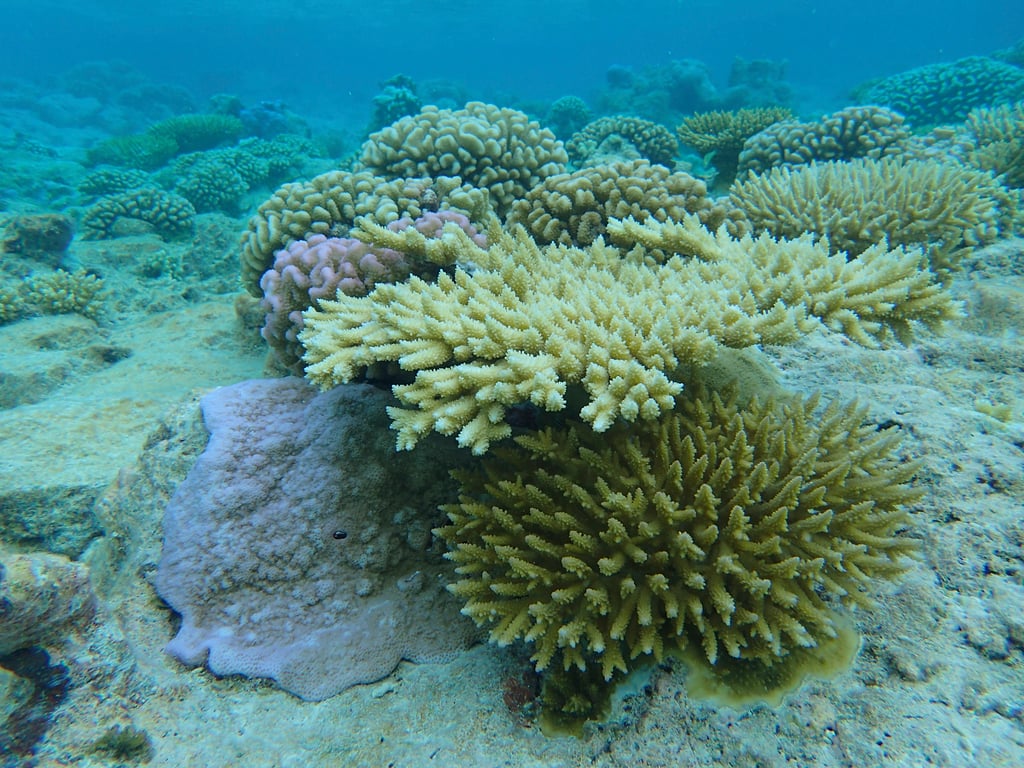
Nearly half of global coral species at risk
The team reassessed 892 reef-building coral species, updating the first global assessment carried out in 2008. Of 774 species with enough data to assess, 340 (or 44%) were classified as threatened, comprising 33 critically endangered, 251 endangered and 56 vulnerable species.
Dr Núñez Lendo said the findings predate the record global heat and the fourth mass coral bleaching event from 2023 to 2025, and the still unknown consequences of the current El Niño (projected to continue in 2027), so the true level of risk could be even higher.
“In the first assessment, one-third of coral species were threatened with extinction. In this assessment, we found it was almost half,” she said.
“What is more alarming is corals are moving towards extinction faster than many other groups of animals, including amphibians, birds, mammals, sharks and rays.”
Climate change is driving extinction risk
“We found that climate change, particularly ocean warming, is the primary threat. Rising ocean temperatures increase the frequency and severity of coral bleaching events, putting coral populations at greater risk of decline,” Dr Núñez Lendo said.
“Every tenth of a degree matters when it comes to coral extinction risk. As carbon emissions rise, so does that risk. But by reducing emissions, we can help lower the risk of extinction. Our findings are not a death sentence for corals, but a wake-up call for urgent action.
“The findings make clear that countries need to commit to ambitious reductions in carbon emissions,” she said.
We need greater investment in conserving and restoring the corals most at risk, particularly species that are the main builders of reefs.
A lifelong commitment to conservation
The project is a personal one for Dr Núñez Lendo, who describes herself as a conservationist at heart.
“I chose marine science because I wanted my work to contribute to protecting nature,” she said. “When I was younger, I always wanted to join the IUCN. To now be part of this work is a dream come true.
“As an early-career researcher, it’s a great honour to be part of this team and to see years of hard work have an impact at the international level.”

Global expertise, species by species
Dr Núñez Lendo’s role built on her direct contributions to the global IUCN Red List reassessment of reef-building corals, including assessing 500 of the 892 current known species and coproducing their technical reports, published in 2023. An example of one of these assessments is the Acropora hyacinthus (Brush Coral) and led to led to an earlier scientific publication in PLOS ONE in 2024, focusing on Atlantic and Caribbean reef-building corals.
“I contributed knowledge from my experience in the Indo-Pacific, including changes observed in the field that had not yet been formally reported,” she said.
“My areas of expertise are coral reproduction, ecophysiology, conservation and restoration, while other researchers contributed expertise in taxonomy, reef ecology and population ecology.
“We brought together different areas of expertise to assess the extinction risk of each species according to its biology and available coral reef data.”
From global evidence to urgent action
Coral reefs provide major ecological, economic and social benefits in more than 100 tropical countries.
Because of the importance of the assessments to the global community, the scientists are calling for better species-level data on coral populations, thermal stress and recovery to improve future assessments.
“The findings are particularly timely, as they are expected to inform discussions at major international events, including the UN Biodiversity Conference (CBD COP17, 19–30 October 2026) and the UN Climate Change Conference (COP31, 9–20 November 2026). The results were also shared – based on the preprint – at the 2025 IUCN World Conservation Congress and the 2026 International Coral Reef Symposium,” Dr Núñez Lendo said.
“These findings can help identify the species most at risk and guide where management, protection and restoration efforts are needed most.
“We need greater investment in conserving and restoring the corals most at risk, particularly species that are the main builders of reefs.”
Featured researcher

Marine scientist, Faculty of Science
News by topic

News
UTS and 2SER tune into the future
Sydney community radio station 2SER marks 47 years on air and launches annual radiothon.

News
Research puts resilient infrastructure on solid ground
Groundbreaking $24 million research centre will develop sustainable technologies that stabilise the foundations underpinning major infrastructure.

News
UTS researchers develop new AI tool to better predict stroke risk
New AI model analyses DNA to identify genetic risk factors for stroke, paving the way for more personalised prevention and treatment.

News
National First Nations College update
UTS has been working towards building a National First Nations College, an Indigenous-designed, culturally responsive residential community where students can...
News
UTS and 2SER tune into the future
Sydney community radio station 2SER marks 47 years on air and launches annual radiothon.
News
Research puts resilient infrastructure on solid ground
Groundbreaking $24 million research centre will develop sustainable technologies that stabilise the foundations underpinning major infrastructure.
News
UTS researchers develop new AI tool to better predict stroke risk
New AI model analyses DNA to identify genetic risk factors for stroke, paving the way for more personalised prevention and treatment.
News
National First Nations College update
UTS has been working towards building a National First Nations College, an Indigenous-designed, culturally responsive residential community where students can...