

- Posted on 18 Nov 2026
- 9-minute read
Birth trauma and obstetric violence
Focus of the clinic
The New South Wales Legislative Council Select Committee on Birth Trauma Report, published in May 2024, identified widespread and preventable harm across the State's maternity care system. With more than 4,000 submissions, the inquiry revealed that approximately one in three New South Wales women experienced birth trauma, and more than one in ten women nationally reported obstetric violence. Many described non-consensual procedures, coercion, inadequate communication, dismissive or disrespectful care, and failures to provide trauma-informed support.
The Clinic’s objective was to focus on birth trauma and obstetric violence as systemic issues within maternity care. Birth trauma includes physical, psychological and emotional harm arising from childbirth, while obstetric violence refers to mistreatment, coercion, non-consensual medical intervention, and violations of bodily autonomy. These harms can create long-term physical injuries and psychological trauma, leaving lasting effects on families and healthcare workers.
Consent to medical treatment is protected through common law, professional standards and NSW Health policy, however, these protections are inconsistently applied in practice. The NSW Health Consent to Medical and Healthcare Treatment Manual provides a strong framework for informed consent. However, the Inquiry heard that many maternity providers were unaware of the Manual.
Given these findings, our Clinic was tasked with researching the key gaps and practical reforms needed to prevent birth trauma and obstetric violence in New South Wales. We focused on four areas: universal access to midwifery continuity of care, protecting bodily integrity and informed consent, standardised early antenatal education, and maternity-specific complaints pathways. These reforms aim to ensure that birthing people are treated with respect and compassion, supported to make informed decisions about their care, and given access to meaningful redress when harm occurs.

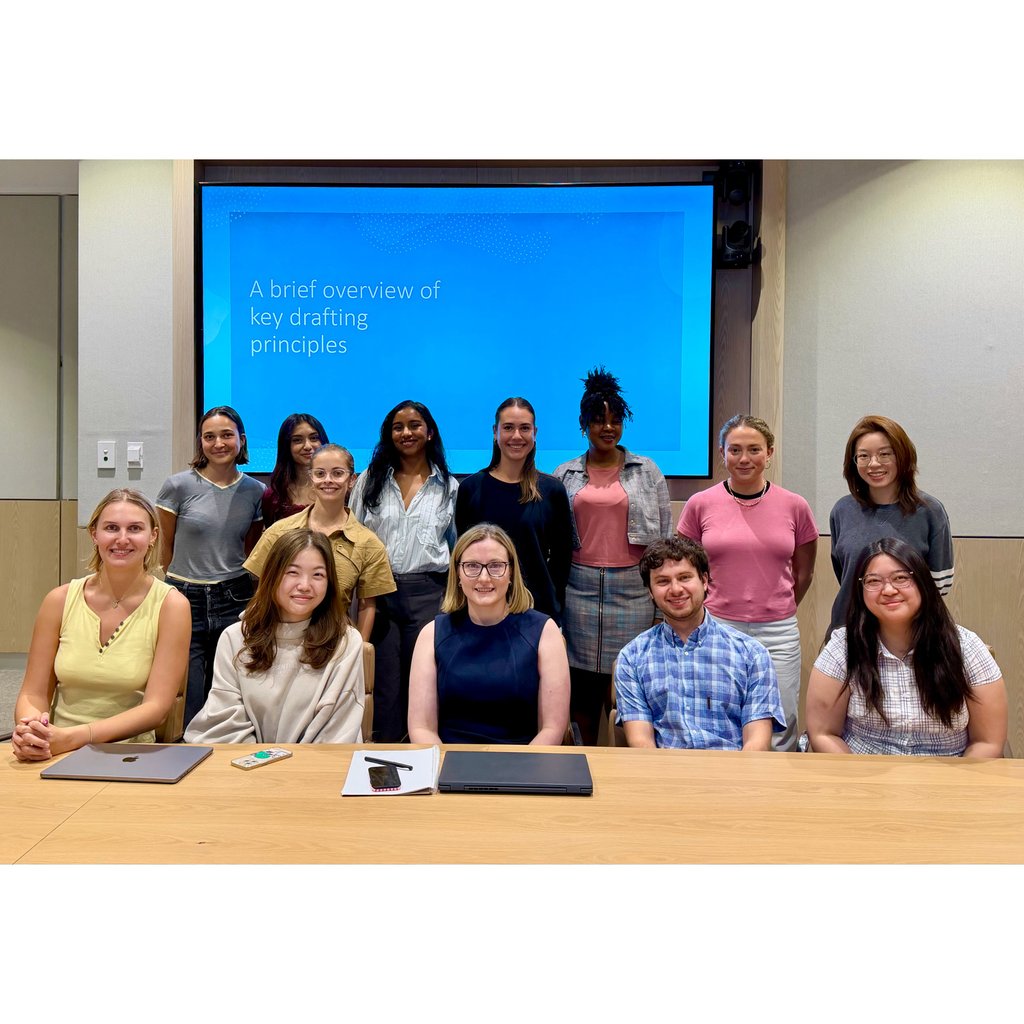
(Back row, left to right): Fran Herro, Nalwamba Kantumoya, Rhea Goundar, Guila Campos, Lucy Matthews, Nicole Lees, Mary Ma. (Front row, left to right): Jack Carney, Maya Saad, Abigail Tambimuttu, Corey Evans, Laura Nguyen, Luna Lu.
How we addressed the issue
Our research began with a close analysis of the NSW Parliamentary Inquiry into Birth Trauma Report, which, for many Clinic members, provided a first exposure to the confronting realities of birth trauma and obstetric violence. From there, we expanded our research internationally and domestically, examining the causes of birth trauma, the contested distinction between birth trauma and obstetric violence, first-hand accounts, consent law, and possible legal, policy and public-health responses. This research was strengthened by input from those with professional expertise, including Kathleen Baird, Professor of Midwifery, and Associate Professor Vanessa Scarf from UTS’s School of Nursing and Midwifery, whose insights grounded our legal analysis in clinical reality.
A highlight was visiting NSW Parliament House, where members of the Birth Trauma Secretariat generously shared their expertise on the Parliamentary inquiry and law reform process. As this was an advocacy-based clinic rather than a traditional legal placement, a central challenge was learning how to translate rigorous research into effective advocacy. Working across law and health disciplines, we developed both public-health and law reform recommendations, producing a more practical and comprehensive final report.
Working across disciplines was a central feature of the Clinic. As Public Health and Law students we had limited knowledge and experience of each other’s disciplines or ways of working. This created challenges in the initial weeks as we found our feet. Luckily, we were supported through out by Cathy Bucolo, from Health Justice Australia the Clinic partner. Cathy started by helping us to understand the necessity of inter-professional working. As we moved through the weeks, she helped us to reflect on our working practices and to improve them. She was an essential element of the Clinic’s success and by the end of the Clinic we all understood the importance of partnership.
Our experiences
Our motivation
Members of the team joined the Clinic with a diverse range of motivations. For some of us, birth trauma and obstetric violence were already areas of interest, particularly because of their connection to women’s health, reproductive care, autonomy and health justice. For others, the Clinic offered an opportunity to better understand how law and health interact in practice, with one member reflecting on their interest in how “legal, medical, and systemic factors shape the experiences of birthing people within marginalised communities.”
A common motivation across the team was the chance to apply our university learning to an issue that one member described as “real, important and human.” For some of us, this meant using our skills beyond the classroom, with another member sharing that “the Clinic felt like the perfect opportunity” to see how the legal knowledge and skills built throughout their degree could be used differently to generate impactful responses to social issues that need greater attention. Others were drawn to the practical nature of the Clinic, describing it as a “valuable opportunity” to learn more about health justice, challenge themselves outside their comfort zones and develop advocacy skills.
The opportunity to collaborate across disciplines also drew many of us to participate in the Clinic. We were interested in working with students from other disciplines and seeing how law and public health could work together to approach a complex issue. For many of us, birth trauma was not a topic we had previously studied in depth. However, as we learnt more about its prevalence and broader societal impact, our motivations grew. What began for some as a chance to gain experience, complete placement requirements, or explore health law, developed into a genuine commitment to producing work that could, as one member reflected, “contribute to policy development and reform.” We were also inspired by the work of the previous LHJ Clinic and hoped to build on their success through our own focus on birth trauma and obstetric violence. Overall, we were increasingly driven by the desire to produce a high-quality report that could create a real impact on maternity care.
Our learning process
Throughout this clinic, we gained valuable insights into how law and health interact. A key aspect of the learning process stemmed from the Clinic’s interdisciplinary makeup, with half of the team studying public health and the other half studying law. It was incredibly valuable to work alongside people with differing perspectives, as it deepened our understanding of the complex ways legal and health issues intersect. Where the law students tended to focus on “rights, accountability and legal standards,” the public health perspectives encouraged thinking on “prevention, systems, service design and access.” Through this collaboration, we were reminded of the value of health justice partnerships, in which combining different expertise enables complex issues to be better understood and addressed through comprehensive solutions.
While most of us had limited prior exposure to the subject matter, we were all taken aback by the prevalence and severity of birth trauma and obstetric violence. A key moment in the learning process was reading the Birth Trauma Report in full, which exposed us to both the historical development of the issue and its ongoing impact on birthing people across NSW. Reading the first-hand accounts published in the inquiry was confronting and, at times, deeply distressing, with experiences ranging from feelings of not being heard or respected to accounts of physically invasive medical interventions performed without proper consent. With this background, we were instilled with a greater purpose in crafting our report, a desire to prevent this injustice from occurring.
The most significant insights we developed include the following:
- Birth trauma is not solely the result of clinical complications but is often produced through systemic conditions such as fragmented care and poor communication.
- Non-consensual or inadequately explained interventions are not isolated failures, but recurring patterns that reveal gaps between legal standards of consent and clinical practice.
- The distinction between “birth trauma” and “obstetric violence” is critical, as each term frames the harm differently. One is subjective experience, the other as systemic and rights-based violation.
- Existing complaint and accountability paths are structurally limited, often failing to provide meaningful redress or drive systemic change.
- There are clear avenues for preventing instances of birth trauma and obstetric violence. For example, consent guidelines exist but are not widely circulated or understood by health practitioners. However, more work needs to be done to identify the gaps in existing midwifery services so that policymakers have a clear understanding of ways to move forward.
Beyond the subject matter itself, an important part of the learning process came from meeting with the Principal Council Officer in the Legislative Council, Rhea Goundar, who assisted us in refining and editing our work. She emphasised the importance of writing for our target audience and encouraged us to adapt our tone to reflect the urgency and seriousness of the subject matter. It was during this stage that our work evolved from a collection of separate sections written by a diverse team into a cohesive body of work that we all felt genuinely passionate about.
Collectively, these insights not only changed our perspectives on birth trauma and obstetric violence but also allowed us to grow professionally, instilling the tools to conduct collaborative and interdisciplinary work.
Power of partnership
During our time at the Law Health Justice Community Advocacy Clinic, we were given the opportunity to work collaboratively across Law and Public Health, outside the disciplines and peer groups many of us were used to. This experience was critical to producing high-quality work while also effectively addressing birth trauma in a more informed and practical way. As we worked together, we observed different learning styles and approaches to work, and came to appreciate the diverse backgrounds and past training each member brought to the Clinic. As one Clinic member reflected, “Working across disciplines taught me that different professions can look at the same problem and see different parts of it.”
This helped us develop aligned goals, recognise the strengths and potential weaknesses of each discipline and use these differences to address challenges collaboratively. One member noted that “recognising individual strengths and working through differences helps to build a cohesive and effective team.” Bridging these gaps together showed us that more effective outcomes can materialise when sectors work together, rather than in isolation. By capitalising on the strengths of both Public Health and Law students, we were able to produce a body of work informed by multidisciplinary perspectives and strengthened by diverse learning styles.
Our work with Cathy Bucolo and Health Justice Australia deepened this understanding and really helped us to understand inter-professional working. One participant described their key lesson as the “value of integrated, multidisciplinary approaches to addressing complex health and social issues.” A common theme across our reflections was that legal and health issues are often intertwined and frequently arise as the cumulative effect of one another. As one Clinic member reflected, “Over time, I came to appreciate that both legal and health perspectives are essential, and that effective collaboration requires mutual respect and openness to different ways of thinking.” When faced with an issue as pervasive and important as birth trauma, we came to understand that intervention from various sectors was required, with one participant noting that “often health advocacy on its own is not enough for long-term systemic change.”
The Clinic was most efficient when we actively worked towards fostering a respectful and open environment for communication. Thanks to Cathy and Health Justice Australia, we learnt to draw on each other's strengths, perspectives and experiences to work towards a shared goal of improving the health and well-being of people experiencing health injustice.
Reflections and key takeaways
The LHJ Community Advocacy Clinic profoundly shaped our understanding of birth trauma and obstetric violence. We came to recognise that systems designed to provide care can also cause profound harm. The confronting prevalence of structural inequity within maternity care environments left many of us surprised, shocked, and angry. The first-hand accounts we were exposed to generated emotional responses, which gave us a strong “sense of urgency and responsibility to contribute to meaningful change”. The lack of equitable access to continuity of care was noted as a particularly concerning deficiency in this regard. Our focus on this led us to recognise the significant value of combined legal and health advocacy efforts to achieve long-term systemic change. One member shared that they were “surprised by how clear and achievable many of the solutions to improving birthing experiences are,” and another member reflected that the slow improvement of current legal and policy responses “made the work feel much more significant”.
In responding to these issues, our team at the Clinic worked across disciplines in a manner that reflected the structure of a Health Justice Partnership (HJP). This is a joint partnership model for producing creative outputs, which we explored during our regular meetings with Health Justice Australia. We engaged collaboratively across law and health backgrounds within the HJP framework on the basis that, as one member observed, “partnerships matter because legal and health problems are often connected”, and accordingly, as another noted, “complex problems need partnership solutions”. Exploring such partnership solutions involved working together for the purpose of creating tangible advocacy material - including an advocacy letter which contains implementable recommendations to Parliament for reform, and a detailed evidence-based written report. The hands-on, cross-disciplinary effort allowed our group to acquire crucial insights into the real-world operation of the effective workplace partnerships that we will encounter over the course of our professional careers. As one participant contemplated, our work at the Clinic has, in this way, trained us to internalise the “value of meeting people where they already are” and to remember that our future legal and medical practice should be “clear, careful and human”.
News
Law Health Justice Community Advocacy Clinic
The Law Health Justice Community Advocacy Clinic is a collaboration between UTS Faculty of Law and Health Justice Australia.
News
Law Health Justice Community Advocacy Clinic 2024
A new collaboration between Law Health Justice and Health Justice Australia.

News
Law Health Justice Community Advocacy Clinic 2025
The Law Health Justice Community Advocacy Clinic is a collaboration between UTS Faculty of Law and Health Justice Australia.
News
Law Health Justice Community Advocacy Clinic
The Law Health Justice Community Advocacy Clinic is a collaboration between UTS Faculty of Law and Health Justice Australia.
News
Law Health Justice Community Advocacy Clinic 2024
A new collaboration between Law Health Justice and Health Justice Australia.
News
Law Health Justice Community Advocacy Clinic 2025
The Law Health Justice Community Advocacy Clinic is a collaboration between UTS Faculty of Law and Health Justice Australia.