

- Posted on 25 Jul 2025
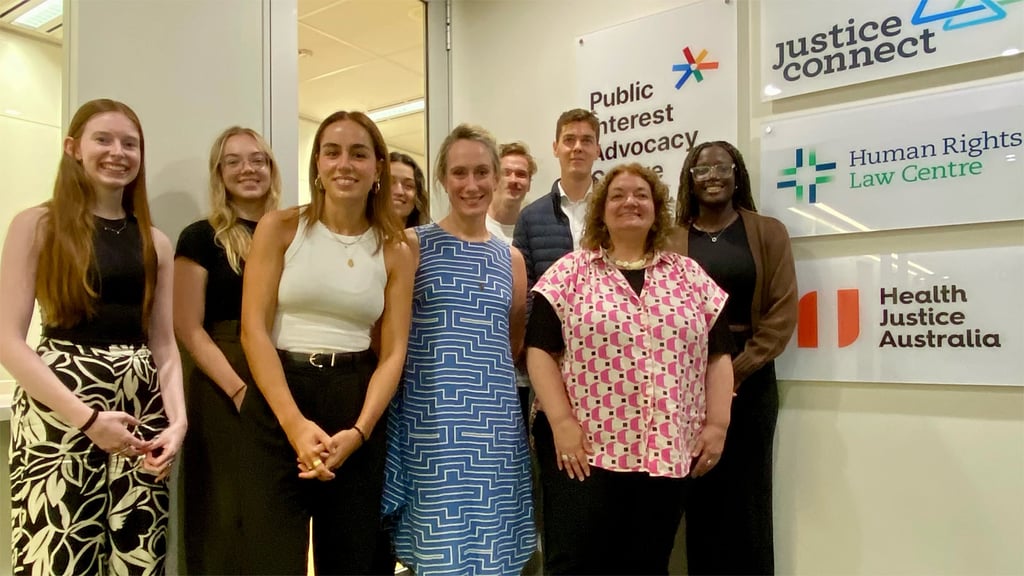
The Law Health Justice Community Advocacy Clinic is a collaboration between UTS Faculty of Law and Health Justice Australia.
The 2025 Clinic
It brings together UTS students from the Faculties of Law and Health, and Law students from the University of Sydney. Working alongside the universities and their students, the clinic brings together academics, professionals and community advocates to tackle complex social issues that impact health equity and human rights. Through collaborative research and analysis, the Clinic strives to create meaningful change.
Who we are
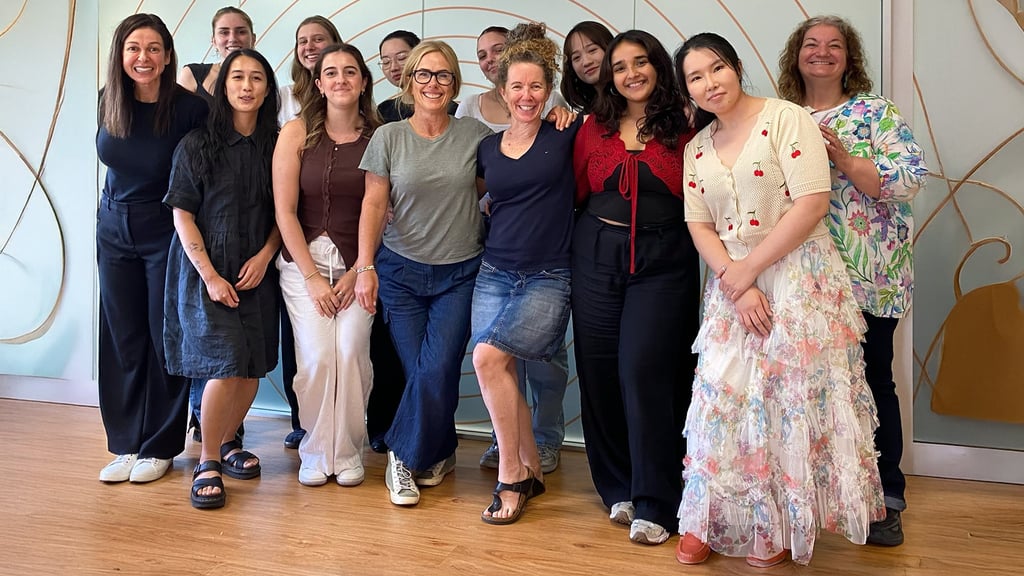
The Clinic team in 2025 were Lucinda Del Monte, Olivia De Ruygt, Mari Notaras, Kate McInerney, and Tiffany Pizzuto (UTS School of Public Health), Teagan Arthur, Lily Nguyen and Emma Talbot (UTS Law), and University of Sydney law students Jihye Ha, Nhi Le, Vi Nguyen, and Nicole Perram. All were united by a shared commitment to creating meaningful change and promoting social justice.
Collaborators
Throughout the Clinic, we received invaluable guidance from our supervisor, Michael Thomson, Professor of Health Law at UTS. Cathy Bucolo and Kate Finch from Health Justice Australia also generously mentored and supported our collaboration. Our understanding of health justice was enriched by experts from different fields, including Emily McCarron from the Australian Centre for Disability Law; Rhea Goundar, Principal Council Officer from NSW Parliament; Natalie O'Brien, former Chief of Staff at GetUp!; and Professor Linda Steele, who was a major contributor into the Royal Commission Research Report into Violence, Abuse, Neglect and Exploitation of People with Disability. Insights from these experts deepened our understanding and strengthened our research.
Purpose of the clinic
The Royal Commission into Violence, Abuse, Neglect and Exploitation of People with Disability, published in April 2019, documented the widespread violence, abuse and systemic failings prevalent in disability settings. The Final Report made recommendations to address critical areas that require urgent attention and reform to uphold the dignity, equality and inclusion of people with a disability in Australia. The objective of our Clinic was to focus on the use of restrictive practices on people with disabilities. These practices - physical, chemical, mechanical and environmental restraints often breach fundamental human rights and leave physical and psychological trauma.
The Royal Commission revealed critical failures in the reporting of authorised restrictive practices, which are intended only as a last resort within a Behaviour Support Plan. Alarmingly, 98.7% of the 1,044,851 reported incidents in 2020/21 involved unauthorised restrictive practices. This highlighted that in one year, there were over one million instances of unlawful restraint. Alongside these findings, we discovered that regulatory gaps existed for the monitoring of restrictive practices in NSW, and a broader failure to comply with International Human Rights laws. This includes the absence of National Preventive Mechanisms (NPMs), despite Australia ratifying the Optional Protocol to the Convention Against Torture (OPCAT) in 2017. OPCAT established these oversight mechanisms to prevent torture and other cruel, inhuman, and degrading treatment. However, NSW has yet to implement the required legislation to meet with international obligations or comply with recommendations in the Australian Human Rights Commission’s Road Map to OPCAT compliance. Given these findings, our team was tasked with conducting research to investigate the key gaps and solutions needed to reduce and ultimately eliminate restrictive practices. It is important to note that both the State and the Commonwealth have undertaken to reduce and eliminate restrictive practices.
How we addressed the issue
In the first few weeks of the Clinic, our focus was on researching and understanding restrictive practices. For many Clinic members, this was their first introduction to restrictive practices and understanding how these practices impact the lives of people with disability. To ensure our work was meaningful and well-informed, we undertook comprehensive research across multiple areas. This included examining where and how restrictive practices are implemented, reviewing firsthand accounts, analysing legal frameworks, and investigating alternative approaches. Most of our research was conducted in interdisciplinary pairs - across law and health - complementing our expertise and strengths to enhance our research and partnership skills. Our combined efforts created three key resources aimed at urging the NSW Government to take decisive action.
Key outputs
- Report on Restrictive Practices (PDF, 568kb) – This Report highlighted the urgent need to eliminate restrictive practices in disability care settings in NSW. Our research examined legislative frameworks and systemic limitations, including research gaps and insufficient training and resources, which informed our solutions and recommendations.
-
Advocacy Letter (PDF, 297kb) – Alongside the Report, an accompanying summary letter was sent to NSW parliamentarians, outlining five key recommendations that highlight the urgent need for change and decisive reforms to reduce and eliminate restrictive practices in line with current State and Commonwealth commitments.
- Information Leaflet – The leaflet, written in clear and accessible language, serves as an easy-to-use guide to help individuals with disabilities understand their rights. It clearly outlines what restrictive practices are and details avenues of redress for people who have experienced unauthorised restrictive practices.
Our overall experiences
Our motivation
Among our team, several reasons drew us to join the Clinic. A common theme was our interest in exploring multidisciplinary collaboration, an area in which many of us had limited experience before joining. As one member shared, "I was interested in seeing how the two disciplines could work together to achieve a common goal." The opportunity to practically apply our university learning was also a commonly cited reason, with members wanting to take part in "something that felt like it could make a difference." Some members were particularly motivated by the Clinic's emphasis on social justice. One member noted, "I have a personal understanding of what it means to feel powerless," inspiring her to want to contribute to positive change. We were also inspired by the work of the 2024 LHJ Clinic and sought to emulate their success.
Our learning process
Through our participation in the Clinic, we were able to grow professionally. Before the Clinic, most of us had limited awareness of the experiences of people with disabilities and restrictive practices. Reading firsthand accounts of lived experiences was "an eye-opener to the harsh conditions and violations of autonomy experienced." Additionally, research into reporting from the Disability Royal Commission further demonstrated the extent of neglect and abuse experienced by people with disabilities because of restrictive practices.
The learning process was complemented by the pairing of law and health students as a way “to help balance different skills and ways of thinking – legal analysis on one hand, systems-based and health-centred perspectives on the other”. Our collective growth was enhanced by understanding how law and health students approached issues and concepts differently, which ultimately made the research process richer and more comprehensive through this complementary collaboration.
The most impactful insights we gained related to the following:
- The embedding of restrictive practices in systems as a means of managing behaviours of concern, as opposed to considering and addressing the environments and situations that catalyse them.
- The existence of evidence-based alternatives, despite the continuity of unauthorised use of restrictive practices.
- The necessity of a national human rights framework in line with international law.
- The need to include and empower people with disabilities in co-design responses and decision-making.
These findings shaped both our final outputs and our perspectives on disability and health law, preparing us to advocate for change as emerging professionals.
The power of partnership
This experience has highlighted how partnerships can effectively address complex issues through collaboration and working toward a shared goal, especially in efforts to improve health and well-being outcomes. As one Clinic member observed, "effective partnership requires deliberate effort towards relationship building, as opposed to the transactional models that we are used to within a university context." This lesson transformed our approach. Initially, we were task-oriented, focusing on efficiency, structure, and accomplishing tasks. However, as one team member reflected, "this approach, while structured, was very transactional and not focused on relationship building." The Clinic sessions- particularly with Health Justice Australia - taught us that genuine collaboration isn't just about assigning roles, it's about understanding each team member's incentives, strengths, and contributions.
Many agreed that a key lesson learned is that partnerships succeed when everyone's voice is valued and respected. Whether from a legal or public health background, each person brought something vital. "The most important thing is ensuring that everyone can share their thoughts and have a say in the final outcome of the project," one participant emphasised. The value of our partnership was clear as our diverse backgrounds - encompassing varied experiences, cultures, and disciplines - generated new perspectives that led to a more rounded approach. This foundation taught us that partnerships thrive on these elements: shared goals, respect, and clear communication. Understanding this strengthened our process, making it more comprehensive and innovative. Ultimately, we learned that successful partnerships are built on understanding each other's strengths and aligning efforts toward a common goal. When everyone was engaged and felt valued, the results were more impactful and more rewarding.
Reflections and key takeaways
The LHJ Community Advocacy Clinic fundamentally enhanced our understanding of disability rights and collaborative practice. We discovered the systemic failure that leaves people in disability care vulnerable to unlawful restraint, violates their basic human rights, and inflicts profound trauma. We produced key outputs to provide information on disability rights related to restrictive practices, including an evidence-based report and an advocacy letter that calls for urgent action and reform to reduce and eliminate these practices. We gained insights into effective partnerships and the power of collaboration that will inform our professional careers.
News
Law Health Justice Community Advocacy Clinic
A new collaboration between Law Health Justice and Health Justice Australia.
News
Law Health Justice Community Advocacy Clinic
A new collaboration between Law Health Justice and Health Justice Australia.