
- Posted on 20 Oct 2026
- 5-minute read
By Marina Zhang
Australia’s Syerston Scandium Project is a test of whether critical minerals cooperation can make Australia not merely a supplier, but a critical capability node in allied industrial networks. A conditional US$400 million loan will support new supply outside China, but the project’s highest-value downstream stages are planned in the United States. Australia should use its position in allied supply chains to capture more industrial value at home, focusing on capabilities such as master-alloy production, compound refining and metallurgical research and development.
This article appeared in East Asian Forum on October 20 2026.
In August 2026, Australian mining company Sunrise Energy Metals secured a conditional loan of up to US$400 million from the US Department of War’s Office of Strategic Capital for its Syerston Scandium Project in New South Wales. The loan signals that the US–Australia Framework for Securing of Supply in Mining and Processing of Critical Minerals and Rare Earths is moving from talk to action by financing supply chain diversification.
Though still subject to due diligence, binding offtake agreements and a final investment decision, the Syerston mine and refinery would produce around 60 tonnes a year of high-purity scandium oxide. But the revised project scope also includes a metallisation plant in the United States and the US Department of War receives a right of first offer over Sunrise’s output. Australian mining and oxide refining would feed US metallisation, alloying and manufacturing, concentrating the highest-value new stages on US soil.
That should give Canberra pause. For decades, Australia exported minerals to China, where much of the processing and manufacturing took place. Australia now risks reproducing a version of that structural position within a different alignment.
The new US–Australia arrangement is clearly preferable for Canberra from an alliance and national security perspective. But allied supply chain security is not the same as Australian industrial capability.
Scandium illustrates why the distinction matters. Scandium is a rare earth element that in small quantities substantially improves the strength, heat resistance and weldability of aluminium alloys used in aerospace and missiles and enhances the performance of solid oxide fuel cells powering AI data centres.
China accounts for the bulk of global scandium supply — around 80 per cent — and virtually all refined metal. Its advantage lies in its industrial ecosystem. While scandium is rarely concentrated enough to make dedicated mining economical, China recovers much of it as a by-product of titanium, zirconium, iron-ore and rare-earth processing, where the primary commodity has already absorbed most of the cost.
Syerston is almost the opposite model — potentially the world’s first primary scandium mine, with resources capable of supporting production for generations. Competing with China’s by-product economics and processing scale is difficult on purely commercial terms. That is precisely why government financing matters.
China placed scandium under export licensing requirements in April 2025. Yet rare earth export controls could be a paradox for China. They create short-term leverage but may also strengthen the case for projects that might otherwise struggle commercially, giving the United States and its allies reason to pay a resilience premium for alternative sources.
China’s strongest response may be structural rather than retaliatory — using its scale, by-product economics and industrial networks to keep Chinese material competitive and, if needed, lowering prices to undermine primary producers like Syerston. Alternative non-Chinese supply may be viable for defence users but too expensive for broader markets, making the resilience premium an ongoing cost rather than a one-off expense.
The Syerston commitment should be an early, precise test of what the US–Australia critical minerals framework delivers. Sunrise’s oxide refinery builds on over a decade of the company’s metallurgical work, predating US involvement. The partnership would add broader scandium processing in Australia and metallisation, alloying and downstream manufacturing in the United States. Success should be measured by whether the partnership creates stages of the supply chain in Australia that would otherwise not exist.
For Canberra, this creates bargaining power — but only if it is converted into terms. If Australian resources matter enough to US national security to justify hundreds of millions of dollars in government financing, Australia should negotiate for more than capital. Its value to allied supply chains should be used to secure capabilities at home that reinforce the objectives of Future Made in Australia.
Three instruments are credible. Conditional co-financing could tie Australia’s project financing under the Framework to master-alloy production, metallurgical research and skills. As US loan disbursements depend on Sunrise securing binding offtake agreements, Australian offtake would give Canberra a seat at the table and leverage to secure an onshore alloying step. The shareholder, court and regulatory approvals, as well as a potential national interest review, required for Sunrise’s planner US listing could provide another opportunity to seek commitments on Australian capability.
Each carries costs and pushing too hard could make the project less investable. The better objective is strategic specialisation. Australia cannot capture every downstream stage, so it should focus on areas where Australian capability can generate cumulative technological learning and become difficult to substitute. For scandium, that means aluminium–scandium master alloys, metallurgical research and development and the broader compound refinery already in scope — areas where Australia’s research base and defence demand give it a claim.
The emerging critical minerals order presents Canberra with a choice — become an increasingly important secure supplier of minerals and intermediates to allied industrial systems or use the restructuring of global supply chains to become an indispensable capability node within them. Australian Resources Minister Madeleine King is right that no country can build these supply chains alone. Precisely for that reason, Australia must decide not just what it wants to supply, but what it wants to become.
AUTHOR
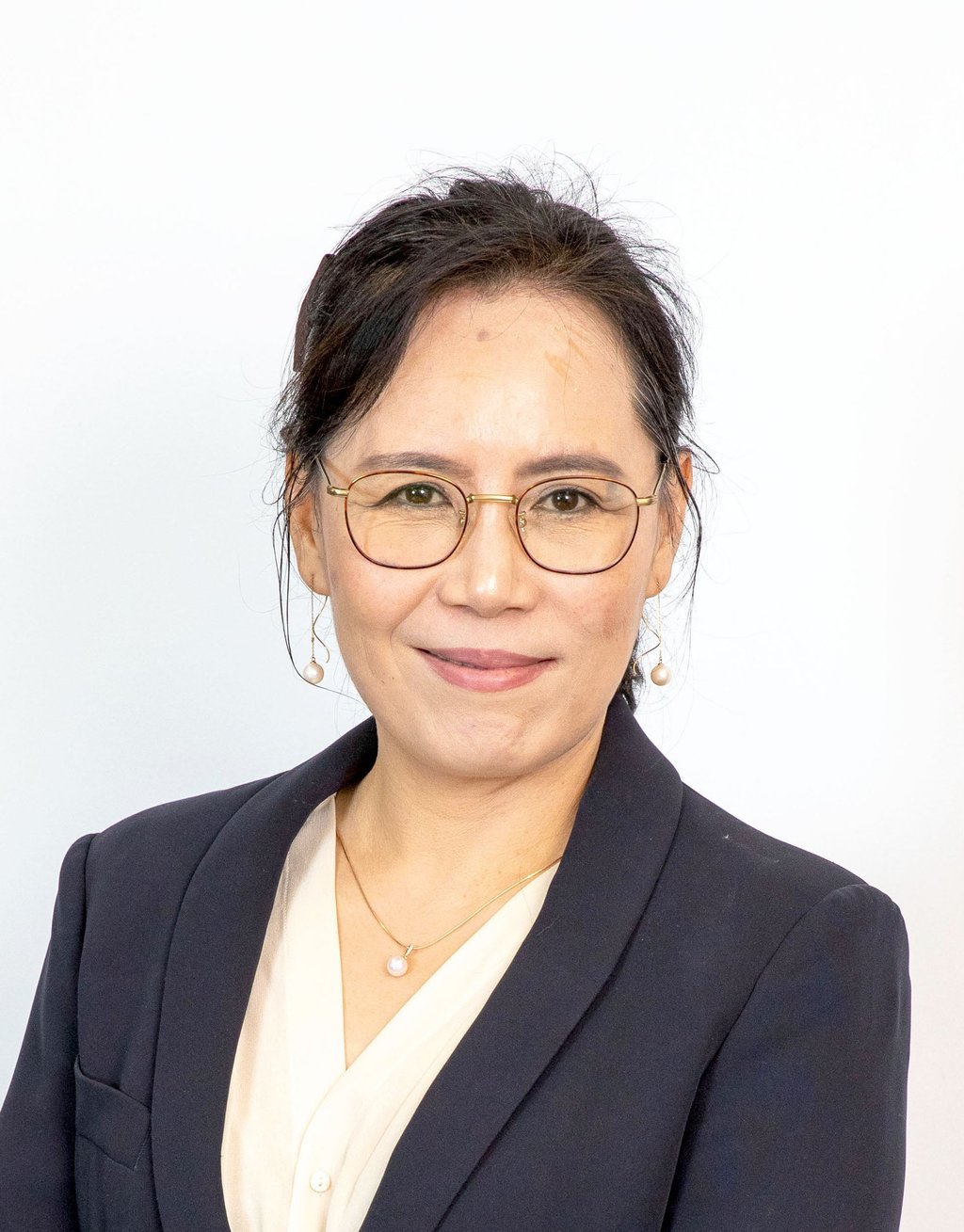
Associate Professor - Research, Australia-China Relations Institute, University of Technology Sydney

News
PERSPECTIVES | Can Australia and China talk sensibly about AI Safety?
Australia will attend the APEC Economic Leaders’ Meeting in Shenzhen on November 18-19 2026 amid questions about the extent to which the two countries can, or...


News
Australia-China Weekly Brief: October 2026 issues
The Australia-China Weekly Brief by the Australia-China Relations Institute at the University of Technology Sydney (UTS:ACRI) tracks key developments in...
News
PERSPECTIVES | Can Australia and China talk sensibly about AI Safety?
Australia will attend the APEC Economic Leaders’ Meeting in Shenzhen on November 18-19 2026 amid questions about the extent to which the two countries can, or...
News
Australia-China Weekly Brief: October 2026 issues
The Australia-China Weekly Brief by the Australia-China Relations Institute at the University of Technology Sydney (UTS:ACRI) tracks key developments in...