


- Posted on 13 Aug 2026
- 3-minute read
Dr Xuan Li’s pioneering environmental engineering research makes a splash, earning her a 2026 Young Tall Poppy Science Award.
Most of us don’t tend to think about what happens to the water we use to wash our hands, flush a toilet or do a load of laundry. But once it flows down our drains and out of our households, its journey is only just getting started.
“Wastewater and sewer systems are much more than just infrastructure for taking waste away. They are actually a valuable and largely untapped resource and information system for our cities,” said Dr Xuan Li, a senior lecturer and ARC DECRA Fellow at the UTS Centre for Technology in Water and Wastewater (CTWW).
“Sewer and drainage networks can provide important signals about what is happening in our communities, from flooding risks to emerging public health threats.”
According to Dr Li, Australia generates approximately 1.4 million tonnes of wastewater sludge each year. Of that, a large amount gets sent to landfill as waste despite containing “energy, nutrients and other valuable resources” that could otherwise be recovered.
“My research develops a low-cost technology that can recover two to four times more energy from sludge than conventional approaches,” she explained. “We also reuse waste by-products from another industry to improve the process.
“I realised that using waste from one industry to help solve another industry’s problems could be a powerful way to promote sustainability and create a more circular economy.”

“I became particularly interested in the huge amount of organic material that remains in wastewater sludge and the energy that is still locked inside it. I see it as an opportunity to build urban systems that are more sustainable, resilient and smarter.”
Dr Xuan Li
2026 Young Tall Poppy Science Award winner
It’s fair to say Dr Li knows more about what happens to wastewater than most. Her innovative research in this field was sparked by the idea that a valuable resource could be lurking in something we generally consider to be disposable.
“I became particularly interested in the huge amount of organic material that remains in wastewater sludge and the energy that is still locked inside it,” she said. “I see it as an opportunity to build urban systems that are more sustainable, resilient and smarter.”
It’s a remarkable use of something largely written off as waste, and one Dr Li hopes will lead to greater clean energy production and help Australia shift closer to its target of net zero emissions.
Speaking about her Young Tall Poppy win, Dr Li called the accolade “a tremendous honour”. She looks forward to the opportunity to share the significance of her team’s research with a wider audience and inspire younger generations “to see science not just as a career, but as a powerful way to address real-world challenges”.
“I’m very grateful to my team, my mentor Professor Qilin Wang, and my school and faculty for their encouragement, guidance and support,” she said. “Research is never an individual effort, and I feel very fortunate to work with such a great team and within a supportive research environment.”
The annual awards from the Australian Institute of Policy and Science (AIPS) celebrate the achievements of early-career researchers, in particular their scientific impact and ability to communicate their research.
The Young Tall Poppy adds to a growing list of recognition for Dr Li. Named as a Chancellor’s Research Fellow in 2024, she was announced as a finalist in the Outstanding Early Career Researcher category at the 2025 Australian Museum Eureka Prizes, and was also a finalist at the 2025 UTS Vice-Chancellor’s Research Awards for Early Career Research Excellence.
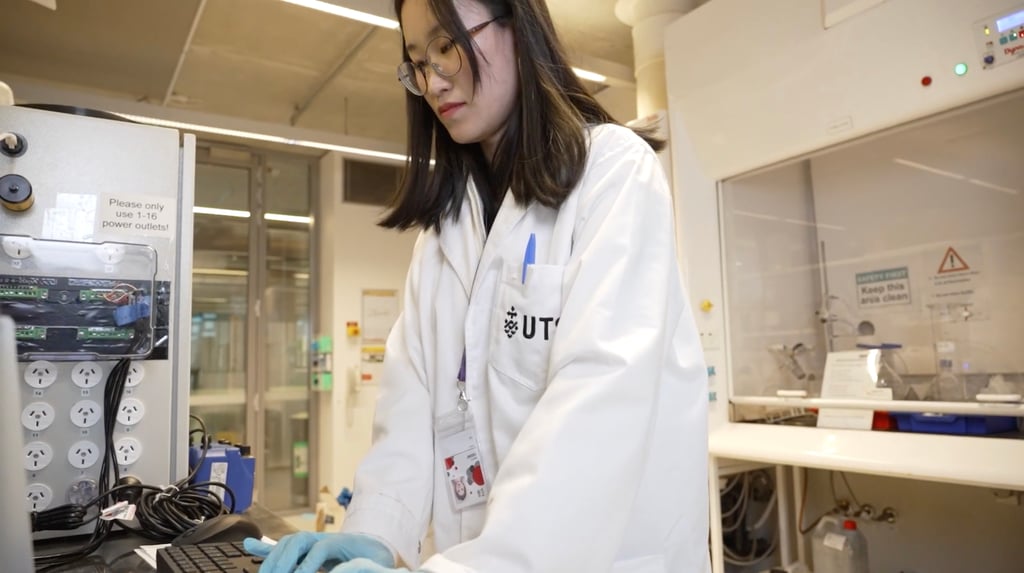
In the coming years, Dr Li hopes to see her research leave the laboratory and be adopted by wastewater treatment plants both here and overseas.
“We have demonstrated that our approach can significantly increase energy recovery from sludge, and now I’m excited about understanding how we can scale it up and make it practical, reliable and cost-effective for real-world applications,” she said.
“For me, the most exciting part of research is seeing how scientific discoveries can translate into practical solutions that address real-world challenges and improve people’s lives.”
Featured researcher
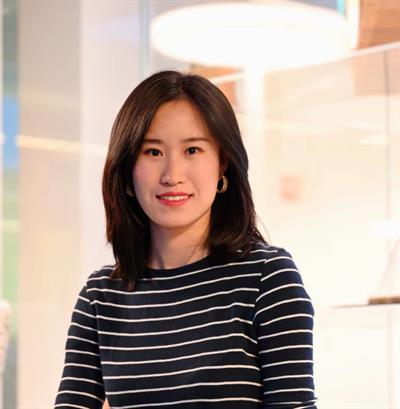
Chancellor's Research Fellow, Faculty of Engineering & Information Technology
News by topic
News
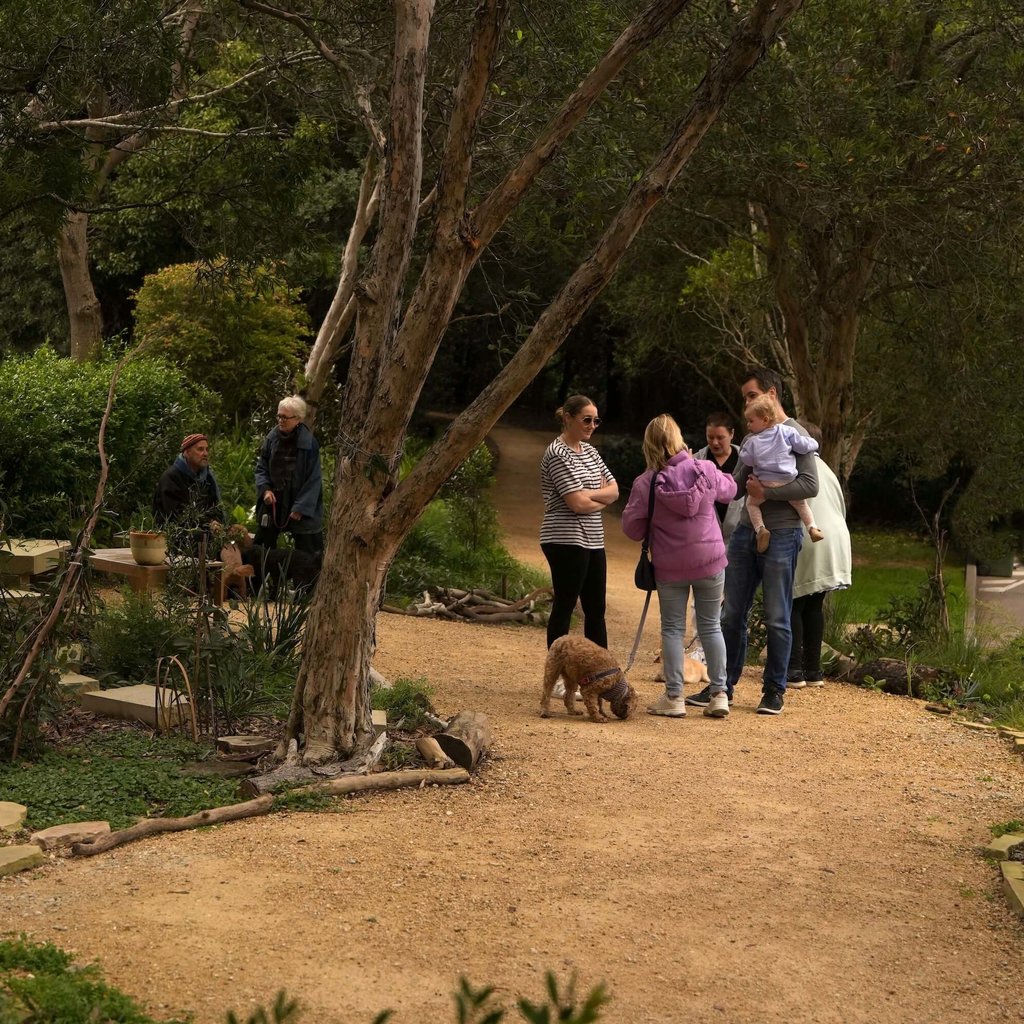
Ecological restoration turns over new leaf for Fred Hollows Reserve
The UTS-led renewal of a highly degraded urban space in Sydney’s eastern suburbs has cleaned up with a run of awards this month.
News
UTS recognised for flexible and inclusive work practices
University earns national recognition for embedding flexibility and inclusion across its workforce.

News
Engineering scientist is a model of success
Associate Professor Jianguang Fang has received an early-career research award, the John Booker Medal in Engineering Science, for breaking new ground in...

News
UTS staff honoured at annual research awards
More than 20 academic and professional staff have won awards for their outstanding contributions to research at the 2025 Vice-Chancellor’s Awards for Research...
News
Ecological restoration turns over new leaf for Fred Hollows Reserve
The UTS-led renewal of a highly degraded urban space in Sydney’s eastern suburbs has cleaned up with a run of awards this month.
News
UTS recognised for flexible and inclusive work practices
University earns national recognition for embedding flexibility and inclusion across its workforce.
News
Engineering scientist is a model of success
Associate Professor Jianguang Fang has received an early-career research award, the John Booker Medal in Engineering Science, for breaking new ground in...
News
UTS staff honoured at annual research awards
More than 20 academic and professional staff have won awards for their outstanding contributions to research at the 2025 Vice-Chancellor’s Awards for Research...