


- Posted on 1 Jul 2026
- 4-minute read
University earns national recognition for embedding flexibility and inclusion across its workforce.
Key takeaways
- UTS has earned its fifth SAGE Cygnet Award, recognising progress in embedding flexible and inclusive work practices across the university.
- Flexible work is becoming normalised as part of everyday university life, supported by better communication and practical guidance.
- Structural changes, including core meeting hours and gender-neutral parental leave, are helping make flexibility more accessible and equitable.
- Staff awareness and use of flexible work have increased, while concerns about negative career impacts have declined.
The University of Technology Sydney (UTS) has earned its fifth Science in Australia Gender Equity (SAGE) Cygnet Award.
The award recognises UTS’s progress in making flexible work more than a policy on paper – embedding it as a lived reality for a diverse workforce.
SAGE CEO Dr Janin Bredehoeft said what stands out about UTS’s commitment is the breadth of what’s been taken on.
“This isn't just about flexible hours, it's about asking who actually gets to access flexibility, and what needs to be true of a workplace culture for that access to be realised,” said Dr Bredehoeft.
“The work UTS has done across parental leave, cultural inclusion, LGBTQIA+ visibility and support for staff with disability reflects exactly the kind of intersectional thinking that drives lasting change.”
UTS’s Vice-Chancellor and President, Professor Andrew Parfitt, said this latest award and previous four SAGE Cygnet Awards reflect not a claim to have solved everything, but a demonstrated commitment to systemic and cultural transformation.
“Like all institutions we constantly strive to improve what we do. This includes evolving our systems and policies for the benefit of our community. I am incredibly proud of how our university strives to support everyone to achieve their full potential, regardless of their circumstances,” said Professor Parfitt.
This builds on UTS’s previous Cygnet Awards on academic recruitment and promotions, attracting girls and women to engineering and supporting career pathways in academia for women in engineering and IT.
Cultural barriers holding back flexible work access
In 2016, fewer STEM academic women agreed they could use flexible work options (65%) compared to their male colleagues (72%).
Staff consultations revealed inconsistent implementation of flexibility policies, particularly in male-dominated areas, and a general lack of awareness of what was available.
Culturally diverse and First Nations women, surveyed through a dedicated study in 2020, reported that it was their ethnicity, not their gender, that was the primary barrier to career progression, with lack of access to working from home provisions among the factors they named.
LGBTQIA+ staff faced their own set of barriers in accessing entitlements like gender affirmation leave, in workplaces where visibility and safety were not yet consistently assured. UTS did not shy away from these findings. Instead, they shaped the entire program of action that followed.
Communicating what flexible work looks like in practice
Central to UTS's approach was a commitment to normalising flexibility as something for everyone, not a special accommodation, but part of how a modern university works.
The university used digital platforms, intranet pages, and campus screens to raise awareness of flexible work options, including publishing staff profiles on the intranet highlighting the breadth of circumstances in which flexibility is used.
One of the profiles focused on a professor who is the first complete quadriplegic to hold that title in an Australian university. After working at UTS for 32 years, he described the shift he has witnessed:
"Flexible working practices have come a long way in the past few years, especially since the pandemic. My experience at UTS has always been very positive in this space. When I first got the job, there weren't any formal policies or practices in place like there are today."
He also noted the importance of the university's REACH grant scheme, which provides up to $10,000 to support researchers re-establishing their careers after disruptions caused by disability, caring responsibilities, domestic violence, or other significant life events, in enabling him to progress on equal footing with peers.
A senior lecturer in economics at UTS credits the scheme with helping her secure a prestigious DECRA Grant from the Australian Research Council.
“The first REACH grant I received helped ensure my children were cared for while I travelled to Africa, both for a conference and to meet with project partners. It enabled me to fly my youngest over to Europe to be looked after by their grandparents, while also covering the childcare for my elder two while their dad was at work back in Australia.
“It was a gamechanger for me and absolutely helped me to get the ball rolling on my research and subsequently secure a DECRA grant,” she said.
Structural changes to support cultural shifts
In 2017, the Faculty of Engineering and Information Technology introduced Core Meeting Hours between 10am and 4pm, with the Faculty of Science and Faculty of Health following. Audits showed compliance rates of 84–93% across STEM faculties from 2022 to 2024.
An associate professor said the impact of this policy was significant. “Meetings are generally not scheduled outside of 10am to 4pm to allow for late arrival or early finish if children need to be dropped off or picked up. And I can make it to some school events,” he said.
“I think flexible working has allowed me to achieve my career ambitions to date. I was promoted to associate professor in January 2023. Without the flexibility I don't think I would have been able to get to where I am now, especially with a young family and as immigrants working full on like we do.”
Alongside these structural changes, UTS updated its enterprise agreement to introduce gender-neutral parental leave and developed a dedicated intranet site to guide staff through the process.
What the numbers show
Between 2022 and 2025, awareness of flexible work options among STEM academics rose from 42% to 76% for women and from 41% to 75% for men. The proportion of women actually using flexible work options increased from 39% to 51% over the same period.
Crucially, the proportion of STEM academics who agreed that using flexible work had a negative impact on their career fell substantially (20% in 2022 compared to 13% in 2025), an important indicator that the cultural change is taking hold.
And an analysis of promotion outcomes showed no gendered difference in promotion success between staff who use flexible work arrangements and those who do not.
A broader theme of inclusion and acceptance
UTS's work extended well beyond flexibility in the traditional sense. Recognising that inclusive workplace culture is itself an enabler of access, the university invested in a suite of initiatives targeting under-represented staff cohorts.
The How I Celebrate project, co-designed with the Multicultural Women's Network, produced 11 digital booklets bringing together 44 stories from staff and students across 14 cultural celebrations – from Eid and Diwali to Nowruz and Raksha Bandhan. The booklets were designed by students in the Socially Responsive Design program at UTS and shared through university channels on the relevant days of significance.
For LGBTQIA+ staff, UTS developed and sustained a substantial body of work. The university has delivered Breaking the Binary and Ally training continuously since 2016, and its Ally network has grown to 208 members across 32 faculties and units.
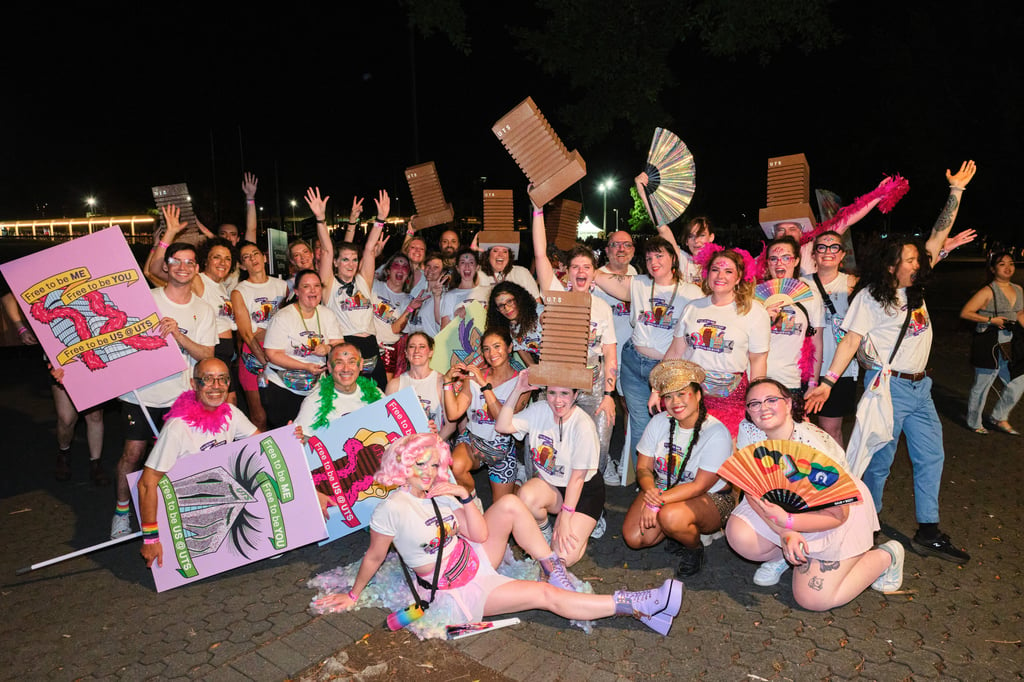
In 2025, UTS returned to the Sydney Gay and Lesbian Mardi Gras parade after a five-year hiatus, with 117 volunteers from 24 units marching and staffing a stall at Fair Day. A post-march survey found that 100% of respondents agreed or strongly agreed that their participation increased their sense of belonging.
One participant described how exciting the return was. "It was so obvious whenever we'd encounter or march by groups with a connection to UTS – they'd always start cheering and getting excited. It means a lot to me, and I think it meant a lot to those staff, students and alumni watching, to know that UTS embraces our community," they said.
You can read more about UTS’s actions, outcomes and impact in the full Cygnet Award Application, or in the Progress and Impact Summary.
News by topic

News
What the Australian government’s apology to LGBTQ+ Defence personnel and veterans means
Current or former Defence personnel can now “apply to have historical homosexual convictions extinguished from their service records”.

News
AI gives rural doctors tools to tackle antibiotic resistance
Evaluation shows new decision support tool helps rural and remote doctors make better antibiotic prescribing decisions.

News
A new study finds that to counter misinformation online, we need to copy its style
Online wording matters, even when the information stays the same, new research finds.

News
The electric car myths Australians can’t shake
Electric cars are dangerous, bad for the environment and impossible to use in the outback. These are just some of the claims circulating among Australians...
News
What the Australian government’s apology to LGBTQ+ Defence personnel and veterans means
Current or former Defence personnel can now “apply to have historical homosexual convictions extinguished from their service records”.
News
AI gives rural doctors tools to tackle antibiotic resistance
Evaluation shows new decision support tool helps rural and remote doctors make better antibiotic prescribing decisions.
News
A new study finds that to counter misinformation online, we need to copy its style
Online wording matters, even when the information stays the same, new research finds.
News
The electric car myths Australians can’t shake
Electric cars are dangerous, bad for the environment and impossible to use in the outback. These are just some of the claims circulating among Australians...