


- Posted on 10 Aug 2026
- 4-minute read
A study of Bradfield City’s First Building green roof confirms that combining native rooftop gardens with solar panels reduces urban heat, increases renewable energy generation and supports local biodiversity.
Key takeaways
- The biosolar roof lowered rooftop temperatures by up to 28°C on extreme heat days, boosting solar power generation by up to 23.25 per cent.
- Over 14,000 native plants created a thriving urban ecosystem that supports 39 species of birds, insects, and pollinators.
- The installation retained 73 per cent of stormwater runoff, filtered out over 90 per cent of heavy metals, and captured 24 kilograms of air pollutants annually.
The research verified that the biosolar green roof increased solar energy generation by up to 23.25 per cent during extreme heat events, while reducing roof temperatures by up to 28°C compared with a conventional roof.
The study also found the roof retained an average of 73 per cent of stormwater runoff, removed more than 90 per cent of key pollutants and supported 39 species of birds, insects, mammals and gastropods, demonstrating the benefits of integrating green infrastructure into urban development.
The comprehensive performance assessment of the 1,300-square-metre biosolar green roof was led by the University of Technology Sydney (UTS) in collaboration with the Bradfield Development Authority (BDA).
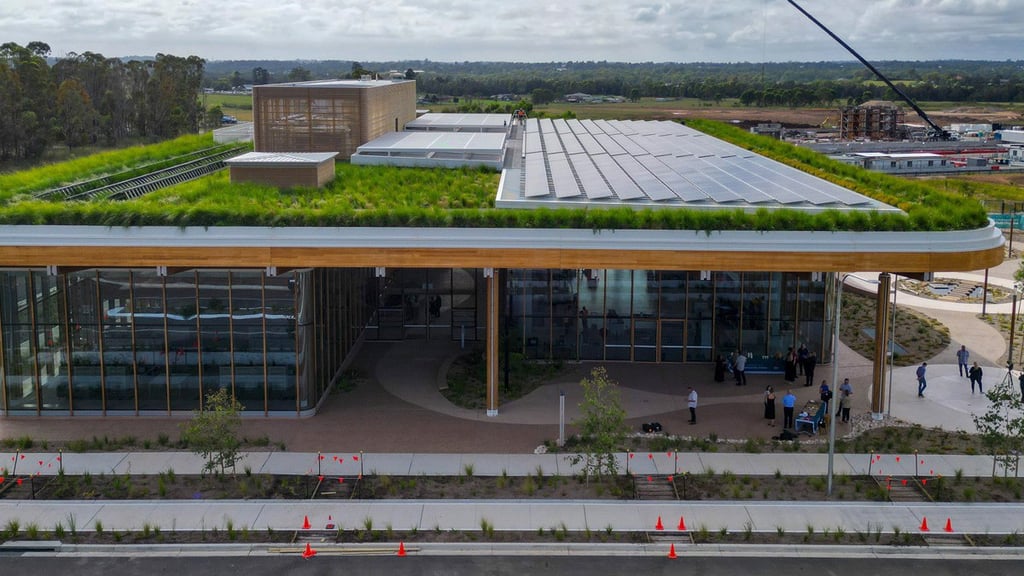
As the first building delivered in Bradfield City, the 3,000-square-metre First Building showcases sustainable design through its use of low-carbon timber, rammed earth walls and an integrated biosolar roof. The building has already received multiple awards for architecture, design and sustainability.
The baseline advantage
For four months over summer 2025, the research team tracked and evaluated the performance of the biosolar roof across five areas: photovoltaic (PV) panel efficiency, biodiversity, stormwater filtration, air quality, and heat.
By installing solar PV arrays directly over the green roof footprint, the configuration allows the vegetation to naturally cool the rooftop microclimate, enhancing solar panel efficiency, while the panels provide partial shade to support the growth of the plants below.
Lead researcher, UTS Associate Professor Peter Irga, said the BDA project provided a unique opportunity to measure the performance of a biosolar roof without the influences typically present in an established urban environment.
“Usually, when we test a green or biosolar roof, the data is heavily distorted by surrounding urban factors such as traffic pollution, drainage issues and the urban heat trapped by other buildings,” Associate Professor Irga said.
“Because broader city-building activities had not yet commenced around First Building, we were able to obtain a much cleaner baseline to accurately assess the performance of the biosolar roof. The findings provide a robust, data-driven blueprint to inform future development across Bradfield City. ”
Dynamic solar cooling
In Australia, one of the major challenges for solar generation is high temperatures. Solar panels perform most efficiently at 25°C, with efficiency dropping by up to 2 percent for every degree above that threshold.
The First Building’s biosolar roof addresses this challenge by combining 319 north-facing solar panels with more than 14,000 native Cumberland Plain plants. Through evapotranspiration, the vegetation cools the surrounding environment, enabling the solar panels to outperform those on a conventional roof by an average of 11.1 percent during summer, with peak gains of up to 23.25 percent on very hot days.
During extreme heat events, the biosolar roof was up to 28°C cooler than a conventional aluminium roof.
“We found the cooling effect of the vegetation was highly dynamic, and became more effective as the ambient temperature rose,” Associate Professor Irga said.
“This means the hotter the day, the harder the plants work to moderate the building's microclimate and keep the solar panels operating efficiently.”
A thriving rooftop ecosystem
The study also found significant biodiversity benefits. A combination of field surveys and environmental DNA (eDNA) analysis recorded 39 distinct species across birds, insects, mammals and gastropods, demonstrating the effectiveness of the roof's native planting in supporting local fauna.
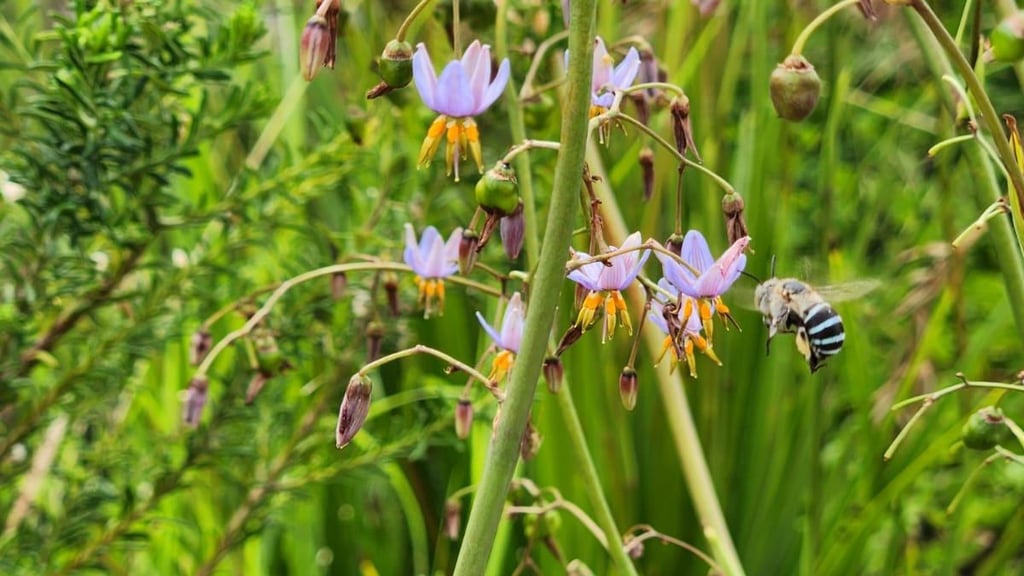
Associate Professor Irga said the emphasis on flowering native species attracted 13 pollinator species, including the rare blue-banded bee.
The roof was designed by Hassell in collaboration with green roof specialist, Three Owls Landscaping, who supplied and installed a mix of flowering groundcovers such as lilies, and wild geraniums, to provide year-round habitat and food sources for local insects.
“Seeing a complete multi-trophic food web establish itself in little more than a year, from pollinators and spiders through to kookaburras, was remarkable,” Associate Professor Irga said.
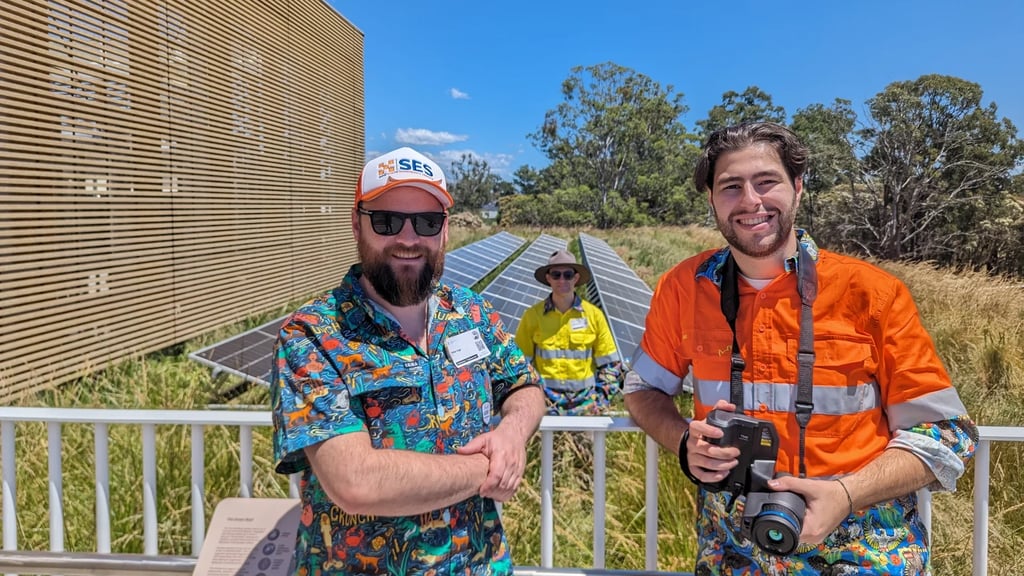
The roof acts as a giant natural filter, substantially reducing the volume of toxic metals entering urban stormwater networks
Water and air filtration
The green roof also delivers significant water quality and stormwater management benefits. Across major rainfall events, it retained an average of 73 percent of stormwater and achieved 100 percent retention in five out of six rainfall events.
It also acts as an effective natural filtration system, removing 99.9 percent of manganese, 98.7 percent of arsenic, 99.8 percent of nickel and 91.75 percent of zinc from runoff.
“The roof acts as a giant natural filter, substantially reducing the volume of toxic metals entering urban stormwater networks,” Associate Professor Irga said.
“At the same time, the vegetation captures roughly 65 grams of air pollutants each day, preventing nearly 24 kilograms of air pollutants from entering the local atmosphere each year.”
Masterplan blueprint
The findings demonstrate the effectiveness of Bradfield City’s Master Plan framework, which requires 80 percent of suitable roof space on new buildings within Bradfield City to incorporate green or biosolar roofs.
BDA Chief Executive Officer Ken Morrison said the First Building assessment provides an evidence-based foundation for championing climate responsive design for the city’s future development.
“Bradfield City presents a once-in-a-generation opportunity to embed sustainable solutions from the outset in Australia's first new city in a century,” Mr Morrison said.
“These outstanding results demonstrate what can be achieved when sustainability is integrated from day one.
“As Bradfield City continues to grow, the goal is that sustainable, climate-resilient architecture will be the standard, not the exception.”
News by topic
News
What the Australian government’s apology to LGBTQ+ Defence personnel and veterans means
Current or former Defence personnel can now “apply to have historical homosexual convictions extinguished from their service records”.
News
AI gives rural doctors tools to tackle antibiotic resistance
Evaluation shows new decision support tool helps rural and remote doctors make better antibiotic prescribing decisions.

News
A new study finds that to counter misinformation online, we need to copy its style
Online wording matters, even when the information stays the same, new research finds.
News
The electric car myths Australians can’t shake
Electric cars are dangerous, bad for the environment and impossible to use in the outback. These are just some of the claims circulating among Australians...
News
What the Australian government’s apology to LGBTQ+ Defence personnel and veterans means
Current or former Defence personnel can now “apply to have historical homosexual convictions extinguished from their service records”.
News
AI gives rural doctors tools to tackle antibiotic resistance
Evaluation shows new decision support tool helps rural and remote doctors make better antibiotic prescribing decisions.
News
A new study finds that to counter misinformation online, we need to copy its style
Online wording matters, even when the information stays the same, new research finds.
News
The electric car myths Australians can’t shake
Electric cars are dangerous, bad for the environment and impossible to use in the outback. These are just some of the claims circulating among Australians...