


- Posted on 19 Nov 2026
- 3-minute read
A leading academic from the University of Technology Sydney is at the forefront of a global movement helping Indigenous communities take control of the knowledge and objects that tell their stories.
Professor Kirsten Thorpe from the UTS Jumbunna Institute elected a fellow of the Australian Academy of the Humanities.
If a single picture is worth a thousand words, the millions of objects, images and information held in Australia’s archives and libraries tell the complex stories that make up who we are.
Harnessing the power of this data to empower Aboriginal and Torres Strait Islander communities drives the work of Professor Kristen Thorpe, who leads the Indigenous Archive and Data Stewardship Hub at Jumbunna.
“After the Bring Them Home report on the stolen generations almost 30 years ago, there was a groundswell of recognition that Aboriginal people need to have more control over the information related to them,” she said.
“In the world of galleries, libraries, archives and museums (GLAM), communities needed to understand what had been recorded on them so that they can access that for identity, healing or truth telling.
“Key to our work is thinking about what Indigenous communities want – what futures do they want to be involved in and control. We open up the systemic issues that need to be addressed around the impacts of colonisation.”
This work is at the forefront of a global movement seeking to break down the complex ways that colonial legacy intersects with current knowledge management practices.
“My research has been about bringing scholarship to memory-keeping in Australia, especially in the GLAM sector," Professor Thorpe said.
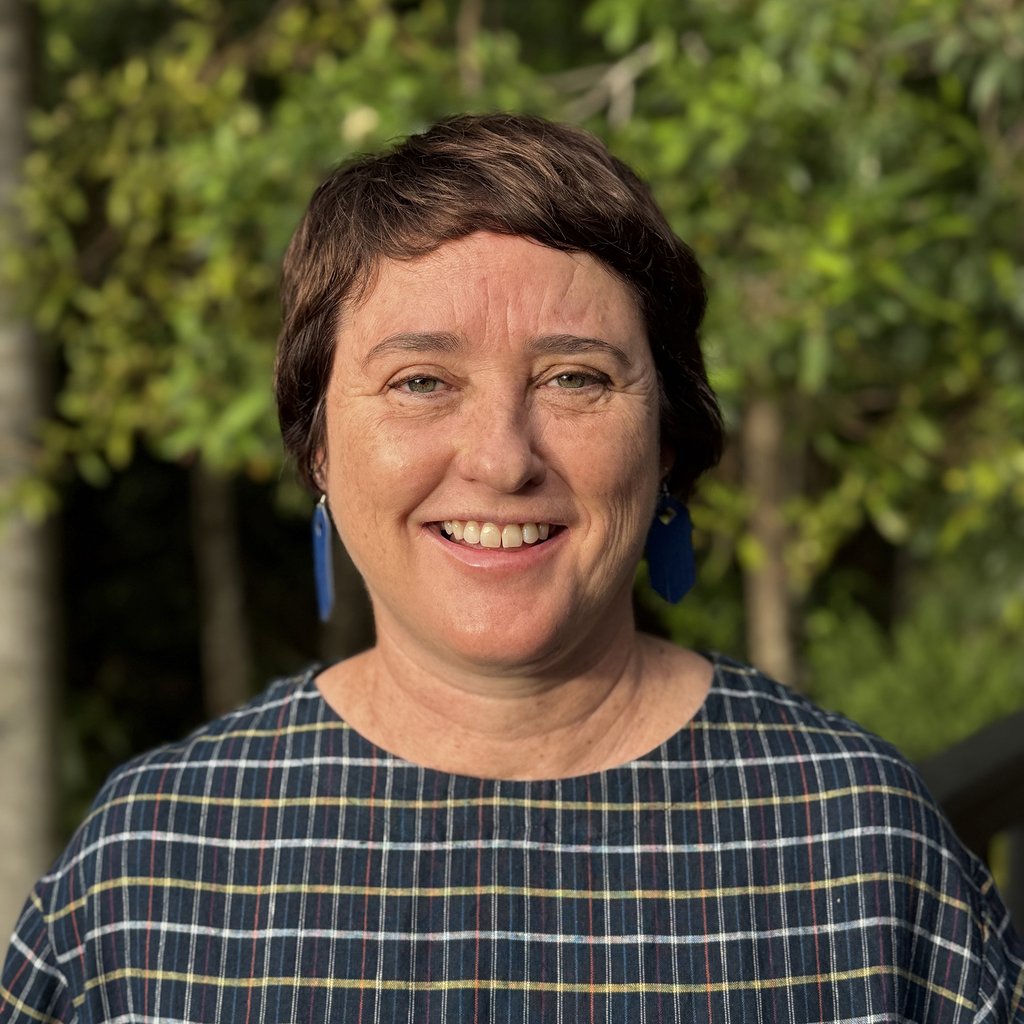
Information and stories keep our national memory. I explore how those archives can be living, cared for and continually activated by communities.
Professor Kirsten Thorpe
“The holding spaces and systems that protect and care for our knowledges have been built on colonial and western foundations. Now the Indigenous Data Sovereignty movement, led by First Nations people, is coming to the fore and we’ve had to break those systems.”
Professor Thorpe came to the task of transforming how libraries and archives support the community ownership of knowledge from a decade-long professional career embedding Indigenous priorities in institutions such as the NSW State Library and State Records NSW.
“When I started out, there was only a very small number of Aboriginal and Torres Strait Islander people working in this space. Now there’s a whole movement bringing community into those spaces and building pathways into the sector,” she said.
“Collecting institutions are now thinking about what Indigenous self-determination means and what our priorities are. Before there was lots of goodwill, but people find it difficult to talk about complexity, to talk about racism and to talk about our difficult histories.
“I’ve always enjoyed nurturing spaces where that dialogue can happen and, keep shifting the agenda as we go. I did that work in practice through leadership roles in the sector where I tried to work with policy to change the dynamic.
“Over time, I came to understand a research career was another way I could bring impact. Many of the questions that came up in policy work were complex. People often didn’t have an evidence base to make change and see where change had progressed.”
Professor Thorpe’s most recent book, Living Indigenous Archives, focusses on how to nurture and care for cultural heritage locally and help communities ensure their data and information is stewarded into the future.
It’s a task made more complex in the age of artificial intelligence.
“AI is now the new space where we urgently need to start applying that thinking. AI intersects with that in the context of care and protection of knowledge, she said.
“We need to work with communities so we have systems that aren’t extractive but bring back genuine benefits. These knowledges are community assets that must be kept locally and managed with informed consent and community ownership.
“It’s a complex and interesting space where the worlds of the technologists and communities are colliding. To build bridges, we need to build literacy and understanding on both sides.”
In a world where there has been a decline in scholarship and education in the library and archiving space in Australia, the team at Jumbunna are filling a critical gap.
“A lot of scholarship is needed in this area and UTS is unique in what we contribute to that library archive information space,” Professor Thorpe said.
“At Jumbunna. we’re really proud of the stories we tell. We’re getting people to think about how to care for information over the long term and what that impact is about. Indigenous story is key to it all.”
Professor Kristen Thorpe is one of the 2026 Fellows elected to the Australian Academy of the Humanities for her outstanding contribution to the humanities and Australia’s cultural and intellectual life.
News by topic
News
Worst migrant underpayment is least likely to face scrutiny
The largest ever study of migrant working conditions in Australia has exposed large-scale impunity for exploitation throughout Australia.

News
Tackling embodied carbon in the construction sector
MECLA has been named a finalist in the 2026 NSW Sustainability Awards.

News
Launch of national institute to rebuild telecommunications engineering capability
The new UTS Telecom Research Institute will rebuild domestic expertise to research, test, protect and strengthen the networks Australians rely on every day,...

News
Schoolies starts this week – six things young people can get wrong about safety
While Schoolies can be great fun, it’s also a time of increased risk.
News
Worst migrant underpayment is least likely to face scrutiny
The largest ever study of migrant working conditions in Australia has exposed large-scale impunity for exploitation throughout Australia.
News
Tackling embodied carbon in the construction sector
MECLA has been named a finalist in the 2026 NSW Sustainability Awards.
News
Launch of national institute to rebuild telecommunications engineering capability
The new UTS Telecom Research Institute will rebuild domestic expertise to research, test, protect and strengthen the networks Australians rely on every day,...
News
Schoolies starts this week – six things young people can get wrong about safety
While Schoolies can be great fun, it’s also a time of increased risk.