


- Posted on 20 Aug 2026
- 2-minute read
UTS researchers are piloting technology that could reduce methane emissions from mining by more than 90 per cent.
A collaboration between University of Technology Sydney (UTS) researchers and leading global provider of air and gas handling products Howden, a Chart Industries Company, is set to yield a major leap forward in methane emissions mitigation.
A pilot plant is being built at the UTS Tech Lab facility in Botany that will optimise the performance of a unique combination of state-of-the-art catalytic process technology and high efficiency heat exchangers.
The project is initially focused on emissions from mines but will also help tackle methane emissions from landfill sites, waste disposal units, energy providers and users requiring high density energy such as data centres.
“Methane mitigation is critical for climate action as it offers the fastest way to slow global warming impacts,” said UTS Catalysis and Process Engineering group lead Professor Michael Stockenhuber.
A better solution for mining emissions
“We have developed a technically superior catalytic methane mitigation technology for low concentration methane emissions. The technology excels in low temperature operation, reduced reactor volume and long-term stability.
“The technology potentially can reduce methane emissions from mining by more than 90 per cent. Emissions from mining contribute approximately 10 per cent of all greenhouse gas emissions worldwide.”
“Howden has been supplying ventilation solutions to the Australian mining industry for over 100 years, where methane emissions have been identified as a serious issue,” said Howden General Manager APAC, Livio Salvestro.
“We are excited to be partnering with Australia’s leading catalysis researchers at UTS to develop an industrially viable product to significantly reduce greenhouse gas emissions.”
“Catalytic technology has a clear advantage compared to thermal mitigation systems owing to lower operating temperatures and much smaller footprint,” Professor Stockenhuber said.
Piloting and commercialising the technology
“Our research has successfully demonstrated consistent, high conversion under standard operation for more than six months at temperatures as low as 460 degrees centigrade.
“Besides the lower operating costs and size of the units compared to thermal oxidisers, the reduced temperature also results in a reduced risk for the operation on mine sites and other applications.”
Professor Stockenhuber said there were more than 10 years of collaboration behind the development of a prototype and Howden and UTS had now formalised an agreement to commercialise the technology within three years.
“We expect the pilot plant to be running from the end of 2026, after which a demonstration plant is planned to treat mine ventilation air on site.
“The technology will then be ready to provide a pathway to reach national and international methane emissions targets.”
Researchers

Professor, Faculty of Engineering & Information Technology

Professor, Faculty of Engineering & Information Technology

Senior Research Fellow, Faculty of Engineering & Information Technology
News by topic
News
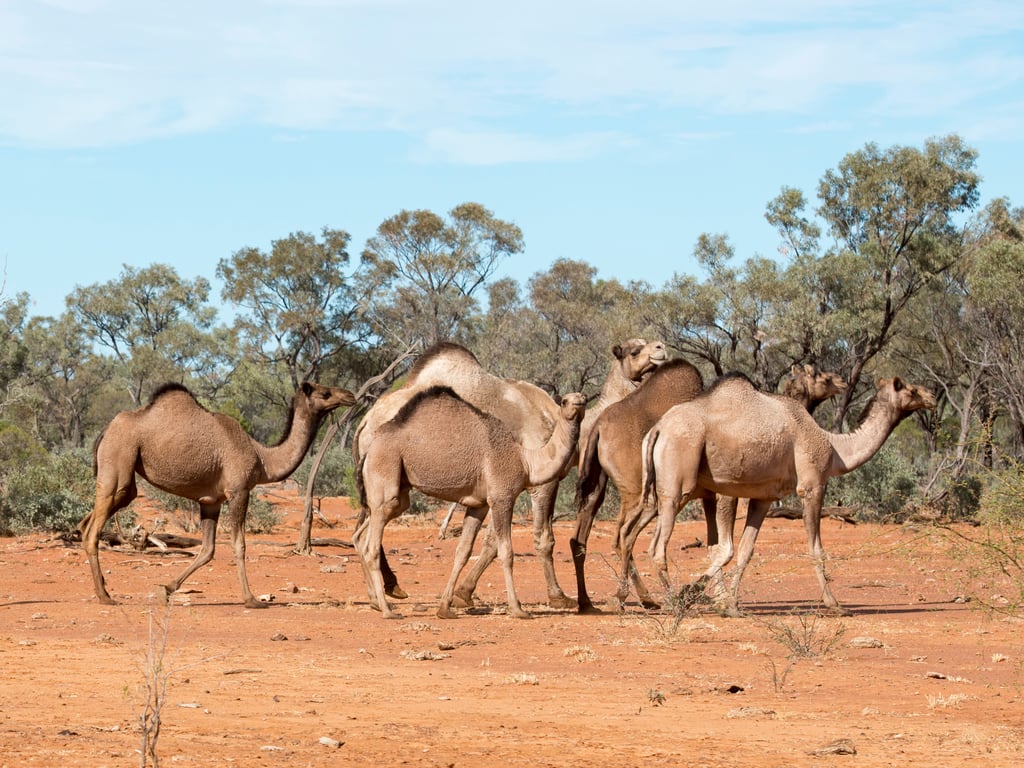
Feral – and threatened? Endangered camels, banteng and hog deer have found an unexpected refuge in Australia
Wild dromedary herds no longer roam the Sahara, while wild banteng are vanishingly rare in Southeast Asia. Should we protect their feral populations in...

News
New report calls for federal reform to address harmful worker surveillance
The Australian Government must urgently address the threat to workers from new forms of AI-powered surveillance, according to a report released today by the...
News
UTS response to NSO report
A statement from The University of Technology Sydney in response to findings of the National Student Ombudsman.

News
Independent review into March protest and event
A message from Vice-Chancellor Professor Andrew Parfitt.
News
Feral – and threatened? Endangered camels, banteng and hog deer have found an unexpected refuge in Australia
Wild dromedary herds no longer roam the Sahara, while wild banteng are vanishingly rare in Southeast Asia. Should we protect their feral populations in...
News
New report calls for federal reform to address harmful worker surveillance
The Australian Government must urgently address the threat to workers from new forms of AI-powered surveillance, according to a report released today by the...
News
UTS response to NSO report
A statement from The University of Technology Sydney in response to findings of the National Student Ombudsman.
News
Independent review into March protest and event
A message from Vice-Chancellor Professor Andrew Parfitt.