


- Posted on 10 Nov 2026
- 3-minute read
A new podcast from the Ultimo Institute brings leading thinkers and writers from around the world into conversation about the forces shaping our economies, democracies and lives, and what it might take to build a fairer future.
Who gets to share in prosperity? And what would it take to build a fairer, more democratic future? These are the questions at the heart of Prosperity, Shared, a new podcast from the Ultimo Institute at UTS.
Hosted by Carl Rhodes, Professor of Business and Society and Director at the Ultimo Institute, the series explores the economic, political and cultural forces shaping our lives, from corporate power and inequality to work, class, media and the stories we tell about care, success, suffering and freedom.
Through conversations with leading thinkers, practitioners and emerging voices from around the world, Prosperity, Shared asks not only where our current systems are under strain, but how they might be reimagined to support a more inclusive and sustainable future.
At the heart of the series is a simple question: who gets to share in prosperity? And what would it take to build a fairer, more democratic future?
From corporate power to the politics of suffering
The first episode features writer, filmmaker and legal scholar Joel Bakan, one of the world’s leading critics of modern corporate power and author of The Corporation, The New Corporation and The Moralizing Corporation: The Rise and Fall of Corporate Carewashing.
Their conversation examines the changing relationship between business and society, including the retreat by some corporations from commitments to diversity, sustainability and social responsibility, and what those changes might mean for democracy.
Bakan argues that widening inequality and declining economic security have consequences that extend well beyond the economy. He describes “the degradation of the social state, the widening inequality, the lack of hope [and] security” as conditions that can fuel anger and resentment and create fertile ground for more populist politics.
But the conversation also returns to a deceptively simple question: what do people actually need to prosper?
“I do think that most people, if you ask them what they want, they will say, I want security. I want health care. I want some hope in my life,” Bakan says.
“As human beings, it’s not that complicated what we want.”
Conversations about the systems shaping our lives
Future episodes broaden the conversation beyond corporate power, exploring questions of class, work, individualism and the future of democracy.
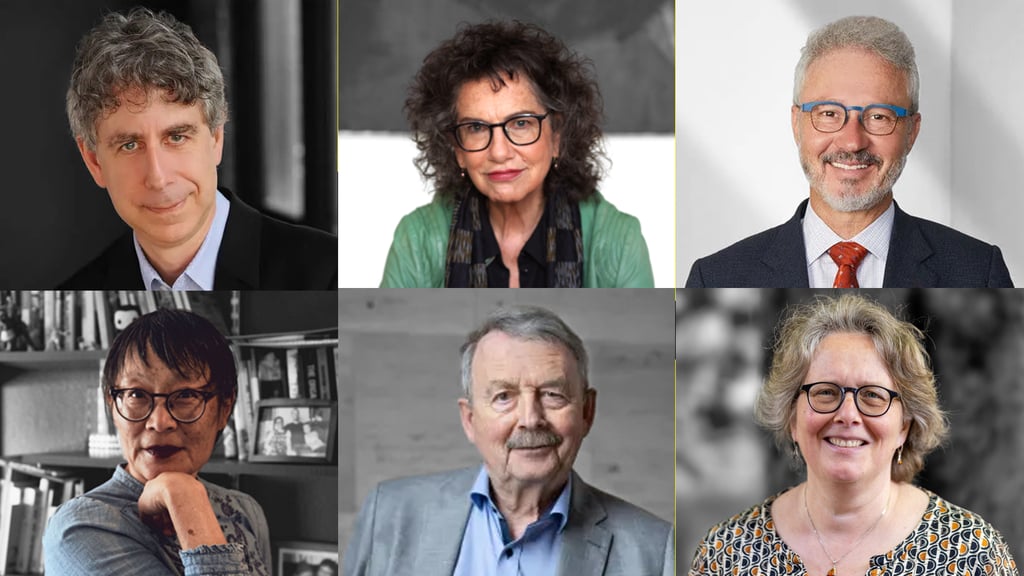
In the next episode, influential American cultural critic and author Catherine Liu examines the rise of “trauma culture” asking what is lost when personal suffering displaces wider conversations about class, work and inequality.
Later conversations feature an eclectic line-up of international thinkers, including Australian lawyer and author Josh Bornstein, Belgian-Dutch philosopher Ingrid Robeyns, acclaimed American philosopher and author Susan Neiman, and renowned German sociologist Wolfgang Streeck, tackling questions ranging from corporate power and extreme wealth to political division and the future of capitalism.
The series reflects the Ultimo Institute’s wider focus on the relationship between the economy and democracy, and how both might be strengthened to create a fairer and more widely shared prosperity.
“The Ultimo Institute is about creating space for new ideas and public conversations about inequality and society, questioning the status quo and exploring what might be possible instead,” says Professor Rhodes.
“The aim isn’t to arrive at one answer, but to bring different voices and perspectives into conversation and create space for genuine debate about the choices ahead of us.”
Prosperity, Shared is presented by the Ultimo Institute and produced in partnership with Impact Studios at UTS, and is available on Apple Podcasts, Spotify, YouTube, or wherever you get your podcasts.
Prosperity, Shared
Listen to Prosperity, Shared on Apple Podcasts, Spotify, YouTube, or wherever you get your podcasts.


News
Are We There Yet? Can Universities Rebuild Trust in a Time of Conflict
Global conflict is testing trust, belonging and legitimacy on university campuses. A new study asks what happens when university communities no longer feel...

News
“Please explain?” Why we blame migrants for problems they didn’t create
Thirty years ago, on 13 October 1996, 60 Minutes reporter Tracey Curro asked Pauline Hanson: “Are you xenophobic?” Hanson replied: “Please explain?” The moment...

News
Has Neoliberalism Turned Activists into Managers?
Many charities and advocacy organisations now operate more like businesses than grassroots movements.

News
A declaration is not a duty
Human dignity sits at the heart of modern democracy, but in Australia it remains more aspiration than obligation. Robert Finkeldey examines why that...
News
Are We There Yet? Can Universities Rebuild Trust in a Time of Conflict
Global conflict is testing trust, belonging and legitimacy on university campuses. A new study asks what happens when university communities no longer feel...
News
“Please explain?” Why we blame migrants for problems they didn’t create
Thirty years ago, on 13 October 1996, 60 Minutes reporter Tracey Curro asked Pauline Hanson: “Are you xenophobic?” Hanson replied: “Please explain?” The moment...
News
Has Neoliberalism Turned Activists into Managers?
Many charities and advocacy organisations now operate more like businesses than grassroots movements.
News
A declaration is not a duty
Human dignity sits at the heart of modern democracy, but in Australia it remains more aspiration than obligation. Robert Finkeldey examines why that...