


- Posted on 13 Jul 2026
- 3-minute read
By Marina Zhang
Spielberg’s Disclosure Day imagines corporations with the reach of governments – and none of the accountability.
share_windows This article appeared in Lowy Institute's The Interpreter on July 13 2026.
In a windowless facility, a man is strapped into a chair. He bites down on a mouthguard as a rod-like device hums in his palm. Hundreds of kilometres away, a woman’s body is no longer hers to command. The man is inside her head, looking through her eyes and moving her limbs as though they were his own. He searches her memories and channels what he finds into a corporation’s surveillance and communications networks.
This is a scene in Steven Spielberg’s latest sci-fi film, Disclosure Day. The hand-held rod is a device reverse-engineered from extraterrestrial hardware recovered nearly 80 years earlier. It is also the film’s central political metaphor. The rod does not merely give its operator access to another mind; it turns cognition into an extractive resource, fed into a wider apparatus of corporate power.
The film deals with a world edging towards nuclear war, cybersecurity risks, secrets and betrayal. In an age of corporate technology giants’ growing dominance, institutional secrecy, contested memory and expanding capacity to observe, predict and influence human behaviour, the aliens are the least alarming thing in the film.
The rod’s most disturbing power is the “dive”: an operator can enter another person’s mind to read, influence or puppet them. The rod is not a forecast of a near-term technology. Rather, it compresses into one sinister object a possible convergence of neural interfaces, algorithmic behavioural inference and networked data.
It is where the film’s politics become uncomfortably current.
Wardex, the company in control of the technology, runs black sites, experiments on living alien captives, reverse-engineers recovered technology, compiles intimate dossiers on citizens and can shut down a city’s electricity grid to silence a television station. It embodies a form of hybrid sovereignty: a private institution with state-like powers but without elections, courts or public accountability.
The question the film leaves is uncomfortably practical: when corporations possess the capacity to collect intimate data, shape public communication, operate critical infrastructure and influence what citizens know, who can compel them to account for how that power is used?
Some plot mechanics may not withstand close scrutiny, but the film’s implications linger.
The main character sees himself as a custodian, convinced that proof of human contact with extraterrestrial intelligence would be a meta-political shock: not merely a disruption to policy or security doctrine, but a challenge to humanity’s assumptions about its place in the universe.
The film usefully avoids a simple religion-versus-science conflict. The issue is not only whether belief survives the disclosure of such a secret, but who decides what citizens are entitled to know.
Public disclosure, the film suggests, depends on personal reckoning: institutions cannot confront what they have buried until the people within them do.
Without giving away spoilers, the warning is not entirely speculative. Australia often treats privacy, cybersecurity, AI safety, energy security and critical-infrastructure resilience as separate policy problems. Yet the companies building cloud platforms, AI models, data centres and communications networks increasingly sit across all of them. They hold sensitive data, operate systems on which governments and businesses depend, and can shape the information available to citizens during a crisis.
This is a question of digital sovereignty. Australia cannot build every platform domestically or withdraw from global technology networks. But it needs greater visibility over ownership, jurisdiction, access rights and dependency risks.
The policy challenge is larger than privacy compliance or cyber-incident reporting. What disclosure, audit and accountability obligations should apply when a company – especially a foreign-owned one – combines sensitive data, consequential AI and infrastructure essential to public life? Should it disclose high-risk uses, submit to independent audits, maintain access and decision logs, notify regulators of material incidents, publish aggregate government requests for access, and demonstrate continuity plans for strategic disruption?
Australia needs an answer before private technical capacity becomes too deeply embedded in public life to inspect, contest or govern.
News
Australia-China Weekly Brief: October 2026 issues
The Australia-China Weekly Brief by the Australia-China Relations Institute at the University of Technology Sydney (UTS:ACRI) tracks key developments in...
News
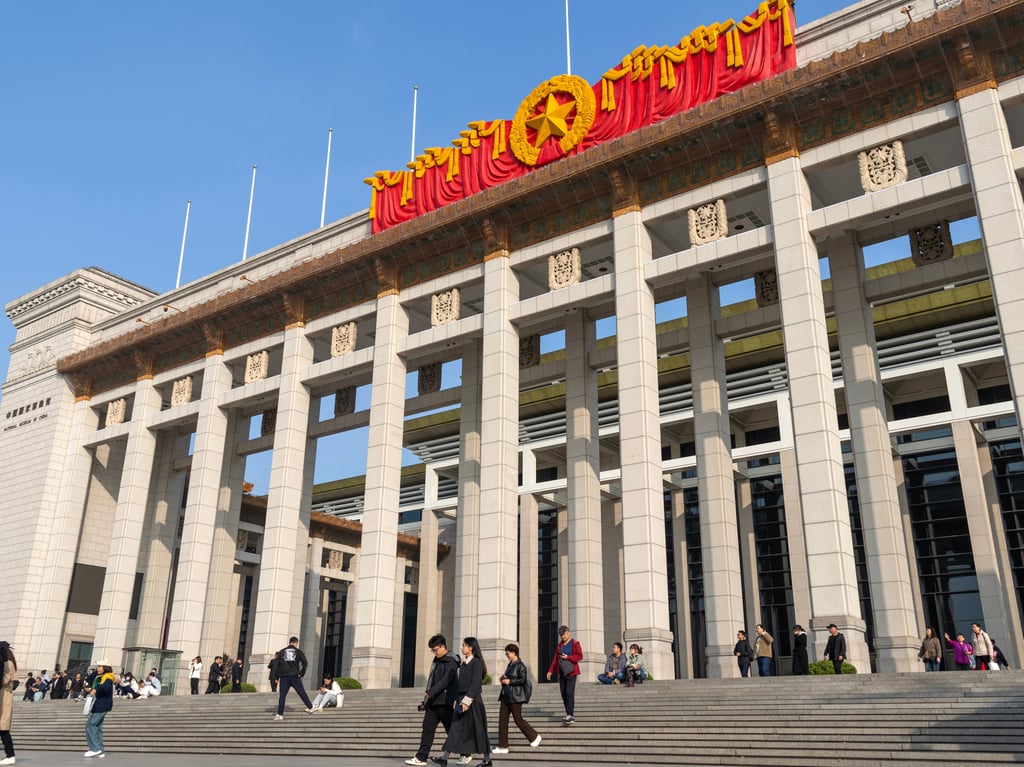
The struggle over what China wants
China expertise is itself a field of epistemic struggle, shaped by competing convictions, dispositions and geopolitical perspectives. Doshi’s critique of Kang,...
News
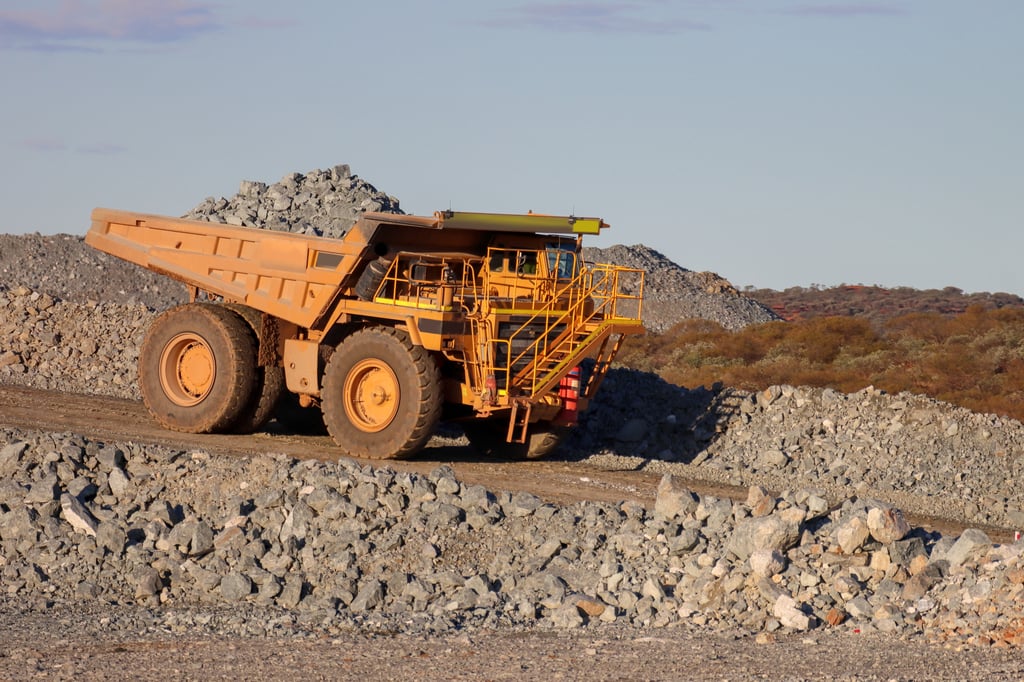
Australia should turn critical minerals leverage into industrial capability
Australia’s Syerston Scandium Project is a test of whether critical minerals cooperation can make Australia not merely a supplier, but a critical capability...
News
PERSPECTIVES | Can Australia and China talk sensibly about AI Safety?
Australia will attend the APEC Economic Leaders’ Meeting in Shenzhen on November 18-19 2026 amid questions about the extent to which the two countries can, or...
News
Australia-China Weekly Brief: October 2026 issues
The Australia-China Weekly Brief by the Australia-China Relations Institute at the University of Technology Sydney (UTS:ACRI) tracks key developments in...
News
The struggle over what China wants
China expertise is itself a field of epistemic struggle, shaped by competing convictions, dispositions and geopolitical perspectives. Doshi’s critique of Kang,...
News
Australia should turn critical minerals leverage into industrial capability
Australia’s Syerston Scandium Project is a test of whether critical minerals cooperation can make Australia not merely a supplier, but a critical capability...
News
PERSPECTIVES | Can Australia and China talk sensibly about AI Safety?
Australia will attend the APEC Economic Leaders’ Meeting in Shenzhen on November 18-19 2026 amid questions about the extent to which the two countries can, or...