
• Posted on 4 Jun 2026

From knowing to listening: Responsibility in reconciliation

What does it take to be ready for truth — and why has truth about Australia’s colonial past been spoken for decades, yet gone largely unheard?  


Truth-listening acknowledges that Aboriginal and Torres Strait Islander peoples have long spoken truth through community spaces, Royal Commissions, national movements and landmark statements — often to audiences who are unprepared to listen.  


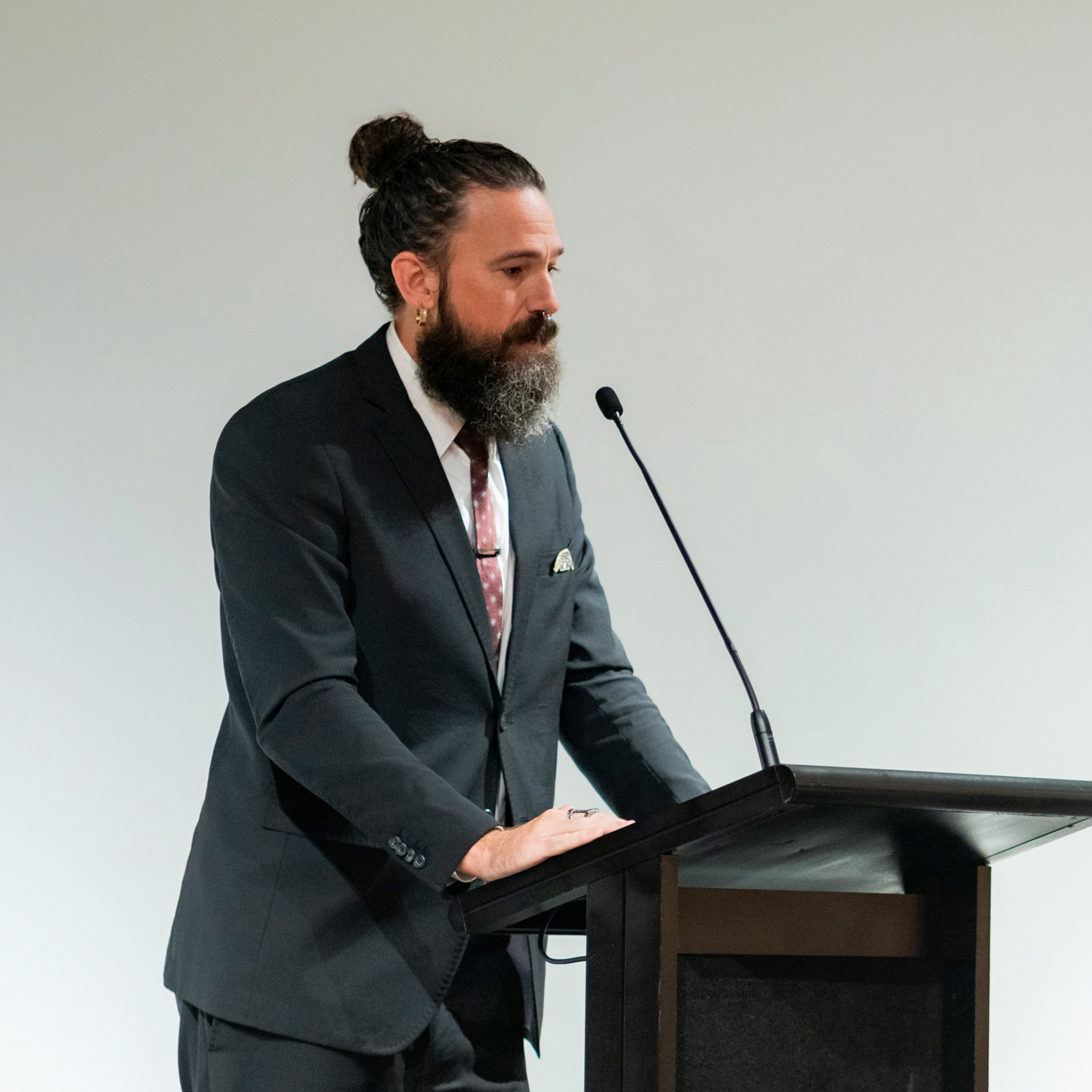
During Reconciliation Week at UTS, Blake Alan Cansdale delivered a compelling keynote on truth-listening and the importance of listening with integrity before action. This was followed by a panel discussion with Professor Lorena Allam, Michael Rose AM, Professor Anna Clark and Amy Persson (moderator), who explored how non‑Indigenous people and institutions can meaningfully embed the practice of truth-listening to support meaningful, sustained change. 
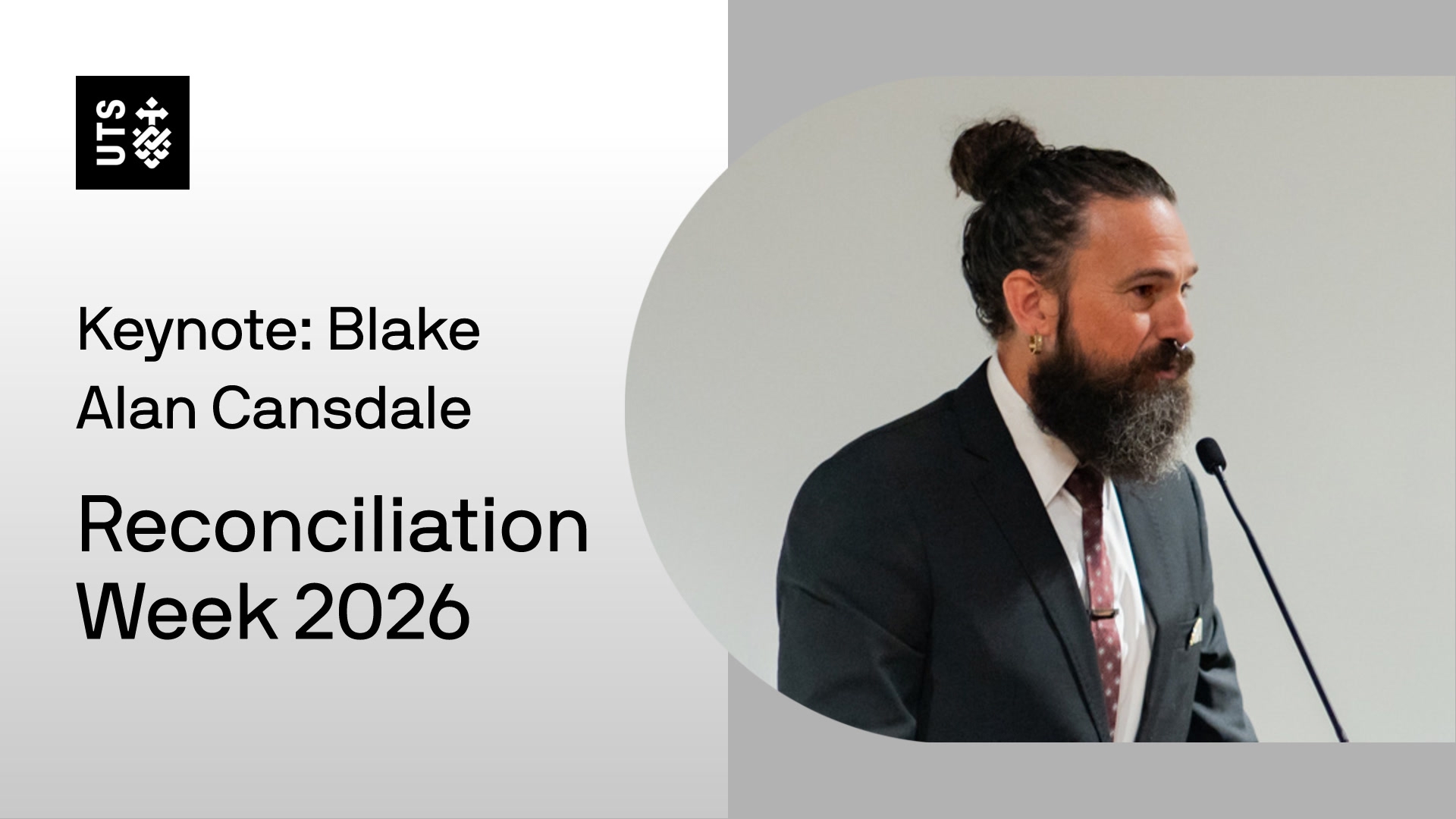
 

Image of Reconciliation Week 2026 tile with Blake Alan Cansdale

Recording: Truth-listening: Readying Australia for truth keynote session

(30:00)

Recording: Truth-listening: Readying Australia for truth keynote session transcript

AMY PERSSON:  Good morning, everyone.  Welcome to UTS.  My name is Amy Persson and I'm the ProViceChancellor of Social Justice and Inclusion.  
It's an absolute pleasure to be coming together, both in person and for all of you online, for National Reconciliation Week, a time for all Australians to explore how each of us can contribute to achieving reconciliation.  
I'd like to begin by welcoming Aunty Glendra Stubbs, UTS's ElderinResidence, who will acknowledge country.  Please welcome Aunty.
AUNTY GLENDRA STUBBS: Well, I need to say I am a bit slow today.  I've got a reason, eh, Blake?  I did the little last bit of the walk, you know, and it was an honour, it was an honour, to see how many people turned up in freezing Canberra.  Honestly, it was really good, eh?  Blake's little boy was there.  He was like the hero of the show, you know.  
It's lovely to see so many repeat offenders that are back here and so many new people in our circle of good people.  
UTS is an amazing place.  It's an amazing place that makes everyone feel welcome.  Oh, I've only got 2 minutes.  Hang on.  Sorry, Lindon.  
It is an amazing place where, you know, you come here and you see everyone lined up for a feed and, you know, all talking and different cultures.  It's about what makes Australia great, what makes Australia great.  
So yes, I did that last little bit of the walk with Narelle, the walker.  She behaved herself.  The gravel was a bit tough, though.  You know, next year we'll have no gravel.  
If they're filming, it looks like I've got the Parkinson's, I think, or the jitters, or something.  But yeah, it's been an amazing time.  
You know, as somebody who was part of ANTAR way back in the day and part of the first Sorry Day committee, I never thought this was going to grow.  I thought it was going to be a oneday wonder that no one would continue.  So I think for the brave people, the brave organisations and the individuals that have supported us on our journey of truthtelling, this old Aunty is really proud of youse, all of youse, every one of youse.  So thank you, and is that my 2 minutes?  
But it also was wonderful to see the little ones, eh, all the little ones holding their  and the ones in the prams.  There were uni girls there, UTS uni girls, with their babies in the pram bumping along the gravel and, you know, the trouble with me is people remember me, but I don't remember them, but I've got it worked out, eh, Blake?  I just pretend I do.  Then I keep asking questions until I really know where I've met you.  So thank you for everyone that, you know, is in our movement.  
Oh, I've got to do the acknowledgment.  That's what I'm here for.  So I'd like to acknowledge we're on the land of the Gadigal people of the Eora Nation and pay thanks to Elders past, present and emerging.  As somebody who had language removed from me, I usually say Yamandhu marang, which is just hello in my language.  
My daughter has a Master's of Indigenous Language, but, you know, it's really hard when you're old to learn this stuff that was probably part of your psyche, but hasn't been part of your everyday language.  So anyone who has the opportunity to learn even one word or two words, embrace it, you know?  
Youse have embraced us.  We're really proud of how our mob and our brothers and sisters from other countries and our brothers and sisters of  nonAboriginal people have embraced this beautiful country.  We are a beautiful country.  We have a lot of space and we have a lot of room and UTS just shows that.  
You go down there and get that feed of an afternoon and you see all those different cultures.  Those kids that have come here, that their families have let them leave, their most precious possession are coming to us.  
So thank you, everyone, and I have done more than 2 minutes.  I am so sorry.  Me and Narelle are leaving.
AMY PERSSON:  Thank you so much, Aunty.  I'd also like to acknowledge  is there a bit of feedback?  I'd also like to acknowledge that we are on the traditional land of the Gadigal people, land that was never ceded.  I want to particularly acknowledge Gadigal as the traditional custodians of knowledge for this place and pay my respects to Elders past and present.  
Wherever you are in Australia, you are on the lands and waters of Aboriginal or Torres Strait Islander peoples.  On this vast continent, as Aunty said, hundreds of different groups have their own culture, customs, language and laws.  
For our audience online, we'd love for you to acknowledge which Aboriginal or Torres Strait Islander country you are tuning in from.  So you need to open up the Slido  and you can see the link for that on the slides and we'll share it in the chat, for those of you online  and click the polls tab, where you can let us know what First Nations land you are joining from or where you live or work.
As a public institution with social justice at its core, UTS is, of course, committed to advancing First Nations selfdetermination, while creating opportunities for our community to deepen its understanding of Indigenous Australia.  We're very proud to be guided by the leadership of our Indigenous colleagues, particularly through the Jumbunna Institute for Indigenous Education and Research, whose work shapes nationally and internationally recognised scholarship and advocacy, and I'd like to acknowledge the Director of Jumbunna, Lindon Coombes, in the audience today.
This year, the theme for Reconciliation Week is 'All In', a reminder that reconciliation is not passive work, nor is it the responsibility of First Nations peoples alone, who have carried the burden of truthtelling, advocacy and action for so long.  At its core, reconciliation cannot exist without truth, a shared willingness to acknowledge our history, accept its impacts, commit to ensuring past injustices are never repeated and contemplate reparations. 
This is where truthlistening becomes essential.  Reconciliation asks not only that truth is told, but that it is heard  openly, respectfully, and with accountability.  Truthlistening recognises that Aboriginal and Torres Strait Islander peoples have long spoken truth through community spaces, Royal Commissions, national movements, landmark statements, often to audiences who seem unprepared to listen.  
In today's discussion, we'll explore what it means to listen deeply and with integrity, to sit with discomfort and to let that truth shape how we move forward together.  
We are delighted to have Blake Alan Cansdale to provide today's keynote address.  Following Blake's keynote, we'll welcome Professor Lorena Allam, Michael Rose, and Professor Anna Clark in discussion.  
But for now, it's my huge pleasure to introduce our keynote speaker, Blake Alan Cansdale.  Blake is a First Nations lawyer, policy expert and national advocate for justice and selfdetermination.  He is currently the National Director of ANTAR, a leading ally organisation advancing rights, respect and recognition for Aboriginal and Torres Strait Islander peoples, and he also serves as Chair of Just Reinvest NSW, working to reduce incarceration and reinvest in communityled solutions.
Blake brings over a decade of experience across law, government and community sectors, including roles with Legal Aid, the Law Council of Australia, and Aboriginal organisations across New South Wales.  His work focuses on advancing systemic reform through truthtelling, treaty and community empowerment.  Please welcome to the stage Blake Alan Cansdale.
BLAKE ALAN CANSDALE:  Thank you.  Good morning, everyone.  Dhanggana.  Thanks, Aunty Glendra, first of all, for the Acknowledgment of Country.  It was really special being out in Ngunnawal, Ngambri and Ngarigo country yesterday  the last few days, actually  with my 7yearold son.  
I made the choice, which I wasn't sure about at first, of taking a 7yearold with me away from family, his two siblings and mother, for several days, but I'm really glad I did.  It's the second time I've done it and it's an incredibly special opportunity to spend such a beautiful time one on one with one of my kids with such a strong cultural focus because ultimately, everything we're here talking about, it's about them, it's about future generations.  They are our future.  So it was a real source of pride for me to be able to spend that beautiful time on country, shared with a lot of other mob and the just absolute powerhouse  Travis Lovett and his wife, who I think was the real boss behind the scenes  and, yeah, be part of a movement and all of the allies that joined.  
As Aunty Glendra said, it's 30 years next year for ANTAR.  It's been a decadelong journey and it's not going anywhere any time soon.  We need to lock in because I think there's a lot more work we need to do as individuals and as a collective.  So, yeah, next time there's an opportunity to join something like the National Walk for Truth, I'd urge all of you to get involved as much as you can.
So before jumping in, because I myself have about 20 minutes, I do want to acknowledge country also.  I want to acknowledge that we're gathering on the sovereign lands of the Gadigal peoples and I pay my respects to Gadigal Elders past and present.  This was  always was and always will be Gadigal land.  
I want to acknowledge all of my Aboriginal brothers and sisters, brother boys and sister girls as well, want to pay my respects to my own Elders and Elders and to every First Nations person's Elders in the room or online with us today.  
I also want to give a shoutout to all the young mob that are joining us.  I think it's incredibly important that they are prepared, I guess, for the challenges that sit in front of us.  As I said, they ultimately are our future, so it's incredibly important that every opportunity we get, we're bringing younger ones along with us and empowering them not with just technical expertise and understanding, but confidence, confidence in self, grounding in truth, and a preparedness to face the challenges that they'll invariably be facing in future.  
So ngaya, ngaya Blake Alan Cansdale.  My ancestral country is around Walcha, Armidale, Uralla in Northern New South Wales.  I was born, however, on Dharawal country, Kogarah, down at St George Hospital in SouthWestern Sydney, and I am honoured to say that I was raised on the beautiful lands and waterways of the Darkinjung people on the Central Coast, about an hour and a half north of here, where I rolled in at 12, 12.30 this morning with my 7yearold after a few days in Canberra, so apologies if I seem a little tired or sort of cloudy minded.  That's exactly what you're seeing right now.
As mentioned, I'm a lawyer by training, an expolicy shonk as well, but don't hold any of that against me.  I'm honoured to currently serve as National Director of ANTAR and Chairperson of Just Reinvest NSW, but I don't think any of my titles are really the most interesting thing about me  far from, actually.  What I want to actually share with you is the fact that I personally, beyond carrying titles, also carry quite a significant hole in my identity, myself and my heart, you know.
Beyond that, though, and the thing that gives me strength is I carry the spirit of my ancestors.  I carry the love of my family, as you've probably noticed, I carry the pride of belonging to the Anaiwan Nation, one of the world's single oldest surviving cultures, and I'm going to be honest with you because that's what I'm fairly well known for doing, like I said before, there's that hole that unfortunately I wasn't born into culture and the very nature of Australia and the experience of colonisation, there's a lot of mob in this country that have had their culture and their identity and their pride and the strength of being part of one of the oldest surviving nations in the world taken away from them.  
So that's a really difficult experience to go through and there are hundreds of thousands of mob that are challenged by that still to this day and that's part of, I think, being an effective ally and a genuine ally is understanding some of that complexity of that history and supporting that process for a lot of individuals because we will be much, much stronger as a nation when we come out the other side.
So one of the things I guess moving beyond that is whether or not my jarjum grow up proud of not only their Aboriginal Anaiwan identity, but also their identity as an Australian.  That will likely depend in large part on whether this nation, after some 240odd years of the colonial project, finally starts to ready itself with the truth of its own history.  I'm not sure we're there  I'm pretty positive we're not there yet, but we're going to talk a little bit here about what are some of the steps we might be able to take, again as individuals and as a collective, because it's very much a deeply person introspective process, but it's about our national identity as well and our institution, so it's also a collective process we need to go through.  
Myself personally, I want to focus on concept and the practice that I've been turning over in my mind for a while now, that is the practice of truthlistening.  So over the next 10 to 15 minutes, I'll be attempting to make a point that, in my opinion  and it's a pretty firm opinion at this point  Australia's problem in 2026 is not that there's a shortage of truthtelling.  Australia's problem, rather, is that we are not truth ready.  
In effect, we're either unwilling or incapable of truthlistening as individuals and as a nation and I want to start with a question that I often get asked when I speak, either a small community group or at a larger group, it goes something like, "Blake, do you feel like the answer lies in more truthtelling?  Didn't the referendum fail because of a lack of education or awareness?  If we did a better job at teaching our younger ones, wouldn't that be the thing that makes the change, that makes the difference?"  
Every time I hear a form of that question, I have to take a moment to reflect because I know it's coming from a good place.  I know the vast majority of people  not everyone, the vast majority  are coming from a good place, a goodwill, a good heart.  Unfortunately, I feel like those kinds of questions, though, miss the mark entirely.  
I can say without reservation that Australia does not suffer from a shortage of truthtelling.  The truth of this country has been told and told and told again.  It's in the Bringing Them Home Report, it's in the Royal Commission into Aboriginal Deaths in Custody, it's in the Stolen Generation testimonies, it's in the data on stolen wages and stolen lands, it's in the Yirrkala bark petitions, the Barunga Statement, the Redfern Address and the Uluru Statement from the Heart.  It is in the reports of the Yoorrook Justice Commission and it's in every yarn shared by mob with other Australian brothers and sisters around the dinner table, at schools, at the local pub.  The truth is on the record.
Now, that's not to say that we don't continue to need truthtelling.  I firmly believe that we do.  We will need truth in all of its diverse, brilliant, devastating and unvarnished forms at a national, state and a local level right up until the job is done.  
In the famous words of one MJ Higgins, "lies will lock you up with truth the only key".  However, the fact is that truth is not hiding from Australia.  Rather, Australia has been hiding from the truth, and once you understand that the truth is not missing, that in many respects it's been here for many years all around us in plain view, then you begin to ask much more astute questions.  For one, people stop asking why didn't we know, and instead, they start thinking why didn't we listen?  
It's my firm view that most Australians did not know because most Australians simply were not listening.  And here is perhaps the harder truth that sits underneath that.  Most Australians were not listening because Australia has built itself brick by brick on the dispossession and silencing of First Nations peoples.  
The historian WH Stanner had a name for this, he called it the Great Australian Silence, and he did not mean that no truth had ever been told of Australia's black history.  Rather, he meant that, as a nation, we had conveniently developed a collective amnesia in respect of our recognition of the blood, sweat and tears that it took to build the contemporary Australian nation.  
Contrary to popular opinion, it took the blood of the blacks before the blood of the ANZACS to make Australia what it is today.  
The great Australian silence is not benign, nor is it accidental.  It is violent, it is deliberate, and it is a silence of a country that's decided time and again that the comfortability of its own self-image matters more than affording truth, justice and equity to its people.  
Our experience of settler denialism  or put differently, our national failure to acknowledge the nature and extent of the harm caused to First Nations peoples by colonial institutions  is not born out of ignorance.  Rather, individual denialism and national failure is a result of a hardening of our hearts over time.  It's a choice, it's repeated daily  sometimes consciously, sometimes unconsciously  to not be changed by truth that abounds us.
If settler denialism and hardened hearts are the problem, then truthlistening is surely part of the solution.  We hear regularly of truthtelling.  However, we hear very little, if anything, about truthlistening.  
So what then is this truthlistening?  Well, for starters, it's not as simple as being quiet while someone else speaks, better known as common courtesy.  It's not about polite or academic head nodding, which I'm sure we're all very familiar with at this point.  It certainly can't be about passive absorption of words without taking on the emotional underpinnings of those words.  
Truthlistening is less about receiving the written or spoken word.  It's more about how we store, how we reflect on, and how we ultimately use truth to influence our behaviours and our actions.  Unfortunately, though, far too many Australians either remain unprepared, unwilling or unable to do the work of truth readiness, that is to position themselves to genuinely receive truth in all of its shapes and sizes and to respond in ways to honour its weight.  
Perhaps Australians are reticent to engage in genuine truth because it comes with conditions and it requires something of the listener.  It often costs them something too.  
However, this seems like a fairly small price to pay, given the immeasurable benefits that have flowed to nonIndigenous Australians from the business of dispossession.  Borrowing the words of Wiradjuri scholar Robynne Quiggin, truthlistening requires nonIndigenous people to be open to complexity and uncertainty and to accept discomfort as a norm.  Ultimately, it is truth that will move us to action.
So if we accept that truth readiness is the work that we must do, what does that work actually involve?  I want to share with you a framework that's helped shape my thinking on this subject.  Because of the timing that I've got, I will skip through things fairly quickly, but hopefully it still gives you a sense of the structure behind this framework.  
It comes from Dr Poppy de Souza and Dr Tanja Dreyer, who wrote a paper called 'Dwelling in Discomfort:  On the conditions of listening in settler colonial Australia'.  In that paper, de Souza and Dreyer offer four essential preconditions to truthlistening  that is, refusal, attunement, yielding, and dwelling in discomfort.  
The first precondition that we're going to focus on is refusal and for many people, refusal sounds negative, it sounds like a form of withdrawal.  However, it is not.  Refusal is power.  Refusal is the act of drawing a line in sovereign sands and saying no to unjust terms, saying no to dispossessory legal fiction and no to colonial oppression and genocide.  Truthlistening begins when we start to make space for that refusal.  
The second condition is attunement.  Attunement can be thought of as relational adjustment.  It's the ability to listen from where you stand, to recognise your position within the systems that shape your life, and to understand how your preconceptions and biases colour the world around you.  It's closely related to the concept of positionality.  
Which brings us to the third essential precondition, to truthlistening, which is yielding.  Sorry, I think it's that late night catching up with me.  I can only imagine what Travis Lovett is right now.  He's a Gunditjmara man and he kept on reminding us how much they love talking, and it's true, he wasn't lying.  He's good at it, though, I'll give him that.  He must be out of voice and legs at this point.  
Yes, so yielding  so put simply, as you'd imagine, yielding is giving something up.  It means stepping back from control, allowing Aboriginal and Torres Strait Islander peoples to define not just the truth, but the framing.  This might be hard as part of truthlistening for many wellmeaning allies because yielding means power does not remain where it has always been.  It is effectively the act of unsettling the status quo and yielding is exactly what Australia, on the whole, refused to do on 14 October 2023.  
The Uluru Statement from the Heart was a gift from Aboriginal and Torres Strait Islander peoples to all Australians.  It was a generous, dignified, carefully considered invitation to Australians issued in 2017.  The statement was not a wish list, nor was it a request for charity or a moment of grievance.  The Uluru Statement was a carefully developed proposal for institutional and socioeconomic repair from the very people on whom the weight of our institutions fall the heaviest.
Voice, treaty, truth  put in that order for good reason.  Voice comes first because voice is structural.  Voice is a body of First Nations people working in parallel with the institutions of this country, with the standing to speak to and ultimately shape laws and policies that affect our interests.  
Treaty comes second because, well, treaty is agreement and treaty cannot be struck by one party alone.
Finally, truth, because truth on its own is unlikely to shift power.  However, truth combined with a genuine commitment to transformative structural reform will be the beacon that guides us to a better future.  
The Uluru Statement from the Heart was an invitation to the Australian people, to all Australian people, to walk together in a movement of the people towards a better future.  It's that simple.  
What happened then on 14 October 2023 was rather the predictable consequence of bringing a proposal grounded in First Nations peoples’ rights and aspirations to a settler colonial nation that had not done the work of truth readiness.  Australia was not ready in 2023, not even close.  Unfortunately, I stand here today and I say it's arguably the case that we are even less ready in this moment.  
Now, let's take a look at the fourth and final condition of truthlistening and that is dwelling in discomfort.  Truthlistening, it is not a single act, it cannot be.  It is a durational commitment to discomfort.  
By default, most of us want to do whatever we can to make ourselves feel better in any given moment.  That's understandable.  I think that is natural physiology, natural psychology.  We want to ultimately skip the part where the problem is dealt with and jump straight into the hugging it out and just moving on.  But that instinct to move too quickly to remedy, particularly when what we're talking about is another person's pain, it can actually manifest as a form of trauma in itself because every time we rush past the discomfort caused by the truth of someone else's pain, we potentially undermine the healing that could have happened, the healing that is often so badly needed and that which may have occurred if only we'd been willing to actually sit in our own feelings for that little bit longer.
So as I bring it to the home straight, I want to briefly connect to  well, attempt to connect the concepts of truthlistening and truth readiness with the widely acknowledged notion of allyship and perhaps a less recognised notion of what it means to be an accomplice.  I think Aunty Glendra made a wise crack about us all joining effectively as accomplices together during the acknowledgment and she was spot on.  That's what we need more of, and I'll explain what that means in a moment.  It's not got the nefarious criminalised kind of Macquarie Dictionary version that you might be thinking.  
So for me, an ally  it could be someone simply that supports you.  An accomplice is also someone who supports you, absolutely, but beyond support, they're someone who is prepared to bear cost with you as well.  That's what I see to be the line in the sand between the two.  
That's not to say that allyship doesn't matter.  It absolutely does.  Our allies matter immensely.  But in many respects, allyship has a ceiling.  An ally tends to operate at the level of the individual, standing alongside a particular person in a particular moment at a particular point in time under particular conditions, whereas an accomplice operates at a more structural level, getting their hands dirty attempting to shape laws and policies, procurement decisions, public and political discourse, as all of that affects First Nations Peoples.  
An ally can opt in and opt out often.  When the sociopolitical weathers turn, the ally has the option of quietly stepping away, and unfortunately, many do in those moments.  An accomplice, meanwhile, has decided in their bones that irrespective of what lies ahead, they're in it for the long haul, regardless of the personal or professional cost.  
In the compelling words of Aboriginal artist and academic Lilla Watson, "If you have come here to help me, you're wasting your time, but if you have come because your liberation is bound up with mine, then let us work together."  
So if there's a single lesson from 14 October 2023, for myself perhaps it's that First Nations Peoples in Australia, we have no shortage of allies.  Corporate logos went purple, yellow, black and red.  Hashtags trended, bumper stickers and corflutes, they were aplenty.  Executives and public figures were standing firm in solidarity, which was excellent, but then unfortunately, Advance Australia, Sky News, Gina Rinehart, the Nationals, Peter Dutton, they chose to flip the script and a great many of those allies went very quiet, including institution allies and perhaps, most of all, institutional allies.  
Out of the 6.2 million Australians that voted in favour of the referendum proposal, the accomplices are still here doing the largely unglamorous work, making the awkward phone calls, showing up in boardrooms, calling out racism in the workplace, writing letters to MPs, donating to First Nations causes and are walking the halls of Parliament, if they have that privilege, all whilst there are a few watching and you probably won't see many of those individuals on social media because that, in many ways, is the point.
If I were to try to bring things together succinctly, I might put it like this:  allyship is the work of being with us; accompliceship is the work of being with us no matter what.  With only 3 to 4% of this country's population being Aboriginal and Torres Strait Islander, it will almost always fall to the 97% to do the lion's share of the work.  
If we have any shot at affording genuine justice, rights and respect to mob, we need more Australians to step up and get their hands dirty.  The lion's share cannot be quarried by First Nations peoples alone.  
So be an ally, if that's where you're at in life right now, we certainly need our allies, absolutely.  However, if and when you are so inclined, please aim with every fibre of your being to accept that your own liberation is bound up with that of every marginalised and vulnerable individual in Australia.  
First Nations peoples have had plenty of allies over the years.  What we need now, right now, more so than ever are accomplices, individuals who are willing to stand close enough to our children, our families and our communities that they themselves weather some of the blows that are intended for us.  We need nonIndigenous Australians who are willing to go all in.  Thank you.

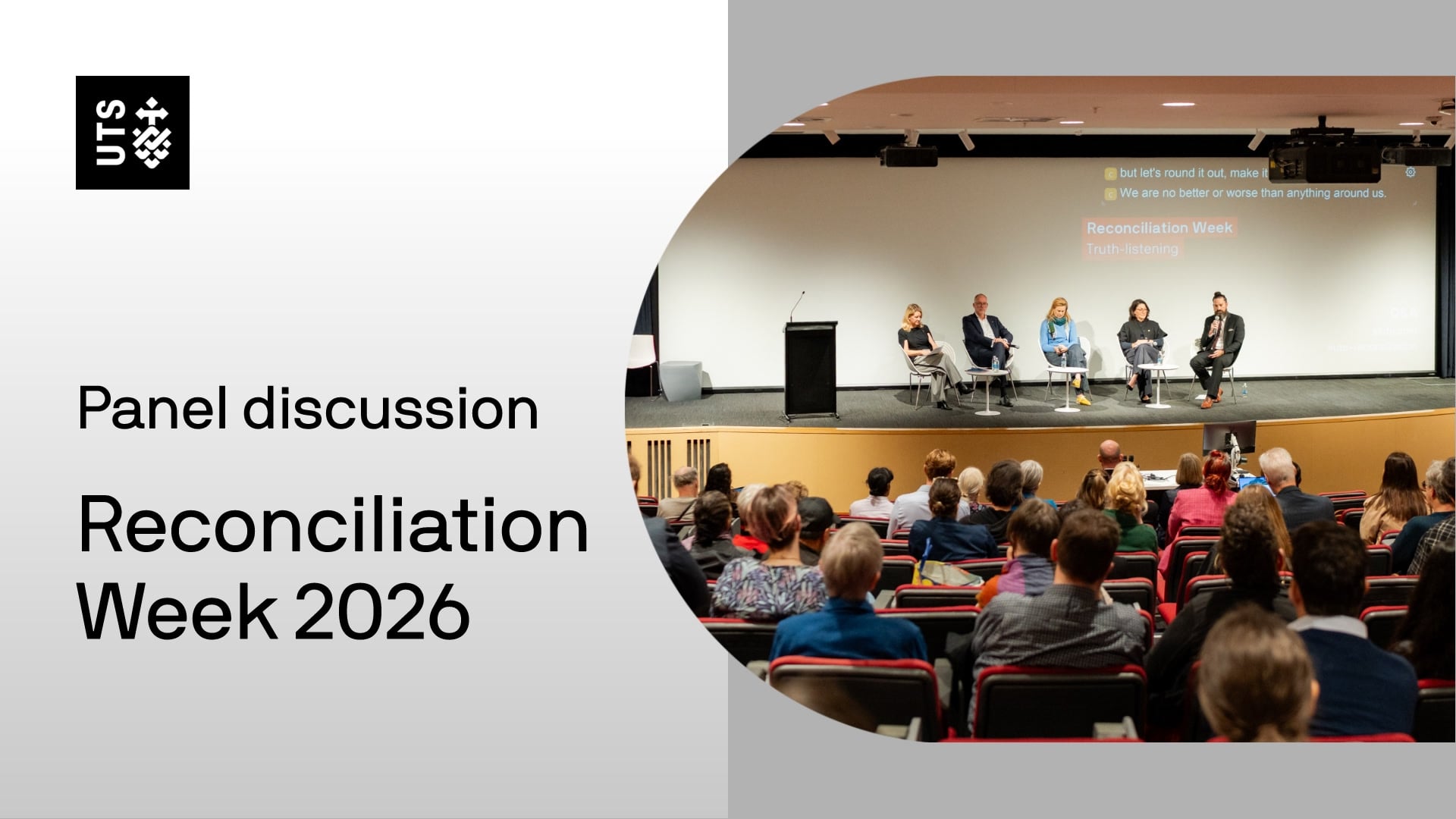
Image of Reconciliation Week 2026 tile for panel session

Recording: Truth-listening: Readying Australia for truth panel session

(55:36)

Recording: Truth-listening: Readying Australia for truth panel session transcript

I'd now like to introduce our panellists.  Lorena Allam is the Industry Professor of Truthtelling Research at Jumbunna Institute for Indigenous Education and Research at UTS.  
Lorena is a descendant of the Yuwalaraay and Gamilaraay people of Northwest New South Wales and is a multiple Walkley awardwinning journalist.  Welcome, Lorena.  
Michael Rose is the Chancellor of UTS and the CoChair of Reconciliation Australia.  Over the last 20 years, Michael has been actively engaged in policy issues involving First Nations communities and Indigenous rights, employment, education and reconciliation.  Welcome, Michael.  
And we have Anna Clark, Professor of History at UTS.  Anna is an awardwinning historian, author, public commentator and the creator and executive producer of the popular kids' podcast Hey History!  Welcome, Anna. 
So much to cover.  I'm going to start with a question for our nonIndigenous panel members this morning and that's reflecting on this concept of truth listening, particularly for nonIndigenous Australians, calls us to accept discomfort when centring First Nations voices and particularly about our history.  It calls us to accept Blake's proposition that we are not truth ready.  So I'm keen for you to reflect on a moment when leaning into discomfort shifted your understanding and how we might invite more of those moments in our communities and institutions, and Anna, I'm going to start with you.
ANNA CLARK:  No pressure.  Thank you, Amy, and thanks, Blake, for your keynote.  It was very prescient in terms of Travis's work, but also, you know, work that's been done, as you said, for decades, actually, if not centuries, in Australia and other settler colonial places.
I suppose I'll start with  yeah, you've asked for a personal anecdote, so I'll give one.  I wrote a history book a few years ago which was a history of Australian history, which sounds meta, but actually if you think about how Australian history has been taught and learnt over generations, there really are different generations of stories that have been told and listened to, and I was looking at this issue of silence as sort of a powerful theme in Australian history and I really sort of thought that there perhaps weren't, you know, records around frontier violence, for example, colonial violence, that there were reasons why this was not  you know, that the chapter of the violence of colonisation in Australia was not largely told and loudly told in school syllabuses, for example, and history books.  
So I looked at 19th century historians, I read all of their works, I looked at newspaper reports and I was struck by how violence and how the truths about settler colonialism were actually very present in those texts.  They were present in colonial hearsay and rumour.  There's a famous quote by the historian James Bonwick that says that he walked through country parts of Australia  and I apologise for the term  and he said it was very common to hear  it was nothing to hear of people talking about shooting black crows.  So it's there.  
There's evidence in newspaper reports of literal violence taking place.  There are the countless stories, family stories, as Blake was saying, around, you know, fires on verandas, around kitchen tables.  There are the stories of child removal.  There are the powerful stories documented in the massacre map with Lyndall Ryan.  They're everywhere.  There's loud noise.  
So if there's so much loud noise, not silence, why does it feel like silence?  It made me think about, you know, as my work as a historian, that the history profession hasn't been listening and that was a profound moment of discomfort and it really made me think how do we shift this and absorb this story and amplify it and be more than just allies and be accomplices in the telling of uncomfortable, discomforting and painful history.
AMY PERSSON:  Thank you.  Michael, a moment when leaning into discomfort shifted your understanding?
MICHAEL ROSE:  I can remember precisely the moment where a truth shifted me from an interest in reconciliation into action.
AMY PERSSON:  Ally to accomplice, perhaps?
MICHAEL ROSE:  Perhaps, and it was about 20 years ago and it was in a conversation with Michael McDaniel, who lots of people in this room will know.  Michael is a friend of mine and has been a mentor to me for about 20 years, but this was our first meeting when we had this conversation.  It was just at the end of the Howard era and, you know, there was all this debate around whether the Government should apologise to First Nations people and the John Howard line was, of course, well, how can people apologise for things that happened 150 years ago and how can people apologise for things which they didn't do?  So Michael and I, who had literally just met, were talking about that and he was asking me what I thought about it and I was agreeing with him, of course, that that was a ludicrous proposition.  
But as the conversation went on, he said to me, "Obviously, you're not responsible for anything that happened 150 years ago or 200 years ago and you're not responsible for anything that happened 50 years ago, and you're not even responsible for things that may have happened even 10 years ago" and then he said, "But you are a beneficiary of it, you are the beneficiary of a modern nation that has been created exactly for guys like you, middleclass white guys", and he said, "So that's it.  You are not responsible for things that have happened, but you are responsible in the face of things that have happened because you are the beneficiary of those things."
Then the next thing he said, which is what kicked me right across, he said, "And people like me are the byproduct of that project which created the nation for you."  So I have to say that kind of shifted me into a degree of discomfort and that was the moment for me where I thought okay, I am responsible in the face of things and I need to take some action.
AMY PERSSON:  Thank you.  Lorena, we've heard from Blake that truth has long been spoken, but not always received.  He called it the great Australian silence.  You have been a journalist, a very wellknown, successful journalist, I think, for the better part of your career.  Given the media's influence in shaping how Indigenous and nonIndigenous relations are understood in Australia, can you talk to us about the responsibility you think journalists hold not just in truthtelling, but in practising meaningful truthlistening and encouraging audiences to do the same.  You know, Blake's view is, and it's evident, that Australia was not ready for the Voice Referendum.  It would be interesting to get your sense of the media's role in that moment as well.
LORENA ALLAM:  Thank you.  The media, I think, has a dual role over time.  When Anna talks about the silence of history, I see it more, having studied this now for several years, it's more of secrets.  The media kept  while on one hand it kept secrets, it also told us the truth people weren't prepared to hear.  
So over time, the media had a role in the colonisation of Australia.  It's not called the Fourth Estate for nothing.  Its role was to dehumanise us so that our extermination and dispossession could be done without upsetting the nice white people in the towns and the cities.  
This was a noble process.  You know, we were going to die out.  They had to smooth our dying pillow.  That was the rhetoric that we heard in the media.  
But at the same time, we had journalists telling us  you know, I've read all those colonial newspapers, like Anna has, hundreds and hundreds of them, for a series I did for the Guardian called The Killing Times, in which I collaborated with Professor Dr Lyndall Ryan and her team to bring to the Guardian readership that history in a way that  you know, in a media sort of publicly accessible way.  
So I think journalism has had a dual role.  It has been a tool of colonisation, a pillar of the colonial process, but individual journalists over time have bucked the trend, as we always do, and told those stories.  
Interestingly, in the colonial papers, journalists were often reporting firsthand accounts of massacres told by perpetrators or bystanders sometimes 20, 30, 40 years after the fact, which is fascinating that people have waited that long, the code of silence has been so powerful that they've waited until much later in life to tell the truth.
I think that the media  industry was owned and operated over time by people who had a vested interest in colonisation.  So, for example, the Sydney Morning Herald was known as the Sydney Herald.  It actively campaigned against the prosecution of the 11 men who perpetrated the Myall Creek massacre in 1839, they slaughtered 28 Wirrayaraay men, women and children.  
In 1839, the Herald said  I'll read you this  "The whole gang of black animals are not worth the money colonists will have to pay for printing the silly documents on which we have already wasted too much time."  
It also  unsuccessfully, I might add  opposed the death penalty that was eventually handed out to those men.  They are still the only men who were ever charged and prosecuted over massacres in Australia, even though the map shows there were at least 438 of them in Australia.  
In 2023, though, the Herald apologised for that and the editor at the time, Bevan Shields, said, "We acknowledge that today's generation is not responsible for the sins of earlier ones, yet we can help heal old harms nonetheless.  We also respectfully argue that the capacity to recognise a past wrong is the sign of a strong future."   
So the Herald is still the only news organisation in Australia to have had a look at itself and told that truth.  I would argue that there's a lot more work to be done in that space.  
But at the same time, I think the media has a role in truthtelling, a really fundamental role, because that is how we, as the tiny 3% of Australia, are going to be able to talk to the nation.  So the media has a role in truthtelling.  Things like Royal Commissions, the reason why they have impact is because the public learns about them as they're happening.  You hear the evidence given.  The Royal Commission into Antisemitism right now is a really good example of how the stories of everyday Australians are being broadcast as part of the coverage of that Royal Commission.  
So truth commissions and big performative truthtelling processes I think are important because it gives the media something to talk about.  It gives us information.  
There's a great phrase from a Canadian academic called Michael Ignatieff who said that truth commissions, and I believe good journalism, what it does is narrows the space for permissible lies, and that is what I think the media has done after the Bringing Them Home Report, which I also worked on.  
We now accept that there were several Stolen Generations.  We teach it in schools.  We accept that this is a fact of our history.  There are still denialists, as there always will be.  
So I think the media has an extremely important role in recognising its colonial background and also its role today and its role as a kind of civic education process.
AMY PERSSON:  Thank you.  Blake, presumably you work with media from time to time.  Have you got any reflections on that work and the role of media when it comes to truthlistening and preparing Australia for truthlistening?
BLAKE ALAN CANSDALE:  I do.  Given that I'm sitting next to a highly respected and amazing journalist, I think I'll reserve some of my thoughts on the role of media in 
AMY PERSSON:  Hashtag not all media.
BLAKE ALAN CANSDALE:  No, I  yeah, look, I think they've played a very distinct, pretty nasty, harmful role historically and still to this day.  
It's difficult, incredibly difficult.  Running an advocacy organisation or anyone  this isn't just First Nations affairs, any marginal or vulnerable  marginalised or vulnerable community seeking to advocate on the rights and interests of their people, of their community, having to connect with the status quo, the majority of everyday Australians, is really difficult when we're just surrounded by white noise.  Social media has made it impossible to connect with people and change hearts and minds.  
There are ways through, but it's proving difficult to figure out what is the new sort of model or strategy that is going to be effective in connecting with people who ultimately is the collective we need to mobilise for change.  No individual group, migrant group, disability rights group, LGBTQI+, First Nations  alone, none of us are going to be able to effect the kind of change that we need to see to walk us towards a better future that we all deserve.  That is going to have to happen through the wider population understanding about our rights, respecting them  first recognising them and then respecting them  and realising, like I said before, that all of our liberation, whether we're privileged or not, is tied up in the wellbeing, the safety and the contentness and the fulfilment of everyone around us, our neighbours, our community.  That concept, which I wish we would teach all kids and teach them real, is the concept of a rising tide lifts all boats  like to really understand what that means and help let that shape our societal values.
The role of media is changing significantly, has changed significantly, fundamentally because of social media.  I have heard someone in the area doing some research refer to mainstream media as a baby boomer love bubble these days and if only politicians, perhaps, could be brought to understand that the particular portion of the population that is still dialled in to mainstream media is a lot smaller than perhaps they think, so they don't need to be as scared by the certain messaging coming out of certain media machines because it's not hitting younger generations, the bulk of the population over their heads, but politicians still seem to be swathed by this stuff, newspaper and  I won't name names, but you know, you probably know the ones I'm talking about.  
So, yeah, really that's something I'm grappling with, how do we connect the relational work, how do we connect with individuals, what's the kind of language, the kind of spaces to create to really help them understand the issues we're grappling with, but to place themselves within those issues.  
That's the key thing.  It's not us and them.  It's not helping  it's not a hand up or a handout.  This is all of us.  Like it's about our collective wellbeing and strength and it's about us understanding our shared history, probably more importantly shaping our vision of a shared future, and the media can either make or break that, so yeah.  
So I don't have all the solutions, but that's a difficult space that we're all in at the moment and I imagine a lot of us are advocates in a sort of way. Trying to navigate that complexity is tough.
AMY PERSSON:  Lorena, do you want to respond to that?
LORENA ALLAM:  I'm here to tell you that all of those things you think about the media are true and having been a survivor of 40 years of it, I could tell you some stories that would curl your hair.  
But in terms of the media's power to change hearts and minds, I just want to talk about a project that I did with the Guardian last year called The Descendants, which came out of The Killing Times, actually, which is where I wanted to go and talk to families who are grappling with this real challenge of finding out, who have gone and looked up in the family tree and found somebody on the frontier who committed atrocities, or they look up in the family tree, as many black fellas do, and see we are the survivors of massacres.  
Where in the country is that happening other than Myall Creek and what do people do with that knowledge, how do they reach out to one another, how do they talk to each other and connect and heal on country?  
It's been  I've done this several places in Australia now.  It's always an overwhelming privilege.  It's an incredible thing to witness people coming together on country and the sites where these terrible things happened and embrace like family.  
You know, it's difficult work, it takes time, there's a lot of hesitation and care and concern and fear that needs to be overcome on all sides.  This is mostly work for white families to do, to be honest, because Aboriginal families usually are the ones who know the whole story.  It's the white families who have been lied to, where the secrets and silence have been omitted from the family narrative and who are coming to this and learning very uncomfortable things about their great great grandparents that they didn't know or didn't want to know until now.  
But on country healing is so powerful and I really think that it's those places where people connect interpersonally, as Blake talks about, as individuals, it's where the change happens in the heart.  It's where  and this is being done in people's home places.  So it's not like you can ignore it because you can drive past it every day.  My father's people still drive past the site where hundreds of our mob were massacred out in Western New South Wales.  It's not far off the highway.  
So while one half of the country carries the weight, the terrible weight, of the knowledge of that history, the other half remains mostly ignorant, I would say knowing, but not knowing about what really happened.  
The media  good journalism, has the potential to tell those stories, to tell the stories of human beings meeting one another and going we've inherited this terrible story, how do we move forward together, what new stories can we tell together?  I think that's a really important part of truthtelling that, you know, other Australians are doing now.  They're not waiting for governments, they're just getting on with the job in their home places, and I think it's one of the most encouraging movements that we could have.
AMY PERSSON:  Thank you.  Anna, you are an awardwinning Australian  you have created an awardwinning Australian history podcast for primary school students and it was interesting  I mean, Aunty and Blake reflected several times on kids and the importance of kids having a place and, I guess, such an important role in the future of this country if we are going to be willing to listen more effectively than we currently are.  
Can you talk to us a little bit about that?  We know that perceptions are shaped really early through school, through friends and family.  How do we teach children about First Nations histories, including events like the Frontier Wars, with honesty and care and confidence?
ANNA CLARK:  Yes, there are a few things going on there.  One of them I think is the sort of culture wars mentality that kids can't cope, and not only can they not cope, the role of history, the function of history, is to make people feel proud and that these sorts of stories, uncomfortable stories, should be curated out of children's education because that's going to diminish their kind of connection or pride, national pride.  
Historians tend not to  the aim of history isn't to teach people how to think or how to feel or what to feel, it's to provide the skills of research and evidence and understanding.  When you talk to young people, they don't have a problem with that truth.  We had the great privilege of recording Travis Lovett's walk last year from Warrnambool to Victoria, the Walk for Truth, and we recorded kids at St Patrick's Primary School in Port Fairy as one of the episodes for this kids' podcast and they weren't fazed at all.  They could absolutely hold many things  you know, we talk about history being complex and, you know, having multiple perspectives and having multiple stories.  You can feel proud to be Australian and understand that history is difficult and it has uncomfortable truths.  Kids absolutely get that.  
I think that the key is, the difficulty is, how do we help teachers feel strong and confident enough to teach that difficult history, teachers who probably didn't learn about it themselves at school, may not have been taught in their own teacher education how to teach it.
Last week I was at a talk by Rachel Perkins at the Sydney Writers' Festival and she has this great  she produced The Australian Wars, which is now rolled out to schools all around Australia, and she says, you know, for teachers, you are our allies in the classroom, you are our accomplices in the classroom.  We can't have an Aboriginal First Nations person in every classroom teaching this stuff.  We need teachers to step up and teach it.  You might be afraid that you might say the wrong thing or you might not use exactly the right words and you might be, you know, sort of muddling your way through, but the alternative is silence.  There is no alternative, actually.  If we're going to feel like this story can be told, if we believe in this project of truthtelling and truthlistening, then we actually need to get out there and have those difficult conversations and it's helping in particular teachers teach it because the students that I talk with absolutely don't  there's no blockage on their part.  They're very comfortable holding those uncomfortable truths in their understanding of what it means to be Australian today.
AMY PERSSON:  My 7yearold goes to our local primary school and a couple of weeks ago he just broke out in Heads, Shoulders, Knees and Toes in a First Nations language and it was just amazing  out of the blue.  
My 10yearold came home recently and said, "Mum, did you know that they took Aboriginal people's babies away?", and I said, "Yeah, I did know that" and it sparked, just as you said, a really good conversation about that part of Australia's history.  
So do you feel like our school system, particularly our public school system, is making progress?  Is it getting better?
ANNA CLARK:  Yes, absolutely.  I mean, if we think about the generations of what people have learnt over time, the histories that they have learnt  I noticed that next year, for the first time, New South Wales schools from 7 to 10, it's mandatory to talk about the effects of colonisation on First Nations people.
AMY PERSSON:  Year 7 to 10?
ANNA CLARK:  Year 7 to 10, mandatory Australian history, it's compulsory for them to learn about the Myall Creek massacre, it's compulsory for them to learn not simply about deep time and ancient Australia, but the effects of colonisation on First Nations people.  
So it's belated, you know.  First Nations families have been talking about this for 200 years to each other.  Cut to 2026, it's finally mandatory.  But that's a step and I think that's something that we can absolutely think of as a step in the right direction, that truthlistening can be something that happens in every classroom around  well, certainly New South Wales, but hopefully nationally.
AMY PERSSON:  Do you want to comment on that, Lorena?
LORENA ALLAM:  I was just going to add to what Anna said so beautifully, which is that when we tell the bigger picture, the wider story of what happened, we leave room for heroes and we leave room for real heroes, the people who resisted, black and white, you know, the heroic people who saved lives, we can tell those stories as well and that gives kids hope and inspiration.
ANNA CLARK:  If we talk about this as a shared history, there are many threads of that shared history that take place and history is not a simple story, it's a complex story, and in fact it's the complexity that gets people interested in it, I think.  You know, there's a stigma that nothing happened in Australian history, that it's boring, that I learnt about it, you know, in years 4, 5 and 6, but actually it's the richness and the depth and the complexity that makes it engaging and intriguing and a hook for young people to sort of see themselves in this bigger picture and this longer story.
AMY PERSSON:  Blake, do you want to comment on that?
BLAKE ALAN CANSDALE:  Yes, just really briefly, I've been grappling with this quite a bit, actually, particularly the last couple of years.  I've got Thomas Mayo, who I also saw out at Ngunnawal, Ngarigo, Ngambri country a few days ago joining the National Walk for Truth, I got him on my shoulder telling me to incubate hope on the back of the failed referendum, the devastation of that.  He did quite a bit of public speaking and was unpacking the position that we're in and kept on reminding us hope is essential, incubate that hope and know that we're moving towards a better future.  
It's something that the internal pessimist in me, I call it more realism these days, a bit of a nicher kind of existential, you know, that everything is fated  I don't know, I'm sort of pessimistic about a lot of things, but I've got a colleague also on my shoulder that was reminding me that future generations through schools are coming through and learning a lot more about the genuine history of Australia and that we should be encouraged and there's a lot of hope in that and that we will see a generational shift and I'm like, "Yeah, okay, great."  
Martin Luther King, "The arc of the moral universe is long, but it bends towards justice", we're constantly at a macro level moving towards a better future, I was buying it and I'm seeing that and I'm owning it.  Then I look at the current political and societal circumstance at the moment and I'm thinking but some of these people in positions of influence and power now have started to come through from being beneficiaries of a shift in that education system, which is what, would you say 10, 15 years it has been 
ANNA CLARK:  It's been uneven, though, I think.  
BLAKE ALAN CANSDALE:  Yes, because that has me question jeez, we're seeing a significant regression probably more than I've ever experienced in my adult life, not just local but at a global style, particularly based on race, but it will come after sexual orientation and gender.  You know, they start with punching down the lowesthanging fruit and it goes from there.  We know that from history.  
So I do worry.  We're at a critical turning point as a global population and I really do hope that the education at the foundational level through schools is critical, but I want to see that, the proof is in the pudding, I want to see that in terms of the politicians it rolls out, the decision makers, the CEOs of multinational corporations that have benefited from that different kind of education that we perhaps didn't get  I'm really keen to see that shift in the output at our level, I guess.  
ANNA CLARK:  Can I ask a question of Blake?  If this is a 30year project potentially, you know, in terms of an intergenerational one, can we wait that long?  Do we have to wait that long?
BLAKE ALAN CANSDALE:  I guess that's why this is really  I struggle with it.  Like our mob is never about winning the moment.  I struggle with campaigning, that sort of model of there’s the Overton Window and you push when the political appetite is right, but in a moment.  Mob don't do that.  Like if we stopped because Parliament wasn't interested in stopping taking our land or taking our children, if we tooled down and waited for another moment, we never would have gotten anywhere.  
So this is generational work for our communities.  We're in it, it's our lived experience, it's about our brothers and sisters and uncles and aunties.  
It's something that we have no choice but to stay the distance, and we will.  That resilience has been built over a very long time.  It's not going anywhere, but we shouldn't have to rely on it.  That's the thing.  
Like we saw  I know it's a bit tangential, but only days ago, Kumanjayi Walker, the ruling handed down  White, pardon me, Kumanjayi White, the decision went public a day before the anniversary of his passing and Sorry Day.  I just  like have we come that far where, honestly, there's no insight about how harmful that is and traumatising and disgusting and inhumane?  
Like the decisions, they just don't seem to be shifting as much as I would like to see from the fact that I agree things have changed fundamentally at the schooling level and at the educational level there is a building of a greater awareness, particularly in younger generations  just, yeah, we need to see that shift at the political and executive level, institutional level.  
LORENA ALLAM:  Yes, I totally agree, and I think that we need to be really clear about what truthtelling is and what justice looks like too because I think sometimes people mix them up and they're not the same.  
As Blake's whole keynote was about, we've been telling the truth for all these years and we want nonIndigenous Australians to listen.  That's not just you guys, us all here in the room or online, but our politicians and the systems that they control.  So those systems need to change.  
Truthtelling won't change them.  It's the actions of people like us that will change them in demanding that change and in saying, "Well, where there's a gap, we want this to happen.  We've listened to our fellow Indigenous Australians and we want this change."  
We want to turn  you know, people talk about turning a blind eye, which is I think what most Australians have done over time, they've turned a blind eye to the truth of history.  They sort of know, but don't want to know the other half.  It's a kind of funny twilight that Australians have managed to live in, and denial is really comfortable, okay?  If we want to get past denial, we have to accept that denial exists in our institutions as well as in our own hearts as people.  
So when Blake talks about Kumanjayi White, who, if you don't know, was held down by two plain clothes offduty coppers in the Coles supermarket in Alice Springs and subsequently died, there will be no charges laid against them.  There has still been no convictions of any prison guards or police officers who have been involved in the death in custody of an Indigenous person in Australia.  
So those are uncomfortable truths that we need to stop denying.  There's denial within the system, right, that allows those things to continue.  
So when we talk about truthtelling, I really think there's lots of layers to it.  There's the work we can do as people and then there's the work we can demand of our institutions to break away from denial and work towards a more truthful accounting.
AMY PERSSON:  I want to bring Michael in here in terms of the role of universities.  We've talked about the school system, we've talked about institutions.  We are, of course, here today in a hugely powerful and influential institution and those future politicians and those CEOs, they are likely to be amongst our 50,000 students or the hundreds of thousands of students, university students, around the country.  
Can you talk to us a bit, Michael, about your sense of the role universities play in advancing truthtelling and reconciliation and not just in intent, but in practice across teaching, research and institutional decision making?
MICHAEL ROSE:  Yes, sure.  How long have we got?  I can go for an hour and a half.
AMY PERSSON:  You've got approximately 4 to 5 minutes.
MICHAEL ROSE:  Well, let me just take two things then.  It's graduation week, lots of people in this room have been sitting on the stage with me and with others watching the graduates walk across the stage and the thing that really strikes me about our graduates is how diverse they are.  They represent every single culture that's moved to Australia and First Nations people also.  
So you have all these people who are crossing the stage they're the first or second generation of their family living in Australia and they are not connected in the way that people like me, for example, are connected to the colonial history of Australia and in fact many of them come from countries that have shaken off their own colonial history and in fact may have preconceptions about Australia which are  you know, reflect what they've learnt in their own country about their own country's colonial history or the colonial history of Australia.
So we have an obligation not only to educate people who are going on to form the future of our nation, but to give a proper sense of who we are and where we are and how we got to where we are to people who are arriving here and beginning to build their lives here.  
I think that's a really important obligation and I think, going back to Blake's comments earlier about the stories that need to be told and the stories that need to be heard, it's important for us to recognise that the people who will be hearing them don't all start in the same place, can't all start in the same place, and won't have the same kinds of responses because their own personal histories are different.  So I think the university has got a real opportunity to work with a broad group of people to help ground the Australian narrative in truth and to set people up to take that truth forward.
The second thing I would say  and this goes, again, to one of Blake's points about the sort of regression we are seeing across our own communities, but also across the world, and I think it's really hard to be optimistic when global leaders are modelling and normalising racism and hatred and, you know, contempt for people who are different to themselves and that makes the effort that we must go to to push back on that stuff even more intense.  So I think we  and those people are modelling that negative behaviour and they're modelling it into a world of really divided attention and profound ignorance.  
If you look now at some of the hatred that's rolling around in our community, it really does sit, not just in a kind of absence to listen deeply, it sits in a kind of absence of any real thought about whether anything is true or not and whether anything is valuable or not.  It's just profoundly ignorant and we are the antidote to ignorance in the university sector.  That's our job and I think we really have to lean into it.
AMY PERSSON:  The antidote to ignorance  I think it's UTS's new vision.  Michelle Callen, I'm looking at you.
ANNA CLARK:  Can I just say the antidote to violence.  You know, someone tried to throw a bomb into a First Nations, yes, commemoration Invasion Day rally in Perth.  You know, I go cold to think about this.  You're totally right, Blake, it's not just let's wait for these 12yearolds to have their education and become teachers in 20 years, like we need to do something now.  It's really urgent.  
MICHAEL ROSE:  Take all this crap about white replacement history, right?  It's historically wrong, it's demographically wrong.  We can spend an hour talking about how wrong it is on every level, but it's there and it gets picked up and it gets rolled out and it gets rolled out by people in positions of real power and that's the level, I think, at which we need to be working.
AMY PERSSON:  I'm going to take some audience questions now and there's two that are the most popular and they're very similar.  Both of them start with, "Thank you so much, Blake, for your speech today."  
The question is:  "Do you have any tips for nonIndigenous people who would like to move from being an ally to an accomplice?", and I think this is really important.  She writes, or he writes, "Without overstepping, which sometimes I worry about doing inadvertently", and I think for nonIndigenous Australians that is a real thing, right, when do you step in and when do you cede and step back?  Very keen for your reflections on how people move from ally to accomplice.
BLAKE ALAN CANSDALE:  Yes, thanks.  That's a grievance it's critical to begin with.  To ask the question where is my place is the very beginning of obviously a degree of selfawareness there that moves beyond, I guess, the white saviour kind of model or the more paternalistic aspect that some wellmeaning allies, but ultimately fall victim to of, you know, "I can help you, I'm here to help, I recognise my relative privilege and I want to improve your circumstance."  
That can be beneficial and often is, but I don't think it's sustainable and it doesn't deliver the kind of dignity and respect and longterm uplift that we ultimately need to be thinking about and it certainly doesn't reshape the relationship between those individuals, which I think that's more what this is.  
Like I said before, this is not a transactional process, allyship or being an accomplice.  It's not one person disconnected from the other doing activities to help them.  This is about our collective wellbeing and about our future as a collective as communities.  
So it's deeply relational, I think it is deeply personal.  If it's done properly, it's deeply introspective.  I can't imagine how someone that doesn't know themself, doesn't have a good sense of self, can possibly profess to be able to help someone else.  
So doing the work first with self to understand your own story and position yourself within that other person's story to understand your own, you know, relative trauma or relative privilege or your own educational knowledge, your own world views, come in  that's that attunement, one of those preconditions to truthlistening, attunement  or positionality is another way of thinking it  come in primed having done the work to think about who you are, what you represent, where you stand in that moment and then you're in a better position, I'd imagine, to bind your interests, your rights, your liberty, your wellbeing with that individual or with that group that you want to see yourself within.  
You can define that group however you want, I guess, as well, at a small scale, at a regional scale, at a national scale or as a global population.  That's the beautiful thing.  I think there's a place for all of us if we just stop with this individualistic sort of capitalism that is delivered to us.  We commodify everything.  It's all about productivity and we're all hyper competitive, trying to oneup each other  not all of us, but too many people, to get ahead.  
This idea of success in a capitalist world, I think it is ultimately creating the division.  It is absolutely splitting us apart and my feeling, and maybe I'm biassed because it's a First Nations world view, more of a collective sense of belonging, a collective sense of responsibility, we generally come back to what we had previously in the western world as well in previous years, a greater sense of our wellbeing and our interests are tied up intimately with that of our community, of our village.  You know, we need to adopt that again.  
I think it's not just our own wellbeing, but the health of country, you know, the survival of our planet depends on it, us starting to see each other and, yeah, really  again, that rising tide lifts all boats, reshape our societal values so it's not about the individual and the nuclear family.  Think about okay, well, we're better off as a collective and there's layers of identity and there's beauty within that complexity.  We bring all sorts of cultural backgrounds and religious backgrounds and my understanding of contemporary Australia, though it's debatable, I think that is an incredibly interesting exercise in itself to reflect on what is a modern Australian, what is contemporary Australian identity, where are we today, what is Australia?  I think that's an exercise that needs to be done in a really focused, structured way.  
But my understanding is that we're an inclusive society, you know, everyone gets an opportunity and that we're a multicultural society and everyone gets a fair go, you know, that kind of thing.  I feel like we need to genuinely adopt that more so, not on racial lines like we have to this date.  We very much are  our form of racial nationalism has guided the haves and the have nots for too long.  I think we need to get rid of that and start to reframe our sense of who we are as individuals and as a community and, you know, adopt more of a sense of collective wellbeing.
AMY PERSSON:  Thank you.  Michael, we've got 
MICHAEL ROSE:  (Inaudible) my answer to that.
AMY PERSSON:  You can and I was going to ask you another question, but I might rethink that, but go ahead.
MICHAEL ROSE:  Just from a nonIndigenous perspective, to answer that question, find someone to be your guide.  I've mentioned Michael McDaniel, he was my guide  someone who is a person that you can speak with, listen to, be mentored by, learn from in terms of how to be in certain places and, more importantly, spend time with that person and their family, understand their story and you begin to learn.  
I think the thing in my experience is the most extraordinary thing about the whole reconciliation movement is the generosity of First Nations people in being willing to share over and over and over with successive waves of people who are wishing to learn.  That generosity, you know, allows lots of room for people to make errors, but having a friend and a guide helps you minimise those errors, I think.
AMY PERSSON:  Lorena, there's a question here around organisations and governments and what does genuine truthlistening look like at an organisational or government level beyond consultations or reports, and there's another question that says, you know, "How do we make executives within our corporations become even just allies in the first instance?  Sometimes it feels like a tickabox exercise."  Do you want to have a go at that one?
LORENA ALLAM:  Well, I'm not a political scientist, so I'll just  as an amateur, observer of politics 
AMY PERSSON:  A very expert amateur  I mean, yes, I question the amateur, but go ahead.
LORENA ALLAM:  Look, the problems  the structural problems require all of us to operate on lots of different levels.  I would say that, you know, as Blake says, we do the work personally.  You go home, as Dr Gary Foley says  go home and look in the mirror.  He says go home and talk to your racist uncle at Christmas and if you can change his mind, then come back and we can talk.  
So the idea is you go off and you do the work personally.  I don't know how we get executives to do that unless we build it into their KPIs, perhaps.  You can always imagine up, as we know, you can manage up sometimes in the workplace.
I think structural change comes when we demand it of our leaders, when we, as empowered voters, tell them what we want, but what we want needs to be informed by honest and shared power discussions with First Nations people and it's up to First Nations people to determine the rules of that engagement, right?  
I do believe, from the work I'm doing with people on country, that that's where it can start and it has the most impact and you can build out from that into more meaningful structural change.  
So in some communities, people might want to pull a statue down or change Roebourne Street or rename a river from the person who perpetrated a massacre to  you know, those things can happen, as well as broader ambitions that people might have longer term.
So I think structural change  I can't  I'd love to be able to solve that.  I don't know how we do that, except do the work as individuals and then expect our leaders to reflect that in the decisions that they make.
AMY PERSSON:  I've got a final question for all of you.  It's a twoparter.  You can choose to do one or the other or both.  It's what gives you hope for the future and what is one key takeaway that the audience can carry forward into their own spheres of influence from this conversation?  Michael, I'm going to start with you.
MICHAEL ROSE:  I know my answer because I was speaking at a reconciliation breakfast this morning on this very topic and Blake raised it earlier.  It's this idea that for the last 25 years reconciliation has been an active discussion in schools, it's become an increasingly active discussion in workplaces.  There are now 11 million people in Australia who work for an organisation or go to a school or go to a university or play sport for a sporting club that has a Reconciliation Action Plan.  
Now, does that mean job done?  Of course not.  But for 25 years now there's a generation of people for whom this has become increasingly normalised and they are now becoming adults, and so I am hopeful that there is a new group coming.  I accept all of the concerns that Blake expressed earlier about that, but that is the source of my optimism.  
I'll take up too much time if I answer both parts, so I'll throw it over.
AMY PERSSON:  Anna?
ANNA CLARK:  Yes, a containership is very hard to turn around, it's slow, there are setbacks, tides change, but I may have mentioned this earlier, I think, in my work with young people and in schools, I'm often astonished at how unfazed they are by these difficult histories.  You know, you see kids doing an acknowledgment of country like it's just part of the way they see themselves in this place and in a way that I  it's not second nature to me.  
I have different lenses that I grew up with and can apply, but the way young people can have that lens  I think it's hard to remove that lens once it's there.  So that definitely gives me hope, notwithstanding the challenges and the difficulties that still confront us, obviously.
AMY PERSSON:  Lorena?
LORENA ALLAM:  Hope is the antidote to despair, which is to take action.  So what gives me hope is when I see people backing up their words with action and accepting that we're all in it, as Blake says, for the long haul.  This is our country.  We're not going anywhere.  
I mean, our ancestors didn't give up, so we're not going to  we can't give up, you know?  I think the burden of the truth about our history has been very unequally carried to now.  What gives me hope is the sheer numbers of my fellow Australians who are willing to go home and look in the mirror and, you know, help us carry that burden.
When I was in Geraldton  I'll stop  when I was in Geraldton talking to families over there, a really fabulous Naaguja woman called Theona Councillor said "In this land new things can grow", and I keep that in my mind all the time, especially when I feel despair about the state that we're in now.
AMY PERSSON:  Blake?
BLAKE ALAN CANSDALE:  Well, what gives me hope is my ancestors' country, as you just touched on.  I actually think if we think of this conversation as being about race, we already have lost in many ways.  I use the term racial nationalism.  It's very much the foundation of this country and I don't see it as being  yes, race is an element, we need to grapple with that and understand it and it doesn't at all need to be a negative thing, but for me, as a First Nations person, what we're talking about is country, and when I say country, I mean everything.  My conception of country is everything from the cosmic to the molecular, flora, fauna, all of us here in the room today, the seats we're sitting on, everything, past, present and future.  
We're systems thinkers.  Every decision we make, every act we take, has implications and ripples for generations.  
The more that we start to adopt a legacy mindset for our behaviour and our actions  and I have the benefit of also  my world view is that when my physical body wraps up its time on this Earth, I'll go back to the Mirrabooka and kick about with my ancestors for a while in the morning star and I'll come back, I'll be reborn  perhaps as another person, animal, I don't know, some tree over in Costa Rica, I don't know  but I will inherit  the point being I will inherit the consequences of our actions and inactions today.  So it's not just about, for me, my children and my children's children, it's also about me.  I'm going to have to deal with that reality in future as well.  
So the work that we're doing now, it's about all of us.  Again, hopefully there's a common thread that you've noticed in my conversation.  I genuinely feel that everything we're doing here is about each and every one of you and my hope, what gives me hope, is that we're moving towards a society where that's the kind of values we start to ascribe to and understanding  adopting more of, perhaps, a First Nations world view and understanding of country.  
It's not about environmental sustainability to save the trees.  That's a nice framing and it's better than sort of extractivism and what capitalism otherwise delivers, but let's round it out more, let's make it even more holistic.  Those trees are our brothers and sisters.  The animals are our family.  We are no better or worse than anything around us.  We're not the apical predator that, you know, some people think we are.  
The sooner we adopt that kind of world view and we start to have love for all things in the planet, the sooner we'll start to turn around some of the pretty horrible things that we've done and the whole world, particularly the western world, the developed nations have been doing for a long time and still to this day and the majority of us are not beneficiaries.  There's a very select few privileged elites in the world that really benefit from the way that society operates.  That's the fundamental truth, and I think more of us are seeing that more and more, the 90 or 95% are seeing that.  
So let's take the knowledge now that the curtain is open and think about, well, do we want to accept that, continue to accept it, or do we want to do this differently?  Let's reshape our sense of self, our sense of place, and let's create a shared vision for a future that is much better than perhaps aspects of the past that we've left behind us.  
Whilst I am an eternal pessimist/realist in many ways, like I mentioned before, I can't help but have a little bit of hope creep through when I start to think like that.  I'm like  you know, whether I'm advocating in First Nations housing or justice or child protection, land rights, I've flitted through all of that.  At its core, they all come back to a common thing and that for me is literally trying to work towards creating a better future for all of us because I genuinely believe the stronger First Nations peoples are as custodians of country, the stronger country is and as I just explained, the healthier country is, that means the healthier every single one of us are.  You know, if we look after country, it will look after us and that gives me extreme hope.
AMY PERSSON:  Can I have a round of applause, for those of us in the room?  
I want to say thank you so much to Blake, Lorena, Michael and Anna for really generously sharing your insights with us today.  
Just before you go, we'd love to know your thoughts on today's discussion, so if you go to Slido and you go to the polls tab, there's a couple of questions we'd love you to answer.  
Thank you so much for joining us in person and for all of you online.  It's been a pleasure and a privilege.

Speakers

Blake Alan Cansdale is a First Nations lawyer and National Director of ANTAR. He also chairs Just Reinvest NSW, advocating for justice reinvestment and community-led solutions to incarceration. With a background across law, policy and Aboriginal community organisations, Blake is a leading voice on treaty, truth-telling and systemic reform.  


Professor Lorena Allam is the Industry Professor of truth-telling research at Jumbunna, UTS. She is a multiple Walkley award winning journalist descended from the Yuwalaraay and Gamilaraay people of northwest NSW. After 30 years with the ABC, she became the first Indigenous Affairs Editor at Guardian Australia in 2018, and led news reporting on Indigenous issues. 


Michael Rose AM is the Chancellor of UTS and co‑Chair of Reconciliation Australia. Over the last 20 years he has worked on policy issues involving First Nations communities and Indigenous rights, employment, education and reconciliation. In 2016, he served as a member of the Referendum Council on Constitutional Recognition.   

Professor Anna Clark is currently Professor of History at UTS. She is an award-winning historian, author and public commentator, and an internationally recognised scholar in Australian history, history education and the role of history in everyday life. Her most recent books are The Catch: Australia’s Love Affair with Fishing (Penguin 2023) and Making Australian History (Penguin 2022).   


Share

Discover more

News

Recording: Tokenistic, ally or accomplice

Performative action, tokenism and good intentions are not enough. How can we step up, lean into discomfort and do better?

Webpage

Gari Yala 2

Gari Yala 2 (Speak the Truth) provides one of the most comprehensive and current examinations of Aboriginal and/or Torres Strait Islander people’s workplace...

Webpage

Acknowledging Country in our Mother Languages

Acknowledging Country in our Mother Languages is a project led by Dr Elaine Laforteza through the Multicultural Women’s Network.